
Wholesale · United States · 2026
We ship Japanese matcha from Japan to cafes in the United States, from 5 kg per order, milled to order. This page covers what is specific to a US account: what shipping to the US costs, how long the trip takes, what US Customs and the FDA ask for, and how to start with samples.
Key takeaways
Japanomars at a glance
In this guide
If you searched for a matcha distributor in the USA, you will find three kinds of supplier. A US distributor or importer keeps stock in a US warehouse. A Kyoto tea house brand sells its own blends, and several paused new wholesale accounts in 2025 and 2026. A supplier in Japan, like us, mills after you order and ships to your cafe from Japan. None is right for every cafe.
| US-warehoused importer | Kyoto tea house brand | Japan-direct supplier (Japanomars) | |
|---|---|---|---|
| Ships from | A US warehouse | Japan | Japan, milled after you order |
| Delivery | Days | Varies; several paused new wholesale accounts in 2025 and 2026 | About two weeks in transit |
| Minimum | Often 1 kg | Varies by brand | 5 kg per order |
| Origins | Usually a fixed blend | The brand’s own blends | Several regions you can compare side by side |
| Who grew it | Rarely disclosed | The brand’s name | Region and grower for each lot |
If you need matcha next week, a US warehouse is the faster route. If you want to choose your origin, keep the same profile through a short harvest year, and tell your customers where the matcha comes from, a Japan-direct supplier is the better fit. Our side has limits too: 5 kg per order in total (grades can be mixed), 2 to 4 weeks from order to delivery, and payment in advance.
For names, our list of wholesale matcha suppliers and distributors in the USA shows who is taking new cafe accounts, and our comparison of 50 matcha wholesale suppliers puts us on the same terms as the others.
Three numbers decide it: the price of the matcha, the cost of getting a parcel from Japan to a US address, and the duty at the border. For plain matcha the third one is currently zero.
| Item | What to expect | Where the number comes from |
|---|---|---|
| Latte grade matcha | About $100 to $160 per kg, quoted at 1 kg | Our collection list |
| Ceremonial grade matcha | About $160 to $210 per kg, quoted at 1 kg | Our collection list |
| EMS, parcel of around 5 kg | 15,100 yen | Japan Post published EMS rate for the US (zone 4) |
| Sample shipping | US$25 flat | Our terms |
| US duty, unflavored matcha | 0% base duty | HTS heading 0902 |
| US duty, flavored green tea | 3.2% | HTS heading 0902 |
Yen amounts are converted at the exchange rate on the day of the invoice. Duty figures as of September 2026; our US import guide tracks changes.
For planning volume: a US cafe pouring 20 matcha drinks a day at 2 g uses about 1.2 kg a month, so a 5 kg order lasts roughly four months. Our matcha dosing chart turns your drinks per day into kilograms per month.
In our recent shipments to US cafes, the trip from Japan to a US address has taken about two weeks. Japan Post publishes US delivery times by ZIP code rather than as one national figure, so the exact number depends on where you are.
Because we mill to order rather than ship from a warehouse, allow 2 to 4 weeks from order to delivery, shipping included, and 8 to 10 weeks around the first harvest in spring, when the new season’s leaf is being processed.
If you read about new tariffs and wondered whether they reach your matcha, our note on the forced-labor tariff exemption shows the exact Customs list.
Our US demand panel shows the market spreading rather than concentrating. Between July 4 and August 1, 2026, 50 of 51 US jurisdictions rose on our matcha search index, and searches for “matcha supplier” rose 264% over six months nationally. The largest one-month gains were in Hawaii, California, Kansas and Texas. The full state-by-state view is in our US matcha demand map.
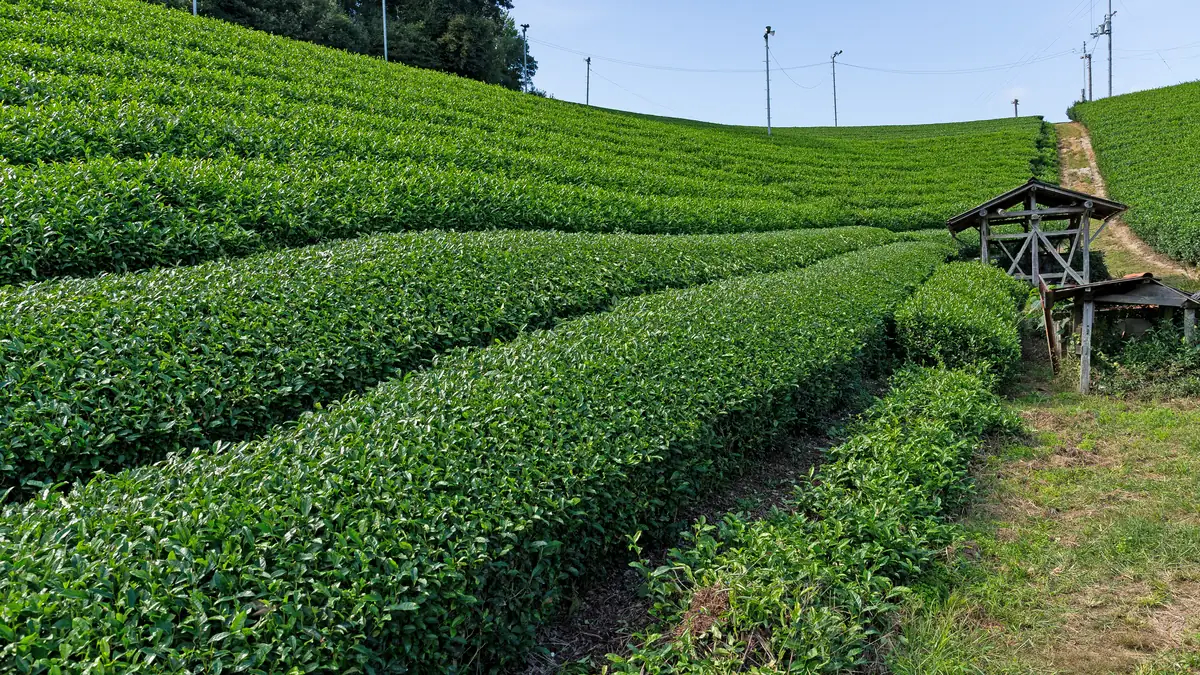
What you get from us is not one farm but access to many. We are connected with farms all over Japan, including Uji in Kyoto, and we choose each one ourselves: we visit, we look with our own eyes, and we taste the samples before deciding which farms are the right fit for cafe owners.
We then help connect you directly with those farmers, which gives your brand a real story to tell. And we can invite you to each of those farms on a farm tour.
If you arrived here because a well-known Kyoto brand paused new wholesale accounts, our 2026 status of Ippodo, Aiya, Rishi and Mizuba lays out who is taking cafe accounts. See who grows our matcha on the farmers and regions page, and compare grades on our collection list.
“Working with Hiroshi has been one of the most valuable relationships. He opened the door to matcha farmers in Japan we never could have reached on our own, guiding us not just to the highest-quality matcha, but to growers whose craft genuinely matches our standards. What sets Hiroshi apart is his dedication. He treats our pursuit of quality as if it were his own, and that care shows in every introduction he makes. We’re grateful for his partnership and the trust he’s helped us build at the source.”
Kevin, Co-Founder, Milk Tea People, Denver, Colorado
“Hiroshi guided us through Kyoto and Sayama. We visited a farmer’s home for a matcha tasting and even showed them how we make our lattes. The experience went far beyond what I expected, and I’m truly grateful.”
Taymir, Co-Founder, Alma Matcha, Fort Lauderdale, Florida
Tell us your drinks per day and what you pour now. We will pick lots that fit your menu and send samples. The sample cost comes off your first bulk order if you place it within a month of the samples arriving.
Shipping somewhere else? See our wholesale guides for Canada, the Philippines, Europe, the United Kingdom, Australia and New Zealand, the UAE, Kuwait, Oman and Bahrain, Saudi Arabia, Thailand, India, Mexico, Singapore, Malaysia, Indonesia, and Hong Kong.
Japanomars is a Japan-based supplier that ships Japanese matcha to US cafes from 5 kg per order, milled to order and sent DDP in about two weeks. We work with farmers in eight regions, including the Uji area of Kyoto. Other options are US-warehoused importers, which deliver faster but ship stock milled earlier, and Kyoto tea house brands, several of which paused new wholesale accounts in 2025 and 2026.
There are two routes. A US distributor holds stock in a US warehouse, so delivery takes days, but you rarely learn which region or lot the matcha came from. The other route is to buy from a supplier in Japan that works with the growers. That is what we do: we mill after you order and ship DDP, so duties are handled on our side, and the parcel takes about two weeks from Japan. Orders are 5 kg per order in total, and you can mix grades. Many cafes use both: a US distributor as a backup, and a supplier in Japan for their main matcha. Our list of US wholesale suppliers shows who is taking new accounts.
Yes. We visit each farm, taste there, and know the growers personally. Some lots we buy from the farmer, others through the regional tea wholesaler the farmer sells through. Either way we can tell you which region and which grower your matcha came from.
Yes. We ship from Japan to cafes in the US, from 5 kg per order, milled to order. Shipping is DDP by default, so duties are handled before the parcel reaches you.
By EMS, a parcel of around 5 kg costs 15,100 yen at Japan Post’s published rate for the US. Samples ship for a flat US$25. Larger orders are quoted by weight.
Plain, unflavored matcha (HTS heading 0902) enters at 0% base duty; flavored green tea is 3.2%. The Section 122 surcharge expired on July 24, 2026, and the Section 301 forced-labor tariff that started the same day excludes the green-tea lines under heading 9903.05.86.
About two weeks from Japan to a US address in our recent shipments. Because we mill to order, allow 2 to 4 weeks from order to delivery, shipping included, and 8 to 10 weeks around the first harvest.
5 kg per order in total, and you can split it across grades. At 20 matcha drinks a day that is roughly four months of stock, and it can be split into sealed 1 kg bags.
A manufacturer makes the matcha: tea farms and factories steam and dry the shaded leaf into tencha, and the tencha is then ground into matcha. A distributor buys finished matcha and resells it from stock in your country. A supplier is whoever sells to you, and can be either of these or neither. We are a supplier based in Japan: we do not run our own factory, we buy from growers and from the regional tea wholesalers they sell through, and we have each lot ground after you order.
No. We ship every order from Japan and mill it after you order, so it does not sit in a warehouse first. That is why delivery takes about two weeks rather than a few days. If you need matcha within days, a US-warehoused supplier is the faster option, and some cafes keep one as a backup.
Hiroshi Asami is the founder of Japanomars, which exports Japanese matcha to cafes in the United States, Canada, the Philippines and Europe, sourcing through direct relationships with growers and processors across Japan, including Uji in Kyoto.
Sources