%E5%A4%A7%E3%81%8D%E3%81%84.png)
Wholesale · Europe · 2026

We ship Japanese matcha from Japan to cafes and tea shops in Europe, from 5 kg per item, milled to order. Europe is not one customs area, so this page starts with which rules apply where, then the details that change your landed cost in 2026: a 3 kg line in the EU tariff, a new flat duty on small parcels, VAT by country, and what the EU asks of Japanese and organic tea.
Key takeaways
In this guide
We ship to a cafe in Stuttgart and to one in Reykjavik, and we are talking with buyers in Austria, Switzerland and Spain. Those five places sit under four different sets of rules, so the first question is not the price but where the parcel lands.
| Where | Customs | Sales tax at import |
|---|---|---|
| EU member states, such as Germany, Austria and mainland Spain | EU customs union: one tariff | Import VAT at the national rate |
| Canary Islands, such as Tenerife | Inside the EU customs territory | Outside EU VAT: the local IGIC applies instead |
| Switzerland | Outside the EU customs union: Swiss tariff | Swiss VAT |
| Iceland | Outside the EU customs union: Icelandic tariff | Icelandic VAT |
The United Kingdom has run its own customs and VAT since leaving the EU, so we cover it on a separate page. The rest of this page covers the EU.
The EU tariff splits green tea by pack size, and the split decides whether you pay duty at all:
| Line | What it covers | Third-country duty | Japan, under the EU-Japan EPA |
|---|---|---|---|
| CN 0902 10 | Green tea in packs of 3 kg or less | 3.2% | 0% |
| CN 0902 20 | Other green tea, including larger packs | 0% | 0% |
Source: European Commission, Access2Markets, origin Japan, destination Germany, updated September 26, 2026.
Most cafes buy matcha in 1 kg bags, which falls in the first line. The 0% rate there is a preference, not automatic: it applies when the goods qualify as Japanese origin and the preference is claimed at import.
The second change is new. From July 1, 2026 until July 1, 2028, the EU charges a flat EUR 3 customs duty per item on postal consignments with an intrinsic value of EUR 150 or less. It replaces the old relief that let small parcels in duty free, so a box of sample bags now pays it. On our shipments that charge is settled on our side, along with the rest.
There is no single EU VAT rate on tea. Import VAT is charged by the country the goods enter, at that country’s rate for the product. For green tea into Germany, Access2Markets shows 7%, the reduced rate for food. Other member states apply their own rates.
We ship DDP, so the duty and import VAT are paid before delivery and your invoice from us is the whole cost. Our second order to Stuttgart went by FedEx on exactly those terms, with duty and local tax paid on our side.
Japan Post lists EMS from Tokyo at 5 days to Germany and 7 days to Switzerland. Our own record: a cafe in Stuttgart paid for a 5 kg order on June 17, 2026, and the EMS parcel was delivered on July 1. That two weeks includes milling the matcha after the order came in.
As a rule, allow 2 to 4 weeks from order to delivery, shipping included, and 8 to 10 weeks around the first harvest in spring.
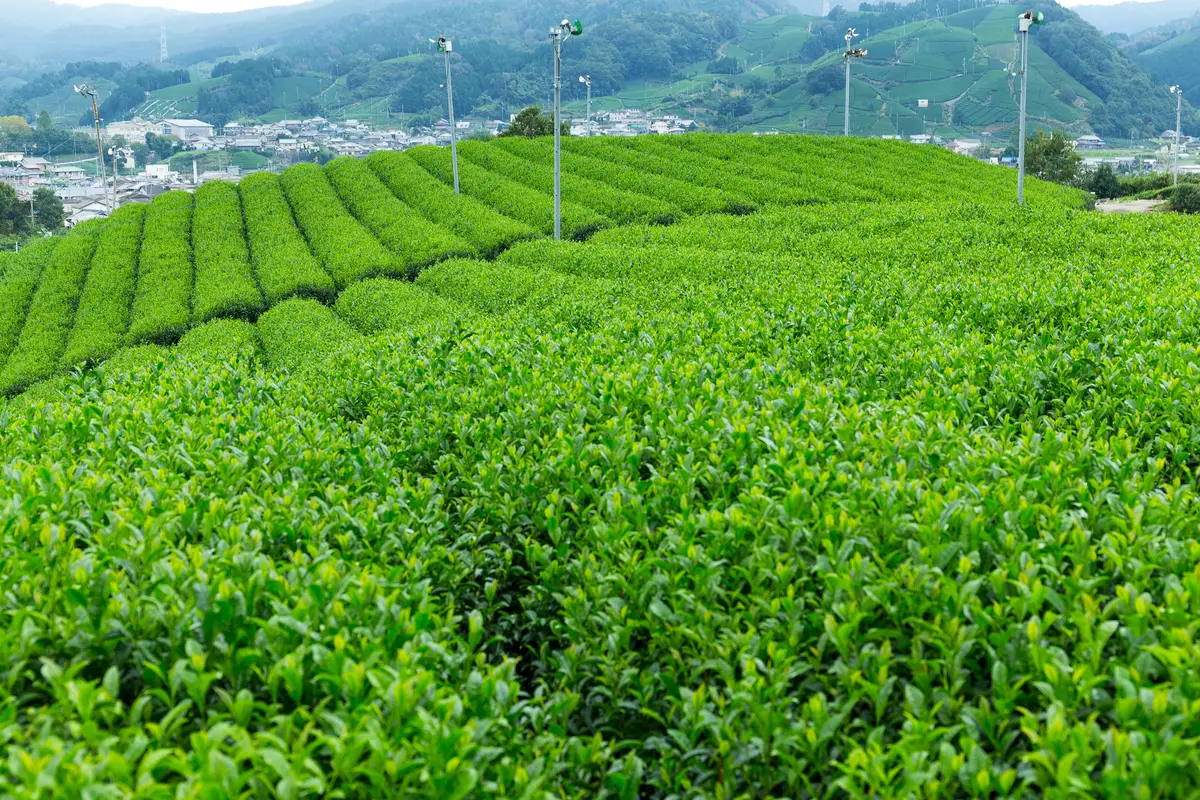
What you get from us is not one farm but access to many. We are connected with farms all over Japan, including the Uji area of Kyoto, and we choose each one ourselves: we visit, we look with our own eyes, and we taste the samples before deciding which farms are the right fit for cafe owners.
We then help connect you directly with those farmers, which gives your brand a real story to tell. And we can invite you to each of those farms on a farm tour.
See who grows our matcha on the farmers and regions page, compare grades on our collection list, and read how prices moved this year in our matcha price index.
Tell us your drinks per day, what you pour now, and whether you need organic. We will pick lots that fit your menu and send samples. The sample cost comes off your first bulk order if you place it within a month of the samples arriving.
Shipping somewhere else? See our wholesale guides for the United States, Canada, the Philippines, the United Kingdom and Australia.
It depends on the pack. Green tea in packs of 3 kg or less (CN 0902 10) has a 3.2% third-country duty, reduced to 0% when the EU-Japan Economic Partnership Agreement preference is claimed. Green tea in larger packs (CN 0902 20) is 0% from any origin. We ship DDP, so the duty is settled on our side.
From July 1, 2026 until July 1, 2028, the EU charges a flat EUR 3 customs duty per item on postal consignments with an intrinsic value of EUR 150 or less. It replaces the old duty relief for low-value goods, so a sample parcel that used to enter free now pays it.
No. The EU repealed those restrictions with Implementing Regulation (EU) 2023/1453, which applies from August 3, 2023. Pre-export testing and certificates for Japanese food are no longer required.
Japan is recognised by the EU as an equivalent country for organic production, but every consignment needs an electronic certificate of inspection issued in the TRACES system before it leaves Japan. Tell us before you order if you need EU organic status.
Japan Post lists 5 days by EMS from Tokyo to Germany. An order from Stuttgart paid on June 17, 2026 was delivered on July 1, milling included. Allow 2 to 4 weeks from order to delivery, shipping included, and 8 to 10 weeks around the first harvest.
Hiroshi Asami is the founder of Japanomars, which exports Japanese matcha to cafes in Europe, the United States, Canada and the Philippines, sourcing through direct relationships with growers and processors across Japan, including the Uji area of Kyoto.
Sources
%E7%99%BD_%E5%A4%A7%E3%81%8D%E3%81%84.png)