Matcha Wholesale in Thailand: Import Permits, the Tea Quota and Shipping from Japan
By Hiroshi Asami · Japanomars · Updated November 8, 2026
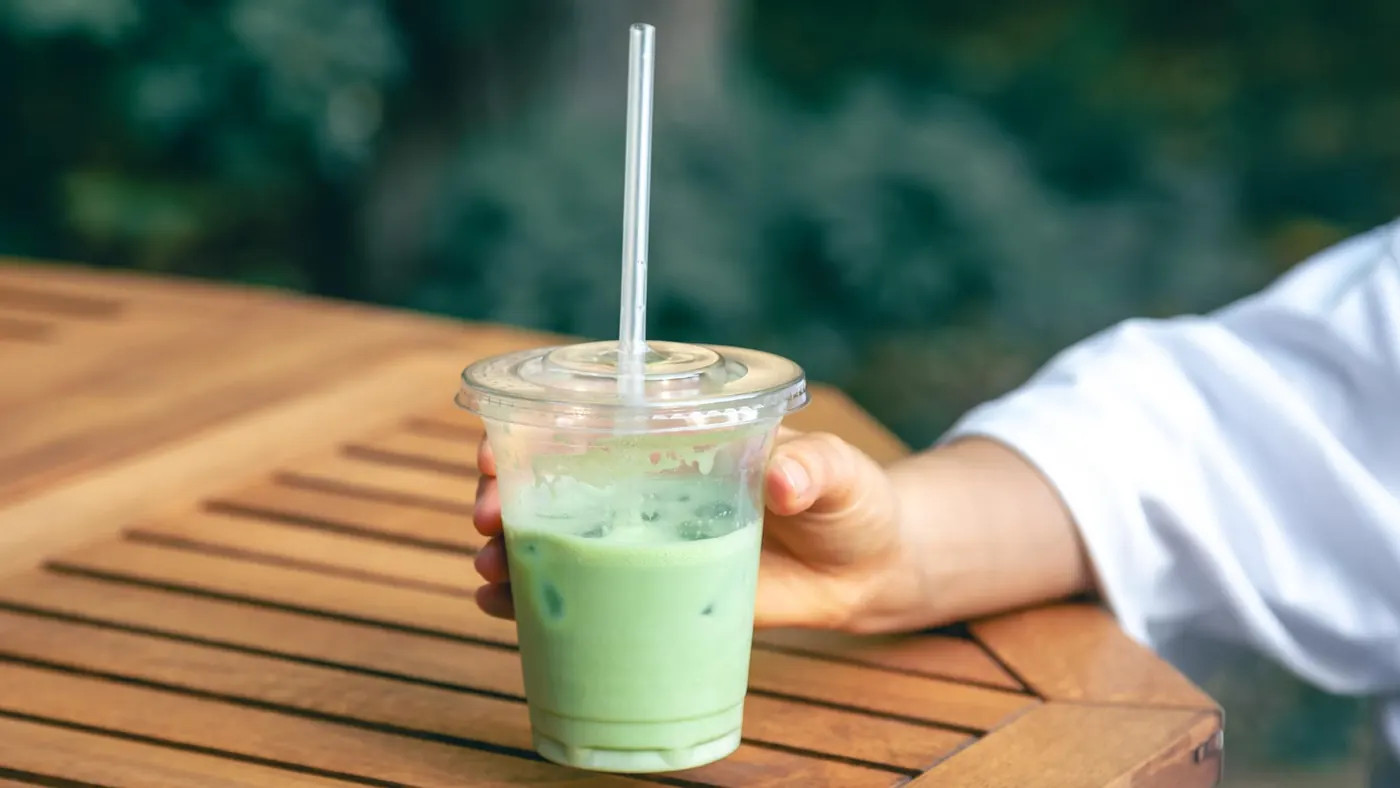
An iced matcha latte. This page is about the paperwork that gets the powder from Japan into Thailand.
We supply Japanese matcha to cafes and importers from 5 kg per order, milled after you order in Japan. Thailand is a market where the paperwork matters more than the price. Tea is a licensed import there: Thai Customs lists three government permits for matcha, and the duty depends on a yearly tea quota that every importer in the country shares. This page explains who can import matcha into Thailand, what the quota means for duty under the Japan-Thailand agreement, what Thai FDA asks for, and how samples and orders travel from Japan.
Key takeaways
Three permits: Thai Customs lists matcha (tariff line 0902.10.90) as needing import permits from the Department of Foreign Trade, the Department of Agriculture and Thai FDA. They are held by the importer, so a cafe without its own licences buys through a licensed Thai importer.
Duty depends on the tea quota: Thailand lets in 625 tonnes of tea a year at the in-quota rate, shared by all importers. Inside the quota, matcha of Japanese origin is duty-free under JTEPA. Outside it, the rate is 90%. AJCEP and RCEP do not cover tea in Thailand.
VAT: 7% on the import value plus duty, at the reduced rate that runs to September 2027.
Thai FDA: the importer needs a food import licence and a product notification, backed by a hygiene certificate from the Japanese manufacturer. Retail packs need a Thai label. Bags sold only to cafes and other food businesses can carry the core details in English.
Shipping: EMS to Thailand is zone 2 at Japan Post, 8,150 yen for a parcel of around 5 kg, and Japan Post lists 3 days from Tokyo. Samples ship for a flat US$25 and need their own Thai FDA permission.
No DDP for Thailand: the permits are in the importer’s name, so the importer clears each shipment and pays the duty and VAT. We prepare the shipping documents for it.
Uji included: matcha from the Uji area of Kyoto is available alongside our other regions.
Japanomars at a glance
Who we are: Japanomars is a Japan-based matcha wholesale supplier for independent cafes, run by founder Hiroshi Asami. We work with tea farmers in more than eight regions: Kyoto (Joyo and Wazuka, in the Uji area), Sayama, Ibi, Yame, Ureshino, Kirishima, Chiran and Miyazaki.
Who we supply: cafes and matcha brands in the United States, Canada, the Philippines and Europe.
How a Thai order works: 5 kg per order in total (grades can be mixed), milled after you order, shipped from Japan to the importer named on the Thai permits, or handed to your agent in Japan. Your importer clears the shipment and pays the duty and VAT in Thailand (we do not ship DDP to Thailand). 2 to 4 weeks from order to delivery, shipping included, not counting the time your importer needs for permits and the quota certificate.
Price: latte grade about $100 to $160 per kg, ceremonial about $160 to $210, quoted at 1 kg.
Samples: about US$20 per bag plus US$25 shipping. The sample cost comes off your first bulk order if you place it within a month of the samples arriving.
Traceability: every lot is tied to its region and its grower, so you can tell your customers who grew the matcha in their cup.
In most countries we ship to, a cafe can receive a box of matcha and the carrier deals with the tax. Thailand works differently. In the Thai Customs integrated tariff database, matcha in packs of 3 kg or less falls under 0902.10.90 (green tea, not in leaf form), and that line carries an import permit flag from three agencies:
Department of Foreign Trade (DFT), Ministry of Commerce: tea is under a tariff quota. The importer needs a DFT certificate to clear each shipment, inside or outside the quota.
Department of Agriculture: dried tea leaves are a restricted article under Thailand’s Plant Quarantine Act. The importer files a plant import declaration, and the shipment normally travels with a phytosanitary certificate from Japan.
Thai FDA (อย.): importing food for sale needs a food import licence, and tea, as a food with prescribed quality standards, needs a product notification before it is sold.
All three sit with the importer, which is the business named on the customs declaration. A supplier in Japan cannot hold them for you.
For a cafe, that leaves two setups that work, and one that does not:
Buy through a Thai importer or distributor that already brings in tea and holds the permits. For most cafes this is the simplest route.
Make your own company the importer. Possible, but it means a Thai FDA licence, a product notification for each matcha, DFT registration and a plant import registration before the first order.
The personal-use route does not fit. Thai FDA lets a person bring in up to 10 kg of food per shipment for personal use, once every three months, with a written promise not to sell or give it away. Matcha poured into drinks you sell is not personal use.
If you are an importer or distributor yourself, the rest of this page works as a checklist: what you file in Thailand, and what we send from Japan so your filings match the goods.
The tea quota, and why JTEPA matters here and RCEP does not
Thailand applies a WTO tariff quota to tea. Each year 625 tonnes, across eight tariff lines covering green and black tea in leaf and other forms, can come in at the in-quota rate. The quota is global, so tea from every country draws on the same 625 tonnes, and the DFT hands it out to importers who apply.
These are the rates Thai Customs shows for matcha (0902.10.90, and 0902.20.90 for packs over 3 kg):
What the importer has
Duty on the customs value
Japanese origin, inside the quota, with a JTEPA certificate of origin and the DFT quota certificate
0% (exempt under JTEPA)
Inside the quota, without JTEPA proof of origin
30% (WTO in-quota rate)
Outside the quota
90% (WTO out-of-quota rate; JTEPA gives no reduction here)
A claim under AJCEP or RCEP
Not available: neither agreement covers tea in Thailand
Import VAT
7% on the customs value plus duty
Rates from the Thai Customs integrated tariff database, checked October 31, 2026. The JTEPA in-quota exemption has applied under the current Ministry of Finance notification since June 2, 2025.
The RCEP row is the one that surprises buyers. RCEP and the ASEAN-Japan agreement cut duty on many Japanese goods entering Thailand, and in the Philippines they bring matcha down to 0%. For tea entering Thailand, the Customs database lists no rate under either. The Japan-Thailand Economic Partnership Agreement (JTEPA), and only inside the quota, is the route to 0%.
What that takes in practice:
On our side: a JTEPA certificate of origin for the shipment, issued in Japan by the Japan Chamber of Commerce and Industry. Ask for it when you order and we will apply for it.
On the importer’s side: a share of the quota from the DFT, then a JTEPA quota certificate for the shipment, presented with the certificate of origin at import. Importers apply for quota in set windows during the year, and each certificate is valid for 30 days, so the shipping date is planned around it. The current DFT regulation for the tea quota covers 2024 to 2026.
Thai FDA: licence, product notification and the label
Under Thailand’s Food Act, nobody may import food for sale without a licence from Thai FDA, and the licence runs to December 31 of its third year. On top of that, Ministry of Public Health Notification No. 196 names tea as a food with prescribed quality standards (moisture no more than 8%, caffeine at least 1.5%, no added colour), so each matcha the importer brings in has to be notified to Thai FDA with its details before it goes on sale.
The hygiene certificate: for food imported for sale, Thai FDA wants proof that the site that made it meets a hygiene standard at least equal to Thailand’s own (Notification No. 420). From Japan, Thai FDA accepts an ISO 22000, FSSC 22000 or JFS-C certificate, or the manufacturer’s business licence under Japan’s Food Sanitation Act. The importer uploads it when notifying the product. Talk to us about it before you order: which document is available differs from producer to producer, so we check it for the lot you choose.
The label: under Notification No. 450, in force since July 2024, packaged food sold in Thailand carries a Thai-language label with the food name, the Thai food serial number, the importer and manufacturer, net quantity and date. Food that is not sold directly to consumers, for example bags supplied to cafes, restaurants and other food businesses, can carry those core details in English instead, with the full details in the sales documents and a note such as "raw material for food processing only". Retail tins on a shelf need the full Thai label.
Residue limits: Thai rules set pesticide residue limits in this order: the Thai limit for the food, then the Codex limit, then a default of 0.01 mg/kg where neither exists. Your importer may ask for a lab report on the lot.
Organic matcha from Kagoshima is available. If you want to sell it as organic in Thailand, tell us at the start: the organic certificate goes in with the product notification and is checked again at customs, and a Japanese-language certificate needs a certified translation.
Plant quarantine: a certificate from Japan
Thailand’s Ministry of Agriculture lists dried tea leaves (Camellia sinensis) from every country as a restricted article under the Plant Quarantine Act. The same notification exempts processed food that has been through a process that destroys pests and pathogens. On the Japanese side, the Plant Protection Station lists green tea bound for Thailand as needing an export inspection in Japan.
Whether a fine matcha powder counts as processed food is decided by the Department of Agriculture at entry, not by us. Plan for a phytosanitary certificate from Japan unless your broker has confirmed otherwise with the Department of Agriculture. If your broker says it is needed, we arrange the export inspection and the certificate in Japan.
One thing you do not need to plan for: Thailand has lifted the import restrictions it placed on Japanese food after 2011. Matcha from Japan has to meet the same contaminant standards as food from anywhere else.
VAT, and why the small-parcel rule does not help
Thailand charges VAT on imports at 7%, worked out on the customs value plus any duty. The reduced 7% rate has been extended to September 30, 2027.
Thailand’s Revenue Code exempts the sale and import of farm produce that is fresh or only preserved, by drying or grinding for example, and JETRO notes that plain dried tea can fall under it. Matcha is steamed before it is dried and milled, and whether that counts as preserved or processed is a question for the Revenue Department. Ask your broker how your matcha is being treated before you price the drinks. Until then, budget for the 7%.
You may also have read about Thailand’s 1,500 baht rule. Low-value parcels used to enter free of duty and VAT. VAT on them started in July 2024, and from January 1, 2026 duty is charged from the first baht as well. For matcha the rule never helped much: a parcel under 1,500 baht still needed the three permits above.
Samples: the step where parcels get stuck
Food samples have their own door in Thailand. The Food Act exempts samples for product registration or for consideration before ordering from the import licence, but Thai FDA still has to approve them. The importer files form Or. 16 in the Thai FDA e-Submission system with a letter explaining the purpose, the invoice and photos of the label. Once approved, it receives an LPI number that goes on the customs declaration.
In 2026 we posted a set of samples to a tea shop in Thailand by ordinary airmail, before any of that was in place. Thai customs would not release them. Since then, before we send anything to Thailand, we ask who will file the sample permit.
So for Thailand there are two ways to get samples:
By EMS, once your importer has the Or. 16 approval. We use the invoice and label details you filed.
To your agent or forwarder in Japan. Only domestic shipping inside Japan applies, and your agent brings the samples in with your other cargo. In October 2026 a Thai distributor had its samples sent to its agent in Osaka this way.
The sample cost comes off your first bulk order if you place it within a month of the samples arriving.
Shipping from Japan to Thailand
Japan Post puts Thailand in EMS zone 2 (Asia outside China, Korea and Taiwan), so a parcel of around 5 kg costs 8,150 yen at the published rate, the same as to the Philippines and a little over half the rate to the United States. Its delivery-day table lists 3 days from Tokyo to Thailand, not counting the day of posting. Japan Post is clear that this is a standard figure, not a promise, and that customs clearance can add time. For a licensed import, the clearance is the longer part.
Delivery days: Japan Post lists EMS delivery in Thailand from Sunday to Saturday, with no delivery on public holidays.
Dutiable parcels: a parcel on which duty or VAT is charged may be handed over at the customs counter rather than delivered to the door.
Parcel details: Japan Post warns that Thai customs may refuse a parcel missing the sender’s and receiver’s full addresses with postcode, a phone number or email, the number of items, and the net weight and value of each, ideally with the country of origin and HS code. We fill all of these in, and we use the same item description and HS code as your permits.
Larger lots: we prepare the commercial invoice and packing list, and your importer’s cargo agent collects from the pickup point in Japan and flies the lot to Thailand (EXW). Your agent books the flight; we have the matcha packed and ready at pickup.
Because we mill after you order rather than ship from a warehouse, allow 2 to 4 weeks from order to delivery, shipping included, and 8 to 10 weeks around the first harvest in spring. The time your importer needs for permits and the quota certificate comes on top, so start those early. Our dosing chart turns drinks per day into kilograms per month.
How a Thai order runs, step by step
Tell us your volume and your importer. Drinks per day or kilograms per month, what you pour now, and which business will import: your own company, a Thai importer, or your agent in Japan.
Samples. By EMS against your importer’s Or. 16 approval, or to your agent in Japan.
Product notification. Your importer notifies each chosen matcha to Thai FDA, using the label details we send and the manufacturer’s hygiene certificate. Ask us about the certificate before you order, since which document is available differs from producer to producer.
Quota and origin. Your importer secures a DFT quota certificate for the shipment. On request we apply for the JTEPA certificate of origin, and we arrange the phytosanitary certificate if your broker says it is needed.
Milling and packing. We mill after the order, pack in sealed 1 kg bags with the label details agreed in step 3, and ship by EMS or hand over to your agent.
Clearance in Thailand. Your importer declares the shipment with the three permits and pays the duty and VAT.
What you get from us
What you get from us is not one farm but access to many. We are connected with farms all over Japan, including the Uji area of Kyoto, and we choose each one ourselves: we visit, we look with our own eyes, and we taste the samples before deciding which farms are the right fit for cafe owners.
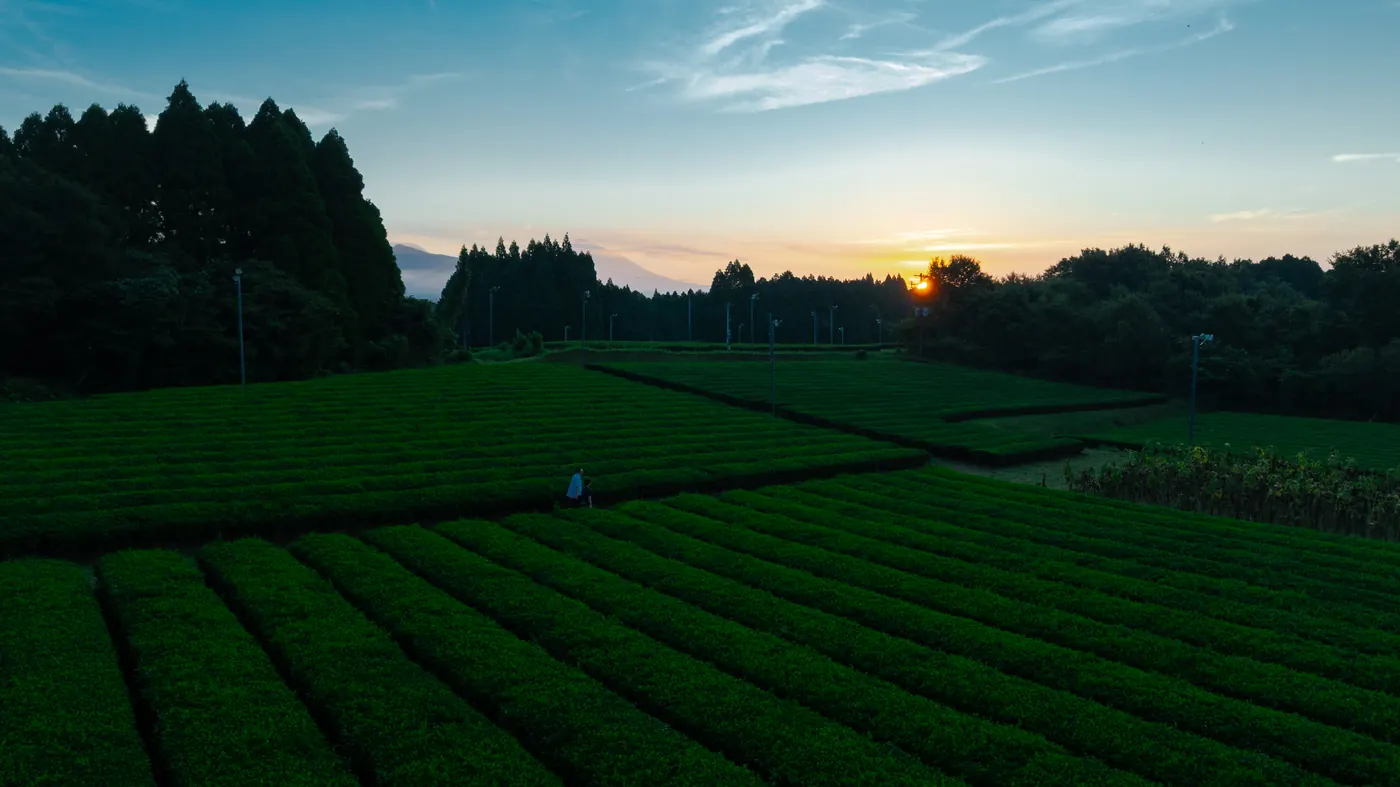
A tea field at sunrise in Japan, photographed on one of our farm visits.
We then help connect you directly with those farmers, which gives your brand a real story to tell. And we can invite you to each of those farms on a farm tour.
Tell us your drinks per day, what you pour now, and who will import. We will pick lots that fit your menu and send samples the way that works for your setup. The sample cost comes off your first bulk order if you place it within a month of the samples arriving.
Is there import duty on Japanese matcha in Thailand?
It depends on the tea quota. Inside Thailand’s 625-tonne tea quota, matcha of Japanese origin is duty-free under the Japan-Thailand Economic Partnership Agreement (JTEPA), with a JTEPA certificate of origin and a quota certificate from the Department of Foreign Trade. Inside the quota without JTEPA proof, the rate is 30%. Outside the quota it is 90%. VAT of 7% is charged on top.
Can I use RCEP or AJCEP for matcha from Japan?
No. Thai Customs lists no RCEP or AJCEP rate for green tea, because neither agreement covers tea in Thailand. JTEPA is the agreement that applies, and only inside the quota.
Does a cafe in Thailand need its own import licence?
Whoever imports the matcha needs a Thai FDA food import licence, a product notification for the matcha, a Department of Foreign Trade certificate for the tea quota and a plant import declaration. A cafe without them buys through a Thai importer that already holds them. Thai FDA’s personal-use allowance is not an option for a cafe, because it requires a promise not to sell.
Do the bags need a Thai label?
Retail packs need a Thai-language label under Notification No. 450. Bags supplied only to cafes, restaurants and other food businesses can carry the core details in English, with the full details in the sales documents and a note that the product is a raw material for food preparation.
How long does EMS from Japan to Thailand take, and what does it cost?
Japan Post lists 3 days from Tokyo to Thailand and charges 8,150 yen for a parcel of around 5 kg (zone 2). Clearing a licensed import can take longer than the flight. Because we mill to order, allow 2 to 4 weeks from order to delivery, shipping included, and 8 to 10 weeks around the first harvest. The time your importer needs for permits and the quota certificate is not included.
Do you ship DDP to Thailand?
No. The import permits are held by the importer, so the importer clears the shipment and pays the duty and VAT in Thailand. We prepare the commercial invoice and packing list, apply for the JTEPA certificate of origin on request, and arrange a phytosanitary certificate if your broker says it is needed.
What is the minimum order?
5 kg per order in total, the same everywhere we ship, and you can mix grades. It can be split into sealed 1 kg bags.
About the author & sources
Hiroshi Asami is the founder of Japanomars, which exports Japanese matcha to cafes in the United States, Canada, the Philippines and Europe. He sources through direct relationships with growers and processors across Japan, including the Uji area of Kyoto.
Sources
Thai Customs Department, Integrated Tariff Database: 0902.10.90 and 0902.20.90, statutory rate, WTO in-quota and out-of-quota rates, JTEPA tariff schedule 2, multilateral preferences, and electronic permit requirements, accessed October 31, 2026.
Thai Ministry of Finance, notification on exemption and reduction of customs duty for goods originating in Japan (Royal Gazette, December 30, 2021) and its 2025 successor as shown in the Integrated Tariff Database.
WTO notification G/AG/N/THA/132 (tariff quota administration, tea, 625 tonnes) and WTO Trade Policy Review of Thailand, WT/TPR/S/480 (October 2025).
Thai Department of Foreign Trade, Ministry of Commerce regulation on in-quota certificates for tea, 2024 to 2026.
Thai Revenue Code, Section 81 (VAT exemptions); reporting on Royal Decree No. 807 extending the 7% VAT rate to September 30, 2027.
Thai Food Act B.E. 2522, Sections 15, 16 and 18; Ministry of Public Health Notifications No. 196 (tea), No. 387 (pesticide residues) and No. 450 (labelling of prepackaged food); Thai FDA Import and Export Inspection Division guidance on sample imports (Or. 16) and personal-use imports.
Thai Ministry of Agriculture and Cooperatives, notification on restricted plants under the Plant Quarantine Act (2007).
Japan Ministry of Agriculture, Forestry and Fisheries: GMP certificates for food exported to Thailand; summary of import restrictions on Japanese food (November 21, 2025). Plant Protection Station, export conditions for Thailand.
JETRO, tea import regulations and procedures for Thailand (survey of October 2024).
Japan Post, EMS rate table (zone 2), EMS delivery-day table from Tokyo, and country conditions for Thailand, accessed October 31, 2026.
Japanomars terms (minimum, price bands, samples, lead time) as published on our collection list. Sample routes from our own enquiries from Thailand in 2026.