
Wholesale · Malaysia · 2026

Japanomars sells matcha to Malaysian cafes in lots from 5 kg, and each lot is milled in Japan once the order is in. On tax, Malaysia is one of the simplest markets we ship to: green tea carries no customs duty in the Malaysian tariff, and tea is on the list of goods exempted from sales tax. The work is on the food side. Every food shipment is cleared by the Ministry of Health through its FoSIM system, tea is subject to quarantine approval, Sabah and Sarawak have rules of their own, and the label has to meet the Food Regulations 1985. This page goes through each of them, with the official sources.
Key takeaways
Japanomars at a glance
In this guide
Malaysia’s customs tariff splits green tea by pack size. Packs of 3 kg or less fall under 0902.10, larger packs under 0902.20, and each is split again into "Leaves" and "Other". In some countries the pack size changes the duty. In Malaysia it does not: every one of the four lines shows no import duty.
| What | Malaysia |
|---|---|
| Customs duty on green tea (0902.10 and 0902.20, all four national lines) | None set in the tariff |
| Sales tax on import | Exempted: heading 09.02 is listed in the Sales Tax (Goods Exempted From Sales Tax) Order 2025 |
| Excise or other levy | None shown for tea |
| Certificate of origin | Not needed for duty |
| Which line powdered matcha falls under | Decided by your broker: powder is usually entered as "Other" |
Sources: Royal Malaysian Customs Department (JKDM) ezHS tariff database and the Federal Gazette, checked November 9, 2026. For comparison, black and partly fermented tea (0902.30 and 0902.40) carry 5% duty.
Malaysia widened its sales tax on July 1, 2025, and many imported goods now pay 5% or 10%. Tea stayed on the exempted list, and the amendments since then, up to 2026, have not touched it. Because there is no duty to reduce, the Japan-Malaysia agreement, ASEAN-Japan, RCEP and CPTPP change nothing for matcha, and no certificate of origin is needed for it.
The tax may be simple, but food does not leave customs in Malaysia until the Ministry of Health’s Food Safety and Quality Division releases it, and that happens through FoSIM:
A cafe can register as an importer itself, or buy through a Malaysian distributor or a broker that handles FoSIM for it. Whichever business is the importer is the name we put on the parcel and the invoice.
Malaysia’s Customs (Prohibition of Imports) Order 2023 lists tea leaves under coffee and tea, with two different rules:
The same order puts all of chapter 9, coffee, tea and spices, under the approval of the Ministry of Health. The entries that name MAQIS are written for the "Leaves" lines, so whether a powder entered as "Other" goes through MAQIS as well is a point to settle with your broker. If your cafe is in Kota Kinabalu or Kuching, tell us at the start, so the permit is in place before we ship.
On the Japanese side, the Plant Protection Station’s summary for Malaysia lists no import permit or phytosanitary certificate for processed tea: tea appears only among plants for planting. If your broker says a certificate is needed, we arrange the export inspection in Japan.
The radiation checks Malaysia placed on Japanese food after the 2011 accident ended in March 2013, so no origin or test certificate is asked for on that account.
Malaysia is one of the few markets we ship to with a written standard for tea. Under the Food Regulations 1985:
Whether a given matcha meets these figures is shown by a lab report on that lot. Reports vary by producer, so if your importer or broker wants one, raise it before ordering and we will see what exists for the lot you pick.
Imported food sold in Malaysia is labelled in Bahasa Malaysia or English. For an imported matcha, the label carries:
That last line does not have to name the farm or factory. The Ministry of Health’s 2023 labelling guideline shows an imported food labelled with the Malaysian company as "Distributed by / Imported by", its address and "Product of New Zealand", with no overseas manufacturer named. We label our bags the same way: your importer as "Distributed by / Imported by", with its name and address, and "Product of Japan". Give us the importer’s details and they go onto every bag.
Malaysia’s current rules exempt bulk containers and outer cases of labelled packs, but not a 1 kg bag sold to a cafe, so plan for the full label on every bag. In December 2025 Malaysia notified the WTO of draft rules for non-retail containers, which may change this once they are in force. Your importer can tell you where that stands.
The Food Regulations set residue limits in this order: the Malaysian limit in the Sixteenth Schedule, then the Codex limit, and where neither exists, 0.01 mg/kg for any pesticide. The schedule has been amended several times since 2023, so your importer should check the current version. If you want a residue report for a lot, ask us before you order.
Halal certification is not a condition for importing tea into Malaysia. Many cafes will ask anyway, for two reasons: their customers, and their own JAKIM certification, which sets rules for the ingredients a certified kitchen may use.
Our matcha is not halal certified. It is a single plant ingredient: green tea leaves, steamed, dried and milled, with nothing added, and we can give you a written statement saying so for your certifier. If your cafe holds JAKIM certification, check with your certifier what it needs for a plant ingredient without its own halal certificate, before you order.
Food brought in for samples rather than sale has its own procedure in Malaysia: the importer declares it in writing to the health officer at the point of entry, with an undertaking form published by the Ministry of Health in 2024 that the food will not be sold.
So for Malaysia there are two ways to get samples:
The sample cost comes off your first bulk order if you place it within a month of the samples arriving.
For EMS, Japan Post groups Malaysia with the rest of Asia outside China, Korea and Taiwan (zone 2). A 5 kg order in its box is charged 8,150 yen, and up to 6 kg, 9,350 yen. The published transit time from Tokyo is 4 days after posting. That is a guide rather than a guarantee, and the FoSIM release sits on top of it.
Nothing sits milled in a warehouse here: the order triggers the milling. Count on 2 to 4 weeks from order to your door, transit included, or 8 to 10 weeks when the spring first harvest is being processed. Getting registered in FoSIM, and the state permit in Sabah or Sarawak, is extra time, best started while the samples are on their way. Our dosing chart turns drinks per day into kilograms per month.
What you get from us is not one farm but access to many. We are connected with farms all over Japan, including the Uji area of Kyoto, and we choose each one ourselves: we visit, we look with our own eyes, and we taste the samples before deciding which farms are the right fit for cafe owners.
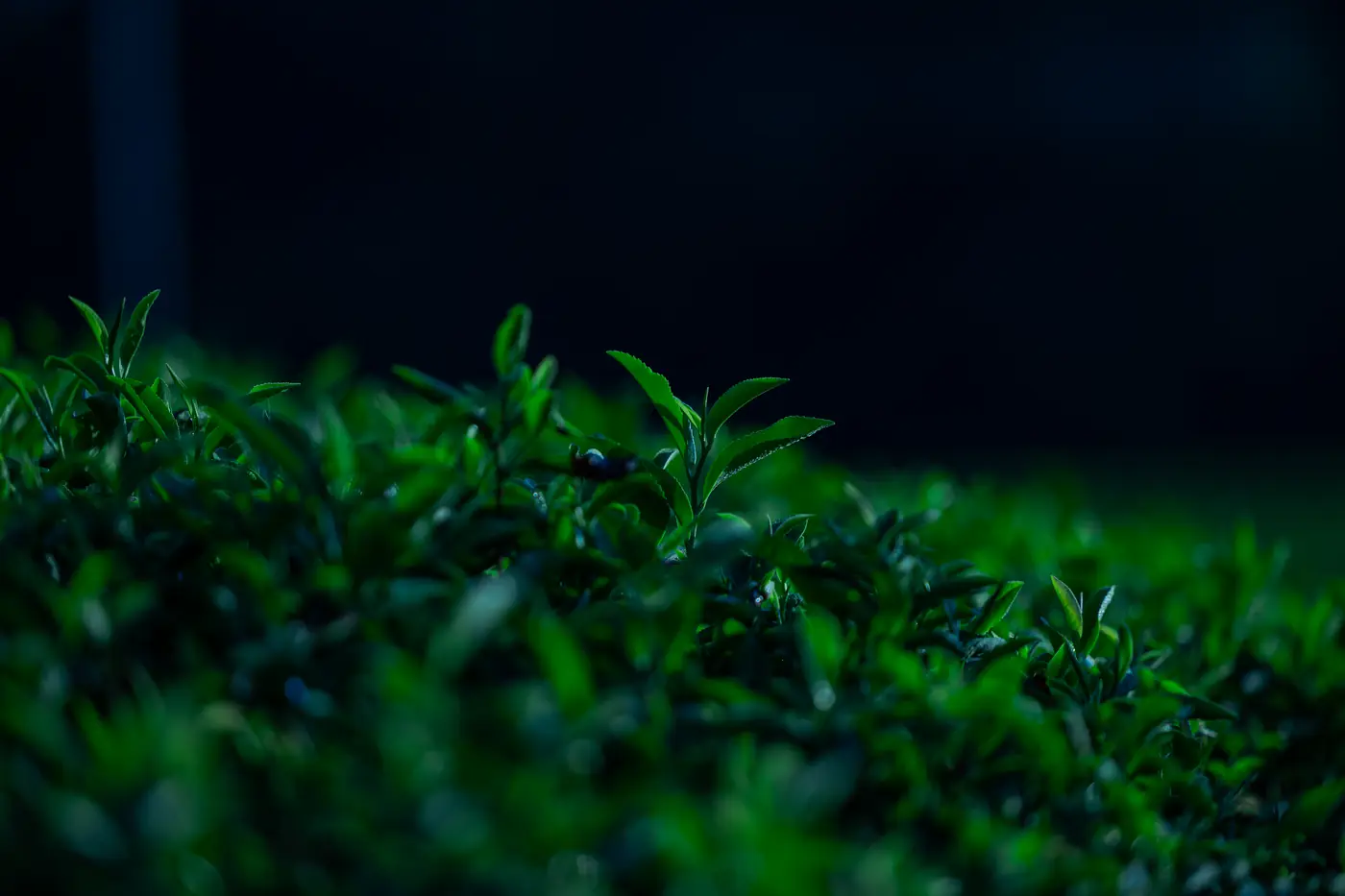
We then help connect you directly with those farmers, which gives your brand a real story to tell. And we can invite you to each of those farms on a farm tour.
See who grows our matcha on the farmers and regions page, and compare grades on our collection list.
Tell us your drinks per day, what you pour now, who will import and which state you are in. We will pick lots that fit your menu and send samples the way that works for your setup. The sample cost comes off your first bulk order if you place it within a month of the samples arriving.
Shipping somewhere else? See our wholesale guides for the United States, Canada, the Philippines, Europe, the United Kingdom, Australia and New Zealand, the UAE, Kuwait, Oman and Bahrain, Saudi Arabia, Thailand, India, Mexico, Singapore, Indonesia, and Hong Kong.
The Malaysian customs tariff sets no import duty on green tea (0902.10 and 0902.20), and tea is listed in the Sales Tax (Goods Exempted From Sales Tax) Order 2025, so no sales tax is charged at import. Black and partly fermented tea are different: they carry 5% duty.
The importer, or its customs broker, registers with the Ministry of Health’s FoSIM system, and every food shipment is released through it. Some cafes register themselves; others leave FoSIM to a Malaysian distributor or broker.
Yes, for tea leaves Malaysia’s import prohibition order requires an import permit from the state Director of Agriculture in Sabah and Sarawak. In Peninsular Malaysia and Labuan, tea is subject to inspection and approval by MAQIS. Ask your broker how your matcha is entered.
Malay or English, the food name, net weight, the Malaysian importer’s name and address, and the country of origin. The Ministry of Health’s guideline accepts the importer shown as "Distributed by / Imported by" in place of the overseas manufacturer, and that is how we label the bags.
No. It is 100% green tea with nothing added, and we can provide a written statement of that. Halal certification is not required to import tea into Malaysia. If your cafe holds JAKIM certification, check with your certifier what it needs for a plant ingredient.
EMS is listed at 4 days from Tokyo, at 8,150 yen for about 5 kg. Order to delivery takes 2 to 4 weeks including transit, since each lot is milled to order, and 8 to 10 weeks during the first harvest. FoSIM registration and any state permit are extra.
5 kg per order in total, the same everywhere we ship, and you can mix grades. It can be split into sealed 1 kg bags.
Hiroshi Asami is the founder of Japanomars, which exports Japanese matcha to cafes in the United States, Canada, the Philippines and Europe. He sources through direct relationships with growers and processors across Japan, including the Uji area of Kyoto.
Sources