
Wholesale · Hong Kong · 2026

We supply Japanese matcha to cafes and importers from 5 kg per order, milled after you order in Japan. Hong Kong is the easiest place in Asia to bring matcha into on paper: there is no import duty and no VAT on it. What Hong Kong does ask for is a short list of things the importer has to do itself, and a food label with a few local rules. This page covers who counts as the importer, the registration and the declaration, what has to be on the bag, and what the rules on Japanese food mean for the regions our matcha comes from.
Key takeaways
Japanomars at a glance
In this guide
| Question | Hong Kong |
|---|---|
| Import duty on matcha | None. Duty applies only to liquor, tobacco, certain hydrocarbon oils and methyl alcohol |
| VAT or GST | None |
| Who must register | The business that imports the food: FEHD food importer registration, HK$195 for 3 years |
| Customs paperwork | An import declaration within 14 days of arrival, HK$0.20 per declaration for food |
| Import permit or health certificate for tea | Not required. Hong Kong’s import controls focus on meat, poultry, eggs, milk, frozen confections and seafood |
| Phytosanitary certificate | Not required for processed green tea from Japan, according to Japan’s Plant Protection Station |
| Label language | English or Chinese, with "best before" and "此日期前最佳" on the date |
| Restrictions on Japanese food | Seafood from ten prefectures and some fresh produce from five; tea is not covered |
| EMS from Japan | Zone 2, 8,150 yen for around 5 kg |
Sources: Hong Kong Customs and Excise Department, Centre for Food Safety, Agriculture, Fisheries and Conservation Department and Japan Post, checked November 8, 2026.
Hong Kong’s Food Safety Ordinance has applied since 2012. Under it, anyone who carries on a business that brings food into Hong Kong, by air, land or sea, has to be registered with FEHD as a food importer. The Centre for Food Safety adds that buying online changes nothing: the business that takes possession or control of the food is the importer.
For a cafe ordering matcha from us, that means one of two things:
Either way, the ordinance asks the importer to keep simple records: for each import, the date, the seller’s name and contact details, where the food came from, the quantity and a description. For food that keeps longer than three months, like matcha, the records stay on file for 24 months. Our invoice carries all of it, so keeping the invoice covers the import side. If you resell to other cafes, the wholesale side needs a record within 72 hours of each supply.
Hong Kong does not charge duty, but it does count what comes in. Anyone who imports goods lodges an import declaration with the Customs and Excise Department within 14 days of arrival. Food has its own form (Form 1A). Declarations go in electronically through one of the three service providers the government appoints: Tradelink, Global e-Trading Services and Brio.
For food the declaration charge is HK$0.20, whatever the value of the shipment. A declaration lodged late carries a penalty that grows with the delay, so put the 14 days in your calendar when the parcel lands. Smaller postal packets can be exempt; your service provider can tell you whether a given parcel needs one.
One more thing Hong Kong’s government has pointed out: clearance of Japanese food slows down when the papers are unclear, especially when one shipment mixes different foods or origins. On our invoice each grade has its own line, with the region, the HS code (0902.10 for packs of 3 kg or less) and the net weight.
Hong Kong’s labelling rules apply to any packaged food ready to hand to a consumer or to a catering business. A 1 kg bag sold to a cafe counts. What has to be on it:
A few things are simpler than elsewhere. English alone is enough. Pure matcha is a single ingredient, so no ingredient list is needed. And Hong Kong’s nutrition labelling rules exempt packaged food sold to a catering business as a single item, so bags that go only to cafes and restaurants do not need a nutrition table. Retail tins on a shelf are different: they need the nutrition information, unless the seller holds a small-volume exemption from the Centre for Food Safety.
We print the label in English with the bilingual best-before line, and if you send us your company name and FEHD registration number, we add them.
Organic matcha from Kagoshima is available. Hong Kong has no organic labelling law of its own; JETRO notes that FEHD’s guidance gives Japan’s JAS organic mark as an example of a recognised certification, so a JAS-certified lot can be sold as organic. Tell us at the start if you need it.
Hong Kong still applies a Food Safety Order to food from Japan, and the Centre for Food Safety was still publishing follow-ups under it in October 2026. Since August 2023 it has banned seafood, sea salt and seaweed from ten prefectures: Tokyo, Fukushima, Chiba, Tochigi, Ibaraki, Gunma, Miyagi, Niigata, Nagano and Saitama. Older rules keep vegetables, fruit and milk from Fukushima out, and allow the same foods from Chiba, Tochigi, Ibaraki and Gunma only with a radiation certificate.
Tea is not named in any of these measures. Here is how they map onto where our matcha comes from:
| Region | Prefecture | Covered by Hong Kong’s Japan food rules? |
|---|---|---|
| Uji area (Joyo, Wazuka) | Kyoto | No |
| Sayama | Saitama | Only for seafood, sea salt and seaweed, not tea |
| Ibi | Gifu | No |
| Yame | Fukuoka | No |
| Ureshino | Saga | No |
| Kirishima, Chiran | Kagoshima | No |
| Miyazaki | Miyazaki | No |
So no radiation certificate is needed for our matcha. Hong Kong can still test any imported food at the border, as it can for food from anywhere.
If you read Hong Kong’s plant law, you will find tea on its strictest list. The Plant (Importation and Pest Control) Ordinance names tea, with rubber, cocoa and maize, as a plant that needs an import licence, fumigation, a phytosanitary certificate and quarantine after arrival. That list is about live tea plants. On the Japanese side, the Plant Protection Station lists processed green tea for Hong Kong as exportable without an inspection, and JETRO’s guide for Hong Kong says no phytosanitary certificate is needed and Hong Kong carries out no plant quarantine on it.
In practice matcha travels like any packaged food. If your broker ever asks for a phytosanitary certificate, tell us and we arrange it in Japan.
Hong Kong sets maximum residue limits pesticide by pesticide, food by food, and green tea has its own limits. Where no limit exists for a pesticide, the food can only be sold if the Centre for Food Safety judges it safe on a risk assessment. Importers and wholesalers can be held responsible, and the Centre advises them to ask suppliers for written evidence. If you need a lab report for a lot, talk to us before you order: which test data is available differs from lot to lot.
Japan Post puts Hong Kong in EMS zone 2 (Asia outside China, Korea and Taiwan), so a parcel of around 5 kg costs 8,150 yen at the published rate, the same as to Thailand and the Philippines. Japan Post does not print a fixed number of days for Hong Kong in its delivery table; flights are short, and the time goes on milling, packing and clearance.
Because we mill after you order rather than ship from a warehouse, allow 2 to 4 weeks from order to delivery, shipping included, and 8 to 10 weeks around the first harvest in spring. If you still need to register with FEHD, do that first. Our dosing chart turns drinks per day into kilograms per month.
What you get from us is not one farm but access to many. We are connected with farms all over Japan, including the Uji area of Kyoto, and we choose each one ourselves: we visit, we look with our own eyes, and we taste the samples before deciding which farms are the right fit for cafe owners.
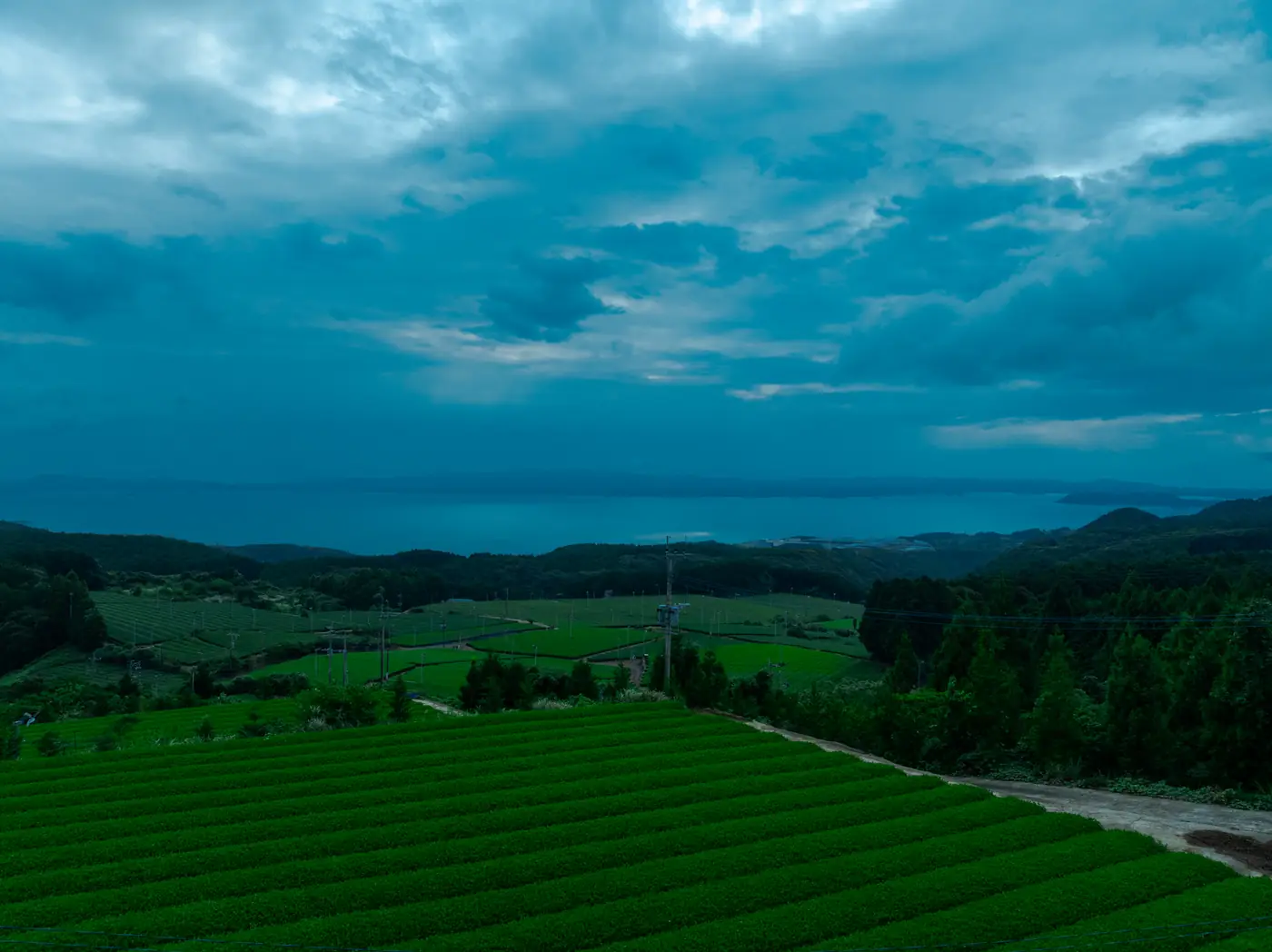
We then help connect you directly with those farmers, which gives your brand a real story to tell. And we can invite you to each of those farms on a farm tour.
See who grows our matcha on the farmers and regions page, and compare grades on our collection list.
Tell us your drinks per day, what you pour now, and who will import. We will pick lots that fit your menu and send samples by EMS. The sample cost comes off your first bulk order if you place it within a month of the samples arriving.
Shipping somewhere else? See our wholesale guides for the United States, Canada, the Philippines, Europe, the United Kingdom, Australia and New Zealand, the UAE, Kuwait, Oman and Bahrain, Saudi Arabia, Thailand, India, Mexico, Singapore, Malaysia, and Indonesia.
No. Hong Kong charges duty only on liquor, tobacco, certain hydrocarbon oils and methyl alcohol, and it has no VAT or GST. The importer pays a declaration charge of HK$0.20 per import declaration for food.
Not an import licence. The business that brings food into Hong Kong registers with FEHD as a food importer, which costs HK$195 for three years, and keeps records of what it imports. You can do this for your own cafe, or buy through a registered Hong Kong importer.
No, English is enough. The one Chinese element that is always required is "此日期前最佳" next to "best before" on the date. Bags sold only to cafes and restaurants do not need a nutrition table.
Not ours. Hong Kong’s measures cover seafood from ten prefectures and some fresh produce from five. Tea is not named, and none of our regions is covered except Saitama, where the ban applies only to seafood, sea salt and seaweed.
Japan’s Plant Protection Station lists processed green tea for Hong Kong as exportable without an inspection, and JETRO’s guide says no certificate is needed. If your broker asks for one anyway, we arrange it in Japan.
Japan Post charges 8,150 yen for a parcel of around 5 kg (zone 2). Because we mill to order, allow 2 to 4 weeks from order to delivery, shipping included, and 8 to 10 weeks around the first harvest.
5 kg per order in total, the same everywhere we ship, and you can mix grades. It can be split into sealed 1 kg bags.
Hiroshi Asami is the founder of Japanomars, which exports Japanese matcha to cafes in the United States, Canada, the Philippines and Europe. He sources through direct relationships with growers and processors across Japan, including the Uji area of Kyoto.
Sources