Matcha Wholesale in India: CEPA Duty, Import Licences and Shipping from Japan
By Hiroshi Asami · Japanomars · Updated November 8, 2026
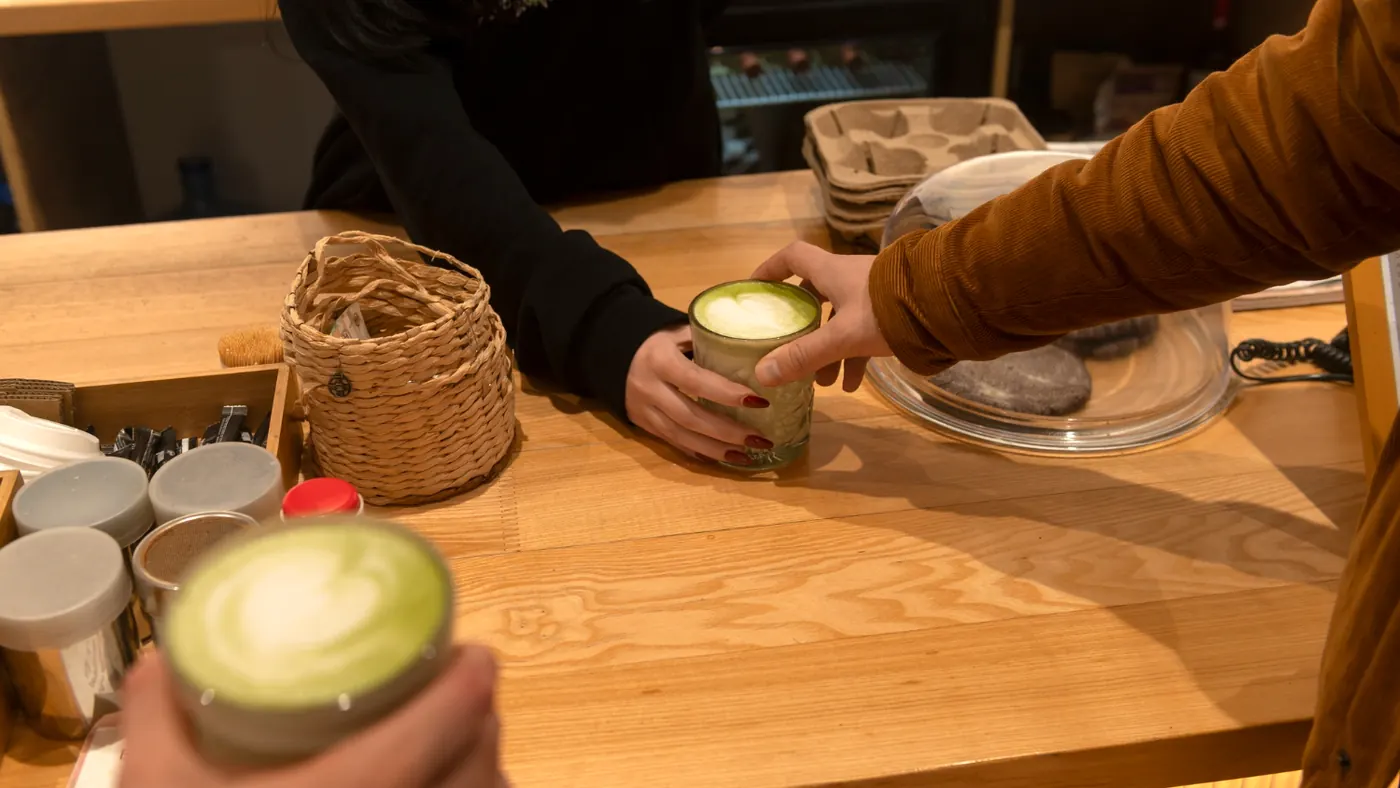
Iced matcha lattes at a cafe counter. This page is about the paperwork that gets the powder from Japan into India.
We supply Japanese matcha to cafes and importers from 5 kg per order, milled after you order in Japan. In India, the question we hear first is about duty, and the answer most buyers have is 100%. That is the standard rate, but it is not the whole story. Under the India-Japan Comprehensive Economic Partnership Agreement (CEPA), some pack sizes of Japanese green tea enter at 0%, and others do not. This page explains how pack size decides the duty, what an Indian importer needs before the first shipment, why EMS is not an option for tea, and how samples and orders travel from Japan.
Key takeaways
Pack size decides the duty: India’s standard duty on green tea is 100%. Under the India-Japan CEPA it has been 0% since April 1, 2021, but only for the tariff lines listed in the CEPA notification: packs up to 25 g, packs over 1 kg up to 3 kg, and packs over 3 kg. Packs over 25 g up to 1 kg (line 0902.10.20, where a standard 1 kg bag falls) are not on the list.
Proof of origin: the CEPA rate needs a certificate of origin issued in Japan by the Japan Chamber of Commerce and Industry. Ask for it when you order and we will apply for it.
Three registrations on the importer’s side: an Importer Exporter Code (IEC), an FSSAI import licence and a Tea Board licence. Since May 1, 2026, the Tea Board tests every imported lot of tea before it can be sold.
GST: 5% on imported tea, charged whatever the duty rate.
No EMS for tea: Japan Post lists tea as a prohibited item for EMS to India. Orders travel as air cargo, collected in Japan by your importer’s cargo agent.
No DDP for India: the licences are in the importer’s name, so the importer clears each shipment and pays the duty and GST. We prepare the shipping documents for it.
Uji included: matcha from the Uji area of Kyoto is available alongside our other regions.
Japanomars at a glance
Who we are: Japanomars is a Japan-based matcha wholesale supplier for independent cafes, run by founder Hiroshi Asami. We work with tea farmers in more than eight regions: Kyoto (Joyo and Wazuka, in the Uji area), Sayama, Ibi, Yame, Ureshino, Kirishima, Chiran and Miyazaki.
Who we supply: cafes and matcha brands in the United States, Canada, the Philippines and Europe.
How an Indian order works: 5 kg per order in total (grades can be mixed), milled after you order, packed in the bag size your importer’s customs broker asks for, and handed to your importer’s cargo agent in Japan. Your importer clears the shipment and pays the duty and GST in India (we do not ship DDP to India). 2 to 4 weeks from order to delivery, shipping included, not counting your importer’s licences or the Tea Board test.
Price: latte grade about $100 to $160 per kg, ceremonial about $160 to $210, quoted at 1 kg.
Samples: about US$20 per bag plus US$25 shipping. The sample cost comes off your first bulk order if you place it within a month of the samples arriving. For India, samples go to your agent or forwarder in Japan.
Traceability: every lot is tied to its region and its grower, so you can tell your customers who grew the matcha in their cup.
India’s customs tariff splits green tea in packs of 3 kg or less (heading 0902.10) by the weight of the pack, and green tea in larger packs (0902.20) by the type of pack. The standard duty on all of them is 100%.
The India-Japan CEPA came into force in August 2011. India’s notification for it, No. 69/2011-Customs, cut the duty on listed lines step by step every April, and from April 1, 2021 the listed tea lines have stood at 0%. The list does not include every tea line:
Green tea, by pack
Tariff line
Listed in the CEPA notification?
Duty on Japanese origin with proof of origin
Up to 25 g per pack
0902.10.10
Yes
0%
Over 25 g up to 1 kg per pack (a standard 1 kg bag)
0902.10.20
No
Standard rate, 100%
Over 1 kg up to 3 kg per pack
0902.10.30
Yes
0%
Over 3 kg up to 20 kg per pack, and bulk
0902.20.10 to 0902.20.40
Yes
0%
Other packs of 3 kg or less, and other forms over 3 kg
0902.10.90, 0902.20.90
No
Standard rate, 100%
GST on import
5%
From India’s CEPA notification No. 69/2011-Customs and its amendment No. 20/2021-Customs; later amendments and the HS 2022 changes have not altered the tea lines. The tariff line is decided by Indian customs on the bill of entry, so ask your customs broker to confirm the line and rate for your pack size on ICEGATE before the first order.
So the 100% figure is real, and so is the 0%. A box of 1 kg bags lands in the line that the agreement left out: a net weight of exactly 1 kg is "not exceeding 1 kg". With the 10% social welfare surcharge on the duty and 5% GST, the tax on those bags comes to about 120% of their customs value. A study for Japan’s Ministry of Agriculture, Forestry and Fisheries (2024) notes the same gap: products over 25 g up to 1 kg are outside the CEPA’s tariff elimination. The same matcha in 25 g sachets, or in bags just over 1 kg, falls in a line that the agreement covers. We pack to the bag size your broker asks for, from 25 g sachets to bags of up to 3 kg.
Two things sit behind the 0%:
Proof of origin from Japan. The certificate of origin for the CEPA is issued in Japan by the Japan Chamber of Commerce and Industry. Ask for it when you order and we will apply for it.
The importer’s own homework. Under India’s CAROTAR rules, the importer claiming the CEPA rate has to hold information on the origin of the goods and can be asked for it after clearance. We give you the producer and region details for each lot.
Who can import matcha into India
Three registrations sit with the importer, which is the business named on the bill of entry:
Importer Exporter Code (IEC) from the Directorate General of Foreign Trade, needed for any commercial import.
FSSAI import licence. Food imports are cleared through FSSAI’s Food Import Clearance System, and the importer applies there for the no-objection certificate on each shipment.
Tea Board licence. Importers of tea are licensed by the Tea Board of India under the Tea (Distribution and Export) Control Order, 2005.
A supplier in Japan cannot hold these for you. For a cafe, that leaves two setups:
Buy through an Indian importer that already brings in tea and holds all three. For most cafes this is the simplest route.
Make your own company the importer. Possible, and worth it at a steady monthly volume, but plan the three registrations before the first order.
The Tea Board test, from May 2026
In February 2026 the Tea Board issued Directive 01/2026: from May 1, 2026, every import consignment of tea is tested before it can be sold. In outline:
The importer applies on the Tea Council portal before the shipment arrives and receives a provisional import permit.
Within 24 hours of arrival, the Tea Board draws two 500 g samples.
An NABL-accredited laboratory tests them against the FSSAI standard, with results within 14 days.
A final clearance certificate follows if the lot passes. Until then the tea cannot be sold. A lot that fails is treated as tea waste.
The application fee is ₹11,120 plus GST per sample.
Two practical points for a cafe order. A kilogram of each lot goes to testing, so plan your order size with that in mind. And add up to two weeks for the test to your timing on top of shipping.
FSSAI: the green tea standard, the label and shelf life
FSSAI’s product standards set values for green tea, and those are the values the Tea Board’s laboratory tests against. Among them: total catechins between 9.0% and 19.0%, water extract of at least 32.0%, and total ash between 4.0% and 8.0%, on a dry basis. No colour may be added. If your importer wants lot data before ordering, talk to us first: what is available differs from producer to producer, so we check it for the lot you choose.
The label: imported food carries a label in English or Hindi with the product name, the importer’s name and address, the FSSAI logo and licence number, net quantity, dates and country of origin. FSSAI allows the importer’s details, logo and licence number to be added in the customs bonded warehouse with a single sticker that cannot be peeled off. Send us the importer’s name, address and FSSAI licence number before packing and we put them on the bag label.
Shelf life on arrival: FSSAI does not clear food with less than 60% of its shelf life left, or less than three months, whichever is less. Because we mill after you order, the matcha leaves Japan close to the start of its shelf life.
Residue limits: where India sets no limit for a pesticide on tea, a default of 0.01 mg/kg applies. Your importer may ask for a lab report on the lot.
Plant quarantine: a certificate from Japan
India’s Plant Quarantine Order of 2003 lists green tea (Camellia sinensis) in Schedule VII: it can be imported without an import permit, on the basis of a phytosanitary certificate from the exporting country and an inspection on arrival. On the Japanese side, the Plant Protection Station lists green tea bound for India as needing an export inspection in Japan. We arrange the export inspection and the phytosanitary certificate in Japan for every Indian shipment.
One thing you do not need to plan for: India has lifted the import restrictions it placed on Japanese food after 2011.
GST
India charges GST of 5% on imported tea. Unlike the duty, it does not change with pack size or with the CEPA, so budget for it whichever line your matcha falls in.
Why EMS is not an option, and how matcha travels instead
Most of our sample and small orders travel by EMS. For India they cannot: Japan Post lists tea as a prohibited item for EMS to India.
That is not a dead end. Because tea needs an FSSAI no-objection certificate, a Tea Board test and a plant inspection, it goes through formal customs clearance in India in any case, so it travels the way most food imports do:
Air cargo through your importer’s agent. We prepare the commercial invoice, packing list, certificate of origin and phytosanitary certificate, and your importer’s cargo agent collects from the pickup point in Japan and flies the lot to India (EXW). Your agent books the flight; we have the matcha packed and ready at pickup.
Because we mill after you order rather than ship from a warehouse, allow 2 to 4 weeks from order to delivery, shipping included, and 8 to 10 weeks around the first harvest in spring. The time your importer needs for its licences and the Tea Board test comes on top. Our dosing chart turns drinks per day into kilograms per month.
Samples
EMS is closed to tea, so for India we send samples to your agent or forwarder in Japan. Only domestic shipping inside Japan applies, and your agent brings the samples in with your other cargo. For any other route, ask us and we will look at it with your importer.
The sample cost comes off your first bulk order if you place it within a month of the samples arriving.
How an Indian order runs, step by step
Tell us your volume and your importer. Drinks per day or kilograms per month, what you pour now, and which business will import: your own company or an Indian importer.
Samples. To your agent or forwarder in Japan.
Pack size and tariff line. Your importer’s broker confirms the tariff line and CEPA rate for the pack size on ICEGATE. We pack to it.
Documents. We arrange the phytosanitary certificate, and on request the CEPA certificate of origin. Your importer files the Tea Council application for the provisional permit.
Milling and packing. We mill after the order, pack in sealed bags with the importer’s details on the label, and hand the lot to your importer’s cargo agent in Japan.
Clearance and testing in India. Your importer clears the shipment, pays the duty and GST, and receives the final clearance certificate after the Tea Board test.
What you get from us
What you get from us is not one farm but access to many. We are connected with farms all over Japan, including the Uji area of Kyoto, and we choose each one ourselves: we visit, we look with our own eyes, and we taste the samples before deciding which farms are the right fit for cafe owners.
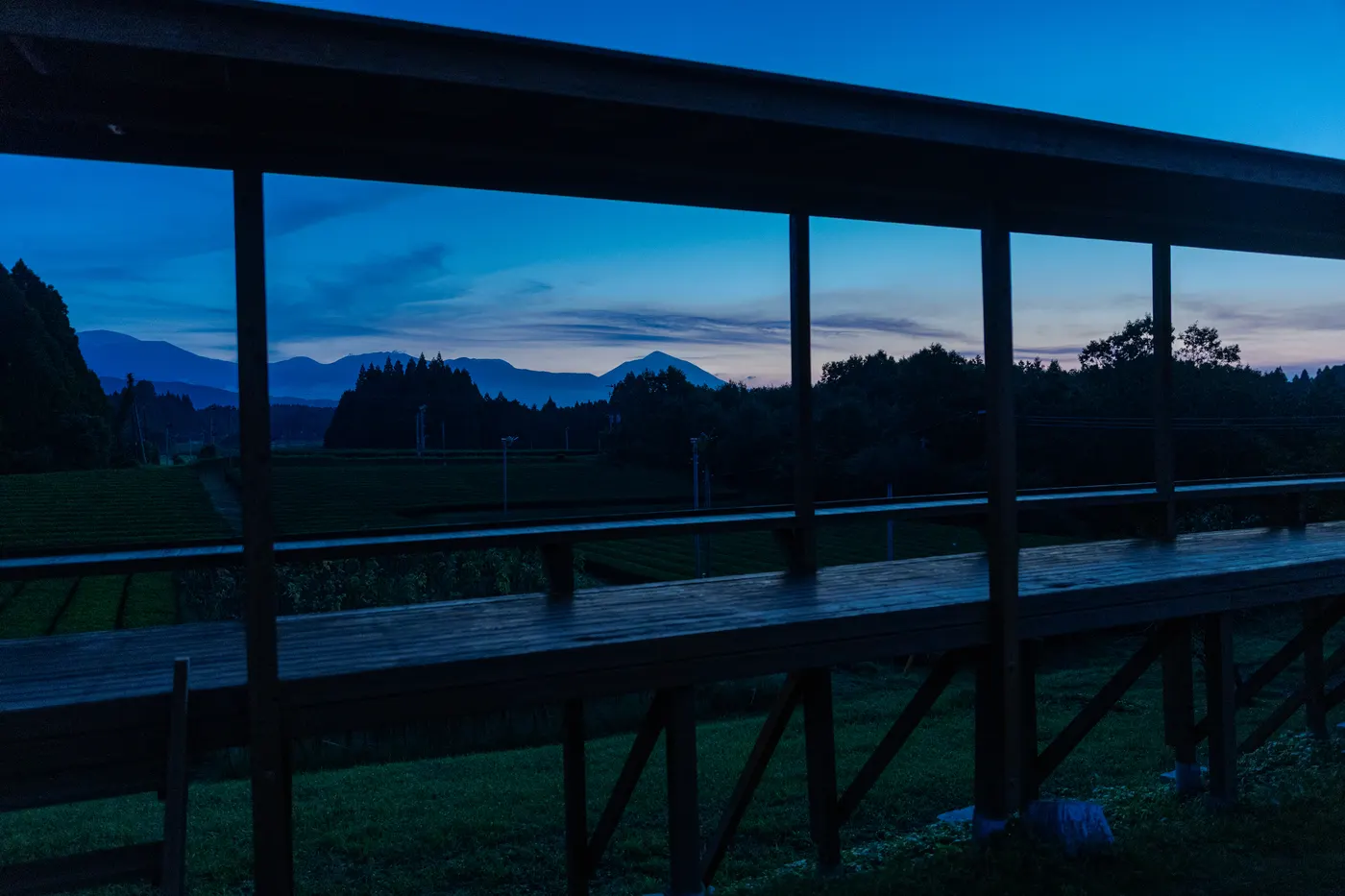
Tea fields at dawn in Japan, seen from a tea terrace on one of our farm visits.
We then help connect you directly with those farmers, which gives your brand a real story to tell. And we can invite you to each of those farms on a farm tour.
Tell us your drinks per day, what you pour now, and who will import. We will pick lots that fit your menu and work out the pack size with your broker. The sample cost comes off your first bulk order if you place it within a month of the samples arriving.
Is the import duty on Japanese matcha in India really 100%?
100% is India’s standard rate on green tea. Under the India-Japan CEPA, Japanese green tea has entered at 0% since April 1, 2021 in packs up to 25 g, packs over 1 kg up to 3 kg, and packs over 3 kg, with a certificate of origin from Japan. Packs over 25 g up to 1 kg are not in the CEPA list. GST of 5% applies either way. Ask your customs broker to confirm the rate for your pack size before ordering.
Why does a 1 kg bag matter?
India’s tariff puts green tea packs over 25 g up to 1 kg in line 0902.10.20, and that line is not in the India-Japan CEPA notification. Packs over 1 kg up to 3 kg (0902.10.30) are. We pack to the bag size your broker confirms.
What does an importer need for matcha in India?
An Importer Exporter Code, an FSSAI import licence and a Tea Board licence. Since May 1, 2026, every imported lot of tea is also tested by the Tea Board before it can be sold, with results within 14 days.
Can you send matcha to India by EMS?
No. Japan Post lists tea as a prohibited item for EMS to India. Orders travel as air cargo through your importer’s agent.
Do you ship DDP to India?
No. The import licences are held by the importer, so the importer clears the shipment and pays the duty and GST in India. We prepare the commercial invoice and packing list, apply for the CEPA certificate of origin on request, and arrange the phytosanitary certificate.
What is the minimum order?
5 kg per order in total, the same everywhere we ship, and you can mix grades.
About the author & sources
Hiroshi Asami is the founder of Japanomars, which exports Japanese matcha to cafes in the United States, Canada, the Philippines and Europe. He sources through direct relationships with growers and processors across Japan, including the Uji area of Kyoto.
Sources
Government of India, Ministry of Finance (CBIC), Notification No. 69/2011-Customs (India-Japan CEPA) and amendment No. 20/2021-Customs; Indian Customs Tariff, heading 0902.
Japan Ministry of Agriculture, Forestry and Fisheries, commissioned export market study on India (Nomura Research Institute, March 2024).
Japan Chamber of Commerce and Industry, certificates of origin for EPAs.
Tea Board of India, Directive 01/2026 on testing of imported tea (February 2026).
FSSAI, Food Products Standards, Chapter 2.10 (green tea), version of May 2025; Food Import Clearance System; Food Safety and Standards (Import) Regulations.
Plant Quarantine (Regulation of Import into India) Order, 2003, Schedule VII. Japan Plant Protection Station, export conditions for India.
Japan Ministry of Agriculture, Forestry and Fisheries: summary of import restrictions on Japanese food (November 21, 2025).
JETRO, tea import regulations and procedures for India (survey of August 2024).
Japan Post, country conditions and prohibited items for India, accessed November 8, 2026.
Japanomars terms (minimum, price bands, samples, lead time) as published on our collection list.