%E5%A4%A7%E3%81%8D%E3%81%84.png)
Wholesale · Canada · 2026

We supply Japanese matcha to cafes in Canada, from 5 kg per item, milled to order in Japan. In Canada the first question is not price. It is whether your business can import food at all, because the Canadian Food Inspection Agency (CFIA) asks the importer to hold a Safe Food for Canadians licence. If you do not have one, we ship through a licensed import agent in Canada. This page starts there, then covers duty, tax, shipping time and labels.
Key takeaways
In this guide
Under the Safe Food for Canadians Regulations, the business that imports food into Canada needs a licence from CFIA. Since February 12, 2024, the Canada Border Services Agency checks the licence number on each import declaration, and a food shipment without a valid one can be held or refused. The licence cannot be obtained at the border, so whoever acts as the importer has to hold it before the parcel leaves Japan.
One of the cafes we supply in Alberta went through this in 2026. After the CFIA interview in June, the licence was confirmed in September, so its next orders can go in under its own licence.
You do not have to wait for a licence to start. If your cafe has not applied, or is still waiting, we ship through an import agent in Canada that holds an SFC licence, and the matcha reaches you the same way. Samples go the same route, so you can taste before you decide whether a licence of your own is worth it.
The numbers are short. Canada charges no duty on green tea from any country, so the costs on top of the matcha are the parcel and the sales tax at import. We ship DDP, so that tax is settled before delivery and nothing is collected at your door.
| What you pay | Amount | Source |
|---|---|---|
| Latte grade matcha | About $100 to $160 per kg, quoted at 1 kg | Our collection list |
| Ceremonial grade matcha | About $160 to $210 per kg, quoted at 1 kg | Our collection list |
| EMS, parcel of around 5 kg | 13,000 yen | Japan Post published EMS rate (zone 3) |
| Sample shipping | US$25 flat | Our terms |
| Customs duty, tariff items 0902.10 and 0902.20 | Free (MFN, CPTPP and Japan rates alike) | CBSA Customs Tariff 2026, chapter 9 |
| Sales tax at import | 5% GST, or HST in participating provinces, settled by us (DDP) | CBSA |
| Collected at your door | Nothing. With DDP there is no tax bill and no CA$9.95 Canada Post handling fee on delivery | Our terms; Canada Post |
Yen amounts are converted at the exchange rate on the day of the invoice. Figures as of September 2026.
Two details worth knowing. Because the most favoured nation rate is already zero, you do not need a CPTPP certificate of origin to get duty-free entry. And Canada’s tariff splits certified organic and non-organic green tea at the ten-digit level, so tell your broker which one you are importing, if you ever import on your own licence.
Japan Post lists EMS from Tokyo at 6 days to Vancouver and 6 days to Montreal, not counting the day of posting. Cities further from those gateways take longer: a June 2026 shipment of ours to Alberta arrived 11 days after it left Japan.
The shipping time is the shorter part. Because we mill after you order rather than ship from a warehouse, allow 2 to 4 weeks from order to delivery, shipping included, and 8 to 10 weeks around the first harvest in spring. For a cafe that goes through 1 to 2 kg a month, ordering when the second-last bag is opened keeps you covered. Our dosing chart turns drinks per day into kilograms per month.
Matcha you use behind the counter reaches you in shipping cartons addressed to a business, and CFIA generally exempts those from bilingual labelling as long as the contents are not resold at retail and the carton carries the required shipping information.
Retail is different. If you plan to sell tins or bags to customers, the mandatory information on each consumer package has to appear in both English and French. Tell us before we pack, so the retail portion can be prepared separately from your cafe stock.
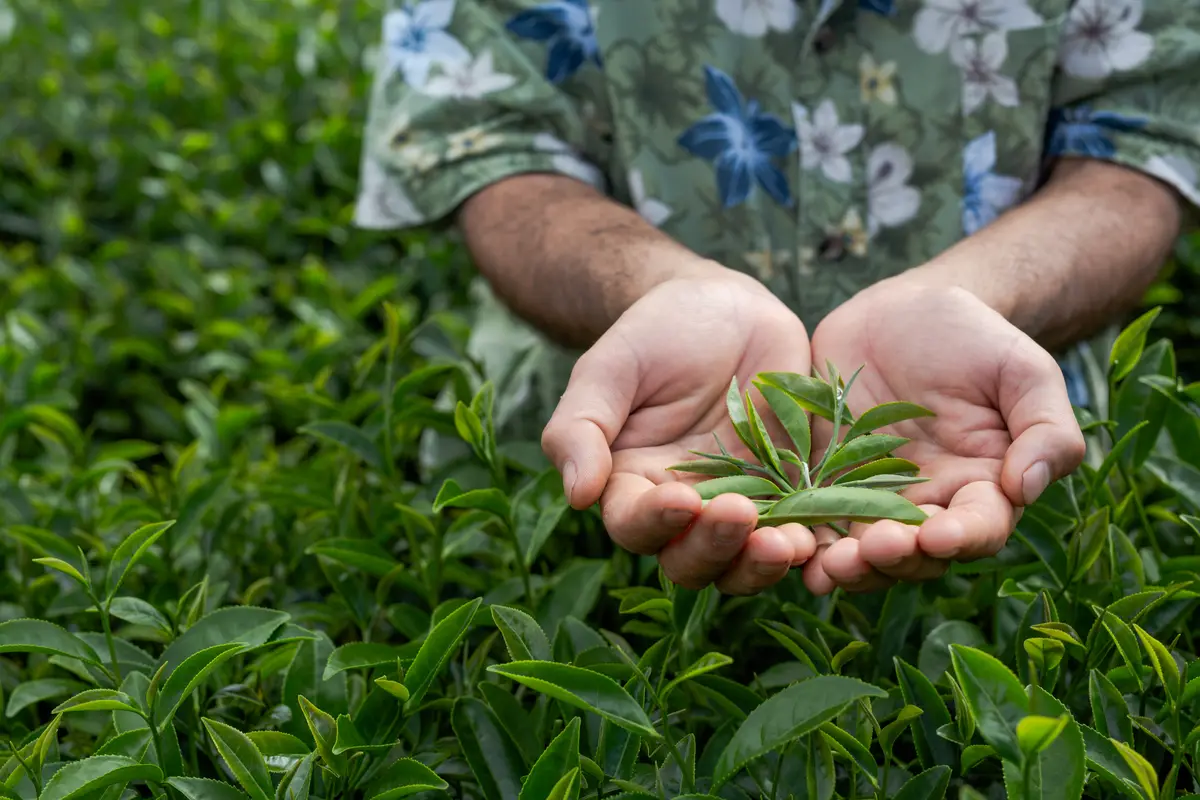
What you get from us is not one farm but access to many. We are connected with farms all over Japan, including the Uji area of Kyoto, and we choose each one ourselves: we visit, we look with our own eyes, and we taste the samples before deciding which farms are the right fit for cafe owners.
We then help connect you directly with those farmers, which gives your brand a real story to tell. And we can invite you to each of those farms on a farm tour.
See who grows our matcha on the farmers and regions page, and compare grades on our collection list.
Tell us your drinks per day and what you pour now. We will pick lots that fit your menu and send samples. The sample cost comes off your first bulk order if you place it within a month of the samples arriving.
Shipping somewhere else? See our wholesale guides for the United States, the Philippines, Europe, the United Kingdom and Australia.
In most cases, yes. CFIA requires a Safe Food for Canadians licence to import food, and matcha bought by a cafe does not fall under the exemptions, which cover things like unprocessed tea leaves labelled for further preparation and food for personal use. If your cafe does not have a licence, we ship through a Canadian import agent that holds one.
No. CFIA licenses non-resident importers only from countries it recognizes as having an equivalent food safety system, and for foods like tea that is currently only the United States. But you do not need your own licence to order from us: without one, we ship through a Canadian import agent that holds an SFC licence.
No. Green tea under tariff items 0902.10 and 0902.20 is duty free under the Most Favoured Nation rate, so origin paperwork for CPTPP is not needed to reach zero. GST, or HST in participating provinces, applies on import. We ship DDP, so it is settled on our side.
Japan Post lists 6 days by EMS from Tokyo to Vancouver or Montreal. A June 2026 shipment of ours to Alberta arrived 11 days after it left. Because we mill to order, allow 2 to 4 weeks from order to delivery, shipping included, and 8 to 10 weeks around the first harvest.
5 kg per item, the same as everywhere we ship. It can be split into sealed 1 kg bags.
Hiroshi Asami is the founder of Japanomars, which exports Japanese matcha to cafes in Canada, the United States, the Philippines and Europe, sourcing through direct relationships with growers and processors across Japan, including the Uji area of Kyoto.
Sources
%E7%99%BD_%E5%A4%A7%E3%81%8D%E3%81%84.png)