
Market · Pricing · 2026
Short answer: Matcha is expensive in 2026 because the leaf it is made from costs two to three times what it did two years ago, export demand roughly doubled in a single year, and only a small, shrinking part of Japan's tea industry can make that leaf at all. Kagoshima's first-flush tencha averaged ¥13,910 per kilogram over the 2026 season against ¥6,013 in 2025, Japan's green tea exports reached ¥72.1 billion in 2025 against ¥36.4 billion the year before, and tencha still made up only 8.6% of Japan's crude tea output.
Three reasons, with numbers
Key takeaways
In this guide
Matcha is ground tencha, and tencha is where the 2026 price story starts. Kagoshima, Japan's largest tencha producer, averaged ¥13,910 per kilogram for first-flush tencha across the season, according to JA Kagoshima Keizairen. In 2025 the same figure was ¥6,013. That is about 2.3 times in one year.
Kyoto tells the same story over a longer window. The Kyoto Prefecture Chamber of Tea and JA Zen-Noh Kyoto reported season averages as of July 31, 2026:
| Kyoto first-flush tencha (yen/kg) | 2022 | 2023 | 2024 | 2025 | 2026 |
|---|---|---|---|---|---|
| Scissor-picked tencha | 4,121 | 4,738 | 5,402 | 14,144 | 17,250 |
| Hand-picked Uji tencha | 13,614 | 15,842 | 20,024 | 47,096 | 52,275 |
Source: Kyoto Prefecture Chamber of Tea and JA Zen-Noh Kyoto tea market division, Kyoto first-flush report, data as of July 31, 2026.
The scissor-picked line is the one closest to what goes into most cafe matcha. It moved from ¥5,402 to ¥17,250 in two years, a little over three times. For context on how these market numbers connect to a supplier quote, our matcha price index and guide to Japan's 2026 tencha auctions track them in more detail.
One labelling note, because published numbers vary. Kagoshima's prefectural tencha auction on May 14, 2026 averaged ¥19,095 per kilogram. That is a single auction of selected lots, not the season average, which is why it is higher than ¥13,910. Both are real. They measure different things.
Japan's green tea exports reached a record ¥72.1 billion in 2025, almost double the ¥36.4 billion of 2024, according to Ministry of Finance trade statistics compiled by Japan's Ministry of Agriculture, Forestry and Fisheries (MAFF). Export volume rose from 8,798 tonnes to 12,612 tonnes, about 43%. MAFF attributes the growth to rising demand for powdered tea, including matcha.
Value rose faster than volume, which tells you prices per kilogram went up as well. MAFF's own export unit price series moved from ¥4,135 per kilogram in 2024 to ¥5,716 in 2025.
Powdered tea is the core of it. In 2025:
The pace has not stopped. MAFF reports ¥67.4 billion of green tea exports for January to August 2026, ahead of the same period a year earlier. At the International Matcha Congress in Tokyo in November 2026, tea companies and cafe chains on stage described matcha as becoming a staple, and our IMC2026 report covers what was said.
A caution on reading these numbers. Japan's customs category for powdered green tea includes matcha and also other powdered tea ground from non-tencha leaf. So it is a good signal of direction, but it is not a pure matcha number. Our matcha market and supply outlook goes further into the demand side.
Because tencha is a narrow product made by a shrinking industry. Under the Japan Tea Central Council's labelling standard, tencha comes from tea grown under shade for about two to three weeks before picking, then steamed and dried without rolling. Matcha is tencha ground into a fine powder. Most of Japan's tea is sencha, which is rolled, so the fields, the shading work and the drying equipment for tencha are a specialised slice of the industry.
The numbers from MAFF's October 2026 report show how small that slice is:
Meanwhile the people who grow tea are fewer and older. Japan had 37,617 tea farm businesses in 2005 and 7,726 in 2025, according to MAFF's census figures. The share of core tea workers aged 65 or over rose from 55% in 2010 to 63% in 2025. Shading adds labour at exactly the busiest point of the year, during the first-flush harvest.
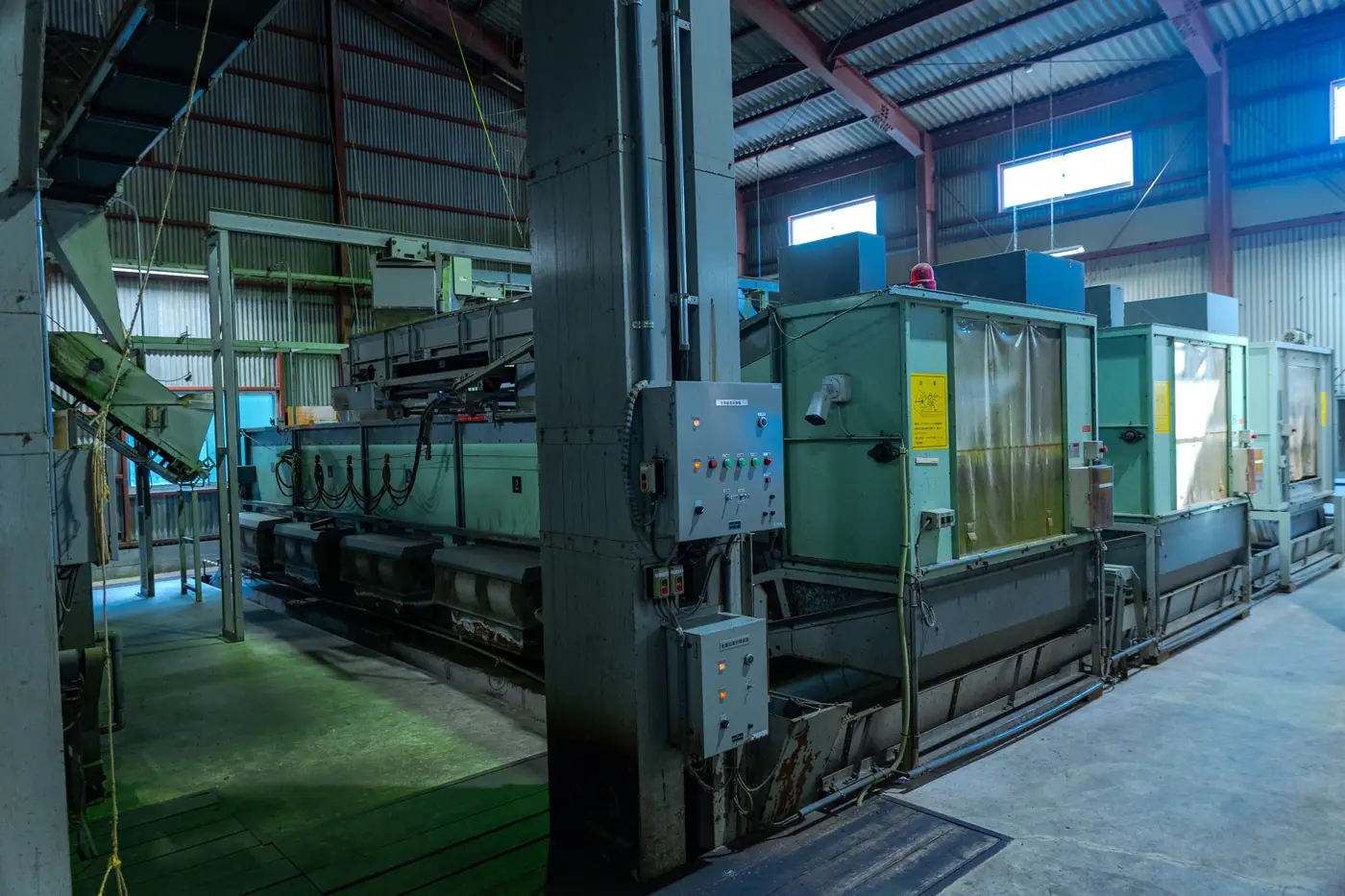
So when demand jumps, new supply arrives slowly. A grower has to decide to shade, the leaf has to go through tencha drying, and the crop comes once a year in spring for first flush. Our guide to sourcing through the matcha shortage covers what this means for lead times.
From the sourcing floor
With prices this high, I hear it from cafes all the time: they want to buy as cheaply as they can. Price matters, of course. But there is also steady demand to know who made the matcha, and I run Japanomars to meet it, with transparency and trust first. I can see that some cafes value that.
In the cup, the 2026 rise is measured in cents. Here is the arithmetic, using the same method as our cost per drink guide: convert the leaf price change to dollars, divide by a milling yield of about 0.885, then multiply by your dose. We use ¥162 to the dollar, the rate used in our matcha price index.
| Price move (tencha, yen/kg) | Change per kg of matcha | 2 g drink | 3 g drink |
|---|---|---|---|
| Kagoshima season average, 2025 to 2026 (+¥7,897) | about +$55 | +11 cents | +17 cents |
| Kyoto scissor-picked, 2025 to 2026 (+¥3,106) | about +$22 | +4 cents | +7 cents |
| Kyoto scissor-picked, 2024 to 2026 (+¥11,848) | about +$83 | +17 cents | +25 cents |
Arithmetic on the stated inputs, not a survey of supplier prices. Japanomars, November 2026.
At the wholesale level, our public ranges are about $100 to $160 per kilogram for latte grade and about $160 to $210 per kilogram for ceremonial. At a 2 gram dose that is 20 to 32 cents of matcha in a latte, and 32 to 42 cents for ceremonial.
Two caveats. Your supplier's price will not move by exactly the leaf number, because milling, packing, freight and margin sit on top and change on their own schedules. And a quote that rose more than the leaf did is worth a question. If you want to see how quotes are built, our wholesale pricing and MOQ guide walks through it.
We cannot tell you, and you should be wary of anyone who says they can. What is on the record is mixed.
Signs the pressure is easing:
Signs it is not:
The next real data point is the first-flush tencha auctions in Kagoshima and Uji, expected in mid May 2027. Until then, treat any forecast as a guess.
Three reasons. The tencha leaf matcha is made from rose sharply (Kagoshima's first-flush season average was ¥13,910/kg against ¥6,013 in 2025). Japan's green tea exports roughly doubled to ¥72.1 billion in 2025, led by powdered tea. And tencha needs shaded fields and specialised drying, made by a shrinking number of growers, so supply responds slowly.
There was real tightness in 2025 and early 2026. Kyoto's tea trade said in October 2026 that the shortages of previous years were avoided this year, though most ceremonial orders are still taken by reservation. Availability varies by grade and region.
Roughly 11 cents at 2 grams and 17 cents at 3 grams, based on Kagoshima's season average move and a 0.885 milling yield at ¥162 to the dollar. Your supplier's change may differ.
No one knows yet. The pace of increase slowed in Kyoto in 2026, and Kagoshima reports more tencha capacity coming. But export demand was still rising through August 2026. The May 2027 tencha auctions will be the first hard evidence.
Second-flush tencha is picked in summer and is generally lighter in sweetness and aroma than first flush. In 2026 Kagoshima's July tencha auction averaged ¥8,738/kg, about 54% below its May first-flush auction, which is why second flush is common in latte and culinary grades.
Not automatically. Japan's tea labelling rules do not define grades such as "ceremonial" or "premium". Judge by origin, harvest, and how it tastes in the drink you actually sell.
Tell us the drinks you sell, your dose and your monthly volume, and we will come back with current wholesale pricing and the cost per drink on your own build.
Request samples & pricingHiroshi Asami is the founder of Japanomars, which exports Japanese matcha to cafes in the United States, Canada, the Philippines and Europe. He sources through direct relationships with growers and processors in Kyoto, Saitama, Gifu, Fukuoka, Saga, Kagoshima and Miyazaki.

Sources