%E5%A4%A7%E3%81%8D%E3%81%84.png)
Quality & Authenticity · 2026
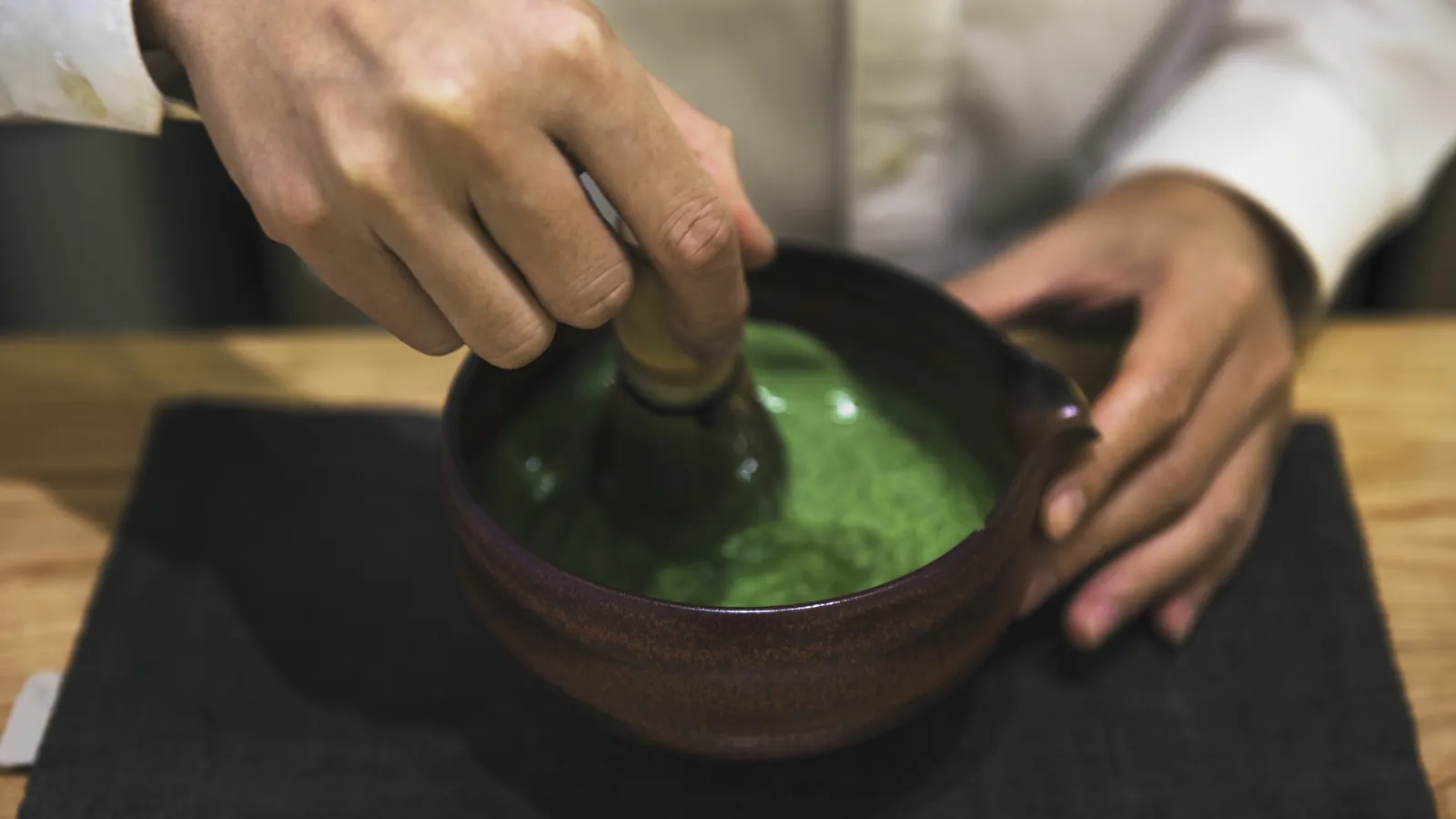
Real matcha has an internationally agreed definition, and most "matcha" on the wholesale market does not meet it. Under ISO/TR 21380:2022, matcha is green tea made only from shade-grown tender leaves of Camellia sinensis var. sinensis, steamed, dried without rolling into tencha, then stone-ground into fine powder. Flavoured, blended, decaffeinated, and instant "matcha" are all excluded by name. This guide gives cafe buyers the official test so you can tell real matcha from powdered green tea before it hits your menu.
Key takeaways
In this guide
Matcha is tea made solely and exclusively from harvested tender leaves, buds, and shoots of Camellia sinensis var. sinensis, grown under shade, then processed by steaming, drying without rolling, and grinding into a fine powder. That is the definition in ISO/TR 21380:2022, the international technical report on matcha. Four things must all be true: the plant, the shading, the tencha processing, and the stone grinding.
Miss any one of them and, by this standard, the product is not matcha. Powdered sencha is not matcha because the leaf was rolled during processing. A green powder from an unshaded field is not matcha because it never developed the chemistry shading creates. This is the buyer's advantage: matcha is defined by how it is made, not by what a bag claims.
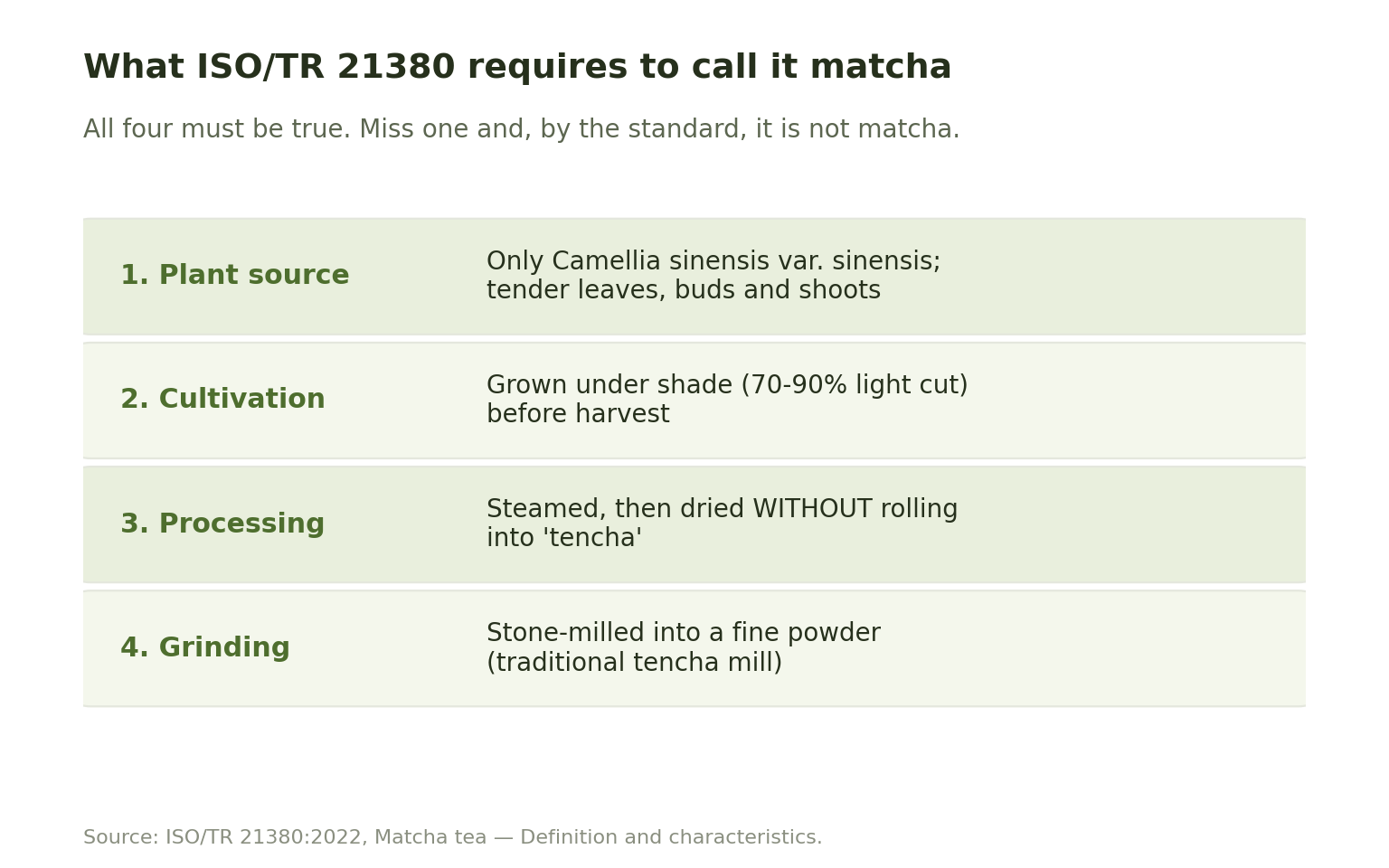
The definition exists because, until 2022, the global market had no agreed rule for what "matcha" meant. Japan, through its National Agriculture and Food Research Organization (NARO), proposed the technical report, and ISO published ISO/TR 21380 on April 11, 2022. Its stated goal is to document matcha's distinctive cultivation and manufacture and to protect the reputation of authentic matcha in international trade.
That gap is exactly why cafes get burned. NARO's own announcement notes that before the report "there is no consensus or rules in the international market," which let anyone label any green powder "matcha." The report is a technical report (a TR), not yet a full certification standard, so no one polices it at customs. It gives you the criteria; enforcing them at the point of purchase is the buyer's job. NARO has said it plans to build on this with a further standard defining the chemical-component ranges tied to quality.
Japan has since added a national layer on top of the ISO report: in 2026 it registered "Japanese Tea" as a Geographical Indication, an origin right that complements the international definition and gives buyers a second way to confirm a powder is genuinely Japanese.
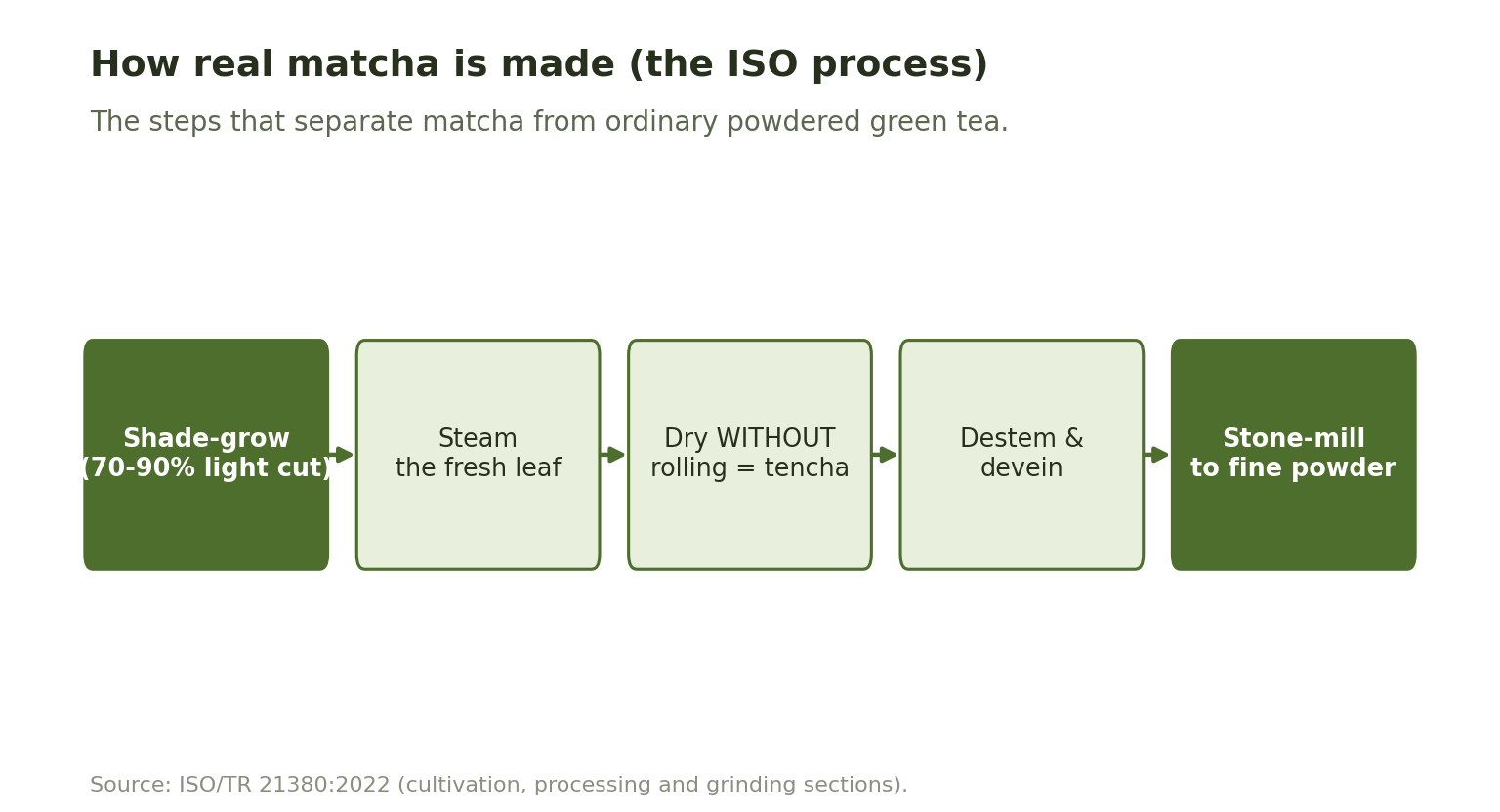
Three processing steps separate matcha from ordinary powdered green tea, and all three are in the ISO report. First, shade growing: the plants are covered for weeks before harvest, cutting 70-90% of sunlight, which raises chlorophyll and L-theanine (umami) and lowers bitterness. Second, drying without rolling: the steamed leaf is dried flat in a "tencha-ki" dryer to become tencha. Third, stone-milling the tencha into powder.
Ordinary powdered green tea (usually ground sencha) skips shading and is made from rolled leaf, then simply pulverized, often in a fast blade mill that heats and dulls it. It can look green, but it lacks the shade-grown chemistry and the fine, cool stone-milled particle. The ISO report describes shading in real detail: a modern two-step synthetic screen giving 70-80% shielding, traditional rice-straw screens, or direct-cover screens cutting about 85% of light. If you want the deeper quality mechanics, our guide on what makes matcha good walks through each trait.
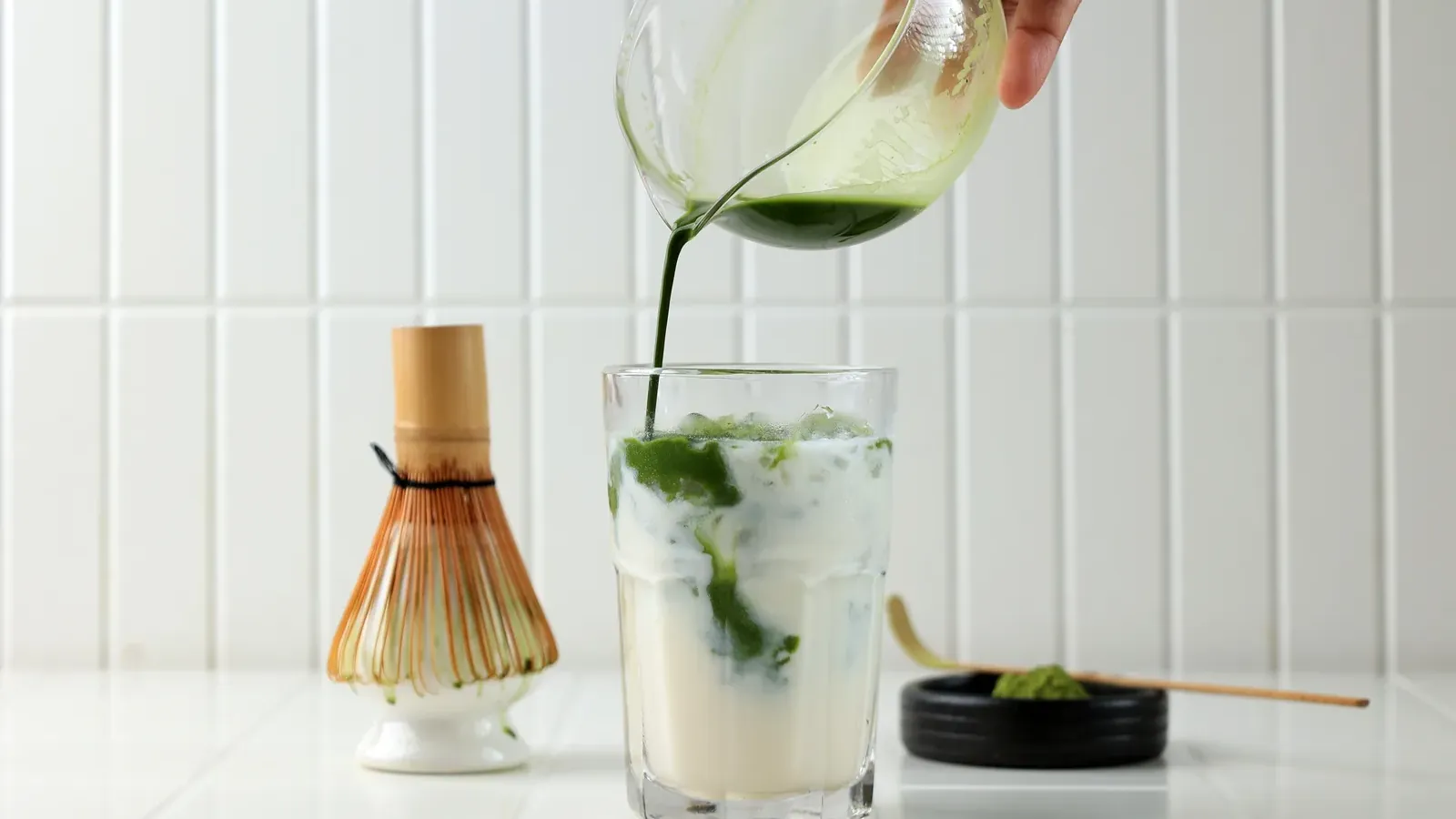
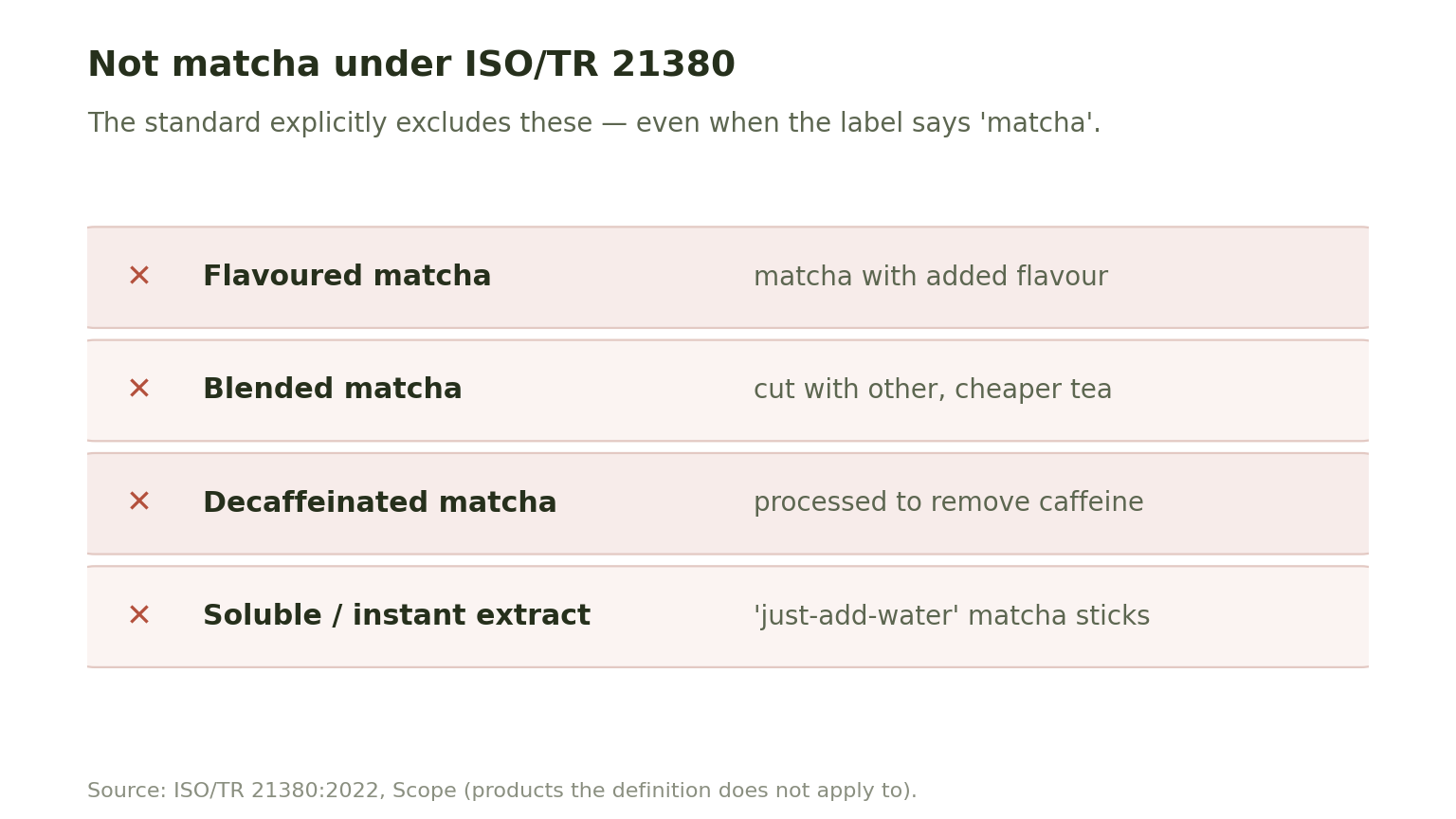
The ISO report is explicit that it does not apply to flavoured matcha, blended matcha, decaffeinated matcha, or soluble/instant matcha extracts. This is the clause cafe buyers should photograph. A sweetened "matcha latte powder," a matcha blended with cheaper green tea, or an instant matcha stick is, by the international definition, not matcha, even when the label says it is.
This matters to your P&L, not just your principles. Blended and instant products are cheaper because they are cut with lower-cost tea or bulked with sugar and maltodextrin, and they behave differently on the bar: weaker color, flatter flavor, and inconsistent dosing. If your menu says "matcha," a product the ISO excludes exposes you to the same authenticity gap that is fueling today's fake-matcha problem, cheaper green tea from China and India, sometimes dyed green and labeled "product of Japan." For the origin side of that, see Japanese vs Chinese matcha.
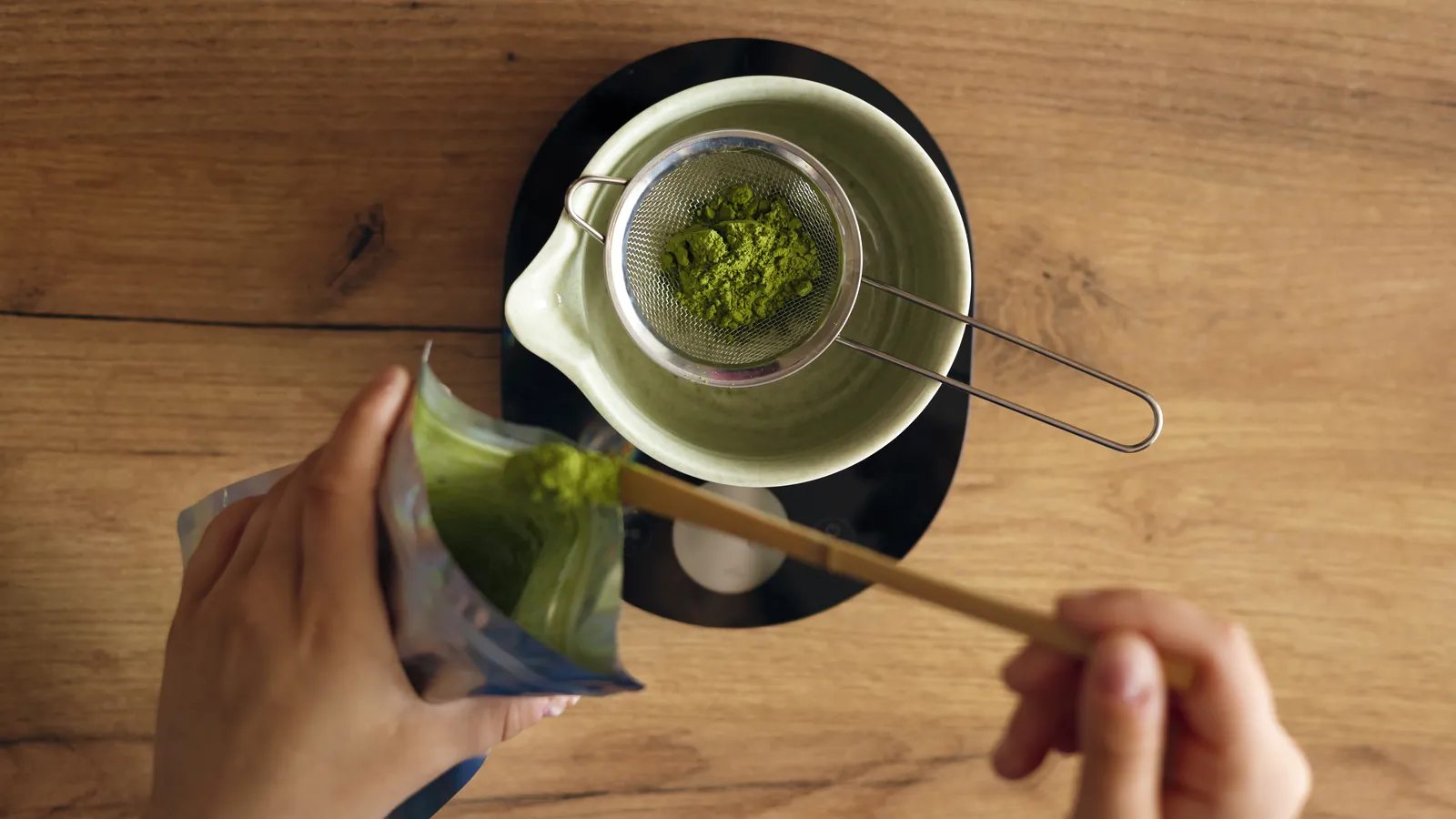
The ISO report lists the sensory markers of real matcha, and you can run the test in a few minutes with 2 grams of powder and 100 ml of hot water. Look for four things: a bright, vivid green color (not dull, yellow, or khaki); a distinct umami taste with a smooth mouthfeel; a fresh, greenish aroma; and a fine particle size that whisks up to a soft, even foam. Dull color, bitterness, grittiness, and thin or no foam point away from real matcha.
This is a screen, not a lab. The ISO report notes that formal quality grading is still done by trained tasters comparing color, aroma, umami, and particle fineness. But the four markers catch most impostors on the bar. Run every sample the same way, side by side, and keep notes. For a repeatable version of this, we're building out a full bench-test protocol.
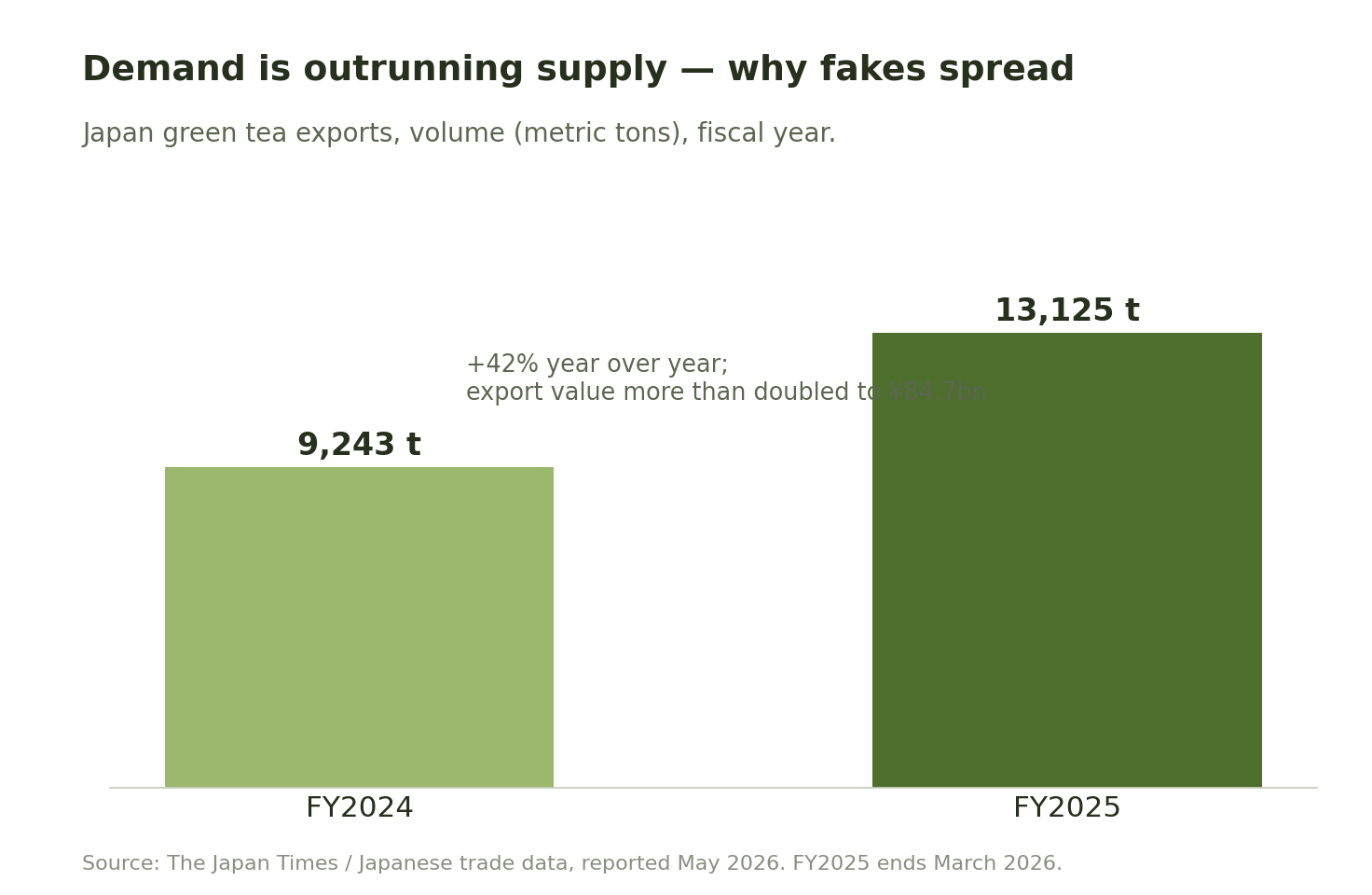
The reason fakes are everywhere is simple math: demand has outrun supply. Japan's green tea exports hit 13,125 tons in fiscal 2025, up 42% year over year, with value more than doubling to 84.7 billion yen, and matcha now makes up roughly 87% of Japanese tea exports by volume of powder, according to figures reported by The Japan Times from Japanese trade data. Meanwhile foreign green tea imports into Japan rose 82% to 5,801 tons. When real tencha is scarce and expensive, cheaper green powder gets relabeled to fill the gap, which is precisely what the ISO definition helps you filter out.
"Ceremonial grade" appears nowhere in ISO/TR 21380 because it is a marketing term, not a regulated standard. The ISO report defines what matcha is and how quality is assessed by process and sensory traits, it does not certify tiers like "ceremonial" or "culinary." Any supplier can print "ceremonial grade" on any green powder, so treat the phrase as a claim to verify, not a guarantee.
That doesn't make the labels useless; it makes them yours to check. Judge on the ISO criteria and sensory markers, plus harvest timing (first-flush ichibancha is finest) and region. We break down what the tiers actually signal in matcha grades explained and what a genuine top tier looks like in ceremonial grade matcha for cafes. When you move from tasting samples to signing supply, our guide to finding and vetting a matcha supplier covers the questions that expose whether a seller's product meets the ISO process at all.
Yes. ISO/TR 21380:2022, a technical report developed by Japan's NARO and published by the International Organization for Standardization in April 2022, gives an internationally agreed definition of matcha based on plant source, shade cultivation, tencha processing, and stone grinding. It is the reference the tea trade uses, though it is a technical report rather than an enforced certification.
Matcha is made from shade-grown leaf that is steamed, dried without rolling into tencha, and stone-milled. Powdered green tea is usually ground sencha: unshaded, rolled leaf that is simply pulverized. The result is that matcha has the vivid color, umami, and fine texture that shading and stone-milling create, while powdered green tea is duller and more bitter.
No. "Ceremonial grade" is an unregulated marketing term and does not appear in the ISO definition. It can signal a higher tier, but any seller can use it on any product. Judge quality by the ISO process criteria and sensory markers, bright green color, umami, fresh aroma, fine particle, and good foam, not by the grade label.
Not under the international definition. ISO/TR 21380 explicitly excludes flavoured matcha, blended matcha, decaffeinated matcha, and soluble or instant matcha extracts. These products can be labeled "matcha" on the shelf, but by the ISO standard they are something else, usually cheaper tea, or matcha cut with other ingredients.
Whisk 2 grams into 100 ml of hot water and check four things from the ISO sensory criteria: a bright vivid green color, a smooth umami taste, a fresh greenish aroma, and a fine powder that foams evenly. Dull or yellow color, bitterness, grittiness, or weak foam are warning signs. Run samples side by side under the same method.
Global demand has outrun Japan's tencha supply. Japan's green tea exports rose 42% in fiscal 2025 and prices doubled, so cheaper green tea from China and India is being relabeled as Japanese matcha, sometimes dyed green. Because "matcha" and "ceremonial" are not legally protected terms, the ISO definition is the clearest tool buyers have to filter authentic product.
Real matcha is defined by process, and ISO/TR 21380 spells that process out: shade-grown Camellia sinensis var. sinensis, dried without rolling into tencha, stone-milled, and never flavoured, blended, decaffeinated, or instant. Hold every sample to those criteria and the four sensory markers, and most of the fake matcha flooding the market screens itself out before it reaches your menu.
We export single-origin matcha straight from the farms in Kagoshima, Yame, Uji, and beyond that make tencha the way the ISO report describes, and we'll send samples with the process and origin spelled out so you can run the test yourself.
Request samples & pricingHiroshi Asami is the founder of Japanomars, an exporter of premium single-origin Japanese matcha to US specialty cafes, working directly with tea farms in Sayama, Ibi, Ureshino, Yame, Kirishima, and Chiran.
Sources: ISO/TR 21380:2022, Matcha tea, Definition and characteristics (ISO, 2022); NARO/NIFTS, "A technical report on the definition of matcha is published by ISO" (2022); The Japan Times, "Japan's green tea exports surged in fiscal 2025 amid matcha boom" (May 1, 2026); NARO press materials on ISO/TR 21380.
%E7%99%BD_%E5%A4%A7%E3%81%8D%E3%81%84.png)