%E5%A4%A7%E3%81%8D%E3%81%84.png)
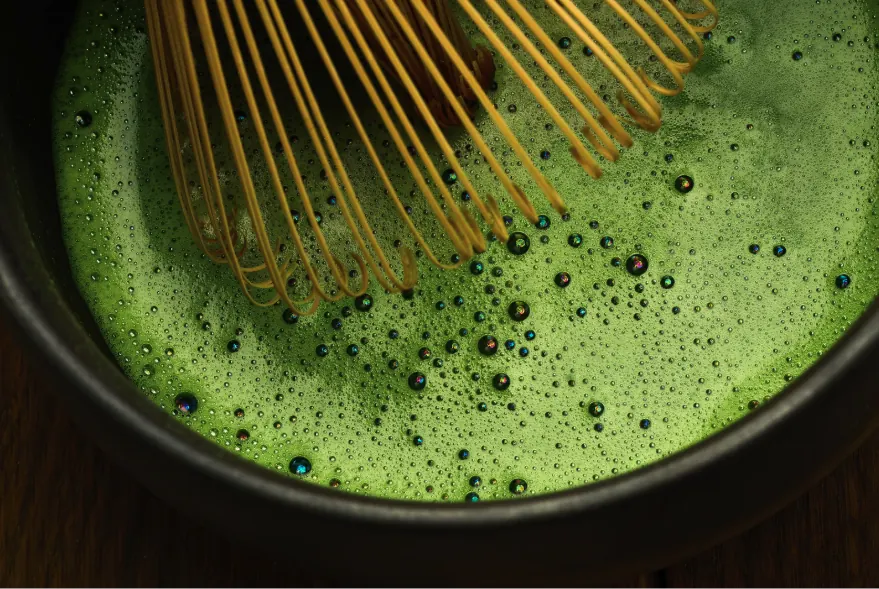
Ceremonial grade matcha is the top tier of matcha, made from first-harvest, shade-grown tencha and stone-milled for whisking straight, but "ceremonial grade" is unregulated marketing language, not an official Japanese standard. For a cafe that matters two ways: you need genuine ceremonial only for a small straight-whisked or premium offering, not for milk lattes, and you have to verify the grade yourself because relabeled culinary is common. This guide covers what the term really means, when a cafe should carry it, how to spot a fake, and how to source real ceremonial matcha during the 2026 shortage.
Ceremonial grade refers to matcha good enough to whisk with water and drink straight, but there is no official definition behind the phrase. Neither the ISO, the Japan Tea Industry Central Association, nor any regulatory body has set legal matcha grades. The terms "ceremonial" and "culinary" were coined by Western importers and retailers to justify price tiers, and most Japanese producers do not use "ceremonial grade" at all.
That does not make the tier meaningless. It means you judge the matcha by its actual production markers, not the word on the bag. Genuine top-grade matcha is made from first-harvest leaf (ichibancha or shincha), shade-grown for roughly 20 or more days to build umami, then stone-milled slowly so friction heat does not scorch the flavor, producing a fine 5 to 10 micron powder. The result is a deep, vivid jade green, a smooth and sweet umami taste, and low bitterness. For the full grade landscape, see our guide to matcha grades and what cafe buyers pay for and what makes matcha genuinely good.
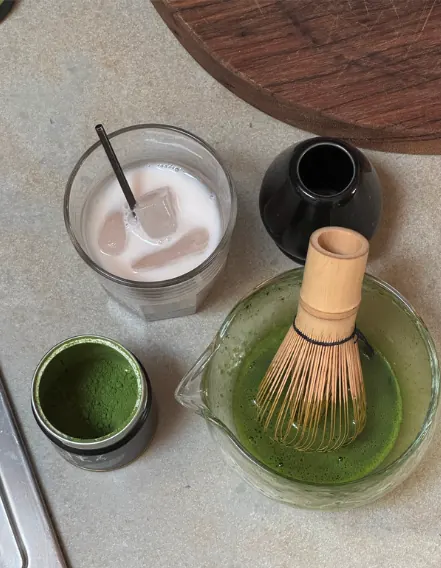
A cafe needs ceremonial grade only for a narrow purpose: a straight-whisked usucha, a premium "pure matcha" menu tier, or customers who order matcha neat. For everyday milk drinks it is the wrong tool, because milk and sweetener mask the delicate sweetness you are paying a premium for. Most of your volume should run on a good latte grade, with ceremonial held back as a small, deliberate upsell.
Carried this way, ceremonial earns its keep in two ways. It lets you offer a genuine tea-quality drink that signals expertise and supports a higher price, and it gives staff a reference point for what real quality tastes like. The mistake is defaulting every latte to ceremonial: you burn 40 to 60% more on matcha cost for a nuance the drink hides. For how grade maps to your whole menu and margins, this piece is a spoke of our Matcha for Cafes sourcing and menu guide.
The tiers differ by leaf harvest, shading, milling, and intended use, not by any certified standard. Ceremonial uses first-harvest tencha, longer shading, and stone-milling for straight drinking; culinary uses later harvests and machine grinding for lattes, baking, and ice cream; "premium" is a fuzzy in-between marketers use freely. Judge by the markers below, not the name.
| Trait | Ceremonial | Premium (in-between) | Culinary / latte |
|---|---|---|---|
| Leaf harvest | First harvest (ichibancha) | First or early second | Later harvests |
| Shading | About 20+ days | Variable | Shorter or partial |
| Milling | Stone-milled, slow | Stone or machine | Usually machine |
| Best use | Whisked straight (usucha) | Premium lattes | Lattes, baking, ice cream |
| Taste | Sweet umami, low bitterness | Rounded | Stronger, more astringent |
| Cafe role | Small premium tier | Optional | 80 to 90% of volume |
Notice that "premium" has no fixed meaning. Treat it as a claim to verify, the same as "ceremonial."
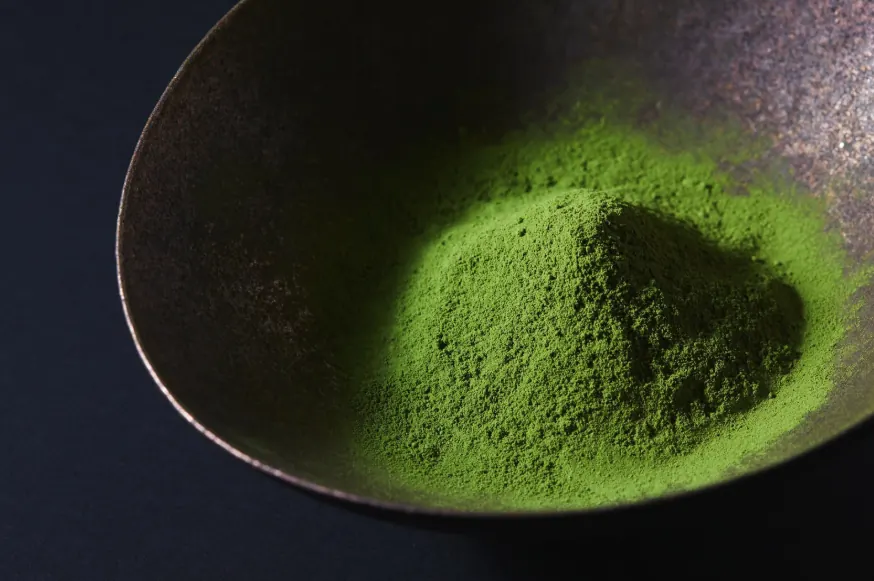
You verify with the powder and the paperwork, not the label, because during the 2026 shortage culinary matcha is increasingly relabeled and sold as ceremonial. Genuine ceremonial is a bright, almost electric jade green, ultra-fine and clump-free, with a clean sweet-umami finish and little bitterness. Dull, yellowish, or khaki color, a dusty or hay-like smell, and a flat or harsh taste point to later-harvest or machine-ground leaf.
Then confirm on paper. Ask the seller for the harvest (first harvest for true ceremonial), the region, and the mill method, and request a sample of the actual lot you would buy so what you taste matches what ships. A price that looks too good during a shortage is itself a warning sign. Our guide to finding and vetting a Japanese matcha wholesale supplier lists the exact questions to ask.
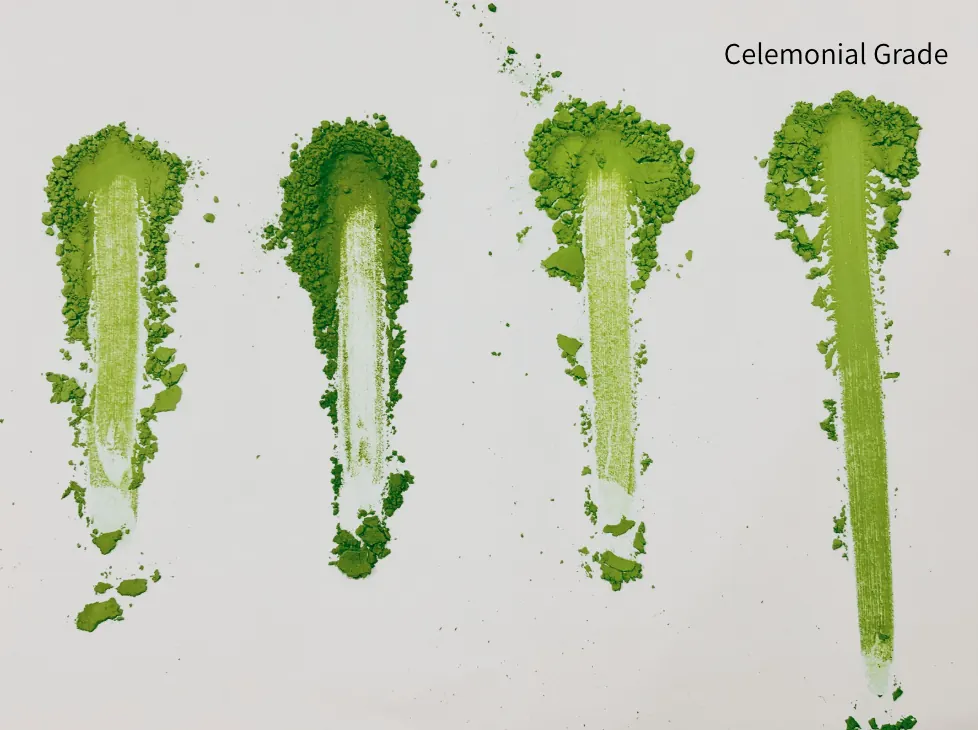
A genuinely ceremony-grade matcha from Kyoto, the kind actually used in tea ceremony, tends to run around 50,000 yen per kilogram (roughly $320). I regularly see "ceremonial" marketed at a fraction of that, a few tens of thousands of yen, and you cannot honestly produce true ceremony quality at those prices; a good deal of it is culinary relabeled. On spotting a fake, color is the obvious tell but it can be faked, for example with added chlorella, so I rely on the stone-milled texture instead. Tip a little powder onto white paper, press it with a fingertip and drag downward: a properly stone-milled matcha leaves a clean, even streak because the particles are so fine. For 2026 lots, a deposit secures your allocation outright rather than a soft reservation; without one, stock can be gone by around March or April next year, and possibly earlier this season.
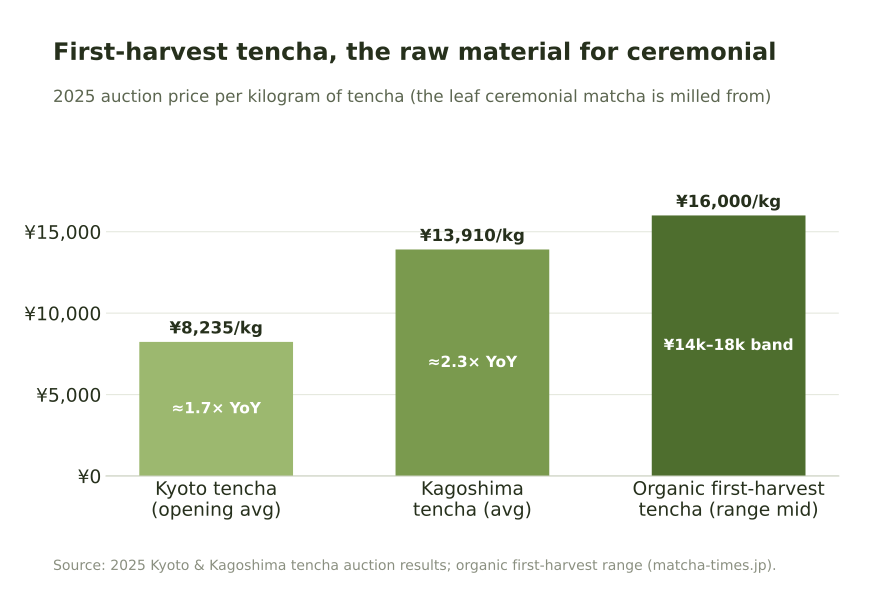
Expect to pay a clear premium over latte grade, and expect that premium to be wider in 2026 than in prior years, because ceremonial depends on first-harvest tencha, which is exactly what the shortage constrained most. The raw material tells the story: 2025 auction tencha averaged roughly 8,235 yen per kilogram in Kyoto (about 1.7 times the prior year) and about 13,910 yen per kilogram in Kagoshima (up 2.3 times), and organic first-harvest tencha traded around 14,000 to 18,000 yen per kilogram.
For a cafe, the practical takeaways are simple. Buy ceremonial in small quantities matched to a low-volume premium offering, so you are not tying up cash in a fast-oxidizing high-cost powder. Get the landed price per kilogram, including shipping and duty, before you compare suppliers. And treat any deep discount on "ceremonial" with suspicion this year. For the wider cost picture, see our 2026 matcha market and supply outlook.
The shortage hits ceremonial hardest because it is a tencha and first-harvest problem, and ceremonial is the tier that most depends on both. Global matcha demand rose roughly eightfold in five years while tea bushes take years to mature, so first-harvest tencha cannot scale quickly. According to the Global Japanese Tea Association, the shortage began in autumn 2024, and it has meant higher prices, purchase limits in Japan, and more relabeling ever since.
The supply numbers are stark. Uji's 2025 hand-picked matcha production fell about 40% year over year, from 10,216kg to 6,140kg, and in 2026 Kagoshima's first new-tea auction still averaged 6,573 yen per kilogram, up 2,436 yen on the year. Major players moved on price too, with Ito En raising prices across its lineup by 5 to 25% from March 2026. The reading for a cafe: genuine ceremonial will stay tight and expensive for at least the next couple of seasons, so lock a trusted source rather than chasing spot bargains. Our cafe buyer's guide to sourcing through the shortage goes deeper.
Source ceremonial from a supplier who can prove the harvest and let you taste the exact lot, and keep the order small and repeatable. Because this tier is where relabeling and quality drift concentrate, verification matters more here than for latte grade. Run this checklist before you commit.
Done this way, a small ceremonial line adds real credibility to your menu without exposing you to the shortage's worst pricing. Pair it with a reliable latte grade for volume, and route both through one vetted supplier so quality and continuity are somebody's job, not a monthly gamble.
No. There is no legal or ISO definition of ceremonial grade, and no Japanese regulatory body sets matcha grades. The terms ceremonial and culinary were created by Western importers to justify price tiers. Judge matcha by its harvest, shading, and milling, not the label.
Culinary or latte grade for lattes. Milk and sweetener mask the delicate sweetness you pay a premium for in ceremonial, so ceremonial in every latte wastes budget. Keep ceremonial for a small straight-whisked or premium menu tier, and run everyday volume on latte grade.
Check the powder and the paperwork. Genuine ceremonial is bright jade green, ultra-fine, with a sweet umami finish and low bitterness. Dull color, a hay-like smell, or harsh taste signal lower grade. Ask for first harvest, region, and mill method, and taste the actual lot before buying.
Ceremonial depends on first-harvest tencha, which the shortage constrained most. Global demand rose about eightfold in five years while tea bushes take years to mature. 2025 auction tencha roughly doubled in places, and Uji's hand-picked output fell about 40% year over year.
Small, repeatable quantities matched to a low-volume premium offering. Ceremonial is high-cost and oxidizes once opened, so buying a large tin ties up cash and risks staleness. Order little and often, keep it sealed and cool, and reserve next first-harvest lots for continuity.
If you want to add a genuine ceremonial tier without gambling on a relabeled tin, start with samples you can taste and trace. We work with cafes on long-term supply, not one-off orders, and can send a sample set of first-harvest ceremonial and latte-grade matcha, with harvest and region details and current wholesale pricing, so you can verify quality before you commit.
Request samples & pricingHiroshi Asami is the founder of Japanomars, which sources premium matcha directly from farms across Japan (Sayama, Ibi, Ureshino, Yame, Kirishima, and Chiran) and supplies specialty cafes abroad. Sources: Global Japanese Tea Association; 2025 Kyoto and Kagoshima tencha auction results; organic first-harvest tencha range (matcha-times.jp); Uji 2025 production figures; Kagoshima 2026 first-auction prices (Minaminippon Shimbun); Ito En 2026 price revision; Norinchukin Research Institute.
%E7%99%BD_%E5%A4%A7%E3%81%8D%E3%81%84.png)