%E5%A4%A7%E3%81%8D%E3%81%84.png)
Menu · Seasonal · Fall 2026
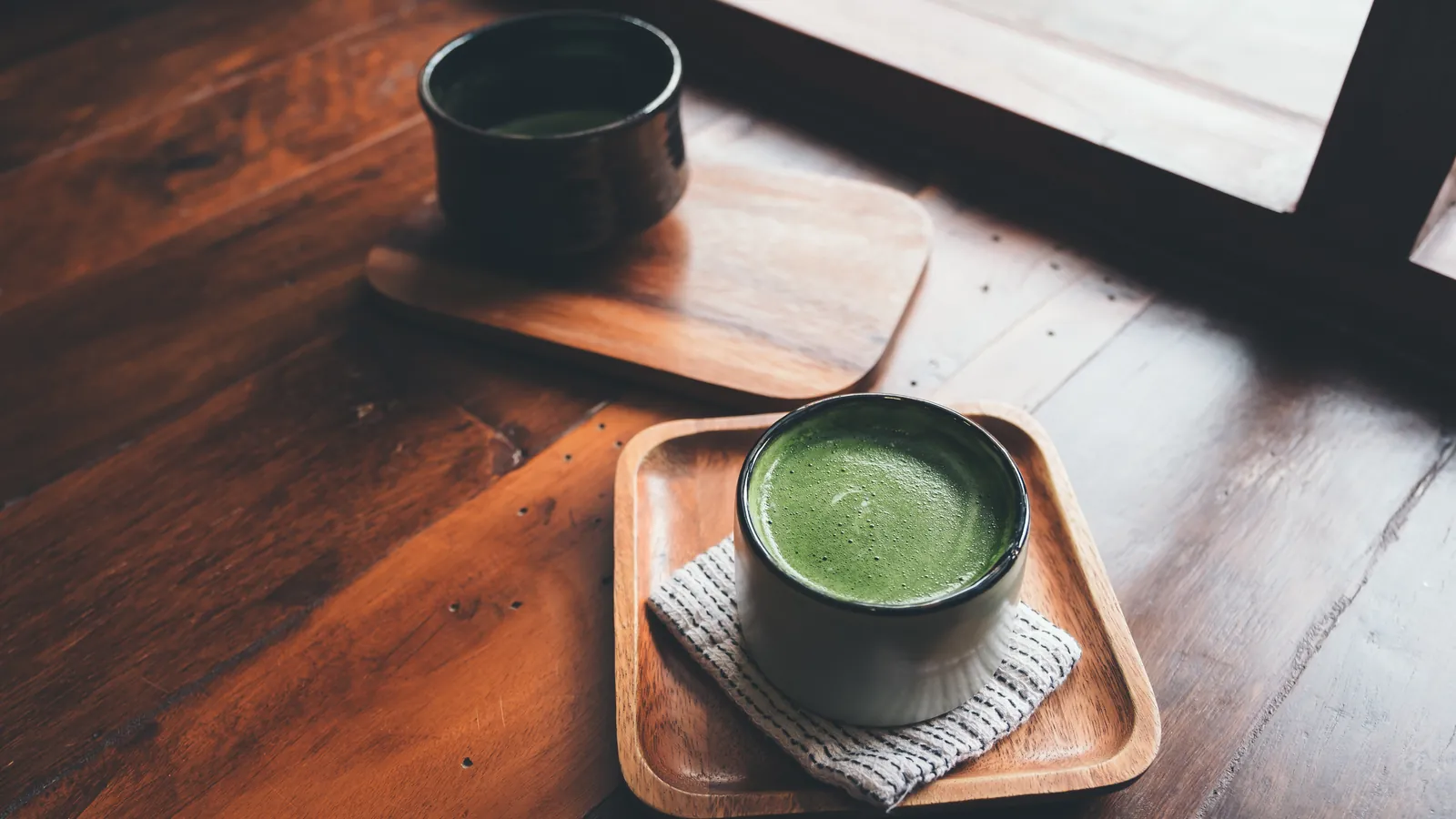
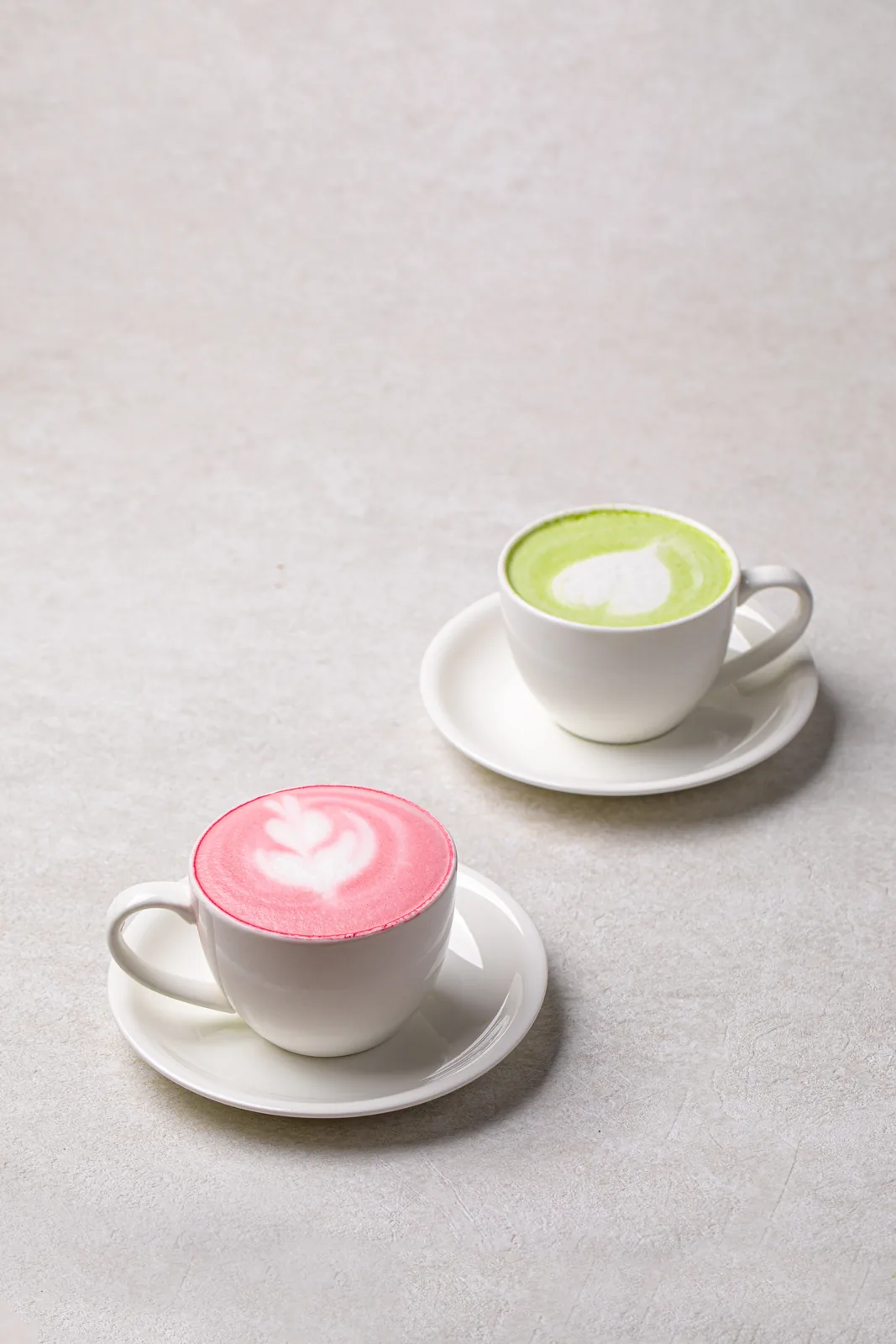
Build your fall matcha menu around one spiced matcha drink made with latte grade, one hojicha SKU as the warm, low-caffeine companion, and an order placed by the middle of August. That is the whole playbook. What changed this year is that the obvious drink is no longer yours alone: Starbucks put an Iced Pumpkin Cream Matcha on its national fall menu for August 25, 2026, so a pumpkin matcha is now table stakes rather than a differentiator.
This guide is for US cafe owners deciding what to put on the board in September, which grade to pour into it, and when the matcha has to be ordered for the launch to actually happen.
Key takeaways
In this guide
Two drinks, not five. One spiced matcha build in the pumpkin, chai or maple register, and one hojicha drink for the customer who wants something warm and roasted without more caffeine in the afternoon. Two SKUs give your bar a fall story, keep training to a single new build, and avoid fragmenting your matcha inventory across products that each sell a handful of cups a day.
The mistake almost every cafe makes in September is rotating the everyday matcha latte itself. Leave it alone. Your volume anchor is the drink regulars order without looking at the board, and it should be the same in October as it was in June. The seasonal drink is a fourth or fifth item layered on top of a menu that already works. If you have not built that base yet, start with how to add matcha to your cafe menu before adding a limited-time offer on top of it.
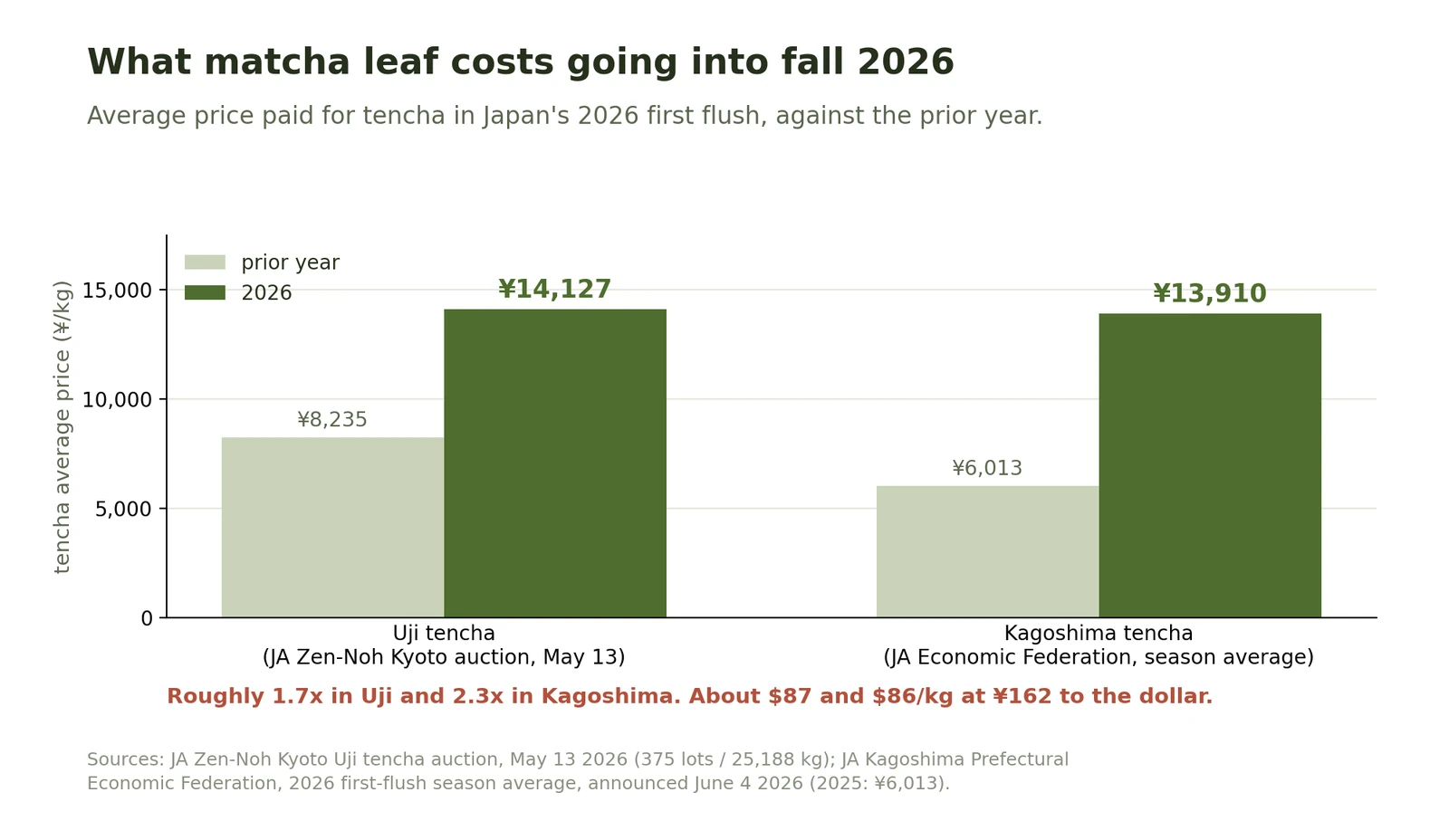
Two things moved this year, and they push in opposite directions. Demand for spiced matcha just got a national endorsement, and the raw material got materially more expensive. Starbucks announced that its 2026 fall menu arrives on August 25 with a new Iced Pumpkin Cream Matcha alongside the returning Pumpkin Spice Latte. At the same time, Japan's 2026 first-flush prices repriced the leaf that becomes matcha by roughly 1.7 to 2.3 times year on year.
The chain launch is useful to you even though it removes your novelty. Every customer in your market will have the pumpkin-plus-matcha idea explained to them for free from late August, by an advertiser with a budget you do not have. Your job is not to invent the category. It is to have a better version on the board when they walk in.
The price side is the constraint. At the 2026 auctions, Uji tencha averaged 14,127 yen per kilogram, about 1.7 times the prior year and a ten-year high, according to JA Zen-Noh Kyoto's May 13 print. In Kagoshima, the season's average tencha trading price came in at 13,910 yen per kilogram against 6,013 yen a year earlier, about 2.3 times, per the JA Kagoshima Prefectural Economic Federation's June 4 announcement. At 162 yen to the dollar those averages are about $87 and $86 per kilogram of raw leaf, before destemming, milling, packaging or freight. We track these prints and the landed-cost math on our matcha price index.
Latte grade, and not because of budget alone. Pumpkin spice, chai and maple are assertive, sweet and aromatic, and they sit directly on top of the delicate umami and natural sweetness that a ceremonial-grade powder is priced for. Under three pumps of spice syrup, the qualities you paid double for are not muted, they are gone. Spending ceremonial money on a spiced limited-time offer is the single most reliable way to lose margin on a fall menu.
There is a second, less obvious reason. Spiced builds usually need more matcha, not less, because the powder has to be tasted through the syrup. Where a plain 12 oz latte reads fine at 2 grams, a spiced version of the same drink often needs 3 grams to keep the matcha identifiable rather than decorative. So the drink where you are most tempted to trade up on grade is also the drink that uses the most powder. Those two moves compound against you.
Keep your ceremonial tin for what it is good at: a straight-whisked usucha, or a plain latte for the customer who asks for your best. Fall is a good moment to run both on the board and let the price gap explain itself. If you want the full grade vocabulary, see matcha grades explained and ceremonial grade matcha for cafes.
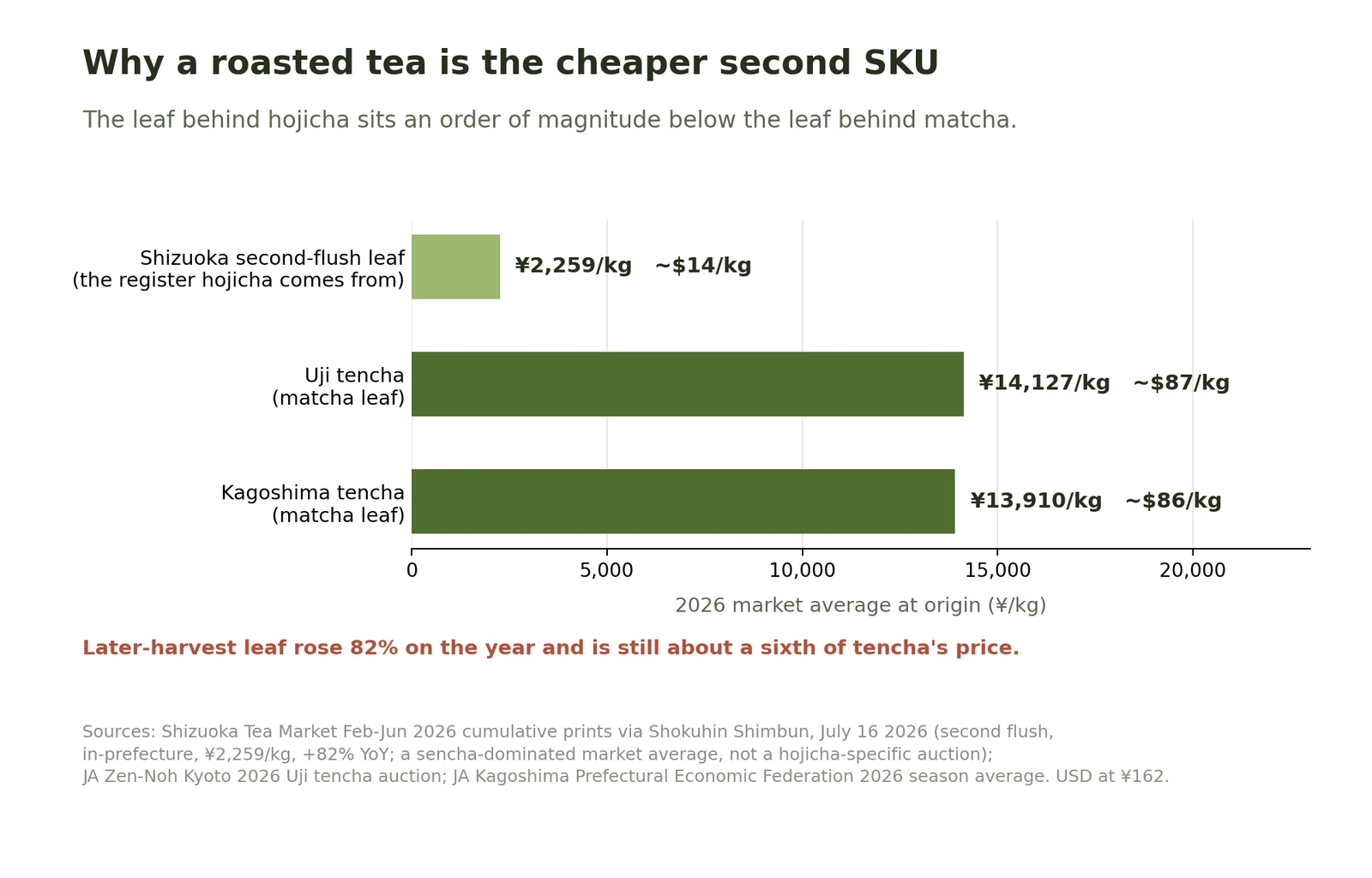
Hojicha is roasted Japanese green tea, and it is the rare seasonal addition that gets cheaper rather than more expensive as matcha tightens. It is made by roasting later-harvest leaf and stems at high heat, which turns the leaf reddish brown and the flavor toasty and nutty, and which drives off much of the caffeine along the way. Warm, roasted, low caffeine and served after 3pm is a genuinely different product from a matcha latte, not a variant of one.
The economics are the argument. The leaf behind a roasted tea sits an order of magnitude below tencha at origin. Shizuoka Tea Market's February to June 2026 prints put second-flush in-prefecture leaf at 2,259 yen per kilogram and out-of-prefecture leaf at 2,301 yen, roughly $14 per kilogram, against the 14,127 and 13,910 yen tencha averages above. Those second-flush figures were themselves up 82 and 86 percent on the year, so later-harvest leaf is not cheap in absolute terms, it is simply cheap relative to tencha. One caveat worth stating plainly: the Shizuoka prints are sencha-dominated market averages, not a hojicha-specific auction, so treat them as direction and magnitude rather than a quote.
The reason the gap exists is the same reason matcha is tight. Growers are converting fields to tencha because tencha pays better, which is squeezing sencha supply and lifting its price, while tencha itself climbs faster still. Adding hojicha spreads your fall exposure across two very different points on that curve. It also ships in the same order from the same supplier, which matters more than it sounds when you are trying not to add a second vendor relationship in August. The full lineup of Japanese teas worth carrying is in hojicha and other Japanese teas for your cafe menu.
From the sourcing floor
We do not hold ground stock. Every order is milled after it is placed, which is exactly why I push cafes to place fall orders by the middle of August: milling, packing and the shipment to the US take two to four weeks between them, and a September 1 board will not wait for a late order.
Between roughly 25 and 45 cents of matcha in a spiced fall build, depending entirely on the grade you reach for. At a 3 gram dose, latte-grade matcha bought at around $110 per kilogram wholesale puts about 33 cents of powder in the cup, while a ceremonial powder at around $220 per kilogram puts about 66 cents in the same drink for flavor the syrup will cover anyway.
For reference, our own landed-cost model puts latte and culinary grade at roughly $86 per kilogram delivered to the US before anyone's margin, and stone-milled ceremonial at roughly $171, both derived from the 2026 auction prints above. Whatever you are quoted sits above those floors. The useful discipline is to price the fall drink off the powder you will actually pour, at the dose you will actually use, not off the tin you keep for tastings.
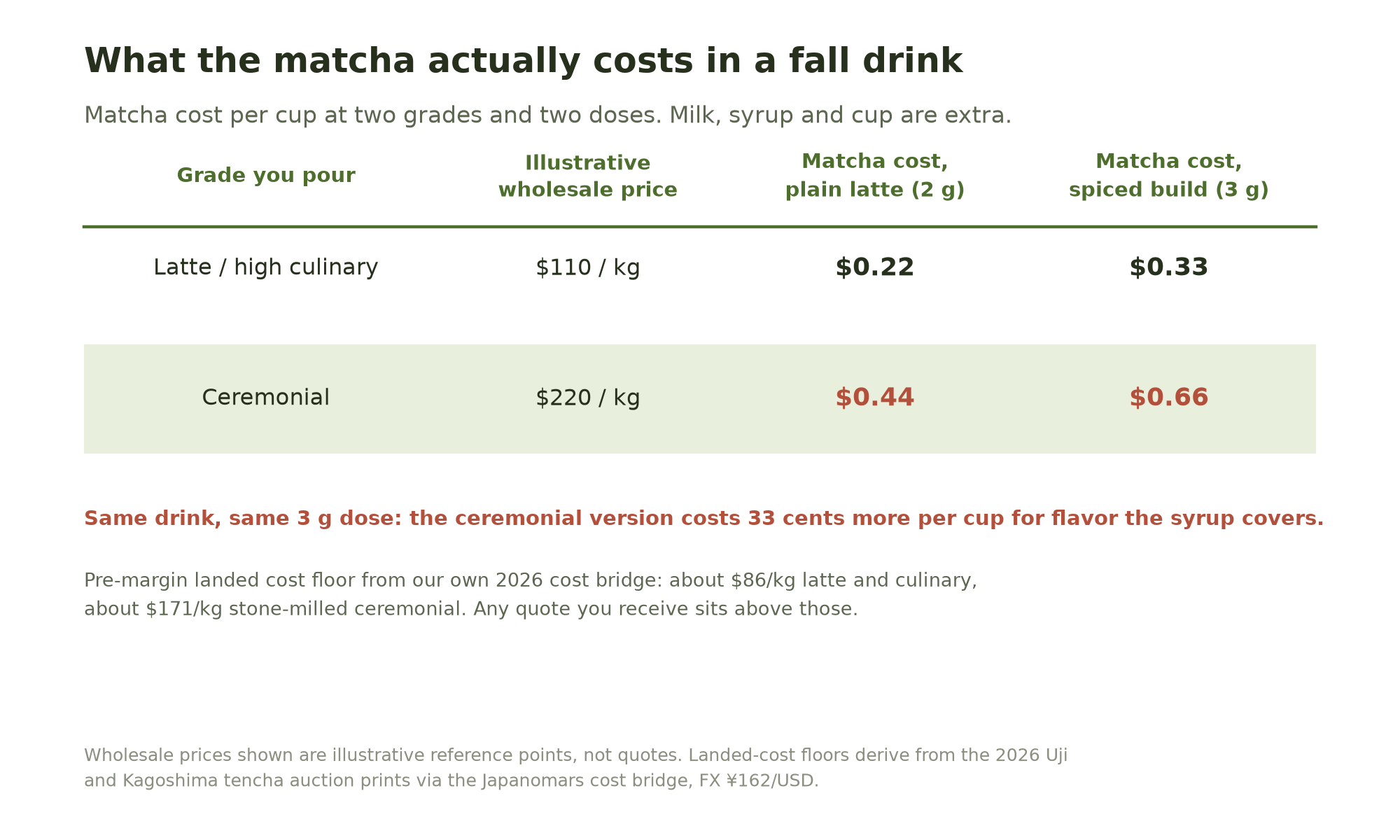
The syrup, milk and cup will cost you more than the matcha in almost every case, which is the part cafes consistently get backwards. A fall limited-time offer fails on margin because of a four-pump syrup spec and an oat milk default, not because of the tea. Set the dose and the grade first, then build the sweetener spec to a target cost, then price the drink. Our wholesale and bulk matcha guide covers how order size moves the per-kilogram number.
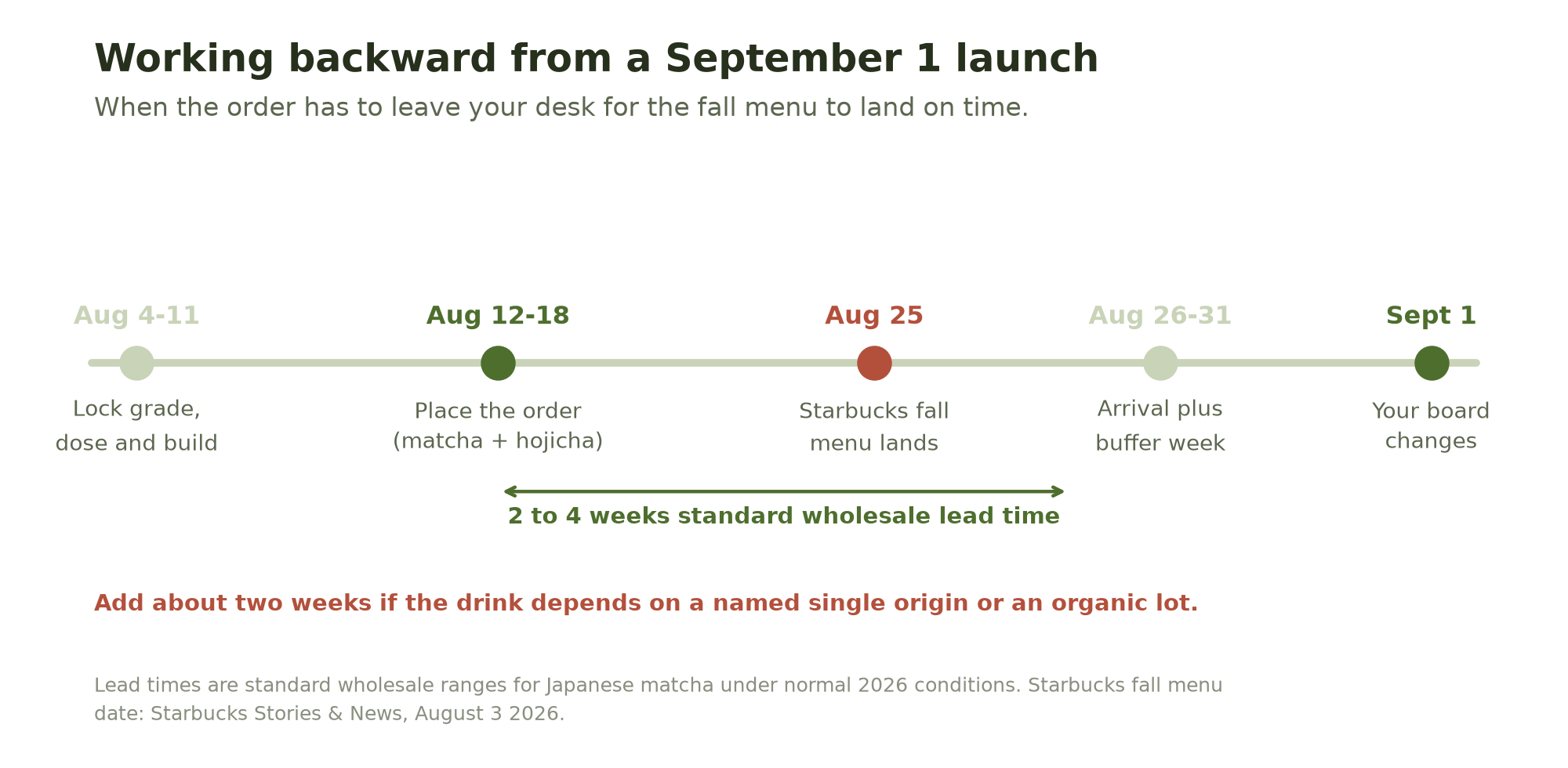
Order by the middle of August for a September 1 launch. Wholesale matcha from Japan typically runs two to four weeks from confirmed order to arrival under normal conditions, and you want a buffer week on top of that so a late shipment does not become a late launch. Working backward from a September 1 board change, that means the order is placed in the window around August 12 to 18, and the decision about grade and dose is made the week before.
Two things stretch that timeline in 2026 specifically. Named-origin and organic lots are the tightest part of the market this year, so if your fall drink depends on a specific farm or an organic certification, add two weeks and confirm availability before you print anything. And if you are adding hojicha at the same time, ask for both on one order rather than sequencing them, because a second shipment is a second chance to be late.
Say where the matcha is from, and say it specifically. The one claim a national chain cannot make on a fall menu is the name of the town the leaf grew in and the month it was milled. Matcha is milled to order in the trade rather than pulled from a warehouse, so a milling date is a real and checkable thing to put on a card next to the register.
Three moves, in order of effort. Put the region and milling month on the drink card. Run the spiced build and a plain latte from the same lot side by side so customers can taste what the spice is covering. And use the fall drink to introduce the hojicha rather than treating it as a separate launch nobody notices.
Then look at the numbers in November: which of the two sold, at what attach rate, and whether the spiced drink pulled anyone into the everyday latte afterward. That is what should decide next year's fall menu, not what the chains announce in August.
Late August to the first week of September for most US markets. Starbucks moves its fall menu on August 25, 2026, which effectively sets customer expectations for the season, so launching in mid-September means arriving after the conversation has started.
Latte or high culinary grade. Spice syrups cover the delicate umami and sweetness that ceremonial grade is priced for, and spiced builds typically need a larger dose to taste through, so ceremonial powder costs more and delivers less in this specific drink.
About 3 grams, against roughly 2 grams for a plain 12 oz latte. The extra gram is what keeps the matcha identifiable underneath the syrup rather than reading as color only.
Yes, substantially, because it is made from later-harvest leaf and stems rather than shaded tencha. Shizuoka's 2026 second-flush leaf averaged around 2,259 yen per kilogram against tencha averages of 14,127 yen in Uji and 13,910 yen in Kagoshima.
Japan's 2026 first-flush tencha prices repriced roughly 1.7 to 2.3 times year on year. Uji's auction averaged 14,127 yen per kilogram and Kagoshima's season average was 13,910 yen, both driven by tight supply and global demand outrunning the shaded acreage available.
Two to four weeks for standard wholesale lots, plus a buffer week. Add roughly two more weeks if your drink depends on a named single origin or an organic certification, which are the tightest parts of the 2026 market.
Fall 2026 is the first season where a pumpkin matcha is something your customers will already know about before they reach your counter. That is a gift and a constraint at the same time. The gift is free category education. The constraint is that the drink itself no longer distinguishes you, so the distinguishing has to happen in the grade you choose, the second SKU you put next to it, and what you can honestly say about where the leaf came from.
If you are building a fall menu now, we can put latte-grade and hojicha samples in front of you with the region and milling date attached, and tell you honestly what is still available for a September launch.
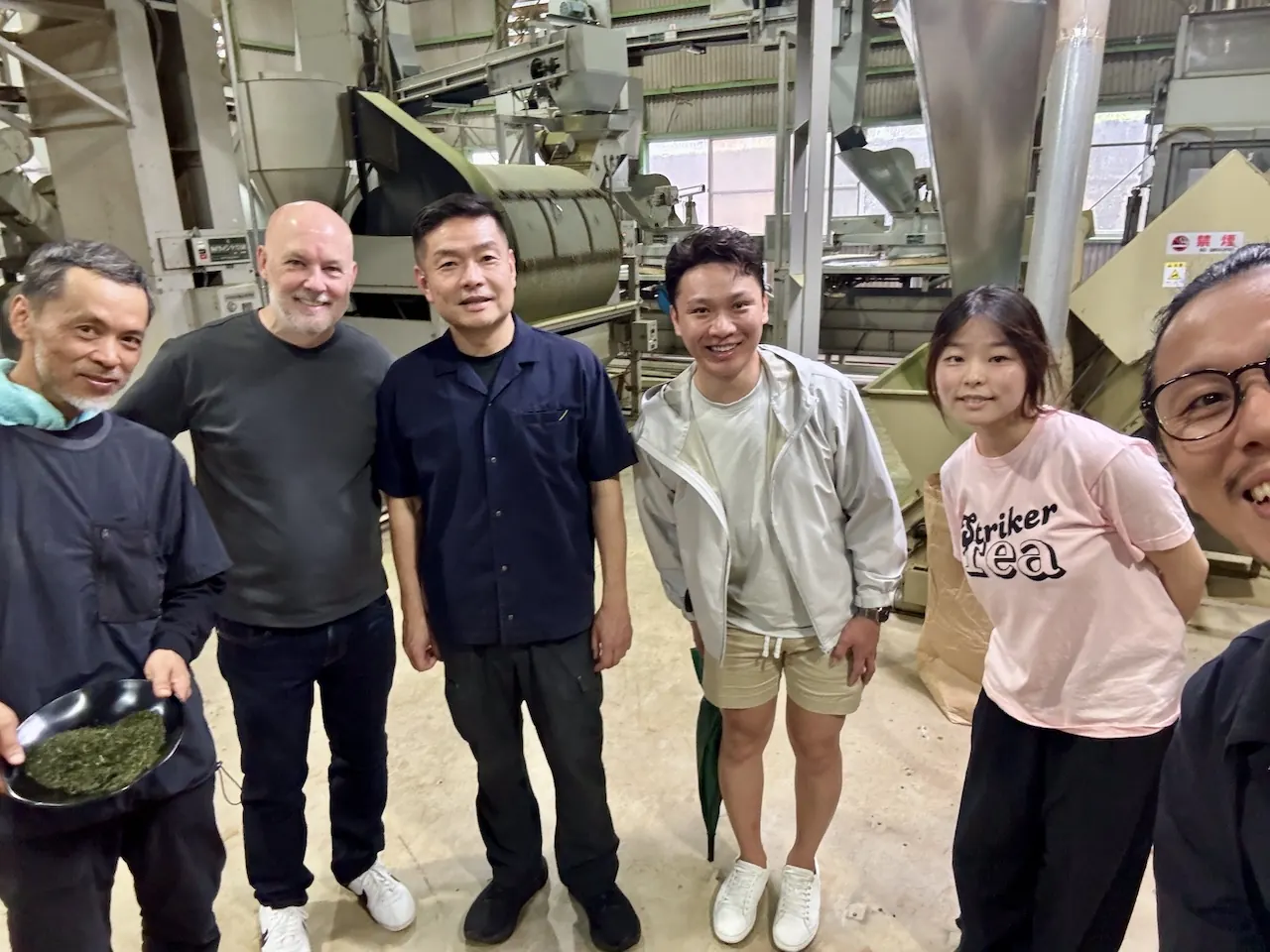
Hiroshi Asami is the founder of Japanomars, which exports Japanese matcha to cafes in the US, Canada and the Philippines. We buy from growing regions including Sayama, Ibi, Ureshino, Yame, Kirishima and Chiran, work directly with farms alongside wholesalers, and have hosted four tours bringing overseas cafe owners to Japanese tea farms.
Sources
%E7%99%BD_%E5%A4%A7%E3%81%8D%E3%81%84.png)