%E5%A4%A7%E3%81%8D%E3%81%84.png)
Quality & Freshness · 2026
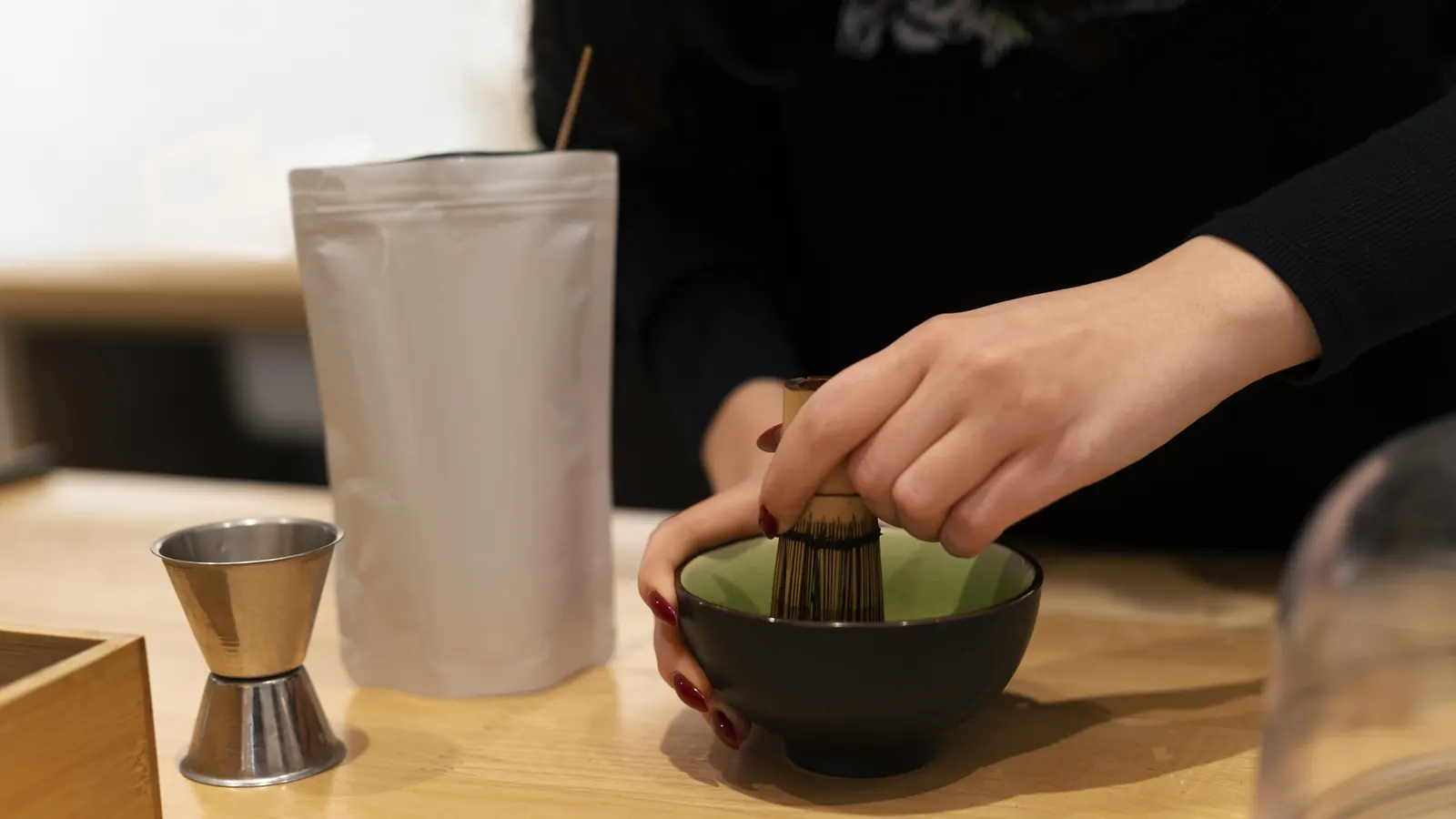
Opened matcha holds its peak color, aroma, and umami for about two weeks behind a cafe bar, even when it's resealed carefully between uses. After that, oxygen and light quietly turn a vivid green powder into a duller, flatter one. Unopened and properly sealed, matcha keeps far longer: six to twelve months cool and dark, sometimes more in a freezer. This guide covers what actually degrades matcha, how packaging format changes the storage math, and the simple bar routine that keeps waste and inconsistent lattes down.
Key takeaways
In this guide
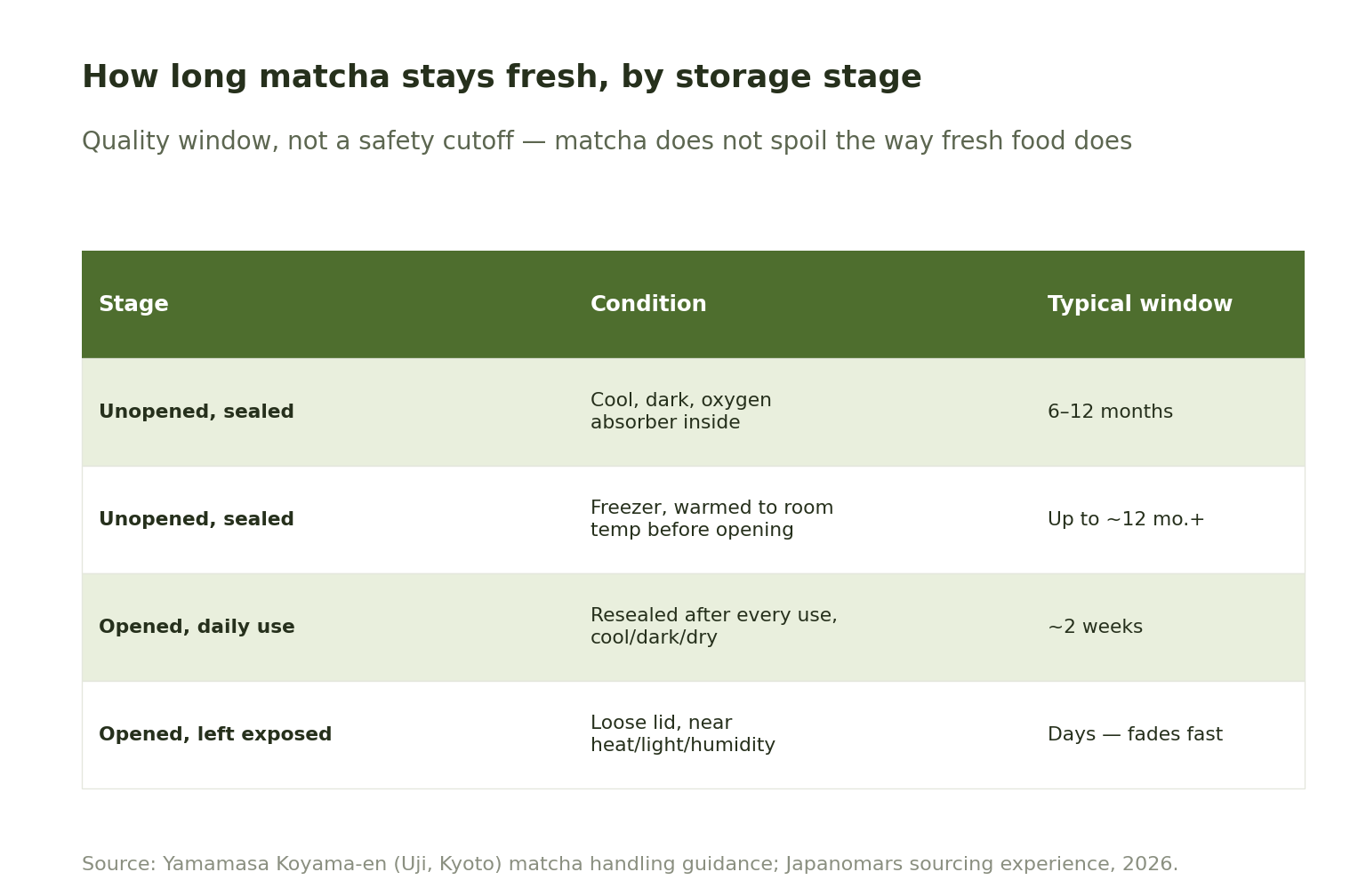
Once a bag or tin of matcha is opened, most producers put its useful window at about two weeks before color and flavor noticeably fade, and that's true whether it's ceremonial or culinary grade, and it holds even if you reseal it carefully between uses. Unopened and sealed with an oxygen absorber, the same matcha stored cool and dark is good for roughly six to twelve months.
This two-week figure isn't a marketing minimum; it's the consistent guidance across Japanese producers. Uji-based Yamamasa Koyama-en, for example, publishes an eight-month unopened guarantee for sealed, oxygen-absorbed tins kept away from heat, alongside the standard advice that opened matcha should be used up quickly rather than stretched over weeks. For a cafe, that means matching order size to actual weekly pour volume matters more than chasing a lower per-kilo price on a bigger tin that sits open on the bar for a month.
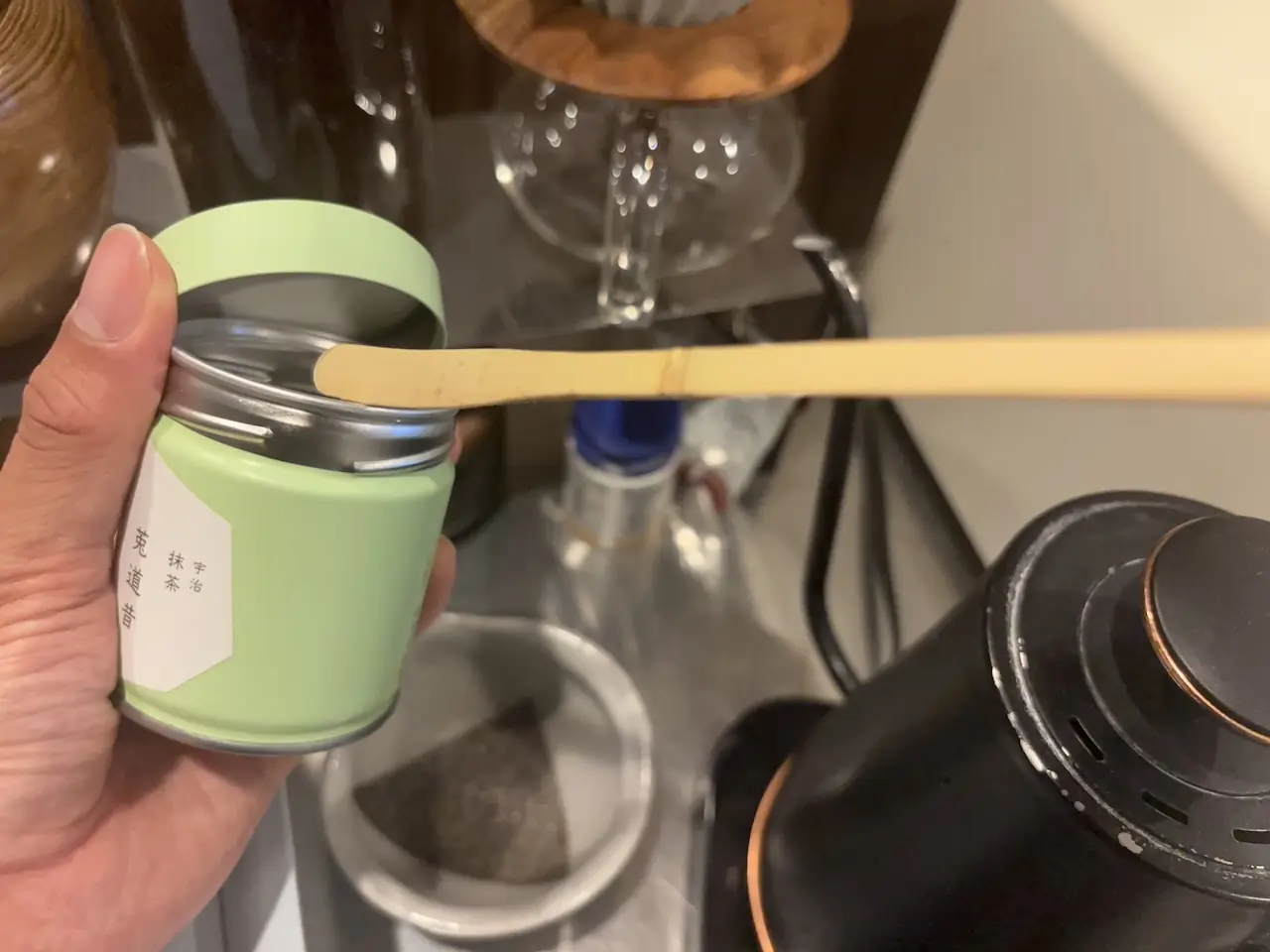
All four degrade matcha, but oxygen does the most damage the fastest: it oxidizes chlorophyll into a duller olive-brown pigment (the same reaction that browns cut fruit) and breaks down the aromatic compounds and catechins that give matcha its umami and grassy sweetness. Light accelerates that oxidation through UV exposure, heat speeds up every one of these chemical reactions, and humidity introduces moisture that causes caking and, in bad cases, mold.
In practice this is why the same matcha can taste noticeably flatter after a few weeks in a clear jar next to a sunny window than it would in a sealed tin in a back cabinet, because the light and open-air exposure are doing separate, compounding damage. None of this makes matcha unsafe once past its best; it makes it worse. A cafe pouring stale matcha isn't risking a health complaint, it's risking a customer who quietly stops ordering the matcha latte because it tasted "off" without knowing why.
Yes: the packaging your matcha arrives in determines how much oxygen is already sitting inside the bag before you've opened it, which changes how urgently you need to use it. Air-filled packaging is the most perishable, since oxygen is already present and degrading the powder from day one. Nitrogen-flushed packaging holds up well while sealed, since inert nitrogen has displaced the oxygen, but that protection ends the moment you open it. Oxygen-absorber sachets actively scavenge any oxygen inside the sealed bag, and (this is the detail most buyers miss) a still-active absorber keeps working after you reopen the bag, provided you squeeze the air back out and reseal it properly.
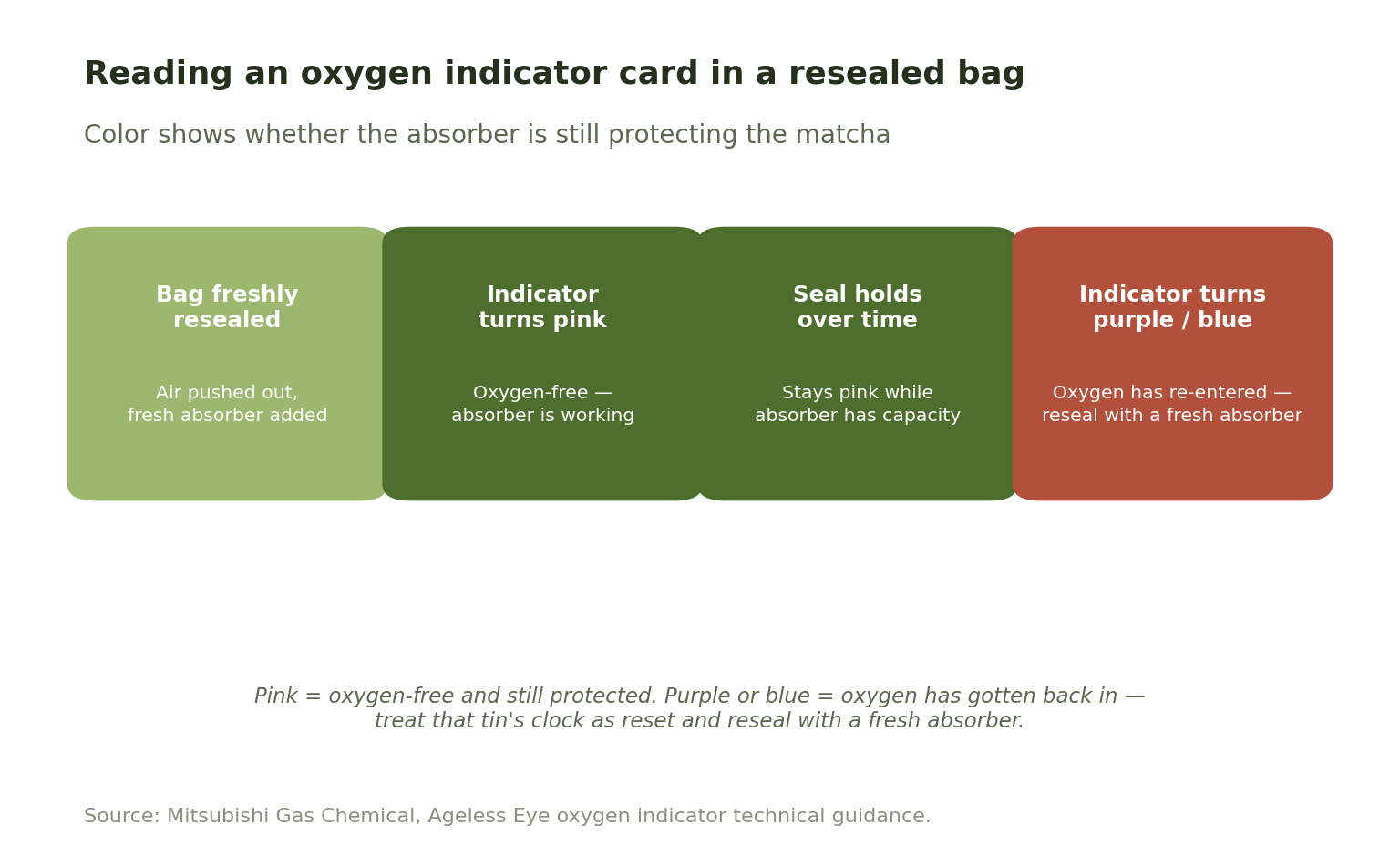
The catch with oxygen absorbers is that a spent one doesn't recover, and there's no way to eyeball how much capacity is left in a used packet. That's where an oxygen indicator card, included in more careful commercial packaging, earns its keep: pink means oxygen-free and still protected, purple or blue means oxygen has gotten back in and the seal or absorber has failed.
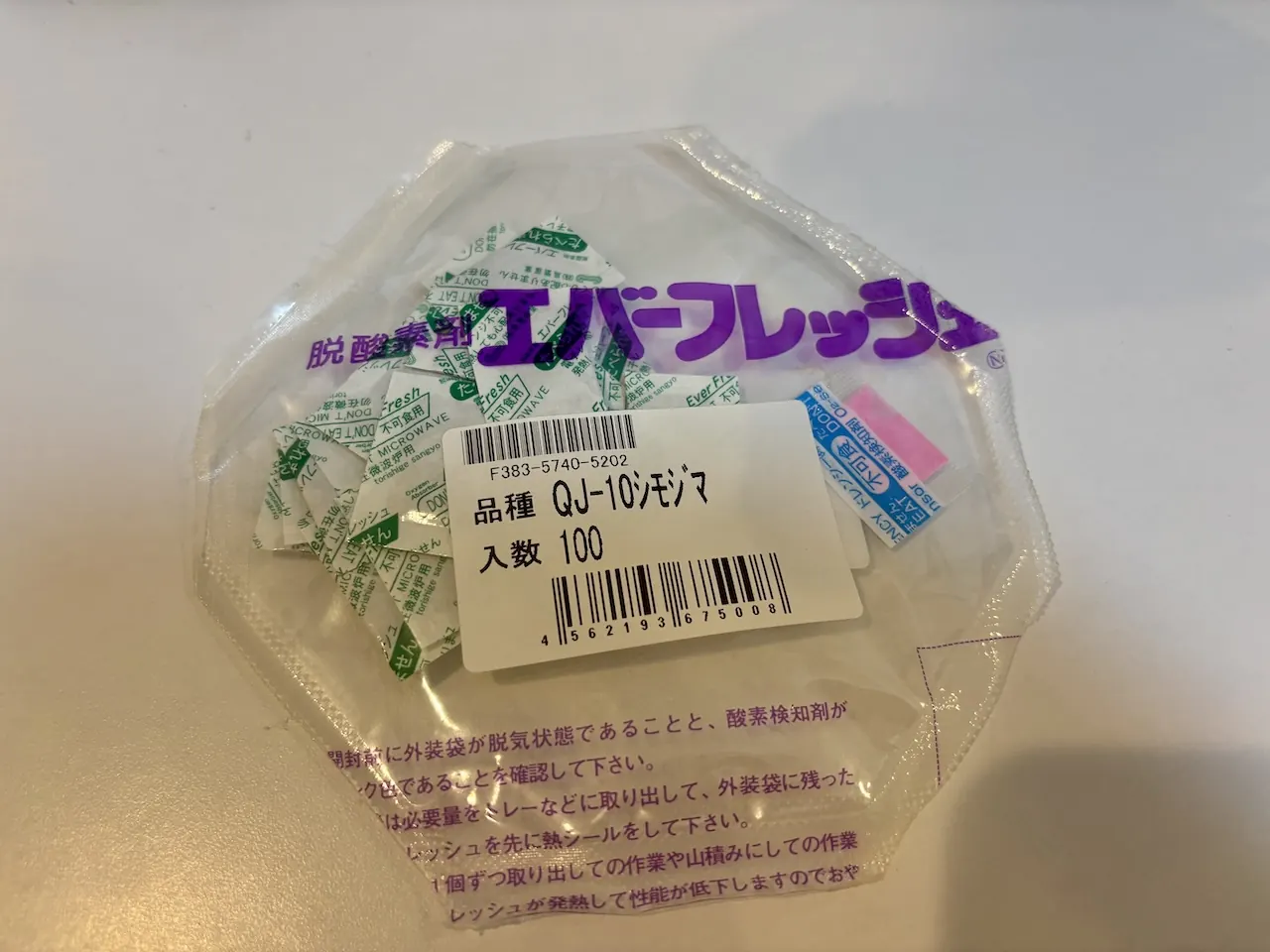
If you're comparing suppliers on packaging quality as part of vetting them, it's worth asking directly what format they ship in and whether they include a fresh absorber with every bulk order, since the answer often says as much about a supplier's attention to detail as their pricing sheet does. If you are at that vetting stage, our comparison of wholesale matcha suppliers for US cafes is the companion read.
For unopened, sealed stock you're not touching for a month or more, yes: a fridge or freezer slows the same oxidation and heat-driven degradation that ruins matcha at room temperature, and freezing is standard practice for bulk stock a multi-location cafe is holding for future weeks. The rule that trips people up: never open matcha straight out of cold storage. Bring the sealed bag or tin to room temperature first, then open it, because opening it cold causes the surrounding warm, humid air to condense onto the cold powder, which introduces moisture and accelerates spoilage fast, undoing whatever the cold storage protected.
Once a tin is opened and in daily rotation behind the bar, move it out of the fridge entirely. Matcha readily absorbs surrounding odors, and a shared fridge full of milk, fruit, and pastry ingredients is exactly the kind of environment that taints delicate matcha aroma within days. A cool, dark, dry cabinet away from the espresso machine's heat and steam is the better home for anything you're using within the next two weeks. This is also one of the practical reasons buying farm-direct or from a supplier who ships in proper sealed bulk formats, rather than repackaged from a trading company's open stock, matters. See our comparison of farm-direct versus trading-company sourcing for what that difference looks like in practice.
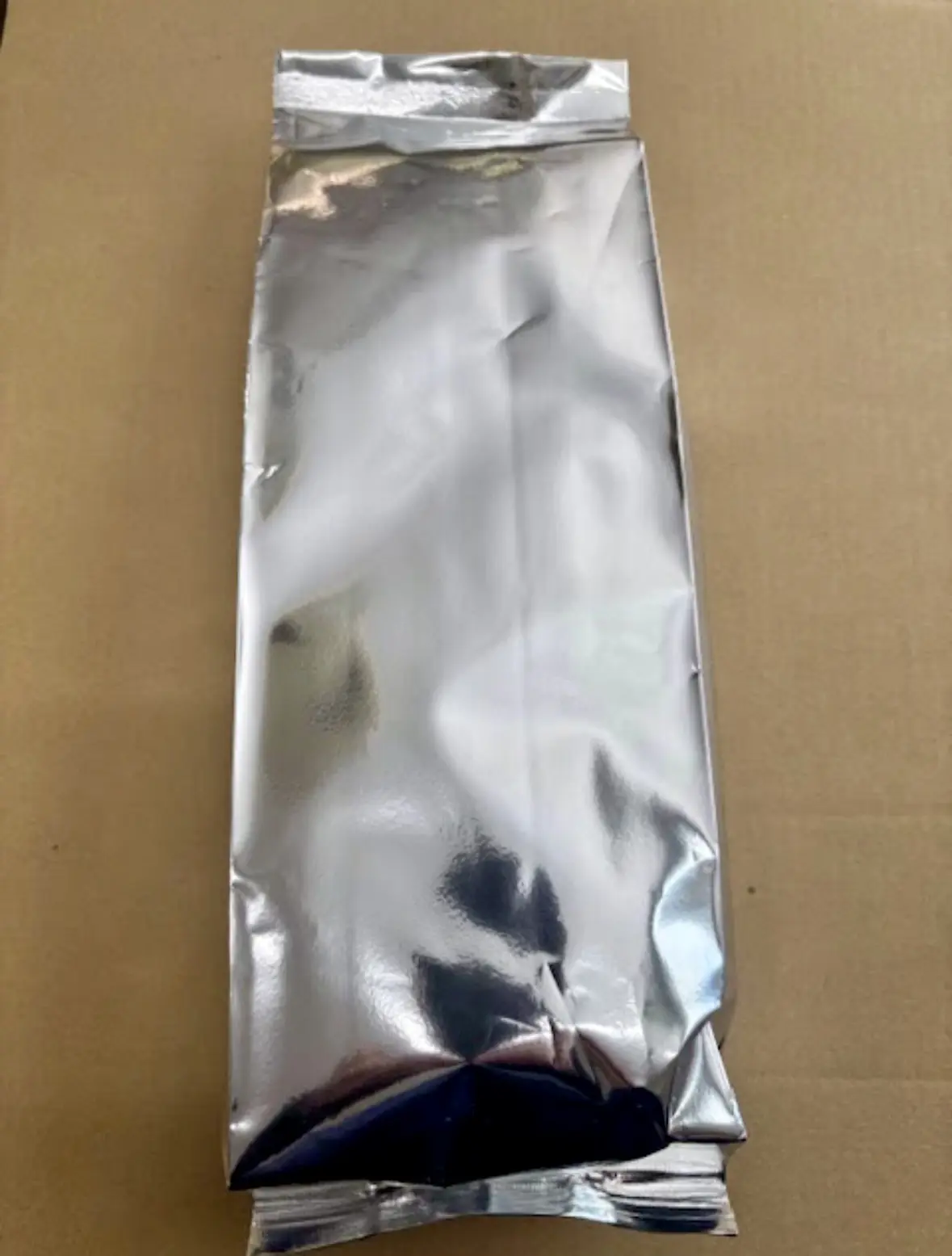
The practical rule Japanomars gives cafe partners: keep only about a week's worth of matcha open at any time, portioned from sealed bulk stock into a smaller working tin, and squeeze the air out and reseal it after every single use, not just at close. For a bar doing a few matcha drinks a day, that might mean portioning 100–150g out of a 500g or 1kg bulk bag rather than leaving the whole bag open on the counter for a month. Order sizing and cadence are covered in our full matcha for cafes sourcing guide.
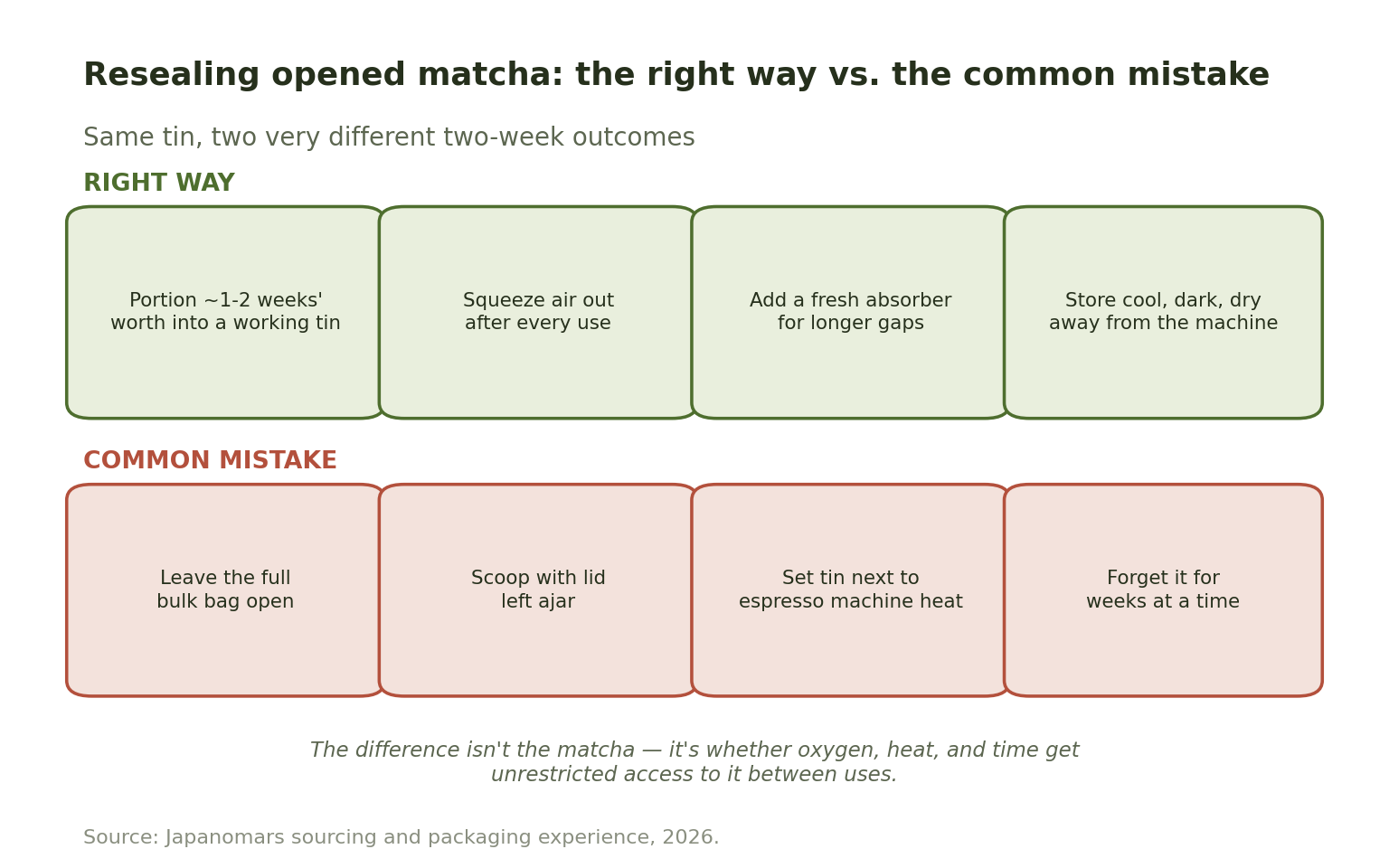
If you're going more than a few days between uses of an opened tin, drop in a fresh oxygen-absorber packet when you reseal it, since the original one has usually already spent most of its capacity absorbing the oxygen that rushed in when you first opened the bag. Keep a small stock of spare absorber packets behind the bar for exactly this; they're inexpensive and last far longer unopened than the matcha itself.
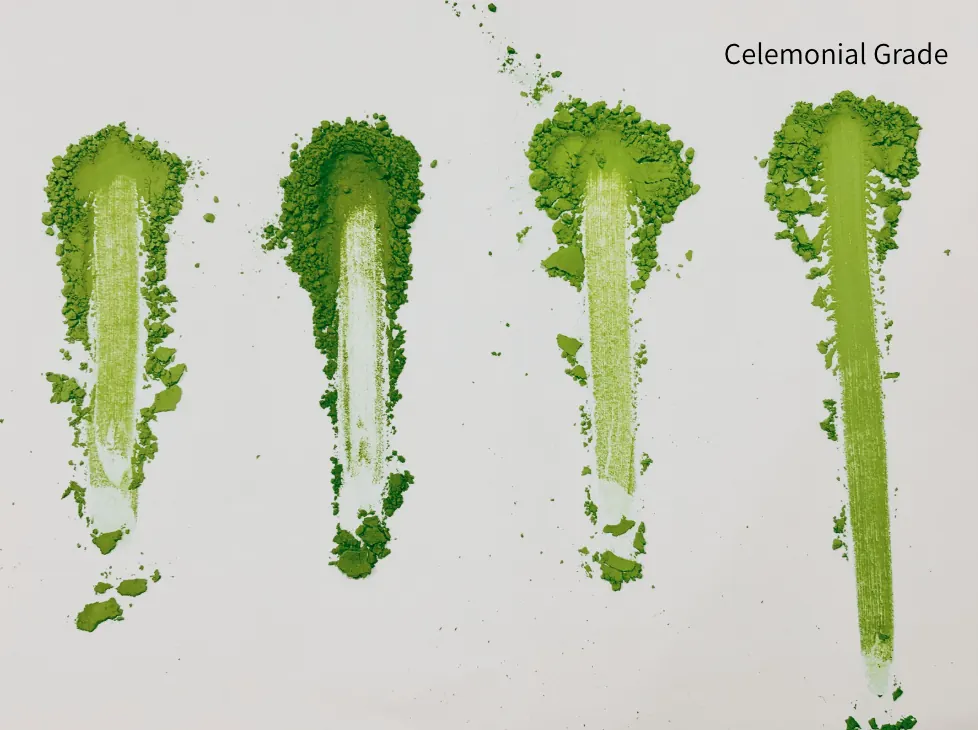
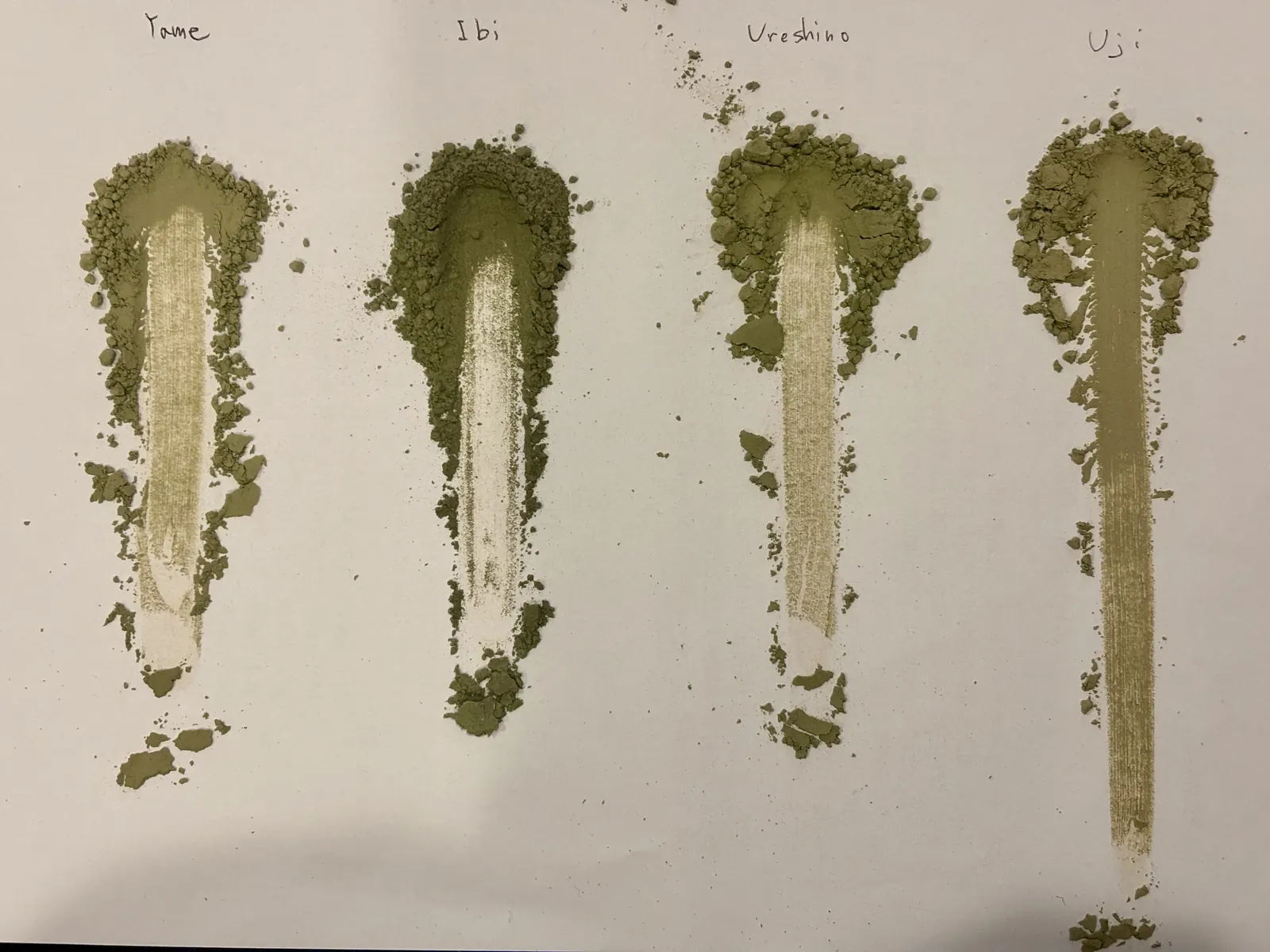
Stale matcha shows up first as color: a vibrant, almost fluorescent green fading toward a duller, more olive or brownish tone is the clearest sign oxidation has set in. Aroma follows: fresh matcha smells grassy and faintly sweet, almost marine, while stale matcha smells flat, like hay or cardboard, or loses its scent almost entirely. Taste confirms it: fading umami and sweetness, with bitterness or a flat, dusty flavor becoming more noticeable relative to everything else.
Texture is a separate signal worth checking on its own: matcha that's clumped or caked, rather than a fine loose powder, has picked up moisture somewhere in its journey, whether from condensation, humidity, or a compromised seal, and that's a storage or handling problem worth tracing back, not just a batch to quietly toss.
Color, aroma, and taste are also exactly the traits worth training new baristas to notice before they whisk a bowl for a customer, the same criteria that separate genuinely good matcha from mediocre matcha in the first place. See our guide to what makes matcha good for the fuller quality picture, which storage either protects or erodes.
A "best by" date on a matcha package is a quality marker, not a safety cutoff. Japan's processed-food labeling standards, which the Japan Tea Association applies to green tea products, require every package to state a shelf-life date, storage method, and manufacturer information, but matcha's very low moisture content makes it a shelf-stable powder rather than a perishable food in the food-safety sense. Past its best-by date, matcha is very unlikely to make anyone sick; it's simply going to taste noticeably worse.
Genuine spoilage is a different, rarer problem, and it's a moisture problem: visible clumping, an off or musty smell, or, worst case, visible mold growth. Any of those mean the seal failed or moisture got in somewhere along the way, and that tin should be discarded regardless of what date is printed on it. For a wholesale buyer, the practical takeaway is to treat the printed date as a planning tool for rotation and ordering, and treat your own eyes, nose, and the checklist below as the real test of whether a specific tin is still worth serving.
About two weeks at peak quality, even if you reseal it carefully after each use. It won't become unsafe after that, but the color, aroma, and umami noticeably fade, which shows up in the taste of every latte made from it.
Yes, for unopened, sealed bulk stock you won't use for a month or more. Freezing meaningfully slows oxidation and heat damage. The one rule: let the sealed package return to room temperature before opening it, or condensation will introduce moisture and undo the benefit.
Only while it's sealed and unopened. Once you've opened a tin for daily bar use, move it to a cool, dark, dry cabinet instead, because refrigerators introduce repeated condensation risk every time the tin goes in and out, and matcha readily absorbs the fridge's other food odors.
It scavenges oxygen out of the sealed package, which is the single biggest driver of flavor and color loss. A still-active absorber keeps working even after you reopen the bag, as long as you squeeze the air out and reseal properly, but a spent absorber doesn't recover, so a fresh one should go in with any long resealing.
Some commercial packaging includes an oxygen indicator card: pink means oxygen-free and the seal is holding, purple or blue means oxygen has gotten back in. Without an indicator, color, aroma, and taste are the reliable practical check: a dulling green and flattening aroma mean oxidation is already underway.
Generally yes from a food-safety standpoint, since matcha's low moisture content makes it shelf-stable rather than perishable; the date reflects quality, not safety. The exception is any tin showing clumping, an off or musty smell, or visible mold, which points to a moisture problem and should be discarded regardless of the printed date.
Matcha doesn't spoil the way fresh food does, but it fades fast once oxygen, light, or heat get to it, and for a cafe, a flat, dulled matcha latte is a quieter kind of lost business than an obviously bad ingredient. The fix isn't complicated: buy in volumes that match roughly two to three weeks of actual use, keep bulk stock sealed and cool, and squeeze the air out of the working tin every time you close it.
Every bulk order we ship arrives properly sealed with a fresh oxygen absorber, and we help cafe partners size their order and rotation schedule to their real weekly volume, not just the next price break.
Request samples & pricingHiroshi Asami is the founder of Japanomars, exporting single-origin Japanese matcha directly from farms in Sayama, Ibi, Ureshino, Yame, Kirishima, and Chiran to specialty cafes across the US and Canada. He has led four sourcing tours bringing overseas cafe owners to Japanese tea farms.
Sources: Yamamasa Koyama-en (山政小山園), matcha handling and storage guidance, Uji, Kyoto · Japan Tea Association (日本茶業中央会), Green Tea Labeling Standards (緑茶の表示基準), 2019 revision · Mitsubishi Gas Chemical, Ageless Eye oxygen indicator technical guidance · Japanomars sourcing and packaging experience, 2026
%E7%99%BD_%E5%A4%A7%E3%81%8D%E3%81%84.png)