%E5%A4%A7%E3%81%8D%E3%81%84.png)
Quality & Compliance · 2026

A matcha Certificate of Analysis (COA) is a lab report from an accredited third-party lab confirming a specific lot's heavy metals, pesticide residue, and microbiological results before you buy it. A legitimate wholesale supplier should hand you a current COA for free on request, matched to the actual lot you're ordering, and an inability or refusal to produce one is itself a warning sign. This guide explains what a complete COA should contain, how to read the heavy metal numbers without either panicking or dismissing them, which lab methods to look for, and where radiation testing actually stands in 2026.
Key takeaways
In this guide
A matcha Certificate of Analysis is a lab document, issued by an accredited third-party laboratory, that reports the actual test results for a specific production lot: heavy metals, pesticide residues, microbiology, and sometimes physicochemical and radioactive-material screens. It's the paperwork counterpart to the bench test you run yourself: a bench test tells you how a sample tastes and performs, a COA tells you what's actually in it at a level no whisk or palate can detect.
Cafe buyers need one for two reasons. First, liability: if a regulator or a customer ever questions what's in your matcha, "our supplier gave us a lab report for this lot" is a real answer and "we trusted the label" is not. Second, leverage: suppliers who routinely provide clean, current, lot-matched COAs without being asked twice are almost always the same suppliers who are careful about everything else, sourcing, freshness, and honesty about grade. This builds on the supplier-vetting questions in how to find and vet a Japanese matcha wholesale supplier: this is the specific document to request once a supplier is on your shortlist.
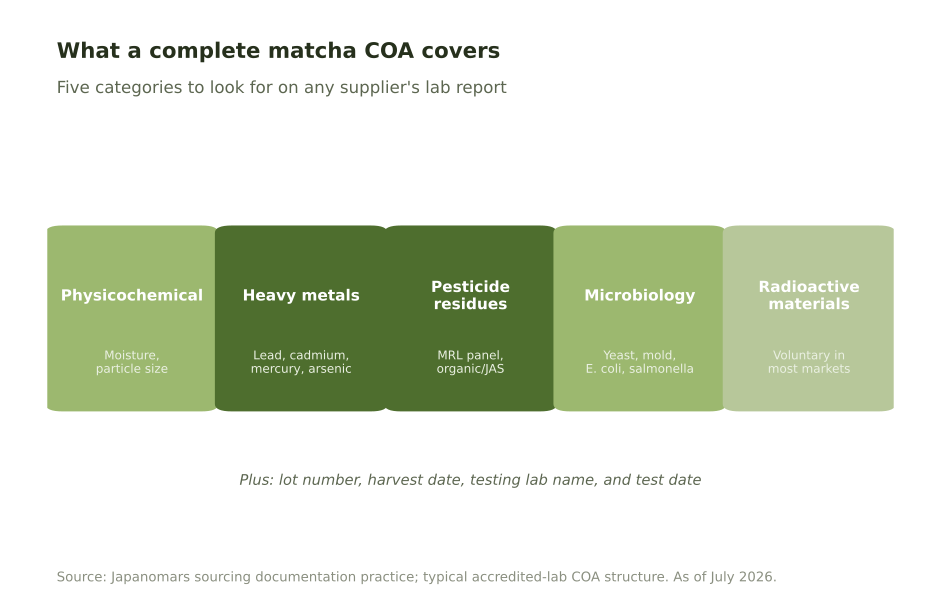
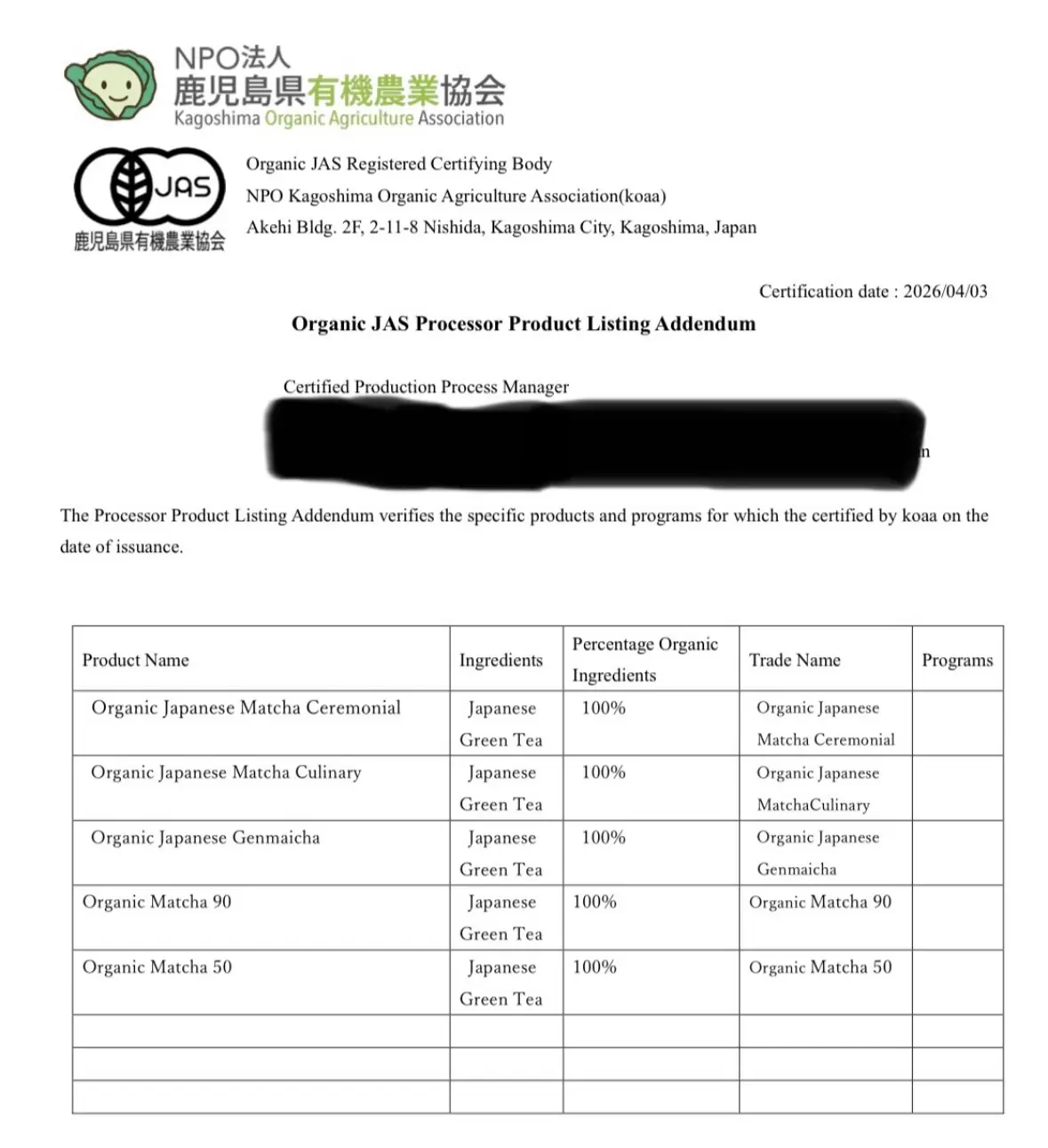
A complete matcha COA covers five categories: physicochemical properties (moisture, particle size, sometimes color), heavy metals (lead, cadmium, mercury, arsenic at minimum), pesticide residues, microbiology (yeast, mold, E. coli, salmonella), and, for some markets, radioactive materials. It should also state the specific lot number, harvest date or period, the testing lab's name and accreditation, and the date the sample was tested, not just a generic "matcha" result reused across every shipment.
The single most common shortcut suppliers take is reusing an old or generic COA across multiple lots or seasons. A COA from a harvest two years ago tells you nothing about the bag arriving next month. Always check that the lot number or harvest date on the COA actually matches what's on your shipment; if a supplier can't explain the connection, ask again before you sign off. For the specific pesticide residue standards and organic/JAS certification questions this touches on, see organic, JAS, and pesticide residue.
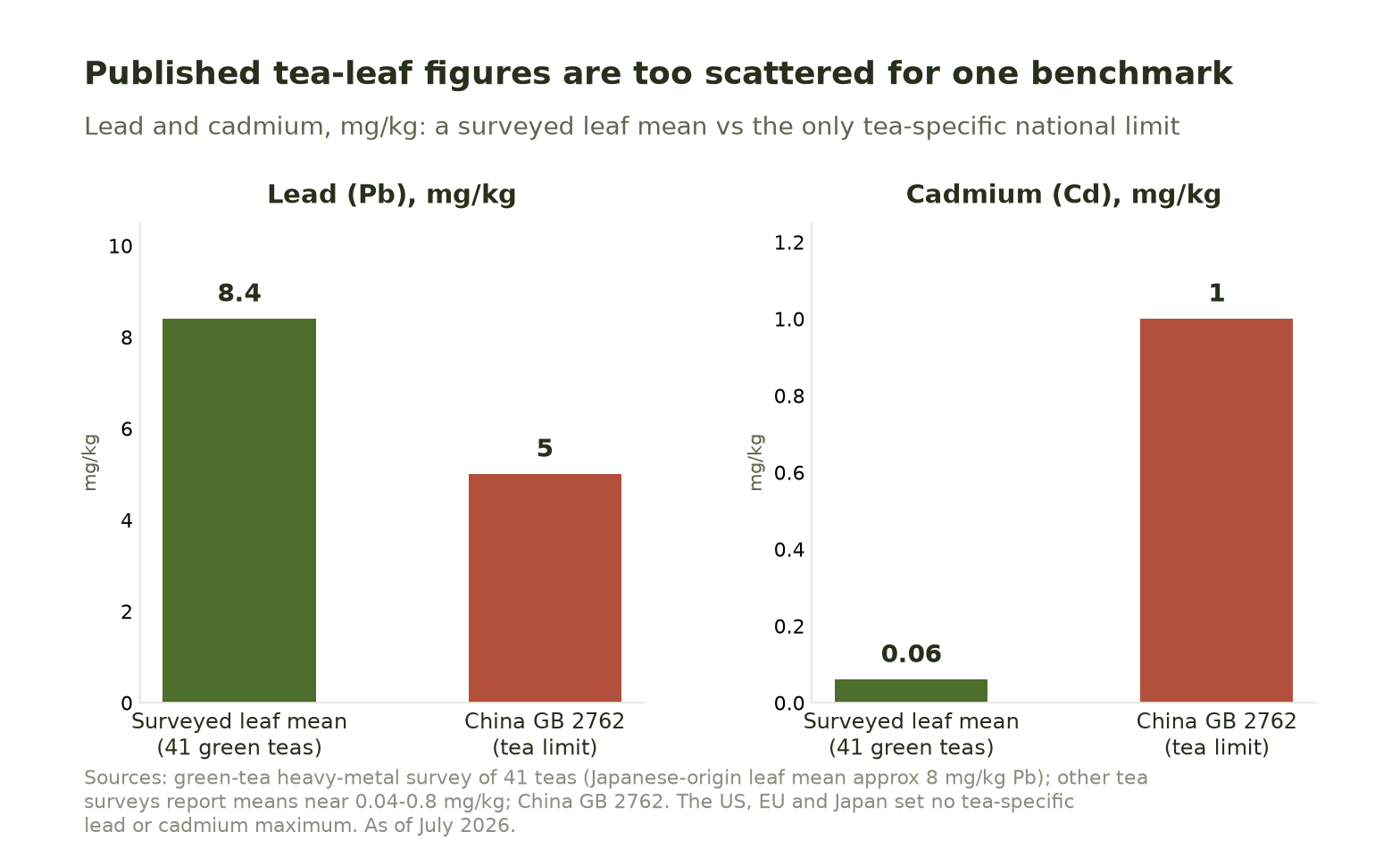
Every heavy metal reading on a matcha COA will be a number above zero, and that's expected, not alarming. Lead, cadmium, mercury, and arsenic occur naturally in soil and are absorbed in trace amounts by any plant grown in the ground, including tea, coffee, cocoa, rice, and leafy vegetables. Be careful, though, with any single "typical" figure, including ones you'll see quoted confidently online. Published surveys of tea leaf disagree with each other by more than an order of magnitude, depending on origin, soil, sampling, and analytical method: one peer-reviewed survey of 41 green teas reported mean lead in Japanese-origin leaf at 0.84 mg per 100g, roughly 8 mg/kg, while other tea studies report means nearer 0.04 to 0.8 mg/kg. There is no reliable single number a buyer can memorize and check against.
So what do you hold a result against? Start by knowing what the regulators actually say, which is: mostly nothing, for tea. The one national standard we could find that sets a tea-specific maximum for these metals is China's GB 2762, at 5.0 mg/kg for lead and 1.0 mg/kg for cadmium in tea. The US sets no equivalent for tea sold to adults, and we could not identify a tea-specific lead or cadmium maximum in EU or Japanese food law either. That is the honest picture, and it is the reason this guide will not hand you a magic number to check against: for matcha, the paperwork and the relationship really are doing the job a regulation would otherwise do. One thing does separate matcha from steeped tea here: you drink the whole powdered leaf rather than an infusion, and studies of brewed tea find only a small fraction of the leaf's lead ends up in the cup, so leaf concentration matters more for matcha than the same number would for sencha. What actually works is three habits, none of which need a threshold you have memorized. Ask the supplier what they reject lots on, and where that figure came from; a supplier who has never thought about it has told you something useful. Compare like with like, holding lots from the same supplier and the same accredited lab against each other, because drift between seasons is more informative than any single number in isolation. And question the outlier rather than auto-rejecting it: a result that jumps is worth a direct conversation before you order.
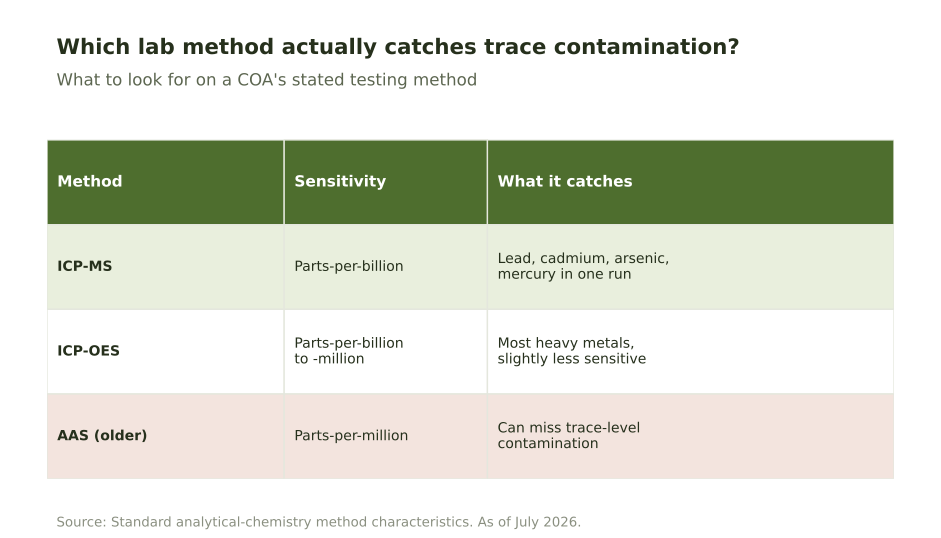
Look for testing done by ICP-MS (inductively coupled plasma mass spectrometry) or ICP-OES (optical emission spectrometry), the modern standard methods that detect heavy metals down to parts-per-billion across lead, cadmium, arsenic, and mercury in a single run. Older AAS (atomic absorption spectroscopy) testing can still be valid, but it's less sensitive and can miss trace-level results that ICP methods would catch, so a COA that names the method used is more trustworthy than one that just states a number.
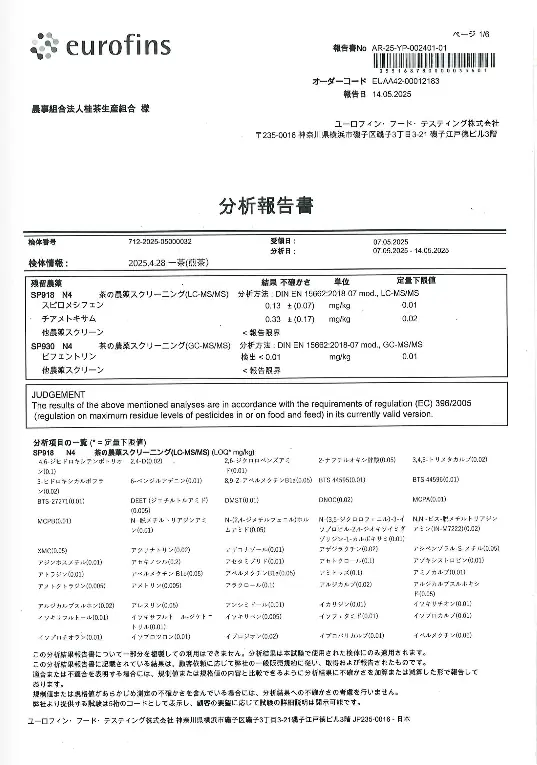
Accreditation matters as much as method. A COA from a recognized, independent lab, in Japan this often means a body like the Japan Food Research Laboratories or an internationally accredited lab such as Eurofins, carries real weight; a report from an in-house or unnamed lab does not. If a COA doesn't name the testing laboratory at all, treat that as a gap to ask about, the same way you'd question an invoice with no vendor name on it.
No single US federal action level applies specifically to heavy metals in matcha or tea for general consumption. The FDA's Closer to Zero initiative, which sets action levels for lead, cadmium, arsenic, and mercury, is targeted at foods intended for babies and toddlers, and the agency continued rolling out action levels and exposure data for that category through 2026. For matcha sold to the general adult market, there's no equivalent bright-line federal number, which means the practical safeguard is a supplier's own COA, and the questions you ask about it, rather than a regulatory pass/fail test.
This is exactly why the COA matters more for matcha than it would for a product category with a hard federal limit: the paperwork is doing the job a regulation would otherwise do. Pair the heavy metals review here with the customs and labeling requirements in importing matcha into the US, since a clean COA and correct import paperwork are two separate boxes that both need checking.
Radiation testing on Japanese tea is now mostly a voluntary trust signal rather than a legal requirement in most major markets. Japan's government reported that around 49 of the 55 markets that imposed restrictions after the 2011 Fukushima accident have since lifted all of them, Australia back in 2014, Singapore in 2021, and the EU in 2023. Taiwan removed its remaining prefecture-level ban in September 2024 and dropped the radiation-certificate requirement for food from the rest of Japan, though it still asks for radiation inspection and origin certificates on the specific products it had previously banned. A short list of markets, China, Hong Kong, Macau, and South Korea among them, still keeps restrictions and certificate requirements in place for products from certain prefectures.
For a US cafe buyer, radiation testing on a COA is no longer something to demand as a compliance requirement, but many Japanese suppliers still test and disclose results anyway, partly out of habit from the post-2011 export environment and partly because it costs little to keep offering a reassurance some buyers still ask for. If a supplier includes a radiation result on their COA without being asked, treat it as a small positive signal about how carefully they document their product, not as evidence that the numbers would otherwise have been a problem.
From the sourcing floor
I request a fresh certificate every time a new lot comes in, not once per supplier, and the first thing I do when it arrives is read it against the bag itself to see whether anything in the labelling disagrees with the document. The certificate then travels with the shipment as part of the export paperwork, so the cafe at the other end receives it without having to ask. Where this actually changes what I can offer is Europe: US and Japanese rules sit fairly close to each other, with the US a little looser in places, but European residue limits are strict enough that for those buyers I work almost entirely in certified organic lots.
Treat "we don't have one" or a long delay in producing a COA as a real red flag, not a minor inconvenience. Any supplier shipping matcha for commercial resale, especially across an international border, has almost certainly already had the lot tested for their own compliance purposes; a supplier who can't quickly produce that paperwork is either disorganized in a way that will show up elsewhere in the relationship, or hasn't actually had the product tested at all.
A few practical responses if a COA isn't forthcoming: ask for the name of the lab used and verify it independently rather than accepting the supplier's description of the results, request a smaller trial order while a proper COA is produced rather than committing to a full order on trust, or move to a supplier who already has current documentation ready. None of these responses need to be adversarial; a supplier confident in their product is usually glad to have a buyer who asks.
Run through this before signing off on a new supplier or a new season's lot:
A Certificate of Analysis is a lab report from an accredited third-party laboratory confirming what's actually in a specific matcha lot, typically covering heavy metals, pesticide residues, microbiology, and sometimes physicochemical and radioactive-material results. It should be matched to the exact lot and harvest you're buying, not reused from a previous season.
No. Lead, cadmium, mercury, and arsenic occur naturally in soil and are absorbed in trace amounts by any plant grown in the ground, matcha included, so a non-zero result is normal. Be wary of any single "typical" figure, though: published surveys of tea leaf disagree by more than an order of magnitude depending on origin, sampling, and method. Compare lots from the same supplier and lab against each other rather than against a memorized number.
Look for ICP-MS (inductively coupled plasma mass spectrometry) or ICP-OES, the modern standard methods that detect trace heavy metals with high sensitivity across lead, cadmium, arsenic, and mercury. Older AAS testing is less sensitive and can miss trace-level contamination that ICP methods would catch.
Not a matcha-specific one. The FDA's Closer to Zero initiative sets action levels for lead, cadmium, arsenic, and mercury, but it's targeted at foods for babies and toddlers, not general adult food products like matcha. China's GB 2762 does set a tea-specific limit (5.0 mg/kg lead, 1.0 mg/kg cadmium), but it is the only one we could identify. Buyers rely on supplier COAs, and on asking a supplier what they screen lots against, rather than a single federal number.
Not as a legal requirement for a US buyer. Around 49 of the 55 markets that restricted Japanese food after 2011 have lifted all measures, the US and EU among them. A handful, including China, Hong Kong, Macau, and South Korea, still keep certificate requirements for products from certain prefectures, so it can still matter if you resell into those markets. Some suppliers test and disclose results voluntarily as a trust signal, which is a small positive sign but no longer a compliance box a US cafe needs to check.
Treat it as a real warning sign. Ask for the specific lab used and verify it independently, request a smaller trial order while proper documentation is produced, or move to a supplier who already has current lot-matched paperwork ready. A supplier confident in their product should have no difficulty producing one.
A bench test tells you how matcha tastes and performs; a COA tells you what's actually in it, and both matter before you commit to a wholesale order. Ask for a lot-matched COA from every new supplier and every new season, check that the lab and method are named, hold heavy metal results to a reasonable benchmark, and treat a supplier's inability to produce one as the clearest red flag on this list.
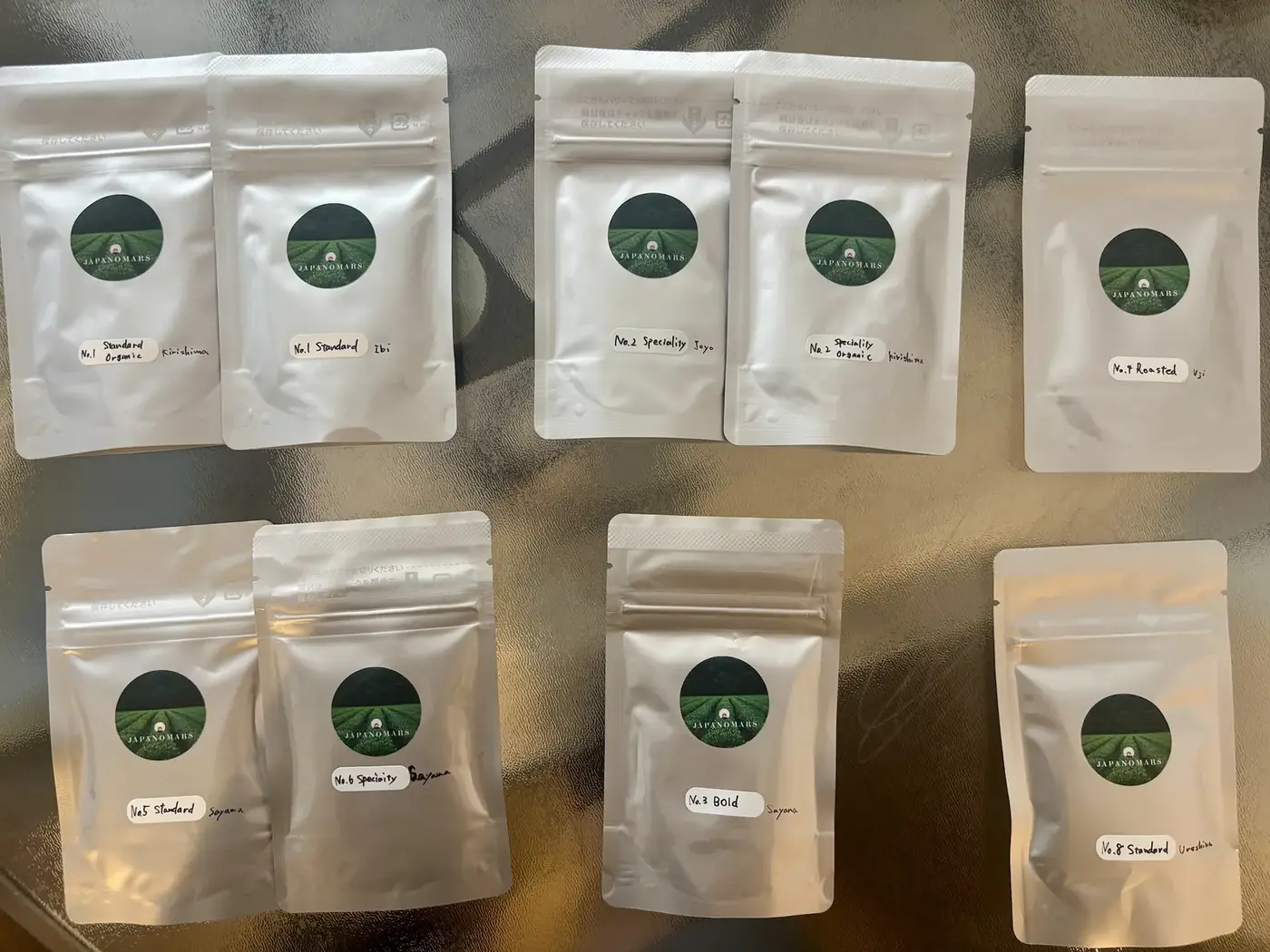
Japanomars provides current COAs from accredited labs for every lot we ship, alongside samples and current wholesale pricing. Request samples, pricing, and current lab documentation, and see the paperwork before you place an order.
Request samples & pricingHiroshi Asami is the founder of Japanomars, a Japanese matcha exporter supplying specialty cafes across the US, Canada, and the Philippines, working farm-direct with growers and regional tea factories in six producing regions, and requests lot-matched lab documentation from those suppliers every season.
Sources
%E7%99%BD_%E5%A4%A7%E3%81%8D%E3%81%84.png)