%E5%A4%A7%E3%81%8D%E3%81%84.png)
Sourcing & Compliance · 2026
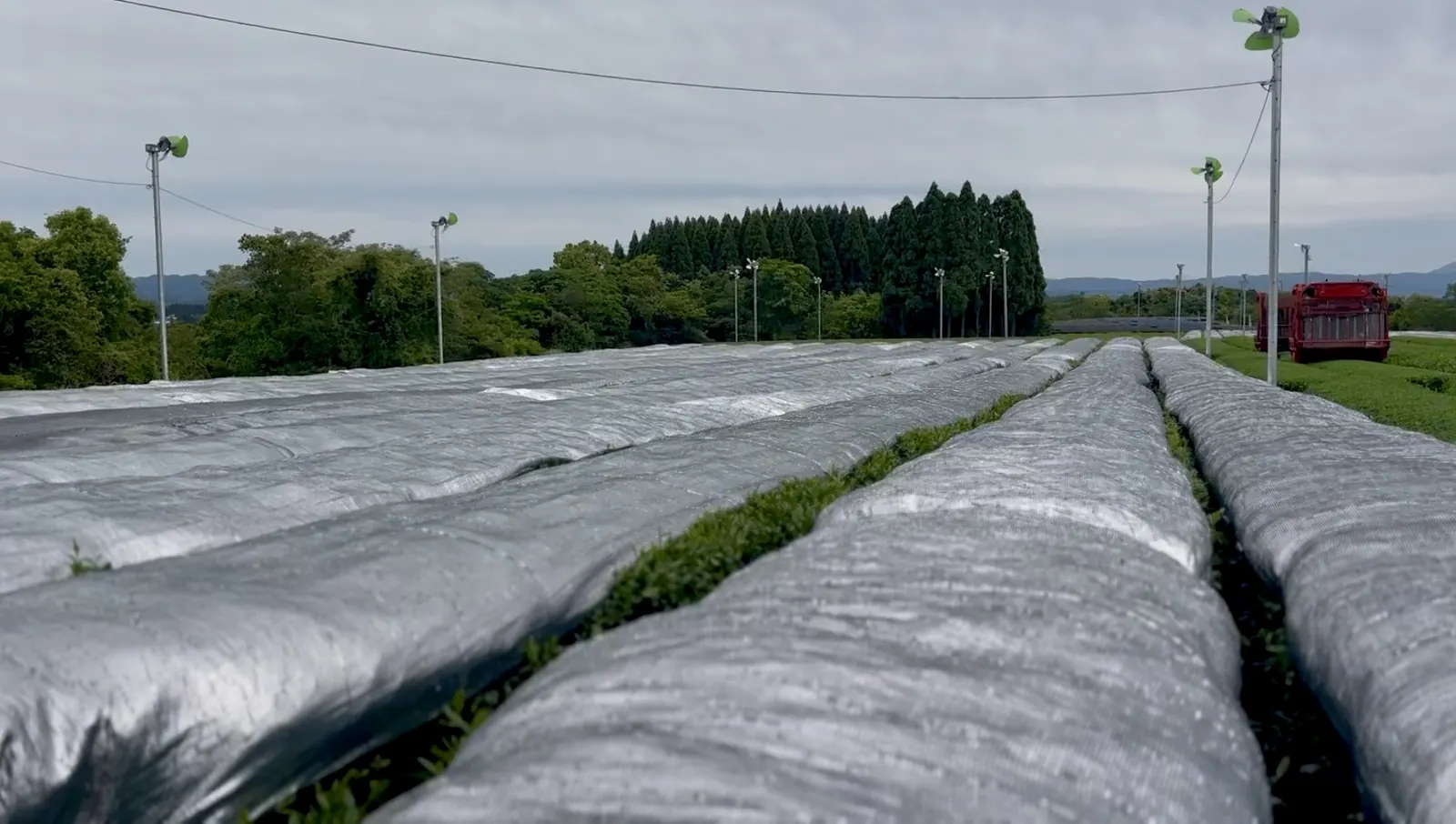
JAS organic is Japan's national organic standard, and under the US-Japan organic equivalence arrangement, matcha certified organic under JAS can be sold as USDA Organic in the United States without re-certification. Pesticide residue in conventional Japanese matcha is mostly a compliance question, not a safety scare: Japan runs its own strict residue system, but a few compounds legal in Japan have no US tolerance at all. This guide walks cafe owners and private-label buyers through what the certifications mean, what the residue rules actually say, and which documents to demand before you wire a deposit.
Key takeaways
In this guide
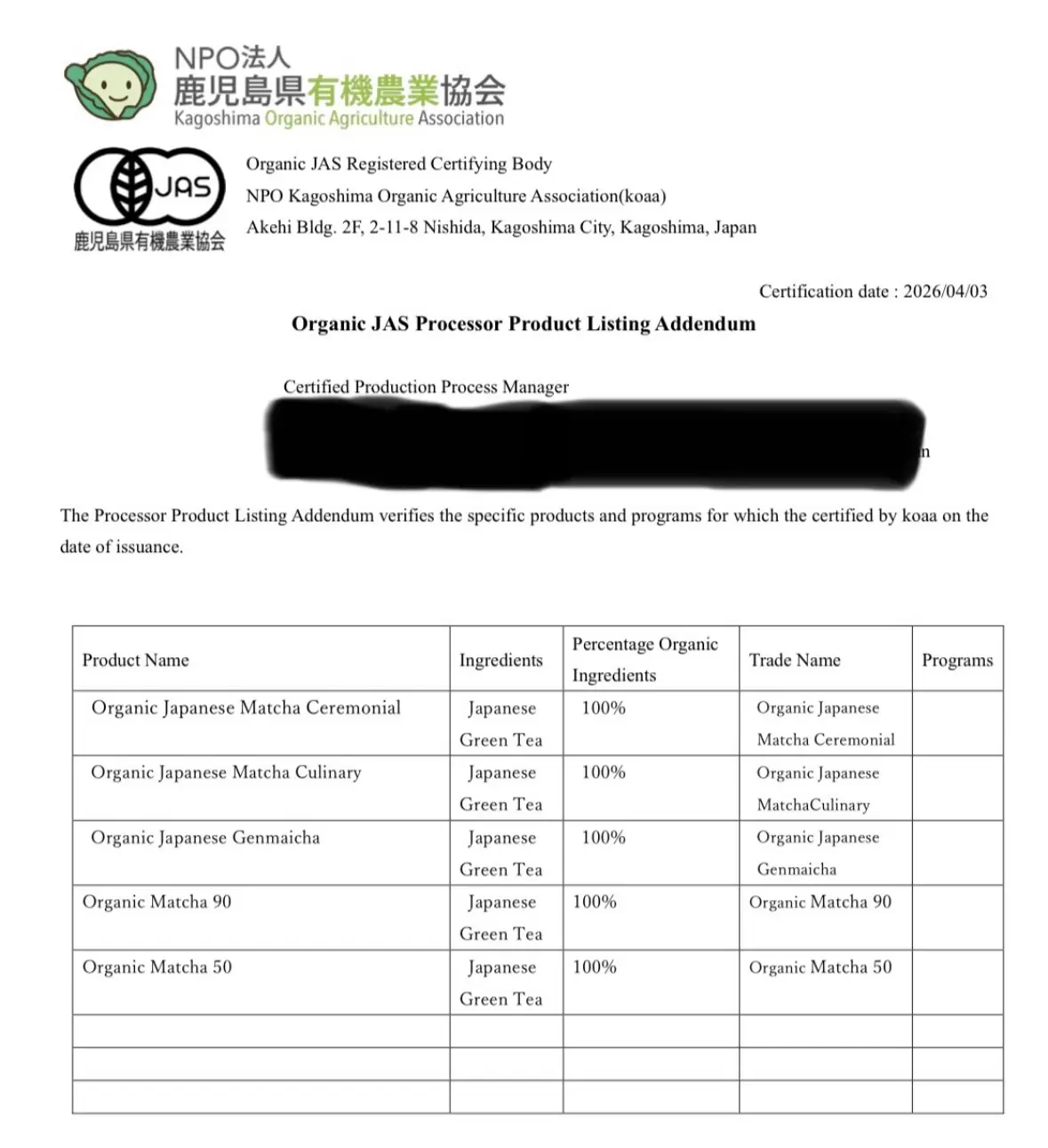
JAS organic (yuki JAS) is Japan's legally protected organic standard, administered by the Ministry of Agriculture, Forestry and Fisheries (MAFF). For tea it requires roughly three years of management without prohibited inputs before the first certified harvest, annual third-party audits, and certification at every step of processing, from the field to the factory that grinds the tencha into powder. Only certified operators may put the JAS seal, or the word "organic," on product sold in Japan.
In practice the standard prohibits synthetic pesticides, synthetic fertilizers, and GMO material, and requires at least 95% organic content for a product to carry the seal. The chain-of-custody point matters for matcha specifically: the farm, the tencha factory, and the milling operation all need certification. A certified field ground in an uncertified mill is not organic matcha.
One thing US buyers rarely hear: tea is already Japan's most organic major crop. MAFF data puts the organic share of tea acreage above 5%, an order of magnitude higher than Japanese vegetables (0.36%) or rice (about 0.1%). Organic tea in Japan grew up as an export business, and it shows in where the fields are, which we will get to below.
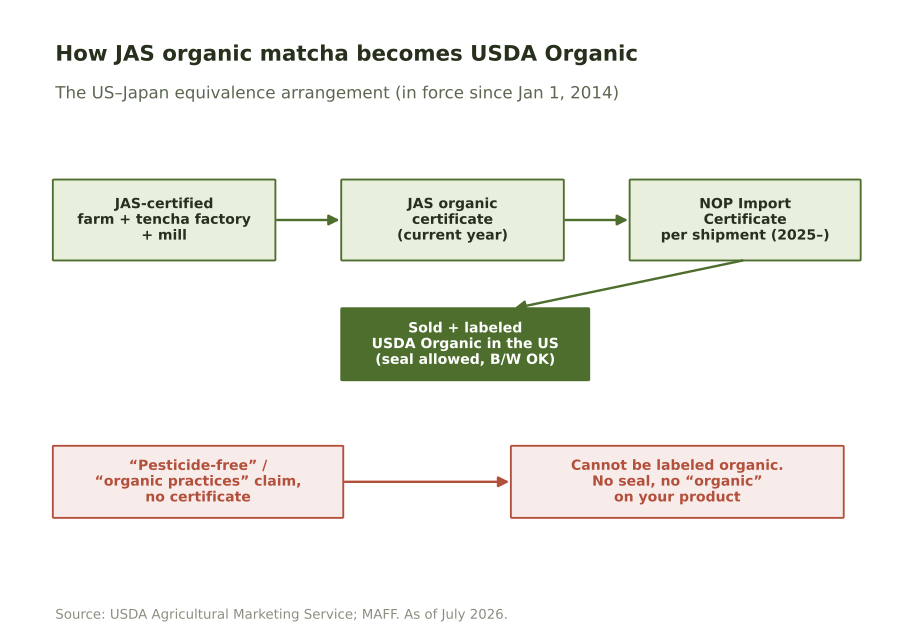
Functionally yes, for imports. Since January 1, 2014, the US and Japan have operated an organic equivalence arrangement: matcha certified under JAS can be sold, labeled, and marketed as USDA Organic in the US without separate USDA certification, according to the USDA Agricultural Marketing Service. Since 2025, each shipment must also travel with an electronic NOP Import Certificate filed in USDA's Organic Integrity Database.
What that means at your end:
If you are importing directly, the organic certificate rides on top of the normal FDA and customs paperwork, which we covered in our guide to importing matcha into the US.
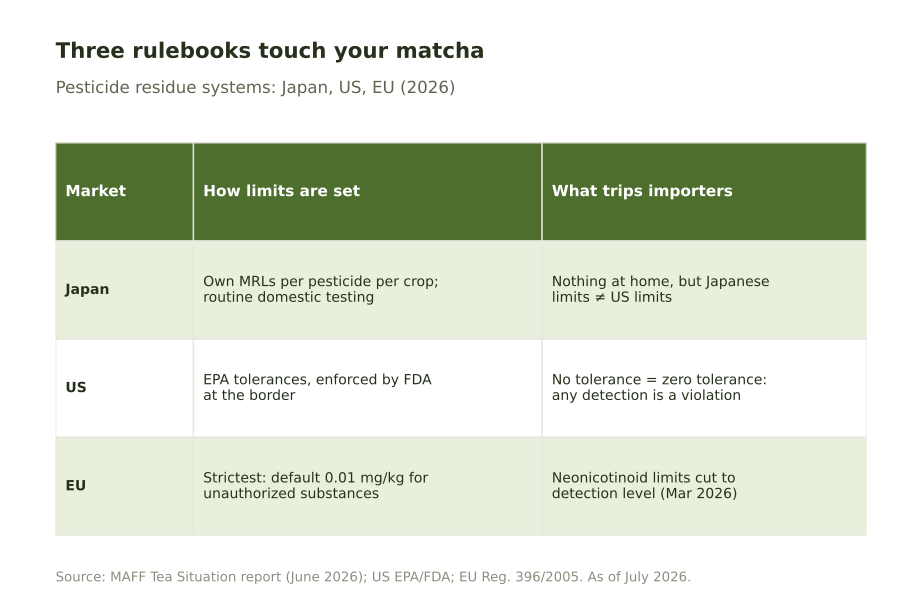
On safety, mostly no. On paperwork, yes. Japan regulates tea pesticides under its own maximum residue limit (MRL) system and tests domestic tea routinely, so conventional Japanese matcha that is legal at home is overwhelmingly within safe ranges. The US complication is legal, not toxicological: if a compound has no EPA tolerance established for tea, any detectable trace renders a shipment adulterated, even at a level Japan considers safe.
This is worth understanding because matcha is the one tea you consume whole. Nothing steeps out; the leaf is the drink. Serious buyers should therefore treat residue testing as part of quality control, not as a scare topic.
Three regulatory systems touch your matcha:
The gap is closing from the Japanese side. MAFF has been filing US import-tolerance applications for the pesticides Japanese tea growers actually use: 14 filed and 13 already established through fiscal 2025, per the ministry's June 2026 tea report. Meanwhile, whole prefectures have published export-compliant spray calendars, and many conventional export lots are grown to those programs. Your action item is simple: ask for a lot-specific certificate of analysis (COA) screened against US tolerances, and make it a standing requirement, not a one-time favor.
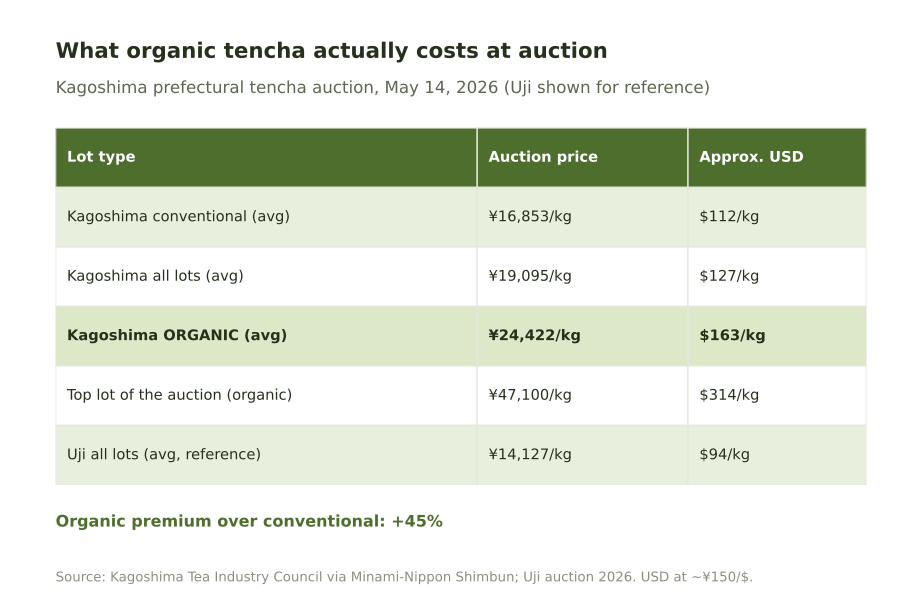
Expect roughly 30 to 50 percent over comparable conventional matcha at the raw-material level. At Kagoshima prefecture's tencha auction in May 2026, organic lots averaged ¥24,422 per kilogram against ¥16,853 for conventional, a 45 percent premium, and the top lot of the year, ¥47,100 (about $310/kg), was organic. For context, Uji tencha averaged ¥14,127 at its own 2026 auction: organic Kagoshima now sits at the very top of the Japanese market.
Why the premium is structural, not opportunistic:
That flavor trade-off deserves honesty. The best organic producers, especially in Kagoshima, have closed much of the gap with cultivar selection and longer shading, but on average an organic matcha will show less umami than a conventional one costing the same. If your customers buy clean-label and provenance, organic earns its premium on the menu board. If you compete on depth of flavor in a ceremonial-style pour, taste organic and conventional side by side before you commit, ideally against our matcha grades guide.
From the sourcing floor
At the May 2026 Kagoshima tencha auction, 38 of the 64 lots offered were organic, and they still cleared at a 45 percent premium over conventional. The organic conversation also doesn't end at the powder: one of our US private-label clients recently spent a week of messages with us perfecting her tin labels, down to requesting the USDA seal in black and white to match her design. (Allowed, by the way.)
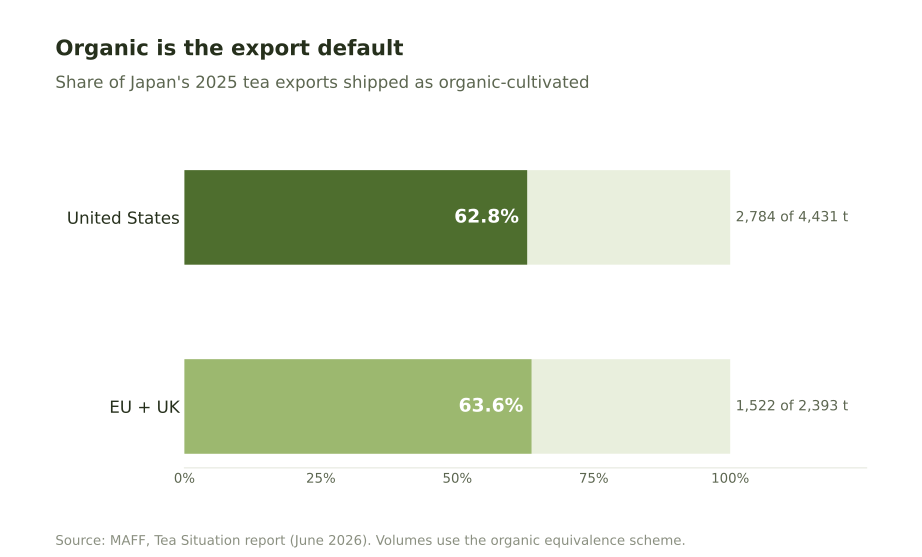
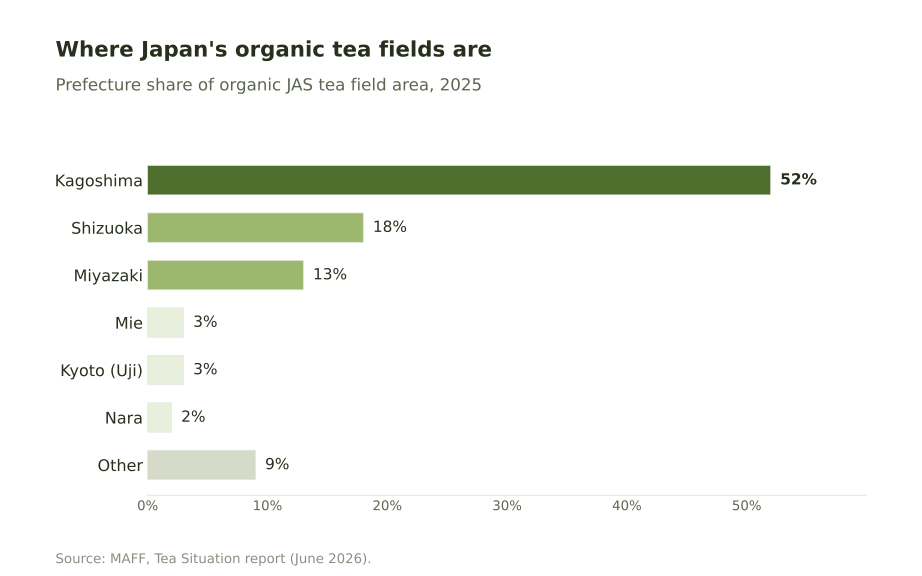
Tight, and structurally so. Organic-cultivated tea already makes up 62.8 percent of Japan's tea exports to the US (2,784 of 4,431 tonnes in 2025) and 63.6 percent of exports to the EU and UK, according to MAFF's June 2026 tea report. Yet certified organic fields remain a small slice of Japan's total tea acreage, and they are heavily concentrated: Kagoshima alone holds 52 percent of Japan's organic JAS tea fields, followed by Shizuoka at 18 percent and Miyazaki at 13 percent. Uji's home prefecture of Kyoto holds about 3 percent.
Policy is pushing hard in one direction. Japan's new Basic Policy for the tea industry (April 2025) explicitly promotes converting fields to tencha and to organic cultivation for export demand, and the fiscal 2026 budget pays growers ¥100,000 per 10 ares toward organic conversion materials. The national target is to nearly double tea exports to 15,000 tonnes by 2030.
But conversion is slow by nature: three years of transition, plus shading equipment and tencha furnace capacity if the field is moving to matcha at the same time. New organic tencha supply arrives in trickles while US and EU demand absorbs it immediately. Practically, that means organic matcha behaves like the tightest corner of an already tight market: allocation goes to buyers with order history, annual plans, and deposits, a dynamic we map region by region in our Japanese matcha regions guide.
Five documents separate genuinely certified organic matcha from a marketing claim. Ask for all of them before your first order, and make the COA a standing requirement per lot.
Red flags worth walking away from: "pesticide-free" or "organic practices" claims with no certificate, a seal on the website that does not appear on the certificate, and organic offers priced below the conventional auction average. If the paper trail feels evasive, the powder usually is too. The same discipline applies to any supplier relationship, certified or not, and we keep a fuller checklist in our guide to finding and vetting a Japanese matcha supplier.
For trade purposes, yes. Under the US-Japan organic equivalence arrangement in force since January 1, 2014, JAS-certified organic matcha may be sold and labeled as USDA Organic in the US without separate certification. Since 2025 each shipment also requires an electronic NOP Import Certificate, so ask your supplier to confirm they issue one.
No. Restaurants and cafes serving prepared drinks are exempt from NOP certification. You may truthfully say a drink is "made with organic matcha" if your supply is genuinely certified. Selling your own packaged retail product with the USDA seal is different, and generally requires a certified handler in the chain.
Trace residues can occur within Japan's legal limits, as with any conventional crop. Because matcha is consumed whole, reputable exporters screen lots against the destination market's limits, and Japan has been aligning with US rules through import-tolerance filings (13 established through fiscal 2025). Ask for a lot-specific COA rather than assurances.
Umami in matcha comes largely from theanine, which conventional growers build with heavy nitrogen fertilization. Organic programs feed nitrogen more slowly, so many organic lots show less umami and more grassiness. Top organic producers narrow the gap with cultivar choice and longer shading, so always taste before committing.
Plan on 30 to 50 percent above comparable conventional matcha. At the May 2026 Kagoshima tencha auction, organic averaged ¥24,422/kg versus ¥16,853 for conventional, a 45 percent premium at the raw-leaf level. Finished wholesale pricing varies with grade and volume, but the premium persists through the chain.
It is an electronic certificate generated in USDA's Organic Integrity Database by the exporter's certifier, required for organic imports since 2025. Your supplier arranges it per shipment; your customs broker declares it at entry. Without it, the shipment can still enter the US, but not as organic.
Organic matcha in 2026 is a real, verifiable category with a real, structural premium. The certification question is settled (JAS travels as USDA Organic), the safety question is manageable (screen lots against US tolerances), and the hard question is supply: certified organic tencha is the tightest corner of the market, concentrated in Kagoshima, and claimed early each season.
Japanomars sources direct from farms and regional factories across Kagoshima, Fukuoka, Saga, Gifu, and Saitama, including certified-organic lots when allocation allows, and every quote comes with the full document set: certificates, COAs, and import paperwork handled. Request samples and current pricing, and we will tell you honestly which side of the premium your concept actually needs.
Request samples & pricing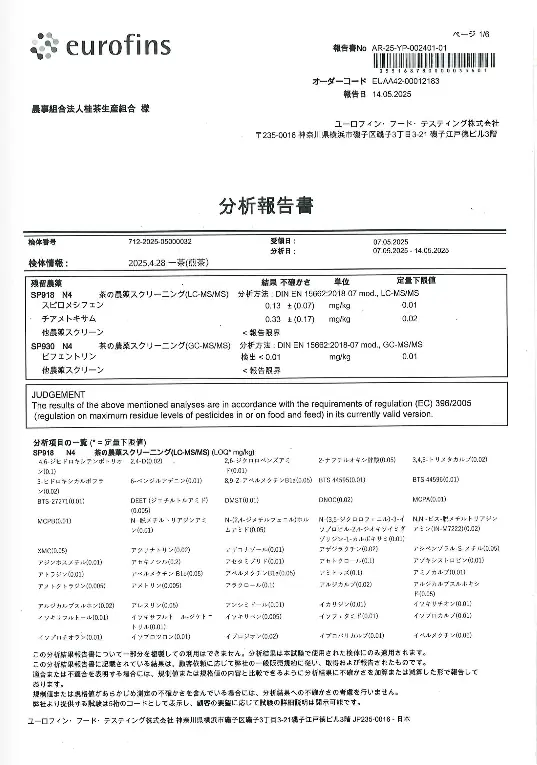
Hiroshi Asami is the founder of Japanomars, a Japanese matcha exporter supplying specialty cafes across the US, Canada, and the Philippines, working directly with farms and regional tea factories in six producing regions.
Sources: MAFF, "Tea Situation" (茶をめぐる情勢), June 2026 edition; MAFF organic tea export case studies; USDA Agricultural Marketing Service, US-Japan Organic Equivalence Arrangement; Kagoshima Tea Industry Council prefectural tencha auction results, May 14, 2026 (via Minami-Nippon Shimbun); Japan's Basic Policy for the Promotion of the Tea Industry and Tea Culture, April 2025.
%E7%99%BD_%E5%A4%A7%E3%81%8D%E3%81%84.png)