%E5%A4%A7%E3%81%8D%E3%81%84.png)
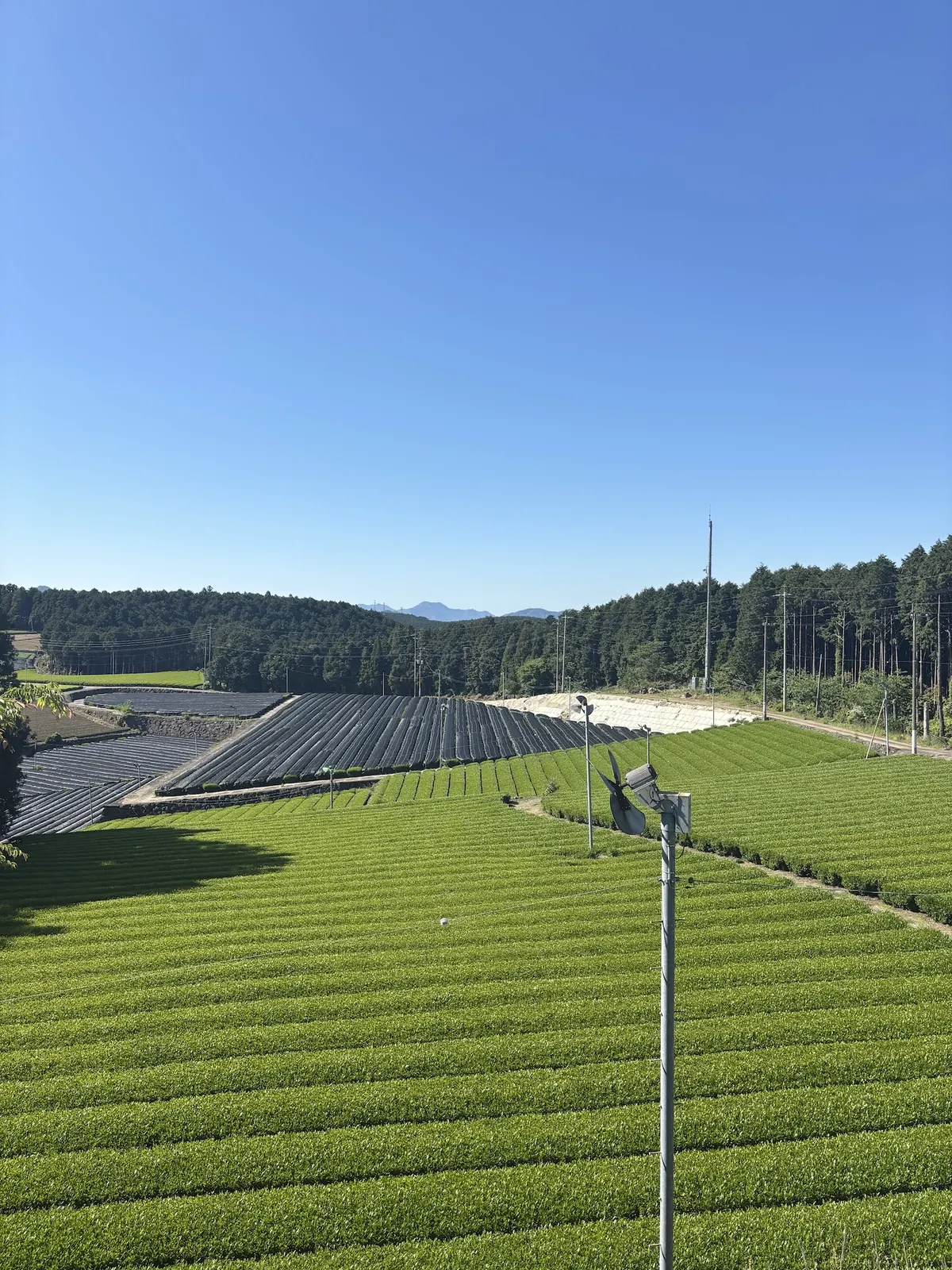
For most US cafes, the right Japanese matcha origin depends on the drink, not the prestige of the name: source Kagoshima or Nishio for everyday lattes and culinary use, and reserve Uji or Yame for a premium ceremonial-grade pour. Origin shapes flavor, price, and (right now, in the middle of a structural shortage) whether you can reliably get supply at all.
I am Hiroshi Asami, and I source and export matcha directly from farmers across Japan through Japanomars. I have walked these fields, shipped from most of the regions below, and brought cafe owners on sourcing tours to meet the growers. Here is how to choose the origin that fits your menu and your margins.
Key takeaways
Yes. Origin drives three things a cafe owner feels directly: flavor profile, price, and supply security. A Kagoshima latte-grade and an Uji ceremonial-grade are different products with different costs and different availability. Choosing origin deliberately is how you protect both your cup quality and your food cost in a shortage.
Think of origin as a lever, not a status symbol. A vivid, umami-deep Uji ceremonial grade is wasted in a 16 oz oat-milk latte; a bright Kagoshima grade built for milk is the smarter pour there and protects your margin. And in 2026, picking origin is increasingly about who can actually deliver, season after season.
For the structural reasons behind the current squeeze, why a once-a-year crop cannot keep up with demand, see our companion guide, How to Source Japanese Matcha During the Shortage.
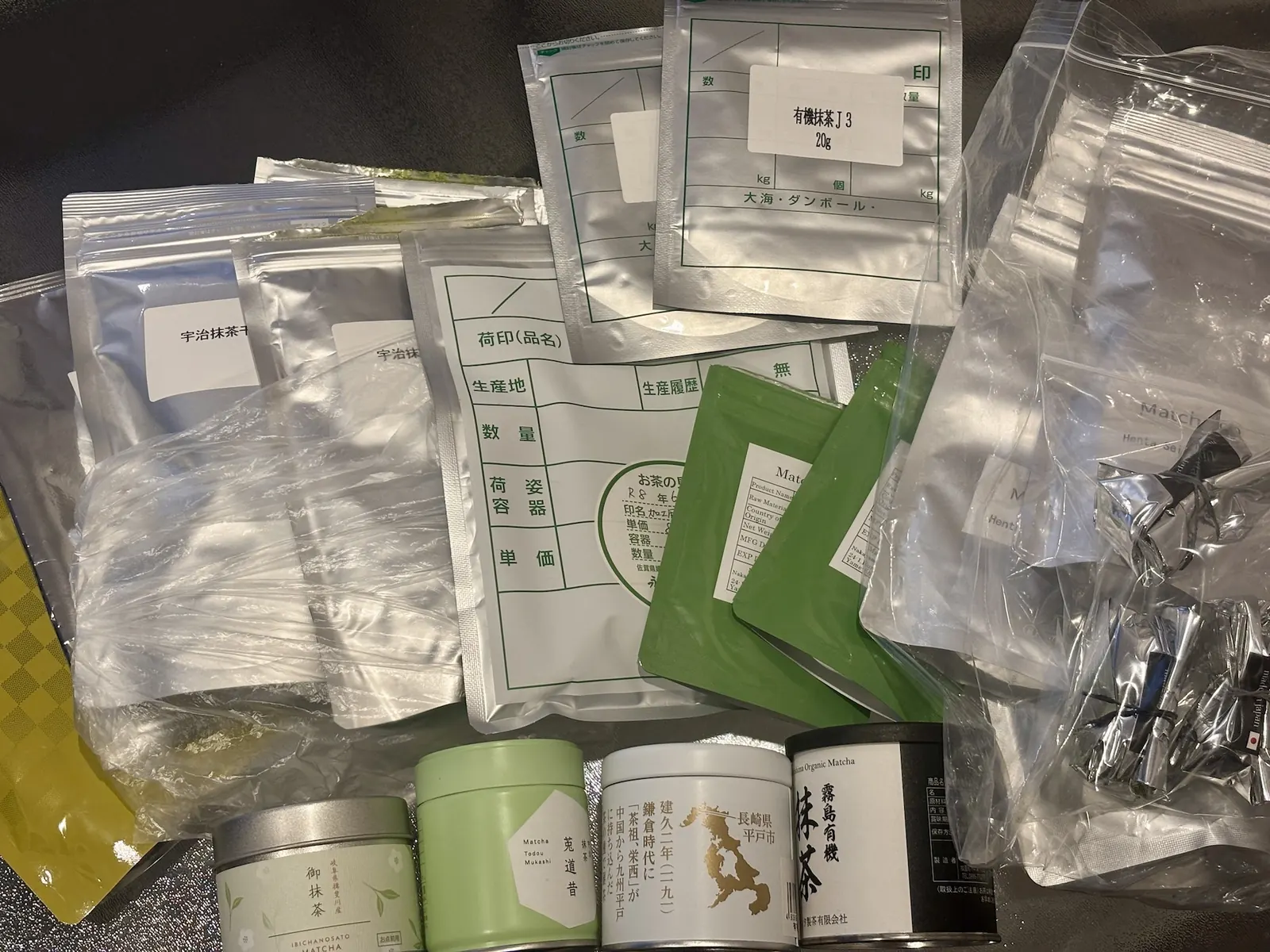
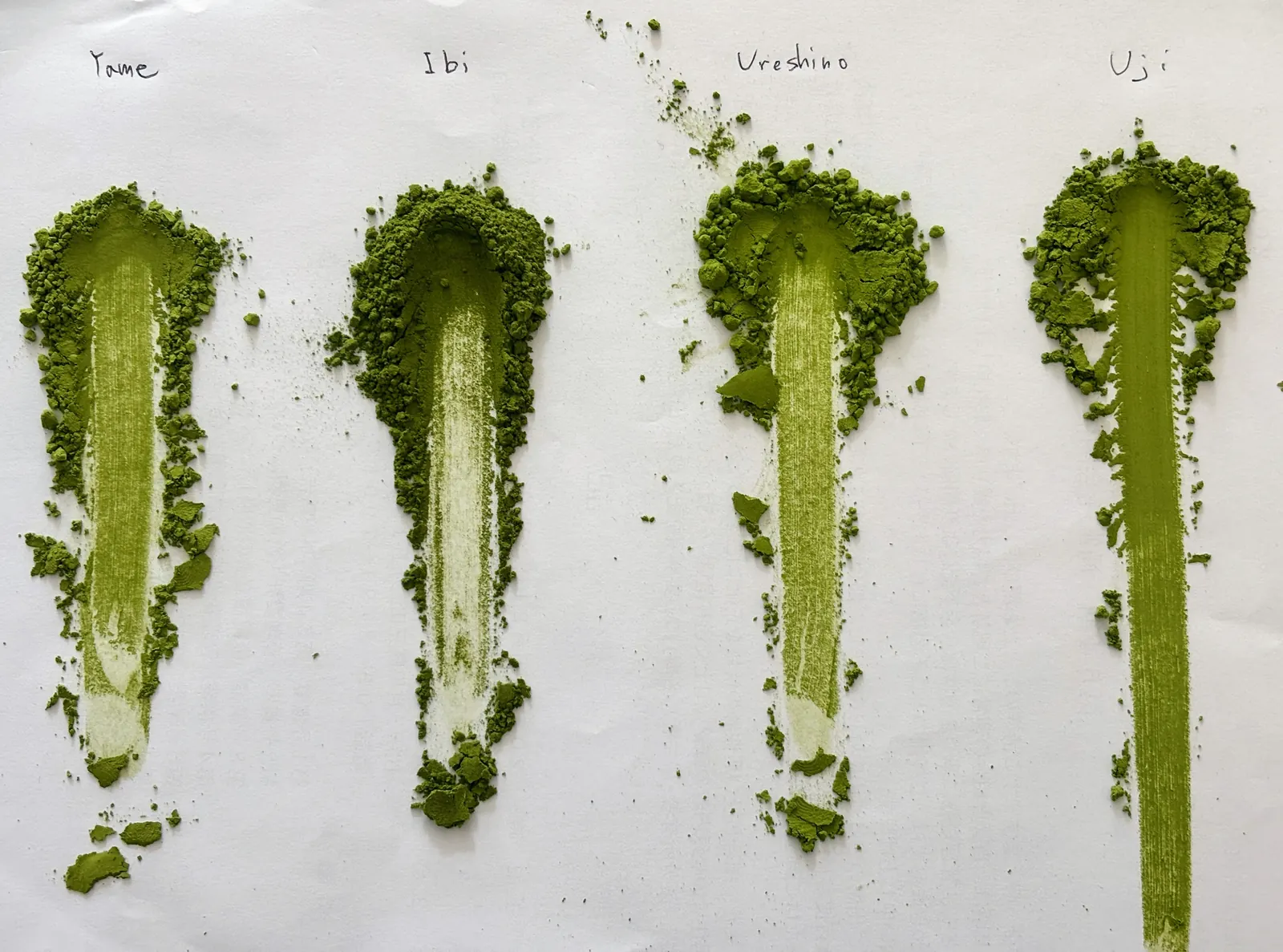
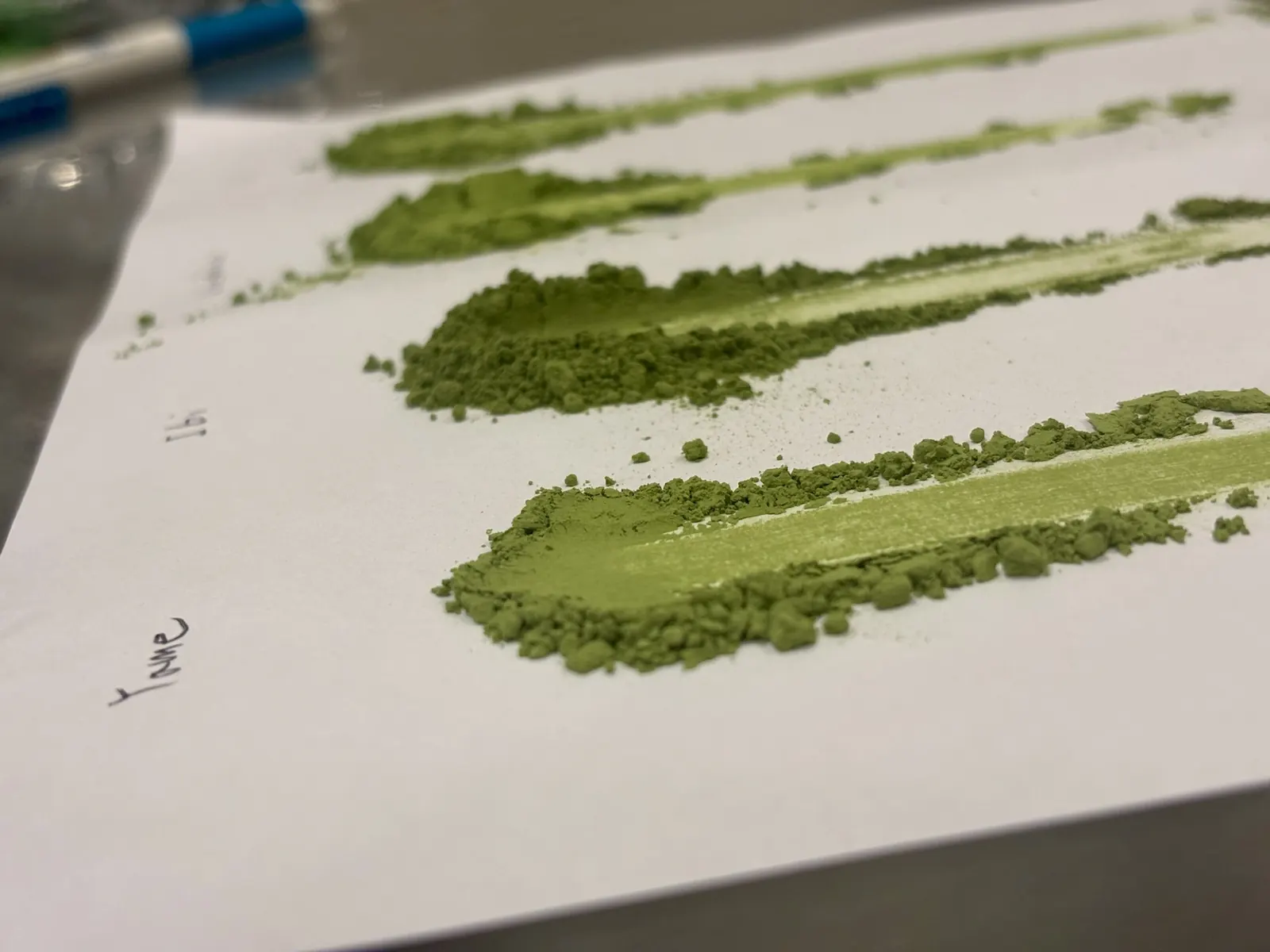
Matcha is produced in a band running from Kyushu in the southwest up through central Honshu, with the four best-known matcha names being Uji (Kyoto), Nishio (Aichi), Kagoshima, and Yame (Fukuoka). A second tier of established tea regions (Shizuoka, Mie, Nara, Shiga, Sayama, and others) also make tencha, and a new frontier is now emerging.
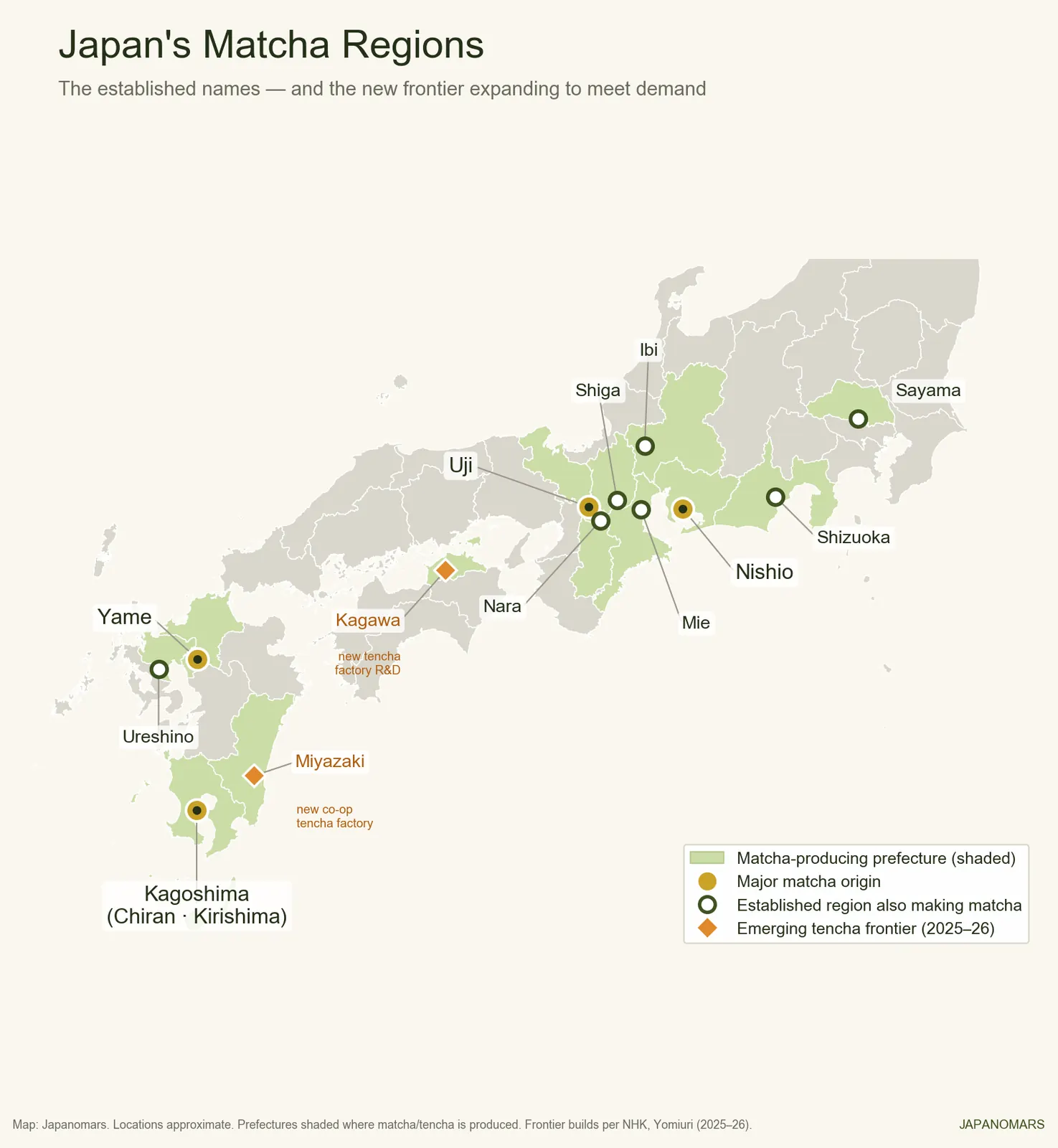
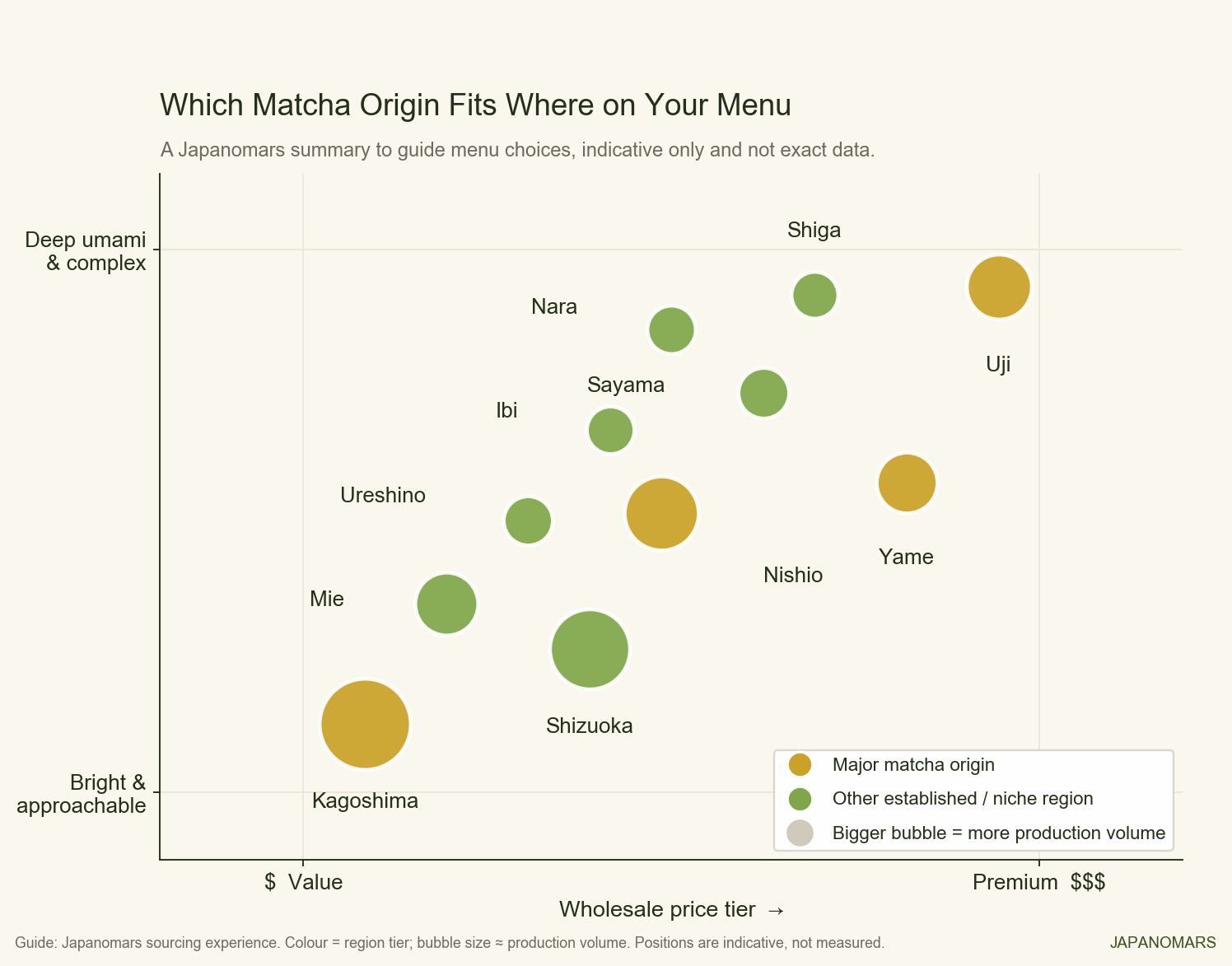
Geography sets the harvest: warm southern regions like Kagoshima pick earliest and mechanize across flat fields, while historic highland areas like Uji and Nara rely on hand labor and steeper terrain, which raises both quality ceilings and costs. Here is the at-a-glance comparison cafe buyers ask for:
| Region (Prefecture) | Flavor character | Volume / availability | Price tier | Best for |
|---|---|---|---|---|
| Uji (Kyoto) | Deep umami, refined, vivid, complex | Low, very tight | $$$ Premium | Ceremonial pour, storytelling, top tier |
| Nishio (Aichi) | Bright green, nutty, savory, consistent | Medium to high, reliable | $$ Mid | House ceremonial plus premium lattes |
| Chiran & Kirishima (Kagoshima) | Fresh, bright, grassy-sweet | High, scaling fast | $ Value | Everyday lattes, culinary, volume |
| Yame (Fukuoka) | Full-bodied, sweet, mellow umami | Low to medium | $$$ Premium | Premium but approachable signature |
| Asukubo & Fujieda (Shizuoka) | Clean, balanced | Emerging, growing | $$ Mid | Scalable mid-grade as supply ramps |
| Ise (Mie) | Mild, rounded, dependable | Medium, underrated | $ Value | Value lattes, culinary |
| Yamato Highlands (Nara) | Naturally sweet, highland-grown | Low, artisanal | $$ Mid | Characterful single-origin story |
| Asamiya (Shiga) | Aromatic, high fragrance | Low, niche | $$ Mid | Aroma-forward signature drinks |
| Sayama (Saitama) | Rich, sweet, full-bodied; roasty Sayama-bika finish | Low, niche | $$ Mid | Bold, full-flavored signature |
| Ibi (Gifu) | Fresh, aromatic, sweet, clean | Low, niche | $$ Mid | Clean, aromatic everyday |
| Ureshino (Saga) | Mellow, rounded, sweet, low astringency | Low, niche | $$ Mid | Smooth, approachable specials |
These four are the names your customers may recognize: Uji for prestige, Nishio for consistency, Kagoshima for value and volume, Yame for rich-and-sweet premium. Knowing the difference lets you build a menu instead of just buying a tin.
Uji is the reference point the whole industry measures against: shade-grown tencha milled into a vivid, umami-rich, low-astringency matcha, often from prized cultivars like Samidori and Asahi. It is also the tightest and most expensive supply in Japan, and the most exposed to the shortage.

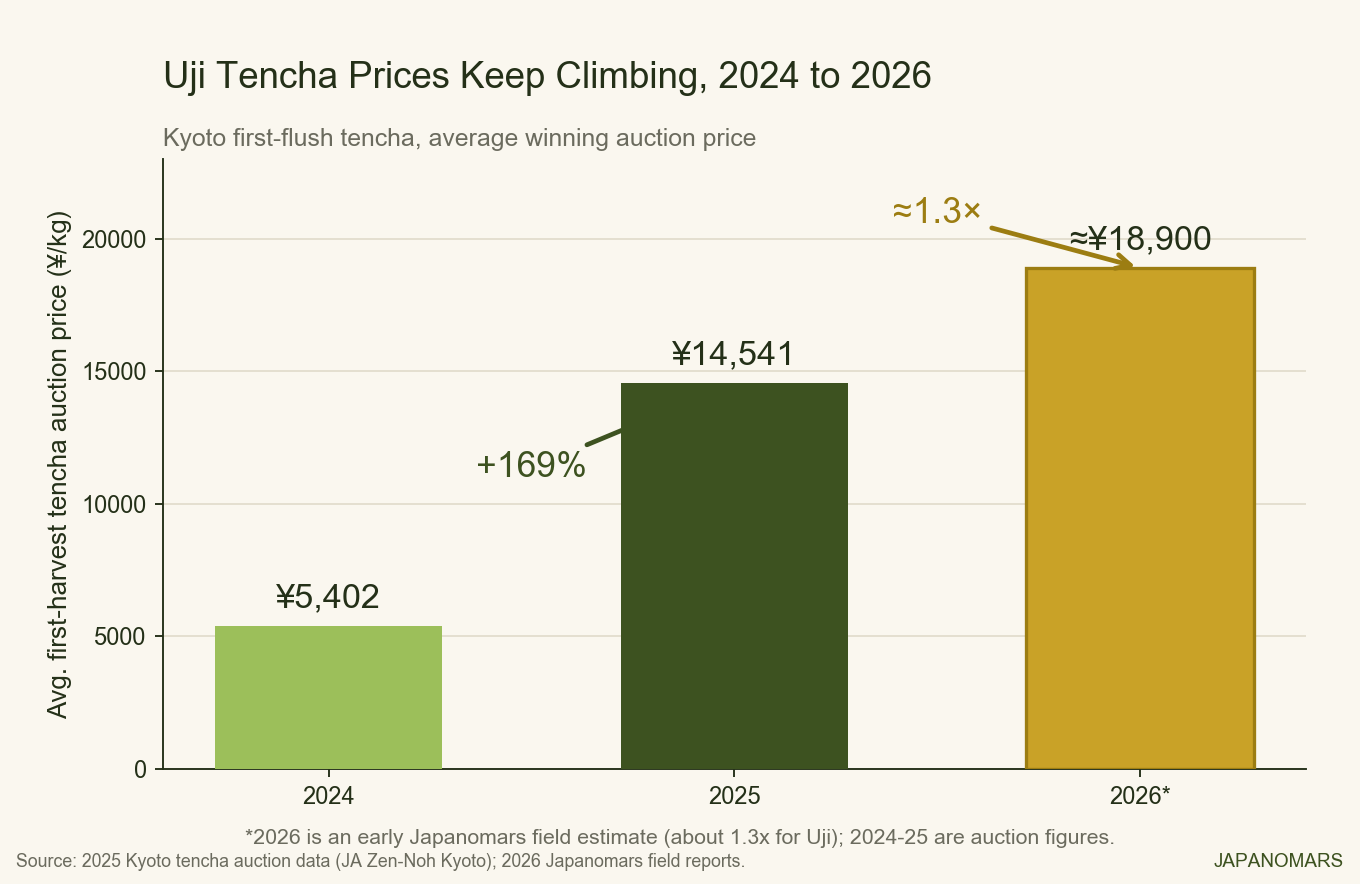
The 2025 numbers tell the story. Hand-picked Uji tencha fell roughly 40% year on year (Kyoto Prefecture / Kyoto Tea Industry Association), and the first-harvest tencha auction average jumped from about 5,402 to 14,541 yen/kg, up about 169%, with top lots reaching 43,330 yen/kg (JA Zen-Noh Kyoto). Commit early, and treat Uji as your halo product, not your everyday pour.
Nishio is built for cafes that need the same cup every week. The city produces roughly 20% of Japan's tencha, and over 90% of its tea fields are dedicated to tencha, an unusual specialization that makes Nishio matcha dependable in color, flavor, and price.
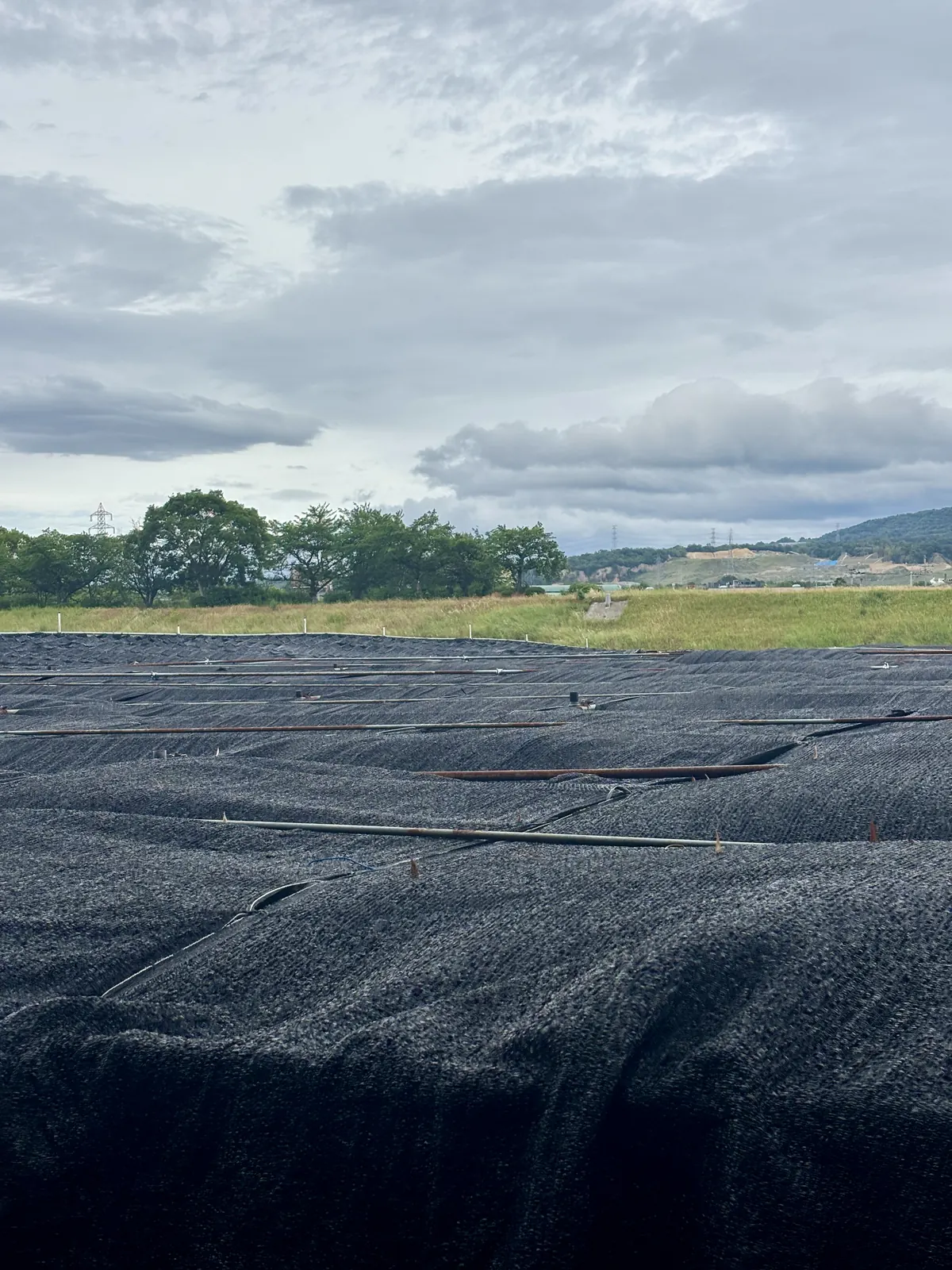
The cup sits in a friendly middle: bright green, nutty, savory, with enough body for milk and enough refinement to serve straight. For an operator who wants the same result every week, it is one of the smartest mid-tier choices in Japan.
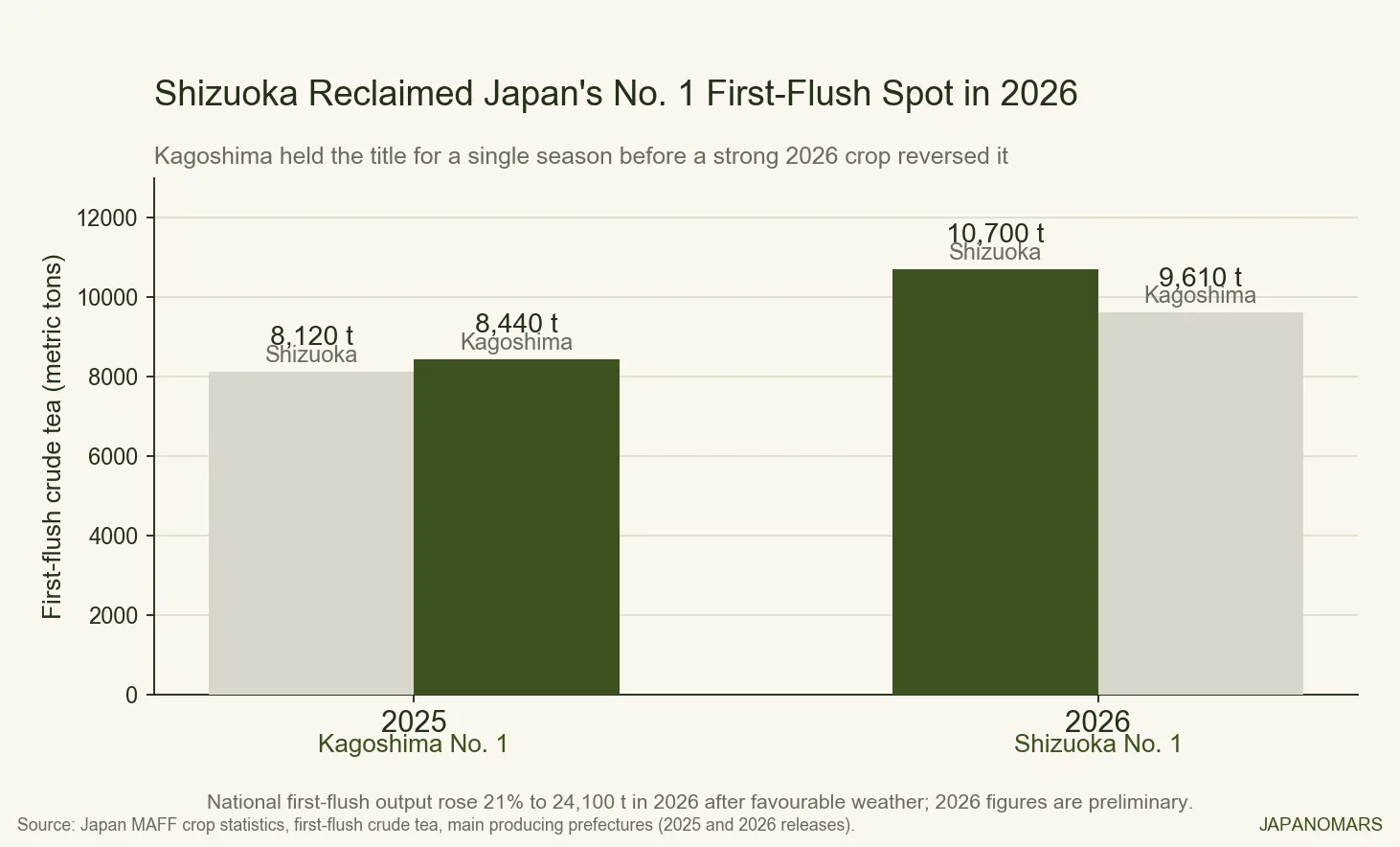
Kagoshima is the engine of Japan's matcha expansion, and for one season it was also the country's biggest tea producer. In 2025 it overtook Shizuoka as the number one first-flush region, 8,440 tons against 8,120, with Shizuoka down 19% to its lowest since the survey began in 1991. The 2026 crop reversed that: favourable weather lifted national first-flush output 21% to 24,100 tons, Shizuoka rebounded 32% to 10,700 tons and reclaimed first place, and Kagoshima grew 14% to 9,610 tons in second (figures published 18 August 2026 and still preliminary, per MAFF). The edge comes from a warm climate, flat fields, mechanized harvesting, and cultivars like Okumidori and Saemidori that deliver vivid color and a fresh, bright, grassy-sweet profile.
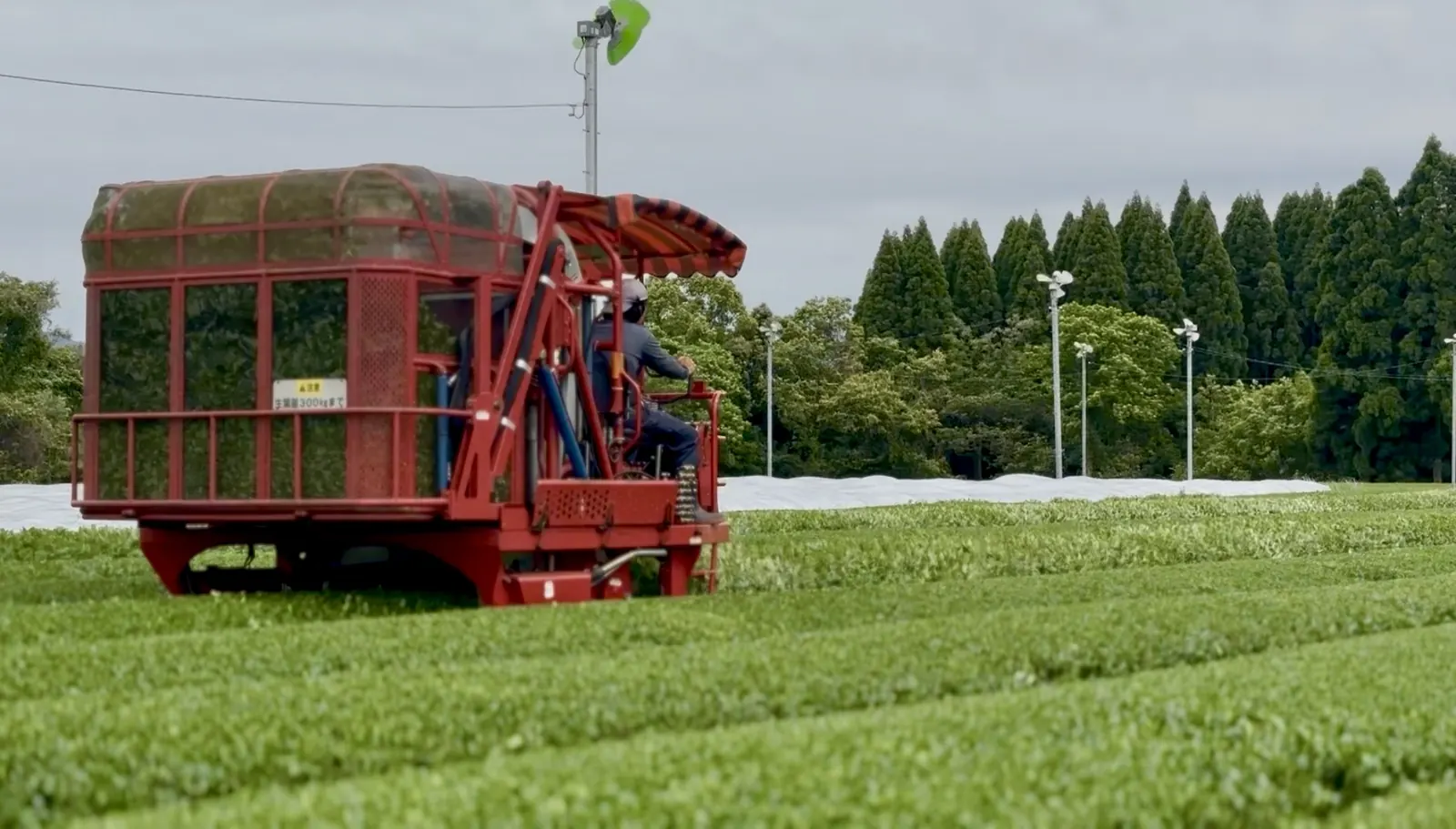
For most US cafes, Kagoshima is the default for latte-grade and culinary matcha: consistent, available, organic-friendly, and priced to protect your margin. It earns less prestige on a menu, but it is the origin that keeps the milk drinks moving all year. On the organic side of that, see what JAS organic certification actually covers.
Yame, famous for its gyokuro heritage, translates that pedigree into a matcha that is full-bodied, sweet, and mellow, with thick umami and low bitterness. Volumes are smaller and prices sit at the premium end, but the cup is distinctive.
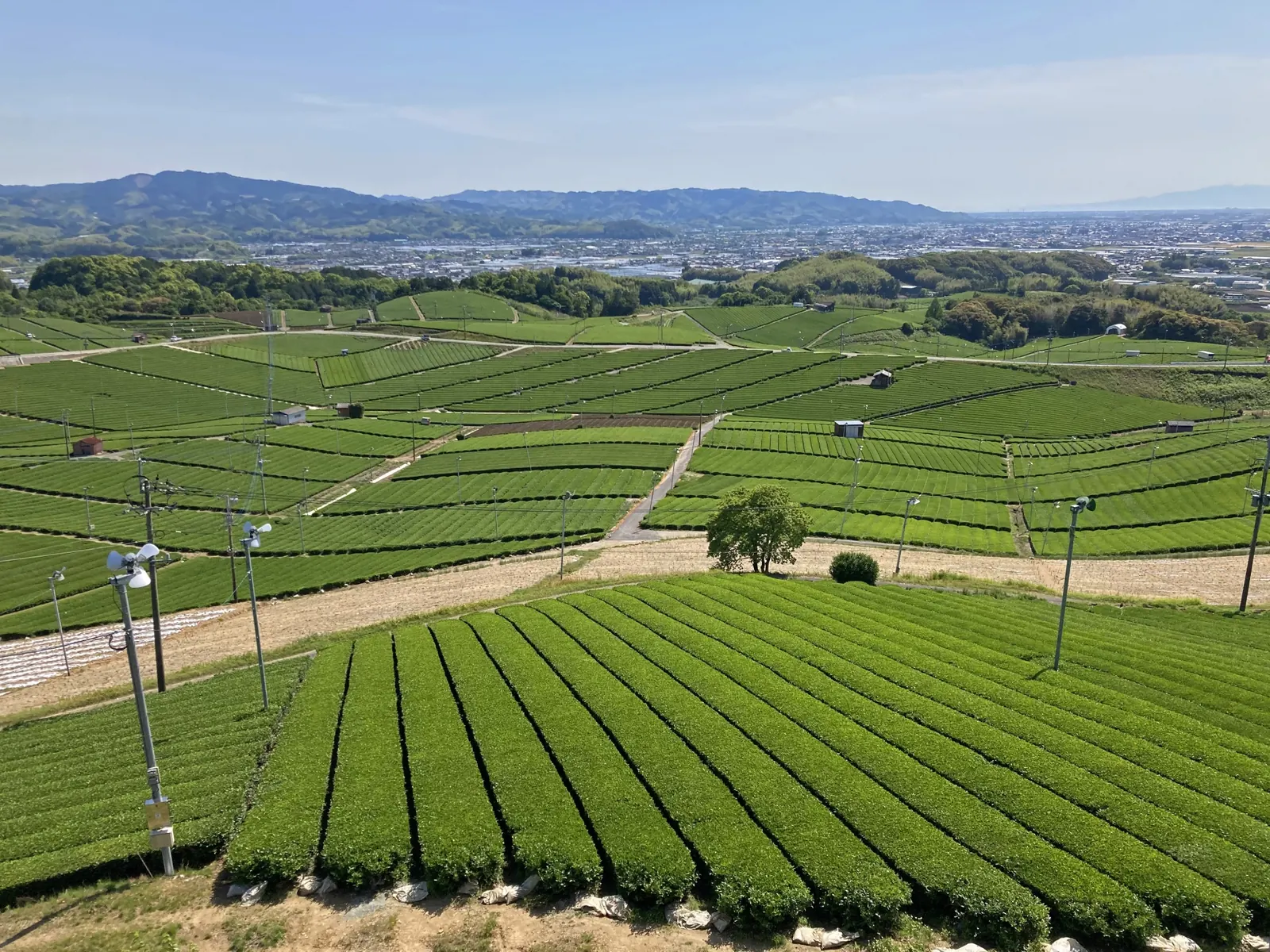
Beyond the big four, several historic tea regions produce real, cafe-worthy tencha, often at better value and availability than Uji. For a buyer willing to look past the famous names, Shizuoka, Mie, Nara, and Shiga are where smart sourcing happens in 2026.
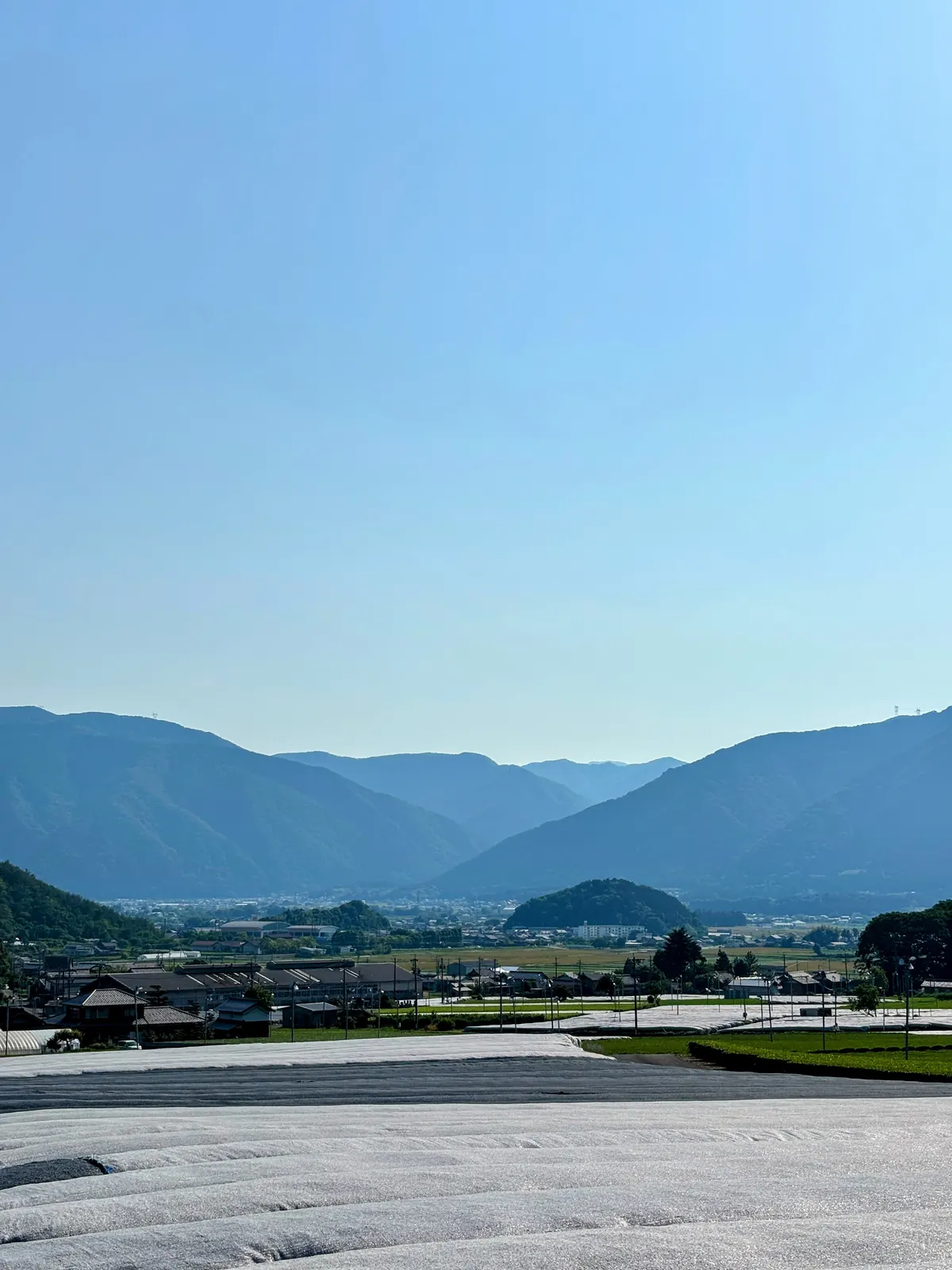
Shizuoka is the giant that pivoted in and then took the volume crown back: No. 1 by tea output value throughout, first-flush leader again in 2026, converting sencha fields fast, with about 70% of the historic Asukubo district now in tencha and a new line running since October 2025. Mie (Ise-cha), Japan's No. 3 tea prefecture, is the quiet value pick for lattes and culinary. Nara (Yamato-cha) grows naturally sweet highland leaf at 200-600 m, and Shiga (Omi-cha), home of Asamiya, leads with fragrance. Sayama, Ibi, and Ureshino are small, characterful origins best used as specials. Flavor and price positions for all of them are in the table above.
Because demand has outrun the traditional regions, capital is flowing into new tencha factories and brand-new growing areas. Tencha output has roughly doubled over the past decade, large dedicated factories opened in Kyoto and Shizuoka in 2025, and the frontier has now reached non-traditional prefectures like Miyazaki and Kagawa in 2026.
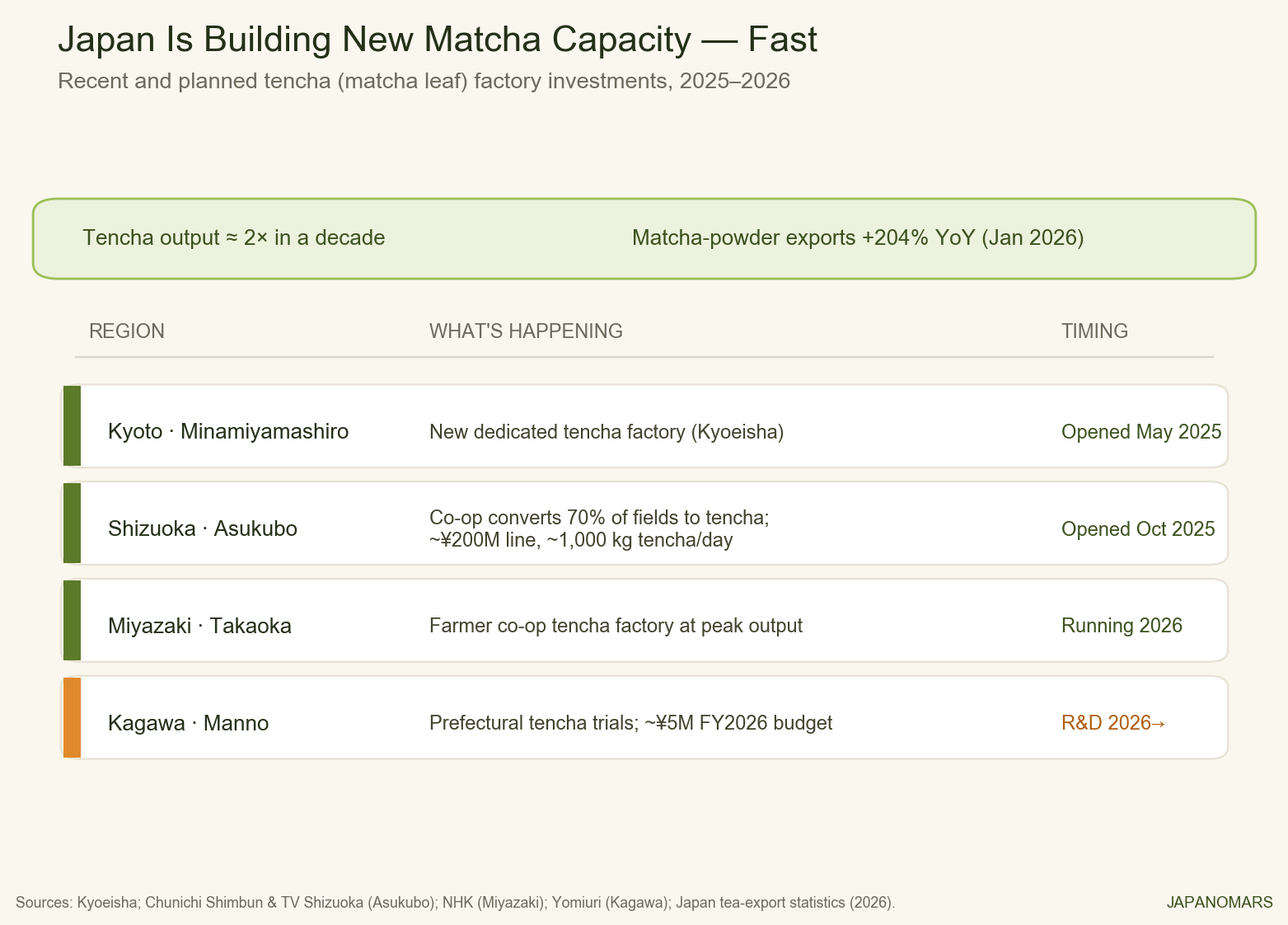
The build-out at a glance: a new dedicated tencha factory in Minamiyamashiro, Kyoto (May 2025); a 200-million-yen growers' line in Asukubo, Shizuoka (October 2025, over 1,000 kg of tencha a day); a farmer co-op plant in Takaoka, Miyazaki now at peak production (NHK); and tencha trial plots budgeted in Kagawa for FY2026 (Yomiuri Shimbun).
The backdrop: MAFF has encouraged conversion to higher-value tencha and new processing facilities since FY2025, while the number of crude-tea factories has fallen more than 30% in ten years (Norinchukin Research Institute, 2026). Fewer, bigger, more export-oriented factories, several of them in places that were not on the matcha map a few years ago.
For cafe buyers, the takeaway is opportunity. As capacity comes online in Shizuoka, Miyazaki, and beyond, mid-grade matcha supply should loosen first, and the exporters with direct relationships in these emerging areas will have allocation before the open market does.
Sharply. Uji sits at the top and is the most volatile; Kagoshima, Mie, and Shizuoka anchor the value end with steadier supply. The single biggest 2025 price signal came from Uji tencha auctions, where the first-harvest average rose about 169% to about 14,541 yen/kg and top lots reached 43,330 yen/kg (JA Zen-Noh Kyoto).
The spread is structural, not seasonal: tencha now trades at roughly 2.7x the price of sencha (2024), so value regions are converting fields fastest. Practically, that means:
Uji and Yame: highest prices, tightest allocation, most year-to-year swing. Commit early or expect to pay spot premiums.
Nishio: mid-priced and notably stable, you are paying for predictability.
Kagoshima, Mie, and Shizuoka: the value tier, with the most room for supply and pricing to ease as new capacity ramps.
Early 2026 confirms the direction: Kagoshima's first 2026 auction set a record 30,000 yen/kg top price with the average up about 60% year on year, and Kyoto's first tea opened higher again (Minaminippon Shimbun).
From the sourcing floor
Growers and wholesalers we have spoken with in recent months put Uji up roughly 1.3x for 2026 and about 1.5x across many regions led by Kagoshima, with a few areas as high as 3x. They also tell us more tencha plants are on the drawing board, but with construction costs climbing it is unclear how many will actually break ground. Field reports, not published data, but the direction is unmistakable.
And demand keeps climbing: Japan's matcha-powder exports were up 204% year on year in January 2026, with total green-tea exports up 133.6% and US-bound tea up 79% (Japan tea-export figures / MOF Trade Statistics).
Match the origin to the use case. As a rule: Kagoshima or Mie for high-volume lattes and culinary; Nishio for a do-everything house grade; Uji or Yame for a premium ceremonial pour; Nara or Shiga for a characterful single-origin story. Most cafes are best served by a two-tier setup, not a single matcha.
A practical playbook for a US specialty cafe:
1. Your everyday latte grade: Kagoshima, Mie, or Shizuoka. Bright, vivid in milk, available, and kind to your food cost.
2. Your house ceremonial or premium latte: Nishio. Consistent enough to standardize and refined enough to serve straight.
3. Your signature or seasonal special: Uji, Yame, Nara, or Shiga as a single-origin story you can charge a premium for and rotate.

You have three routes: a US distributor (easiest, highest cost, least origin control), a broker, or a direct relationship with a Japanese exporter who works with farmers in the regions you want. For origin specificity and traceability, direct sourcing wins. On price, the honest version is that a shorter chain carries fewer margins at a given grade rather than a fixed percentage saving, because grade names are not standardised and there is no like-for-like distributor comparison to measure against.
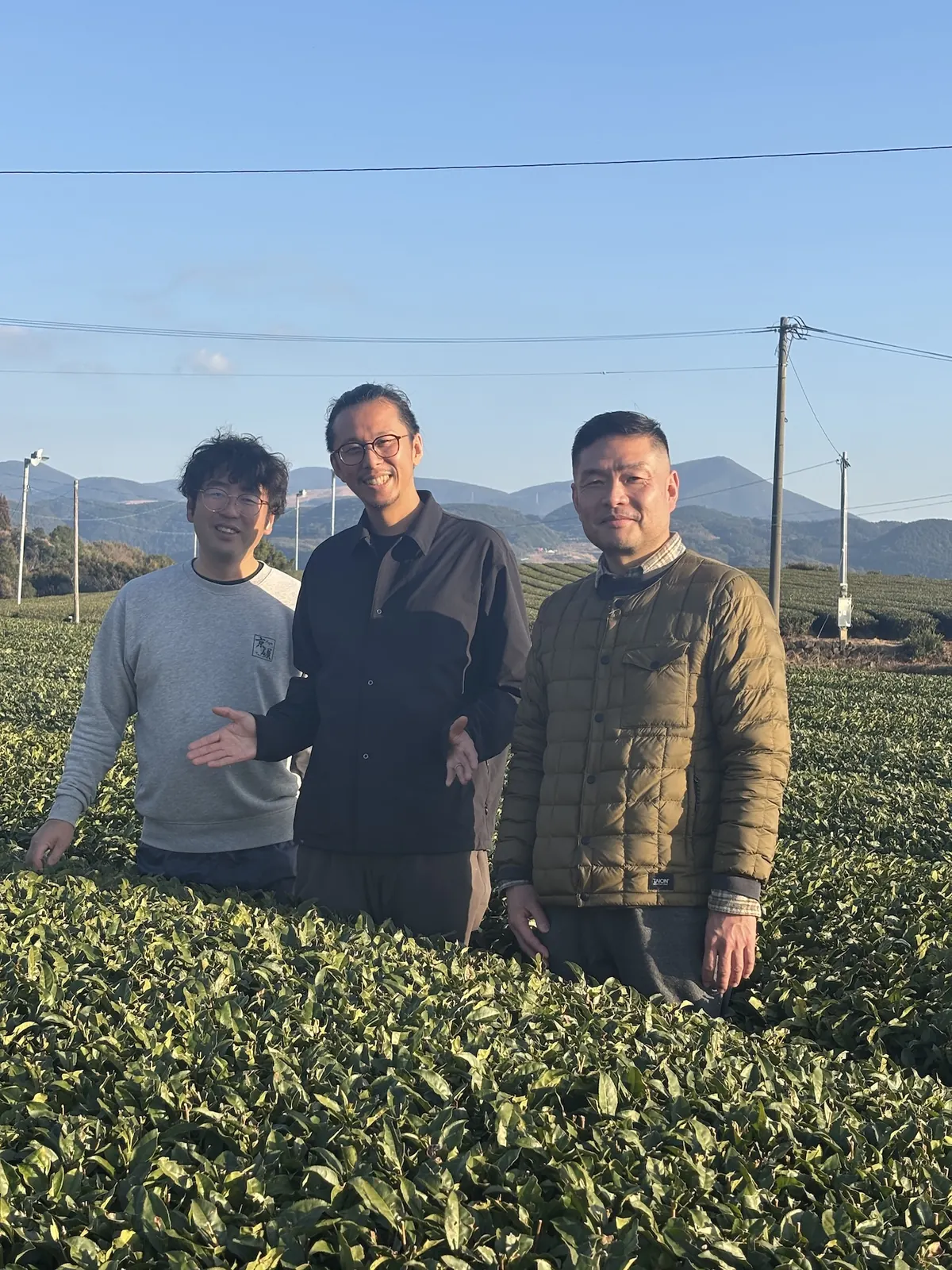
Japanomars works directly with farmers across Uji, Kagoshima, Yame, Ureshino, Ibi, Sayama, and more. If you are choosing between origins or want to lock in allocation from a specific region ahead of the spring harvest, we can match you to the right farmer and grade.
Request samples & pricing
Kagoshima is the most popular choice for cafe lattes: its bright, vivid, grassy-sweet profile stands up to milk, it is widely available, and it is priced for volume. Mie and Shizuoka are strong value alternatives. Reserve Uji and Yame for premium or ceremonial service rather than everyday milk drinks.
Uji sets the quality benchmark and offers exceptional depth and refinement, but better depends on use. For a straight ceremonial pour, Uji is hard to beat. For a 16 oz latte, a bright Kagoshima or consistent Nishio often delivers a better cup-to-cost ratio, and far better availability during the shortage.
Across a band from Kyushu to central Honshu. The major matcha names are Uji (Kyoto), Nishio (Aichi), Kagoshima, and Yame (Fukuoka), with large volumes also from Shizuoka and Mie. New tencha capacity is now being built in Miyazaki and trialed in Kagawa.
Shizuoka, again. Kagoshima passed it in 2025 with 8,440 tons against 8,120, but the 2026 crop reversed that: Shizuoka produced 10,700 tons of first-flush crude tea against Kagoshima's 9,610, according to MAFF figures published on 18 August 2026. National first-flush output rose 21% to 24,100 tons on favourable weather. The 2026 figures are preliminary.
Yes, through a direct exporter relationship you can specify origin, grade, and even farm. Distributors usually blend or do not disclose origin, so single-region sourcing is one of the clearest reasons cafes work directly with a Japan-based exporter.
Japanese matcha is a map of regions, each with its own flavor, price, and supply story: Uji for prestige, Nishio for consistency, Kagoshima for value and volume, Yame for rich-and-sweet premium, with real value in Shizuoka, Mie, Nara, and Shiga beyond the famous names.
The winning move is to tier your menu by origin: value regions for the everyday milk drinks, prestige regions for the premium pour, and supply locked in before the spring harvest sets the year's pool. If you would like help doing exactly that, it is what we do.
Understanding the regions is the first step; the same shade-growing that elevates premium origin also builds L-theanine, the amino acid behind matcha's calm-energy story. For what your menu can honestly claim, see our guide to matcha's real health benefits. For the price and supply backdrop driving 2026 buying decisions, see The Matcha Market in 2026.
Hiroshi sources and exports matcha directly from farmers across six Japanese tea regions to cafes in the US and Canada through Japanomars, and has personally led four sourcing tours bringing overseas cafe owners to meet growers in the field. Sources: Japan Ministry of Agriculture (MAFF) crop statistics, first-flush crude tea, 2025 and 2026 releases; Kyoto Prefecture / Kyoto Tea Industry Association; JA Zen-Noh Kyoto auction data; Norinchukin Research Institute (2026); Japan tea-export figures (MOF Trade Statistics); NHK; Yomiuri Shimbun; Chunichi Shimbun / TV Shizuoka; Grand View Research.
%E7%99%BD_%E5%A4%A7%E3%81%8D%E3%81%84.png)