%E5%A4%A7%E3%81%8D%E3%81%84.png)
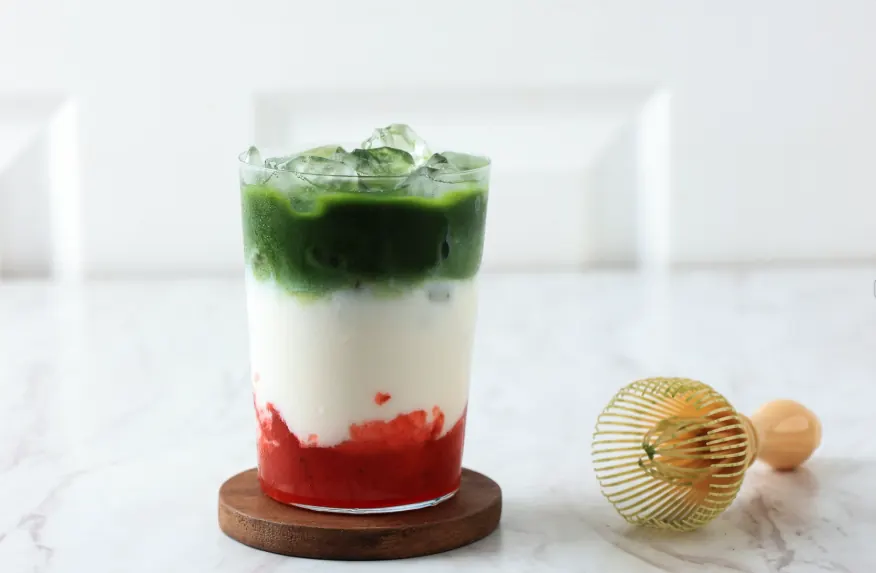
Iced matcha is the drink that carries a cafe's afternoon and summer sales, and in 2026 it is also the most social-media-friendly item you can put on a menu. To make it well, whisk about 3 grams of latte-grade matcha with a little hot water into a smooth paste, then pour it over cold milk and ice so the color stays vivid and the flavor holds. This guide covers whether to add it, the iced method and ratio, the trending drinks driving traffic, the layered look that goes viral, how to serve it fast in a rush, and which grade to use. It is a spoke of our Matcha for Cafes guide and the matcha latte ratios and method guide.
Yes, iced matcha is one of the highest-return items a specialty cafe can add, because it sells in the afternoon and warm months when espresso volume drops, and it draws a younger, willing-to-pay customer. It also photographs beautifully, so customers do your marketing when they post it. That combination of daypart revenue, margin, and social reach is hard to match with another single menu item.
The strategic point is that iced matcha is not just a summer drink. Its social pull and afternoon fit make it a year-round traffic and revenue tool, strongest from spring through summer. Get the base drink right and you can layer trending variations on top of it without adding much prep. For where matcha fits your whole menu and margins, see our Matcha for Cafes guide.
Whisk the matcha with a small amount of hot water into a smooth paste, then pour that paste over a glass of cold milk and ice. The method is the same as a hot latte up to the paste; only the milk is cold and the pour is over ice. Pouring the hot-whisked paste over the cold milk last keeps the color vivid and gives the layered look before the customer stirs.
Two things protect quality. Whisk the paste with water at about 160 to 180F, never boiling, so it is not bitter, and pour it over the milk rather than mixing matcha straight into cold milk, which clumps. For the full method, water temperature, and clump fixes, see our matcha latte ratios and method guide.
For an iced matcha latte, use a touch more matcha than hot, because ice and cold milk dilute and mute the flavor. A solid house baseline is about 3 grams of latte-grade matcha whisked with 1 to 2 ounces of hot water, poured over 8 ounces of cold milk and ice in a 12 to 16 ounce cup.
| Cup | Matcha | Hot water (to whisk) | Cold milk | Ice |
|---|---|---|---|---|
| 12oz iced | 3g | 1 to 2oz at 175F | 8oz | fill |
| 16oz iced | 3.5 to 4g | 2oz at 175F | 10 to 12oz | fill |
| Stronger | +0.5 to 1g | same | same | fill |
Lock this as your house ratio and put a ratio card at the station so every barista pours the same drink. Adjust once by taste, then keep it fixed through the busy months.
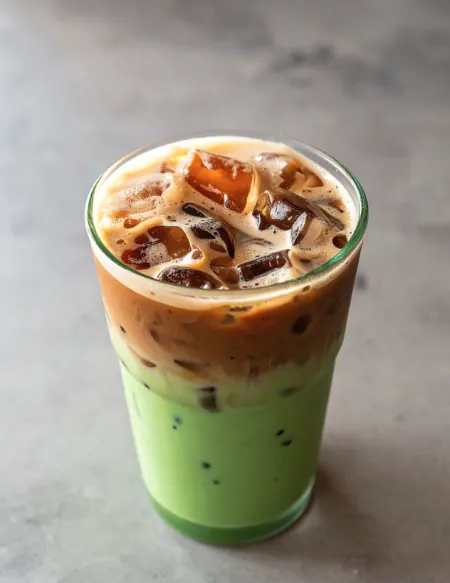
Strawberry matcha is the standout iced drink of 2026, a viral pink-and-green layered latte that spread across social media as the signature drink of spring. Flavored matcha lattes more broadly are being called the next big drink trend, which means a cafe can grow matcha sales by adding a few well-chosen iced variations on the same base.
| Drink | What it is | Cafe note |
|---|---|---|
| Iced matcha latte | The base: matcha over cold milk and ice | Your anchor iced item |
| Strawberry matcha | Macerated strawberry, milk, matcha, layered | The 2026 viral star; high social pull |
| Vanilla or brown-sugar matcha | Flavored syrup added to the base | Easy, familiar upsell |
| "Dirty" matcha | Iced matcha with a shot of espresso | Converts coffee drinkers |
| Coconut or oat matcha | Alt-milk versions | Rising with dairy-free demand |
Keep the list tight: one or two flavored options on top of the base outsell a long menu and keep prep simple. For a fuller drink lineup, see our matcha latte variations playbook.
For iced I think Uji matcha is the best choice; its flavor is robust enough that it still tastes great over ice. The latte grade I recommend for iced is also Uji, though at that grade it is second-harvest (nibancha) rather than first, simply because true latte-grade Uji is genuinely scarce. Because of that I would blend it with another matcha that has strong color, so the drink stays vivid and bright over ice.
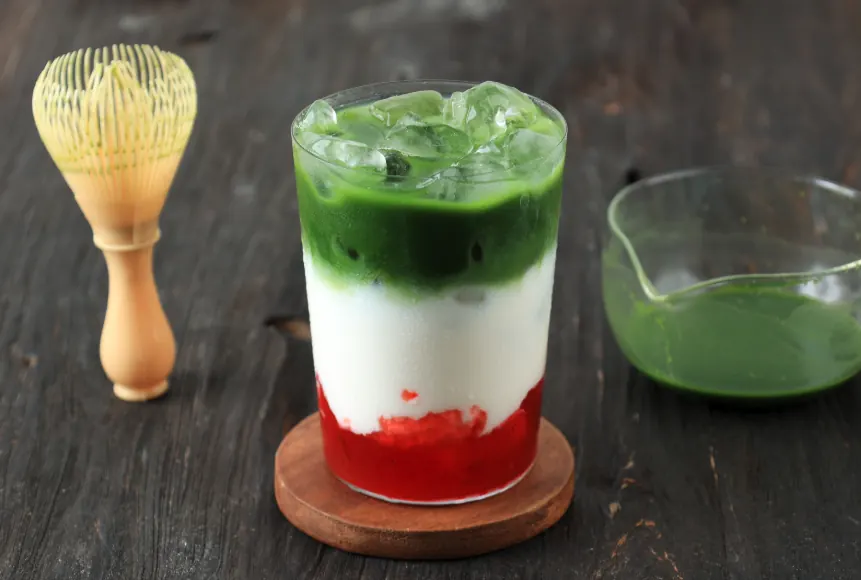
The layered look comes from building the glass in order and pouring the matcha last: flavor or fruit at the bottom, ice, cold milk, then the whisked matcha poured slowly over the top. The green sits above the milk (and above a pink strawberry layer, if used) until the customer stirs, which is exactly the moment people photograph and post.
For a clean layer, pour the matcha paste gently over the back of a spoon or down the side of the glass, and use a bright, vivid latte grade so the green reads well on camera. Presentation is part of the product here: a well-layered iced matcha is both the drink and the ad for it.
Batch a whisked matcha concentrate: whisk a larger measure of matcha and warm water smooth, hold it cold and covered, and pour a fixed amount per drink over milk and ice. This cuts per-drink prep from a minute to seconds during a summer rush without the clumping you get from pre-mixing matcha into cold milk.
Keep it disciplined: make the concentrate fresh each shift, stir or shake before each pour since matcha settles, portion with a fixed pour or pump for consistency, and do not hold it more than a day. This is how a cafe serves iced matcha at coffee speed on your busiest afternoons without the drink drifting in strength or color.
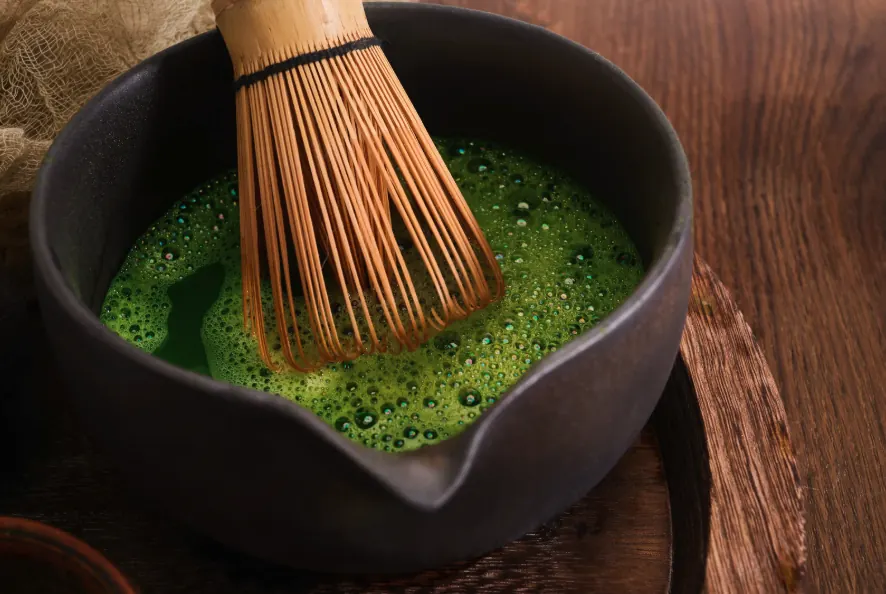
Use latte grade for iced, not ceremonial, because milk and ice mask ceremonial's delicate flavor and it costs far more. At cafe wholesale volumes, latte-grade matcha runs roughly 55 to 85 dollars per kilogram, about 0.45 to 0.70 dollars of matcha per iced drink at a 3 gram dose, which still leaves a strong margin on a 6 to 7 dollar iced matcha.
A vivid, smooth latte grade is what keeps iced matcha bright green over ice and clean-tasting under milk; a dull, cheap powder looks gray and tastes flat no matter the recipe, which shows badly in a clear glass. For the grade breakdown see our matcha grades guide, and for wholesale pricing, MOQs, and how to buy, our wholesale and bulk matcha for cafes guide.
Whisk about 3 grams of latte-grade matcha with 1 to 2 ounces of hot water (about 175F, not boiling) into a smooth paste, then pour it over a glass of cold milk and ice. Pour the matcha last for a vivid color and layered look, and stir before drinking.
Ice and cold milk dilute and mute the flavor, so iced needs a touch more matcha to taste balanced. A hot 8oz latte runs about 2 grams; an iced 12oz runs about 3 grams. Lock a house ratio so every iced drink tastes the same.
Strawberry matcha, a layered pink-and-green iced latte, is the standout of 2026 and spread widely on social media. Flavored matcha lattes more broadly are a rising trend, so a cafe can add a couple of variations on the same iced base to grow matcha sales.
Whisk the matcha into a paste with a little hot water before it touches cold milk, and pour the paste over the milk and ice rather than mixing it in. Use a vivid latte grade; dull, cheap powder looks gray in a clear glass no matter the method.
Yes. Whisk or blend a matcha concentrate with warm water, hold it cold and covered, and pour a fixed amount per drink over milk and ice. It cuts prep to seconds during a summer rush. Stir before each pour since matcha settles, and make it fresh each shift.
Iced matcha lives or dies on color and clean flavor, which comes down to the grade. If you want a latte grade that stays vivid green over ice, start with a sample you can taste in your own iced ratio. We work with cafes on long-term supply, not one-off orders, and can send a latte-grade sample with current wholesale pricing so you can test your iced menu before you commit.
Request samples & pricingHiroshi Asami is the founder of Japanomars, which sources premium matcha directly from farms across Japan (Sayama, Ibi, Ureshino, Yame, Kirishima, and Chiran) and supplies specialty cafes abroad. Sources: 2026 iced and strawberry matcha trend coverage (stylerave.com, allreasons.eu, tastewise.io); iced matcha method and ratio best practice (loveandlemons.com, webstaurantstore.com); wholesale latte-grade pricing per kg (2026 B2B ranges). Ratios are a house baseline; adjust once by taste and lock them.
%E7%99%BD_%E5%A4%A7%E3%81%8D%E3%81%84.png)