%E5%A4%A7%E3%81%8D%E3%81%84.png)
Cafe Operations · 2026
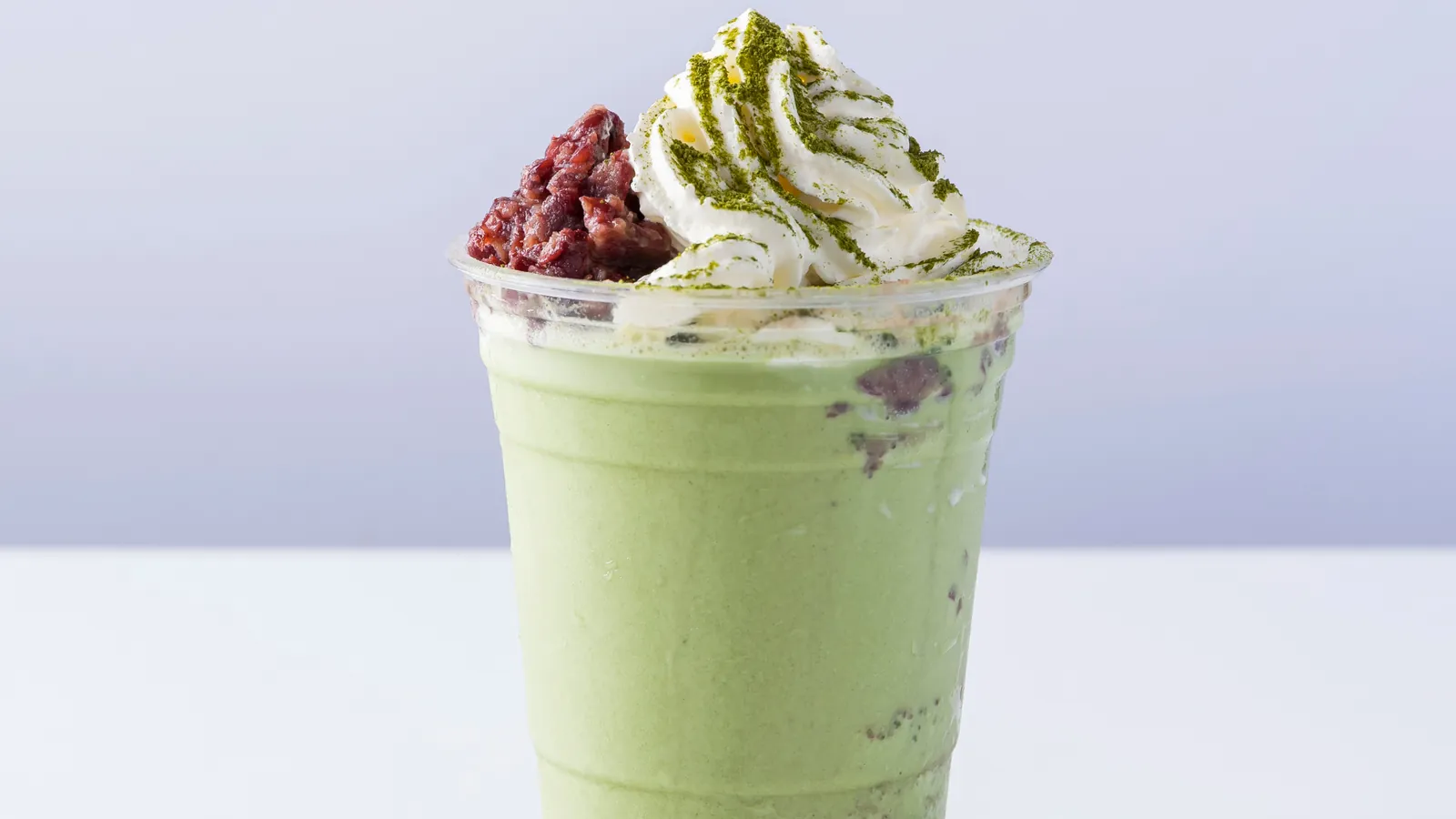
A blended matcha needs more matcha than a latte, not the same. Plan 4.5 grams for a 16oz blended drink where an iced latte uses 3.0 grams, hold ice at roughly half the finished weight, and if you run a slush machine keep the mix between 13 and 18 Brix. Most frozen matcha on US menus tastes weak for one reason: it was built on latte dosing.
This guide is for owners costing a blended matcha before it goes on the summer board, and for bar managers who need a spec that survives a rush.
Key takeaways
In this guide
Put frozen matcha on the menu if you already sell iced matcha well and you own a blender that can handle ice. It is the highest ticket matcha item on most menus and the one customers photograph, but it is also the loudest and slowest drink on your bar. The decision is really about which equipment path you take, because blender-to-order and slush machine are different businesses.
Blender to order is the default. No new equipment beyond a decent blender, no minimum volume, and each drink is made fresh so color is at its best. The cost is a blender running on every order and a bar that backs up in a rush. Budget about 90 seconds of barista attention per drink from cup to hand-off, of which 30 to 40 seconds is the blender itself.
And be specific about the machine. A blender that can handle ice means a commercial unit rated for it, not a domestic smoothie blender, which will manage a few weeks of summer and then fail in the middle of August. Budget for a sound enclosure at the same time, because the noise is the part most owners underestimate.
A slush machine flips that. Service becomes a pull of a handle, but you commit to holding several liters of mix at a fixed sugar level all day, and you have a machine to clean nightly. Below roughly 40 blended drinks a day the machine rarely pays for itself.
Whichever path you take, frozen matcha should sit alongside your iced program rather than replace it, the same way we treat the summer build in iced matcha for cafes.
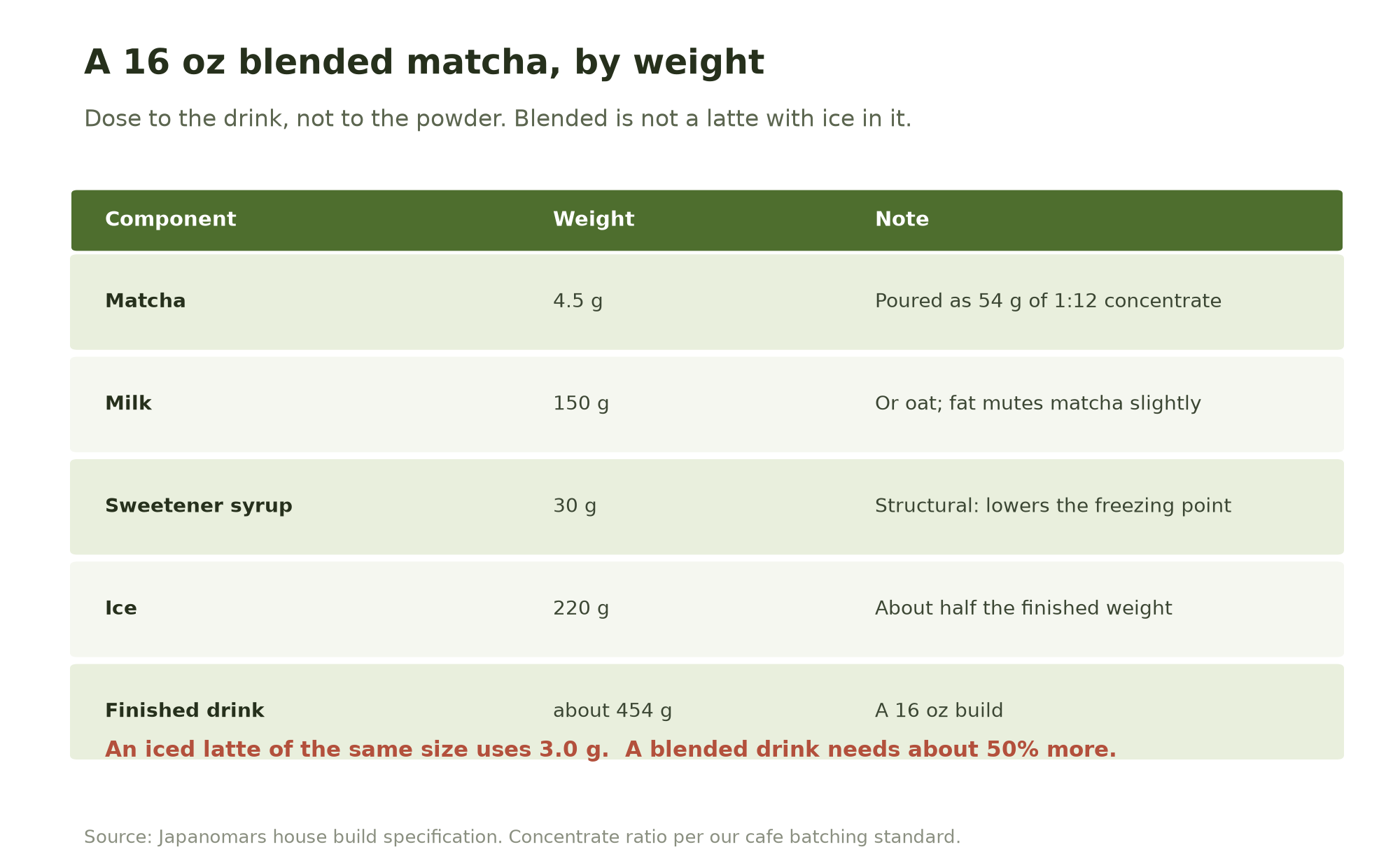
Plan 4.5 grams of matcha for a 16oz blended drink, against 3.0 grams for an iced latte of the same size. That is a 50 percent uplift, and it is not generosity. This is our house recommendation from bench testing, not a published industry standard; start here and adjust to your blender and ice. A blended drink is served near freezing and carries far more water, and both of those things work against you at the same time.
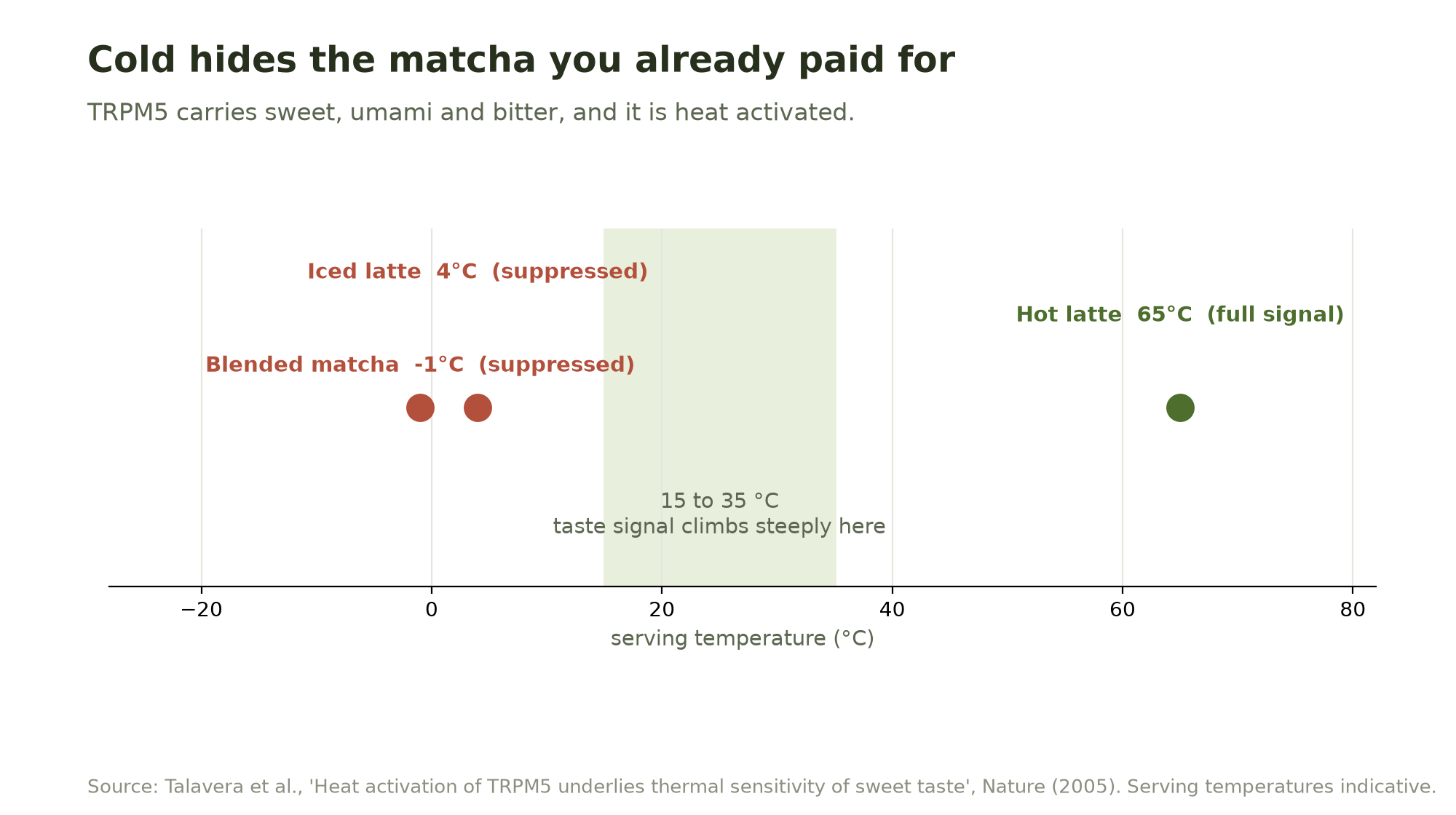
The temperature part has a known mechanism. TRPM5 is an ion channel in the taste buds that carries sweet, umami and bitter signals, and it is heat activated: research published in Nature found its inward currents increase steeply between about 15 and 35 degrees Celsius. A blended drink sits near zero, well below that band, so the umami and sweetness your matcha is carrying are physically under-reported by the tongue. Chill the same liquid and you have not changed the matcha, you have changed how much of it the drinker can perceive.
The dilution part is simpler arithmetic. Ice is roughly half the finished weight of a blended drink, and as it melts it keeps diluting in the cup. A latte dose spread across that much water and ice lands as green-tinted milk.
So dose to the drink, not to the powder. If you batch a concentrate at the house 1:12 ratio, 4.5 grams of matcha arrives as 54 grams of concentrate, which pours as fast as anything else on the bar. The per-cup dosing this uplift is measured against is the table in the matcha latte guide.
Hold ice at about half the finished drink weight. For a 16oz blended matcha that is roughly 220 grams of ice against roughly 230 grams of liquid and sweetener combined. Under about 40 percent ice the drink pours like a thin milkshake and separates within minutes. Over about 55 percent it turns grainy and the flavor drops out as the ice takes over.
Blend time matters as much as ratio. Thirty to forty seconds on high is usually enough. Longer does not make it smoother past a point, it warms the mix through friction and starts melting the ice you just added, which is how a drink ends up both watery and grainy.
Sweetener is structural here, not just flavor. Sugar lowers the freezing point of the mix, which is what keeps a blended drink spoonable instead of setting into a block. If you cut sugar to make a lighter version, expect a harder, icier texture and plan to adjust the ice down rather than leaving the ratio alone.
Oat milk is worth planning around rather than treating as a substitution. It blends thicker than dairy and holds the drink together longer, which helps here, but it is also noticeably sweeter, so cut the added syrup rather than running both at full measure.
The build itself is five steps:
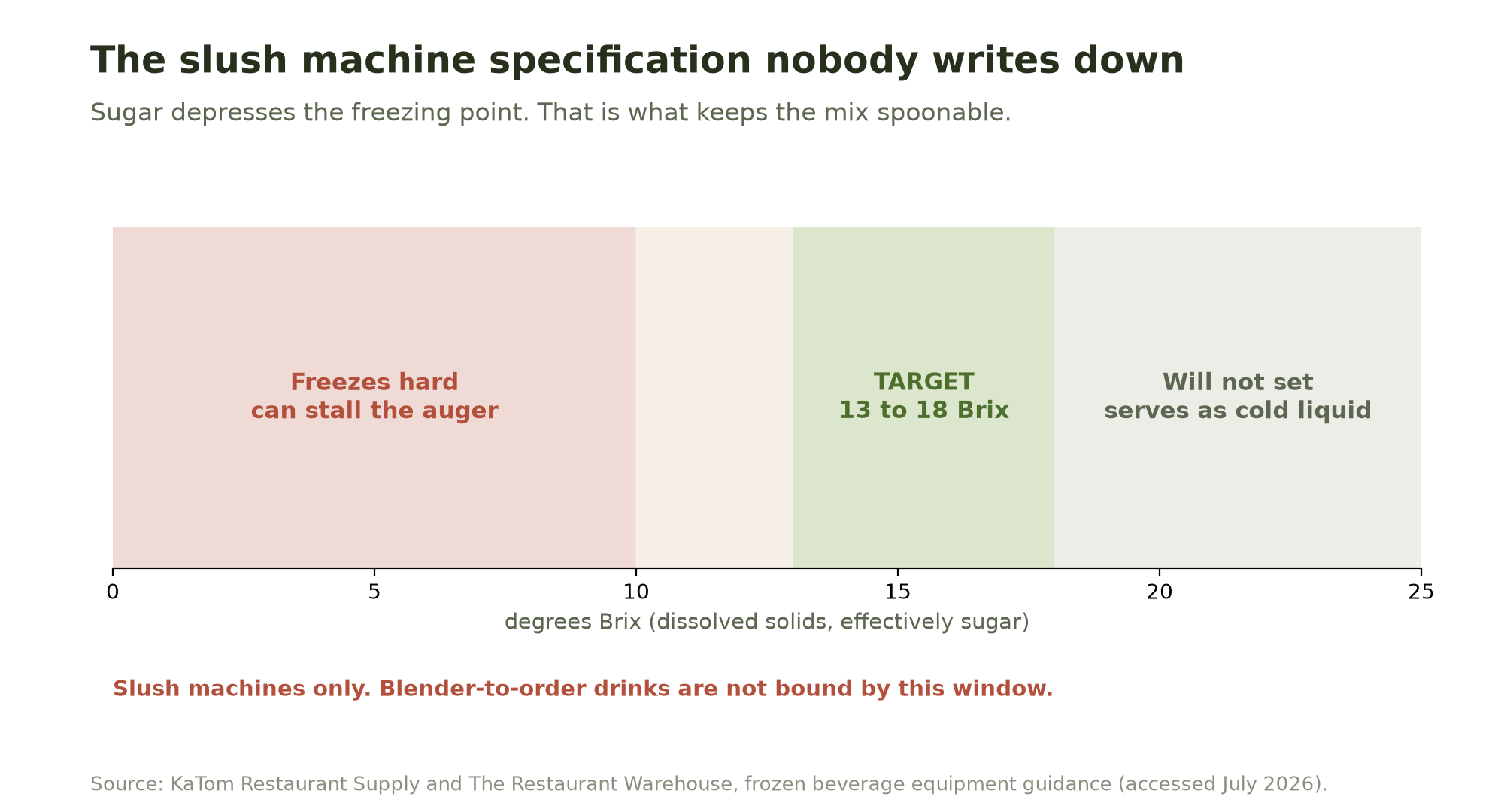
Hold the mix between 13 and 18 Brix. This applies only to frozen beverage dispensers, not to blender-to-order drinks, and it is the single specification most cafes never see written down. Brix is the percentage of dissolved solids, effectively the sugar level, and a slush machine will not run correctly outside its window.
The physics is freezing point depression. Sugar lowers the temperature at which the mix freezes, so the machine can hold it as a soft slush rather than ice. Too little sugar and the mix freezes hard and can stall or damage the auger. Too much and it never sets, and you serve cold liquid. Published guidance for frozen beverage equipment puts the working range for non-alcoholic mixes at 13 to 18 Brix, with mixes below about 10 Brix freezing harder and faster than the machine is designed for.
The practical consequence for matcha is that your sugar level is set by the machine, not by your palate. You cannot sell an unsweetened frozen matcha out of a slush machine. If unsweetened matters to your customers, and for a lot of specialty cafes it does, that argues for blender to order.
Buy a refractometer. It is inexpensive, it reads Brix in seconds, and it turns "the slush is weird today" into a number your closing shift can act on.
Blending drives air into the drink, and air is what turns matcha brown. The green in matcha is chlorophyll, which holds a magnesium ion that is displaced by oxygen, light, heat and acid, converting it to pheophytin, a dull brown green. A blender is an oxidation machine by design, so a blended matcha starts losing color the moment it is made.
That gives you two rules. First, blend the ice and milk with the matcha rather than aerating a matcha base separately and folding it in later. Second, do not hold blended matcha. A slush machine mix will visibly dull over a service day even held cold, which is a real argument for smaller, more frequent mix batches.
It also means freshness of the powder matters more here than anywhere else on your menu, because you are stress-testing color retention harder than any other build. Grade naming does not tell you this, which is why we push on the milling date rather than the label in matcha grades explained.
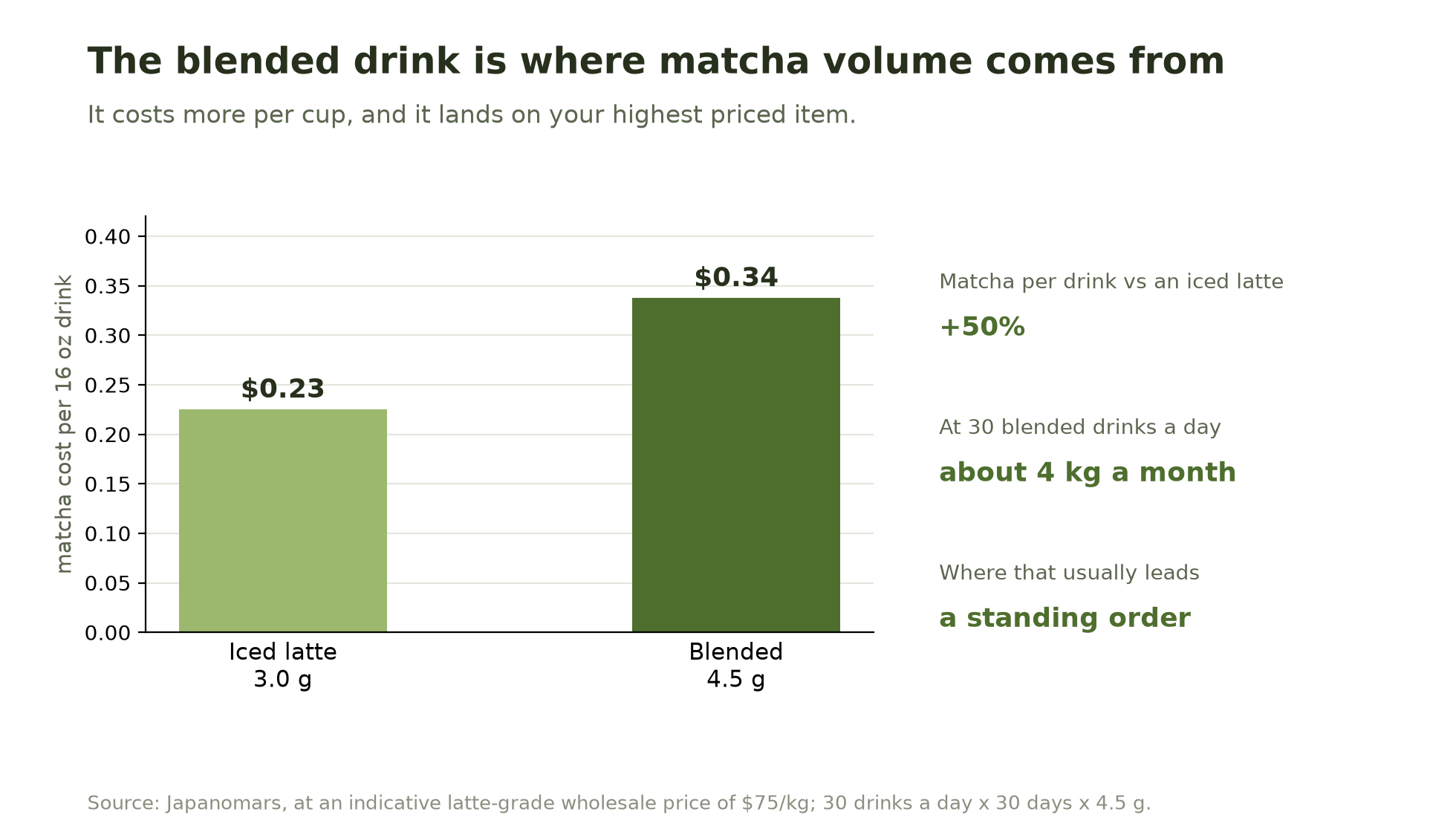
At an indicative latte grade wholesale price of about $75/kg, a 4.5 gram blended drink carries about $0.34 of matcha against about $0.23 for a 3.0 gram iced latte. That is a real difference, but it lands on your highest priced drink, so the margin usually improves rather than shrinks. For scale, national chain menu trackers put a Grande matcha creme Frappuccino at roughly $5 to $6.50 in 2026, and independent specialty cafes generally price a blended matcha in that range or above. At $0.34, the matcha is under 6 percent of the ticket. Milk, sweetener and the cup together cost you more than the matcha does, which is worth remembering before you go shopping for a cheaper lot.
The number worth planning around is the monthly one. A cafe selling 30 blended matcha drinks a day works through roughly 4 kilograms of matcha a month on that single menu item. That is a different conversation with a supplier than a cafe buying 1 kilogram at a time, and it is usually the point at which a standing order and a committed price become worth asking about.
That also changes what you should be buying. Volume at this level makes a dedicated latte or culinary grade sensible for the blended build, with a higher grade kept for to-order service, which is the same two-tier approach we describe in how to add matcha to your cafe menu.
Plan 4.5 grams for a 16oz blended drink, compared with 3.0 grams for an iced latte of the same size. The uplift is needed because a blended drink is served near freezing and carries roughly half its weight in ice, and cold suppresses how much umami and sweetness the tongue registers. This is our house recommendation from bench testing, not a published industry standard.
Almost always because it was built on latte dosing. Serving temperature near zero sits below the range where the TRPM5 taste channel responds strongly, so the same amount of matcha reads thinner. Melting ice then dilutes it further in the cup. Raise the dose by about 50 percent.
Between 13 and 18 Brix for a non-alcoholic mix. Sugar depresses the freezing point so the machine can hold a soft slush. Below about 10 Brix the mix freezes hard and can stall the machine, and too high a Brix will not set at all. Check it with a refractometer.
Blended to order, yes. In a slush machine, no. The machine relies on sugar to depress the freezing point, so the sweetness level is set by the equipment rather than the recipe. Cafes that want an unsweetened option should stay with blender to order.
About half the finished drink weight, roughly 220 grams for a 16oz build. Below about 40 percent the drink is thin and separates quickly. Above about 55 percent it turns grainy and the matcha flavor drops away behind the ice.
Blending forces air into the drink, and oxygen displaces the magnesium at the center of the chlorophyll molecule, converting it to pheophytin, which is brown green. Blend to order rather than holding, keep mix batches small in a slush machine, and use matcha that was milled recently.
Frozen matcha fails on US menus for a boring reason: it gets latte dosing. Move to 4.5 grams for a 16oz build, hold ice near half the finished weight, and if a slush machine is involved, treat 13 to 18 Brix as a specification rather than a preference. Then cost it properly, because this one drink can quietly become the largest line in your matcha spend.
If you are about to build a blended item and want to know what a 4 kilogram a month program actually prices at, that is a sourcing conversation rather than a bar one.
Hiroshi Asami is the founder of Japanomars, which exports matcha from producers in Saitama, Gifu, Saga, Fukuoka, and Kagoshima to cafes in the United States and Canada.
%E7%99%BD_%E5%A4%A7%E3%81%8D%E3%81%84.png)