%E5%A4%A7%E3%81%8D%E3%81%84.png)
Cafe Operations · 2026
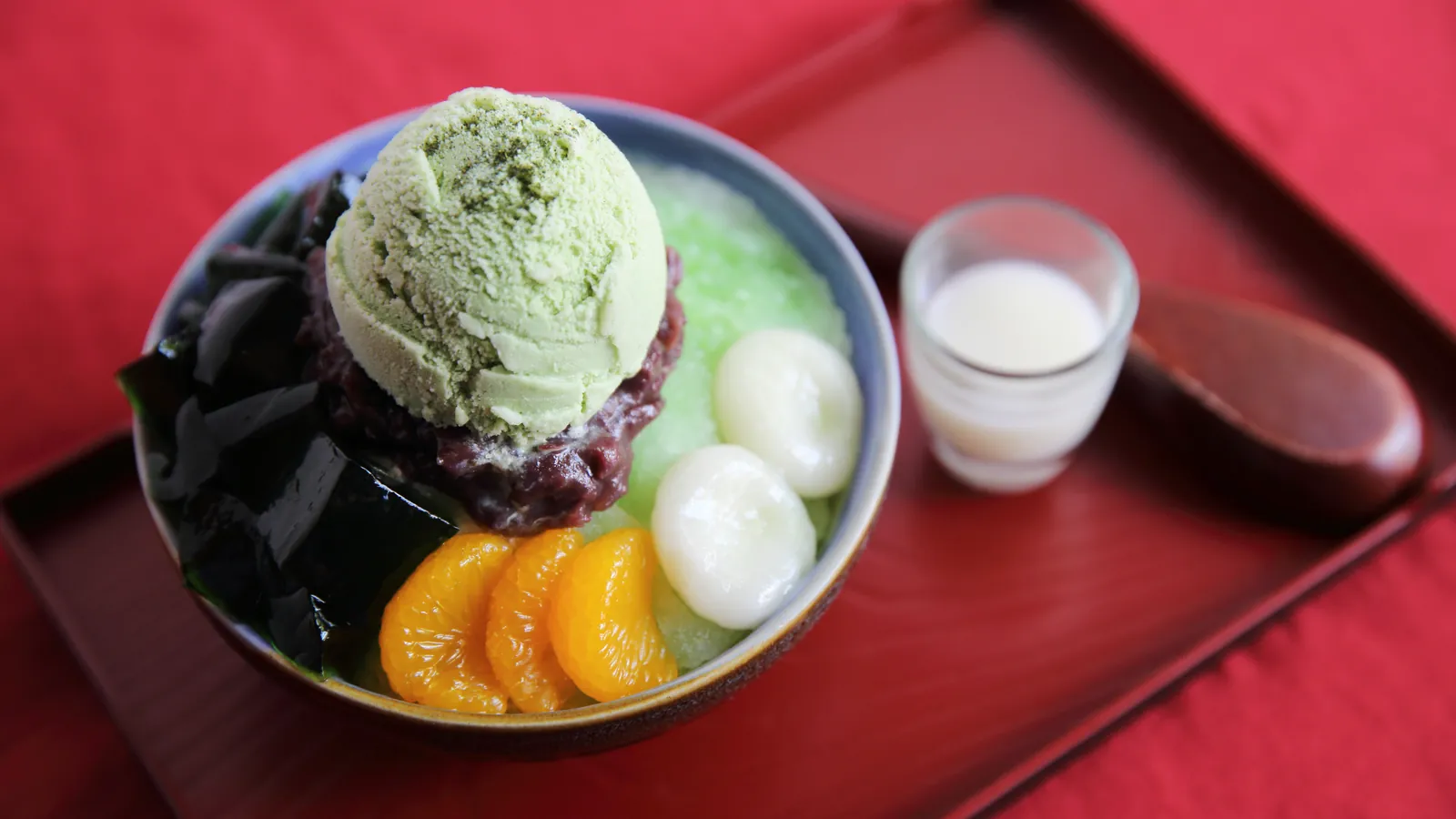
Kakigori is not a snow cone, and the difference is almost entirely in the ice. Use pure ice frozen slowly, then let the block warm to about -5°C before you shave it. Shave it straight out of a -18°C freezer and you get crunchy powder instead of the fluffy ribbons that make the dish. The matcha syrup is whisked rather than stirred, and one serving carries more matcha than anything else you sell.
This guide is for cafes considering kakigori as a summer dessert item, and for anyone whose first attempt came out icy and did not know why.
Key takeaways
In this guide
Kakigori is Japanese shaved ice, and the distinction from an American snow cone is texture rather than flavor. A snow cone is crushed ice with syrup poured over it. Kakigori is ice shaved into continuous ribbons so fine they collapse on the tongue, which is why it does not give you the same brain freeze and why the syrup is absorbed rather than draining to the bottom of the cup.
The dish is old enough to have a written record. Sei Shonagon, writing The Pillow Book around the year 1000, describes kezurihi, shaved ice served with a sweet syrup made from amazura, a boiled-down plant sap. Ice in Heian Japan was cut in winter, stored in ice houses, and reserved for the aristocracy, which made a bowl of it an extraordinary luxury.
The matcha version has its own name. Uji-kintoki means Uji for the matcha and kintoki for the sweet red azuki beans, with kintoki commonly explained as a reference to the red color associated with the Heian-era warrior Sakata no Kintoki. Before the war, the standard kakigori menu in Japan was small: yuki, plain shaved ice with sugar, mizore with sugar syrup, and kintoki with azuki. Bottled shaved-ice syrups only appeared afterwards.
That history is worth knowing because it tells you what the dish is trying to be. Uji-kintoki is not a sweet drink in a bowl. It is bitter matcha set against sweet beans, and the ice is the medium rather than the filler.
Two things separate cafe kakigori from a bad one: the ice you buy, and its temperature when the blade touches it. Neither is about the machine. Get these wrong and the best matcha in Japan will still land as gritty slush.
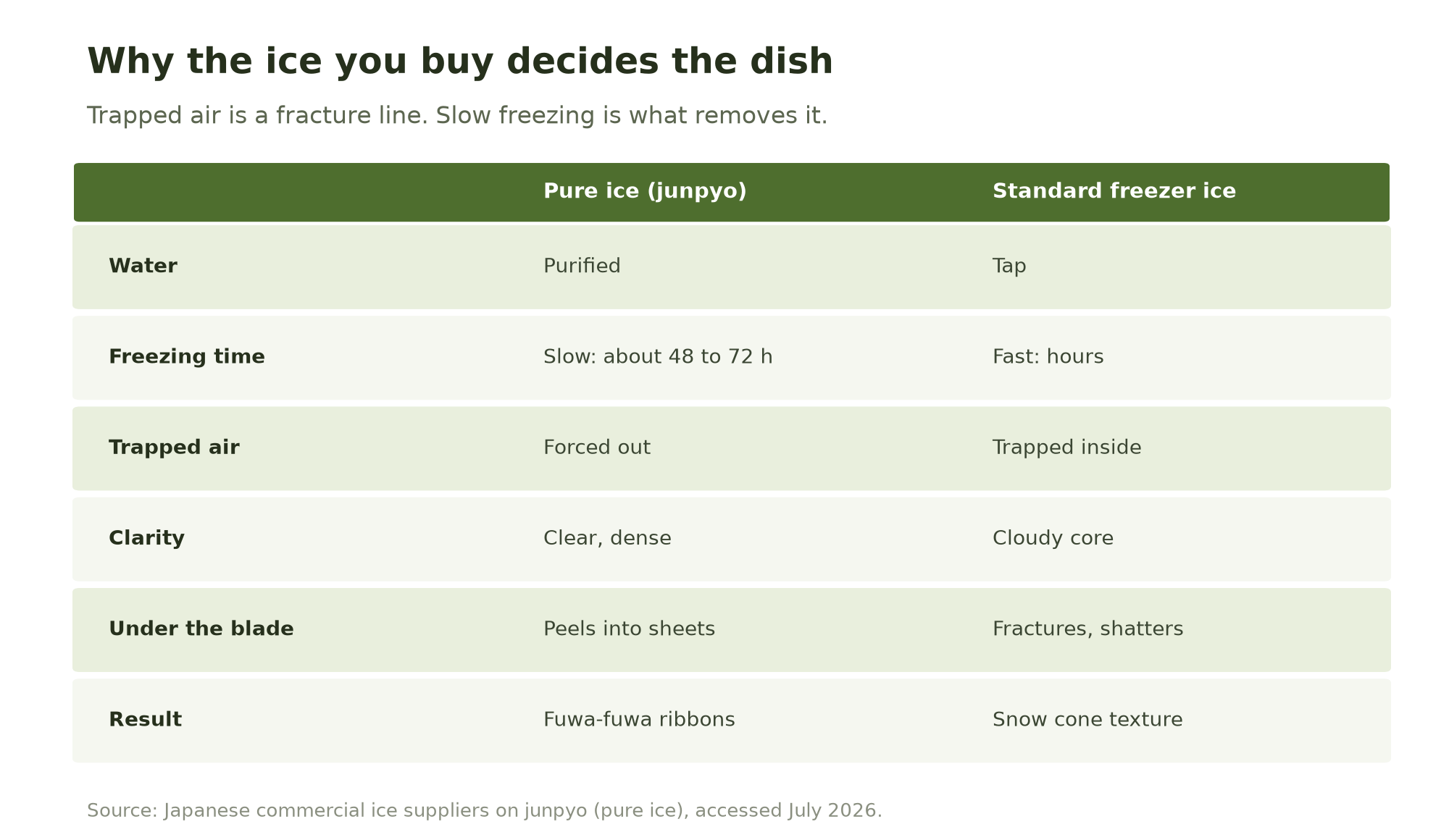
Buy pure ice. In Japan this is called junpyo, ice made from purified water and frozen slowly, typically over 48 to 72 hours depending on the producer. Slow freezing pushes dissolved air and impurities out, giving a dense, clear block that shaves into sheets. Ice frozen fast in a standard freezer traps air, and trapped air is a fracture line. It shatters instead of shaving.
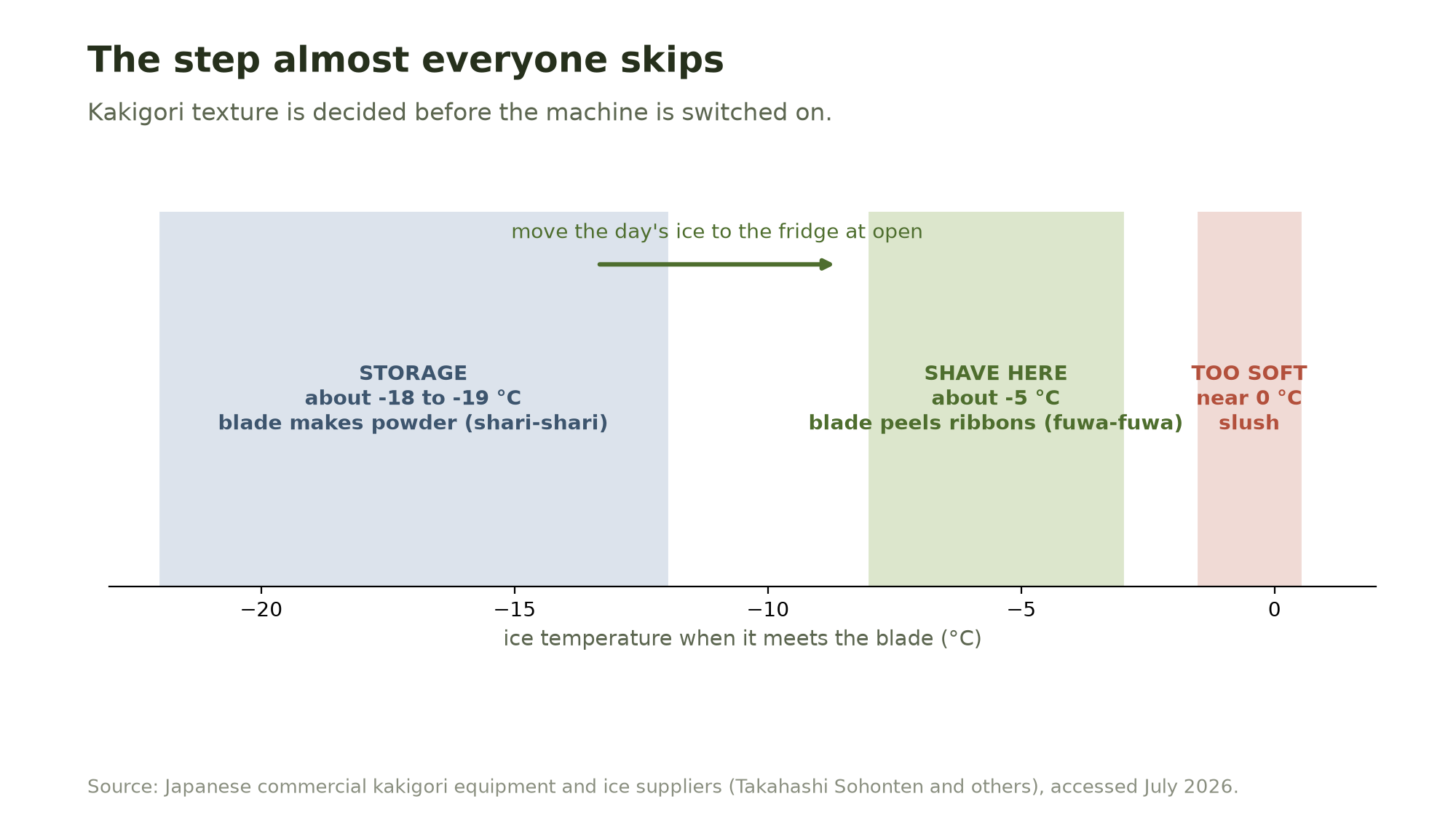
Then temper it. This is the step almost everyone skips. Commercial ice is stored around -18 to -19°C, and at that temperature it is too hard to shave properly: the blade produces powder. Japanese kakigori shops bring the block up to roughly -5°C before service, in practice by moving the day's ice from the freezer into the refrigerator when they open. At about -5°C the ice is soft enough that the blade peels a continuous ribbon, which is what fuwa-fuwa, the fluffy texture, actually means. Straight from the freezer you get shari-shari, crunchy.
So the operational reality is a morning routine rather than a technique. Decide your day's covers, move that much ice across at open, and keep the rest frozen. Ice that has been tempered and refrozen is not as good, so move only what you will use.
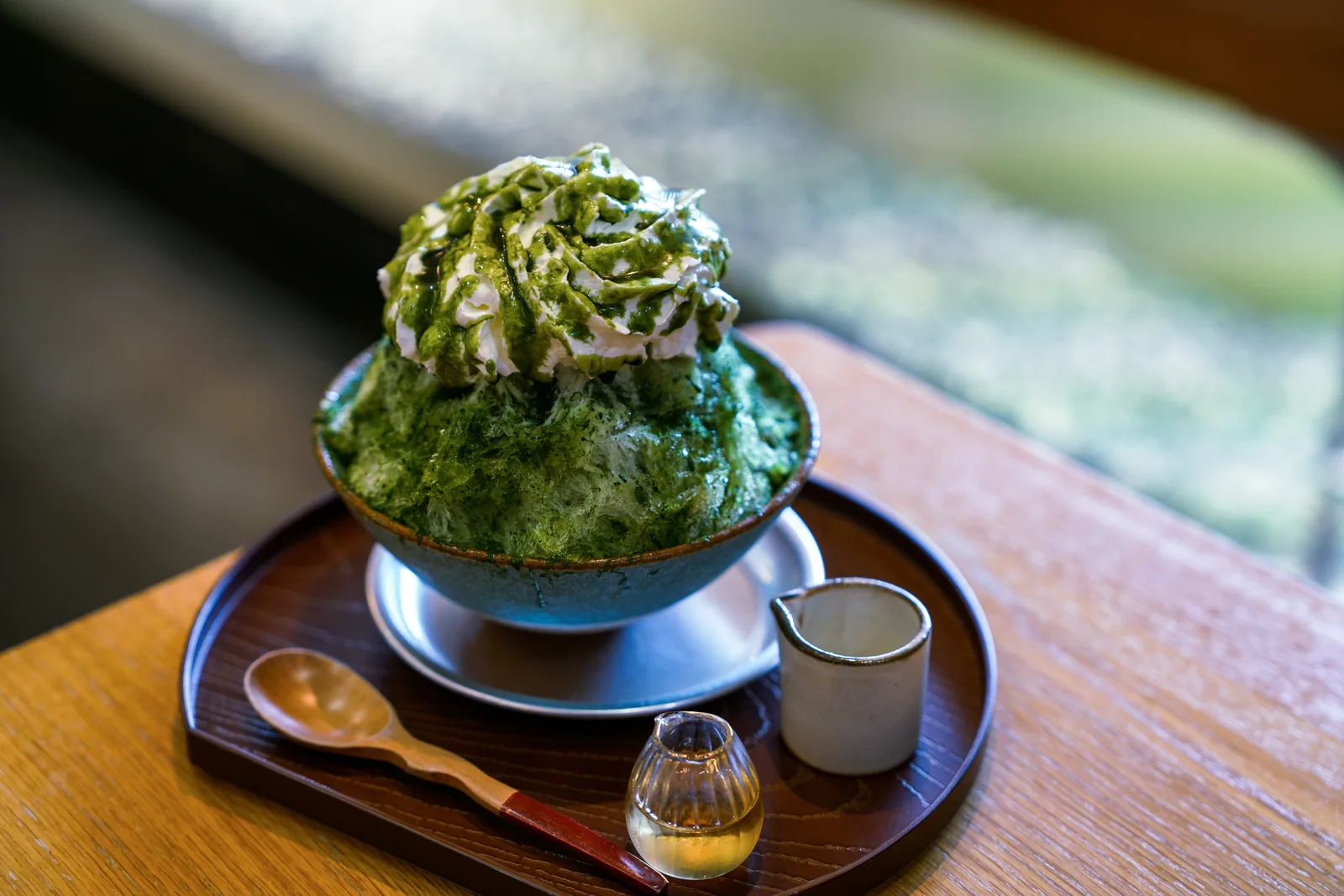
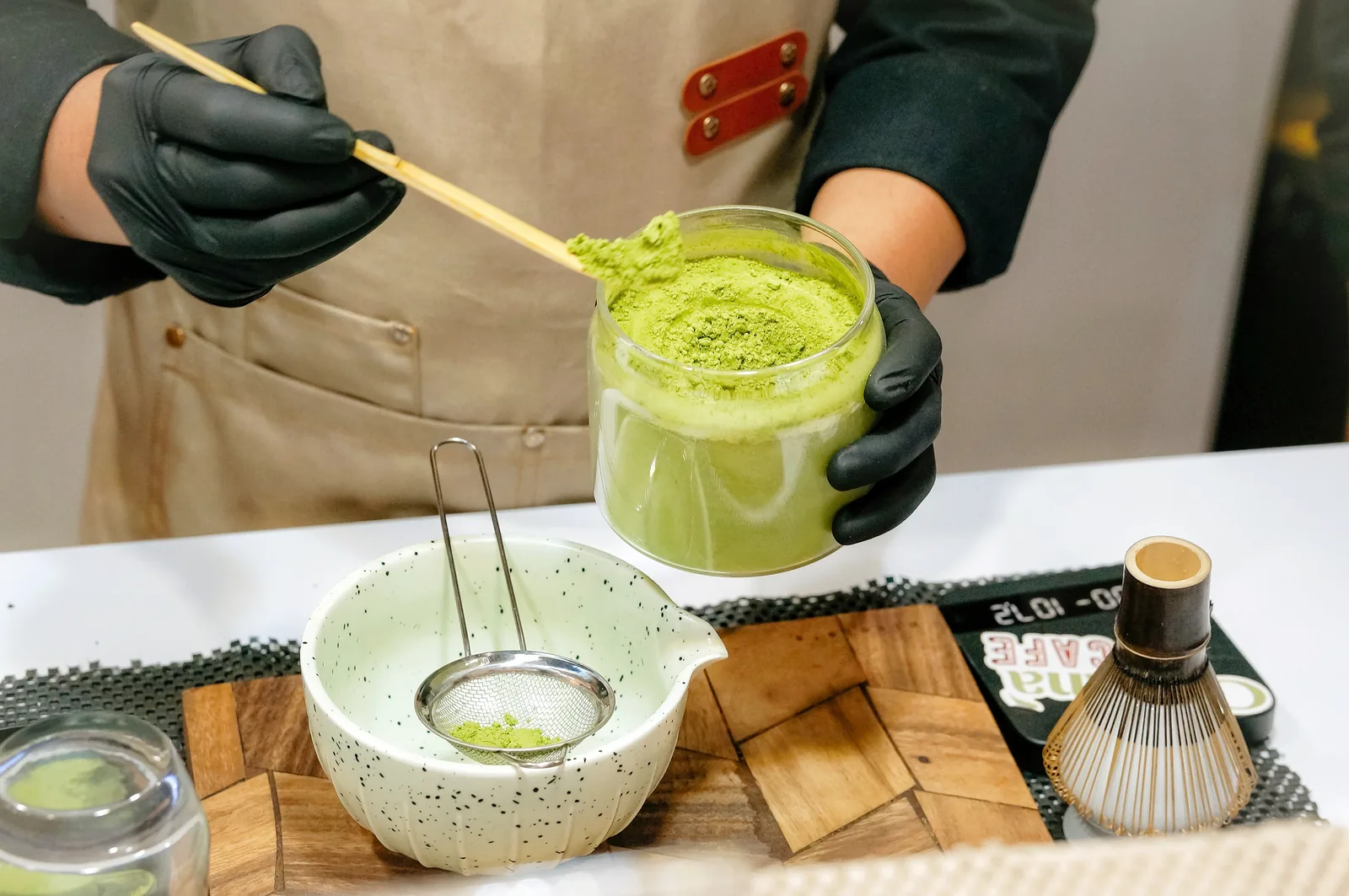
Whisk it, do not stir it, and make it warm. The traditional Uji-kintoki syrup is matcha, sugar and water combined with a chasen, the bamboo whisk, rather than dissolved cold. Whisking does two jobs at once: it breaks up the matcha properly, and it aerates the syrup slightly so it sits on the ice instead of running straight through it.
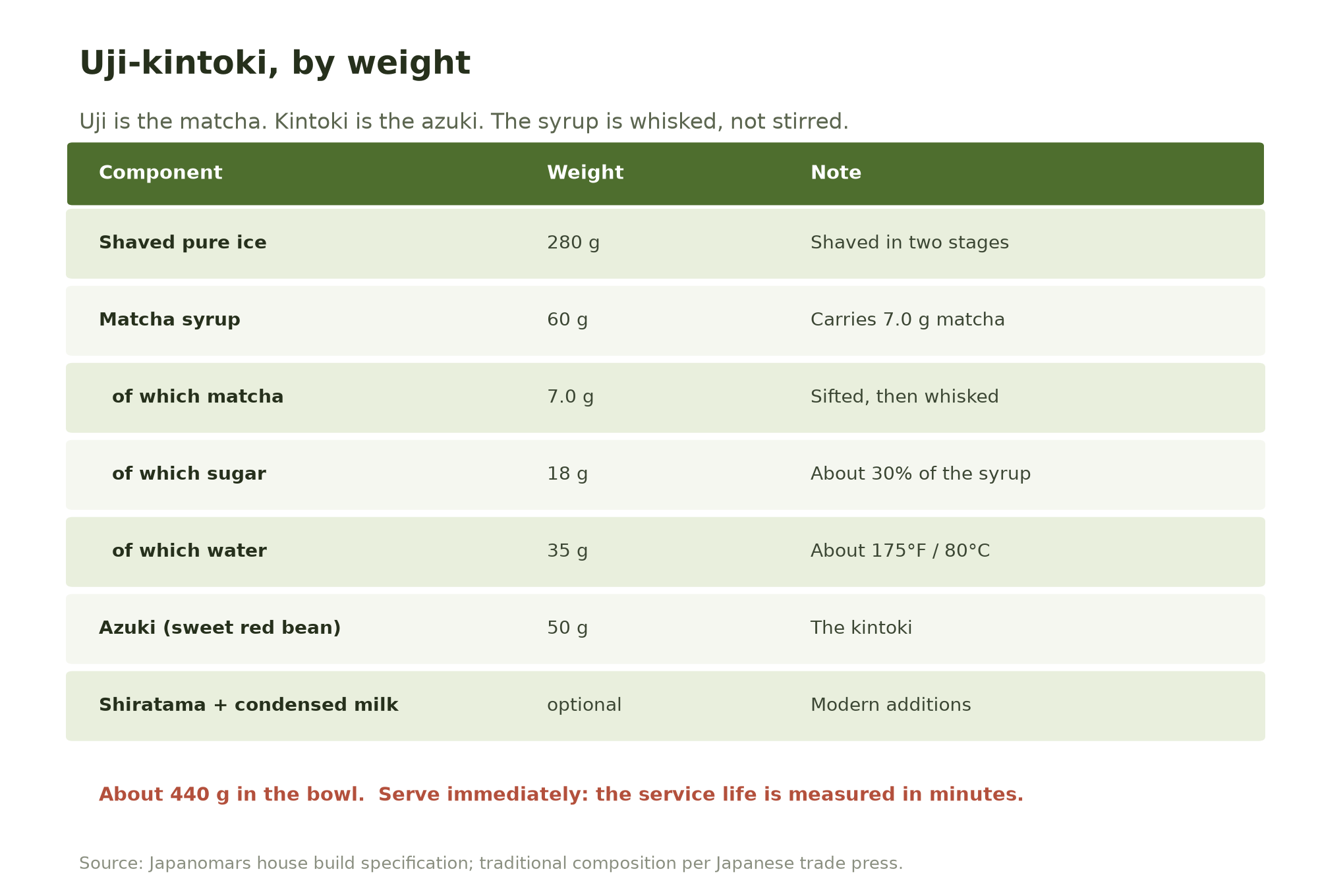
Our house spec is 7.0g matcha, 18g sugar and 35g hot water per serving, whisked to about 60g of syrup. This syrup spec is our house recommendation, not a published standard; treat it as a starting point. That is roughly 30 percent sugar, which matters structurally: a thin syrup melts the ice on contact and you lose the texture you just spent the morning protecting.
Sift the matcha first. A clump that survives into a cold drink is a texture problem; a clump in kakigori syrup is a visible green lump on a white surface.
Use water around 175°F (80°C), not boiling. This is the same reasoning as any matcha preparation: hotter water pulls harsher notes forward, and here you have sugar to balance but no milk to hide behind. It is the same water-temperature error we cover in the matcha mistakes baristas make.
Make it in small batches through service and keep it cool but not cold. Matcha syrup browns as it stands, because the chlorophyll that makes it green loses its magnesium to oxygen and light and turns to pheophytin. Against white shaved ice, that dulling is far more obvious than it is in a latte.
Build it in layers, not as a syrup poured on top. Pouring everything over a finished mound gives you a wet cap and dry ice underneath. Shaving in two stages with syrup between them is what gives an even bowl.
One component you do not need to make is the azuki. Sweetened red beans come canned or in pouches from any Japanese or Korean grocery wholesaler, already cooked, and they are consistent between tins in a way a house-cooked batch usually is not. Start there and make your own later if the dish earns it.
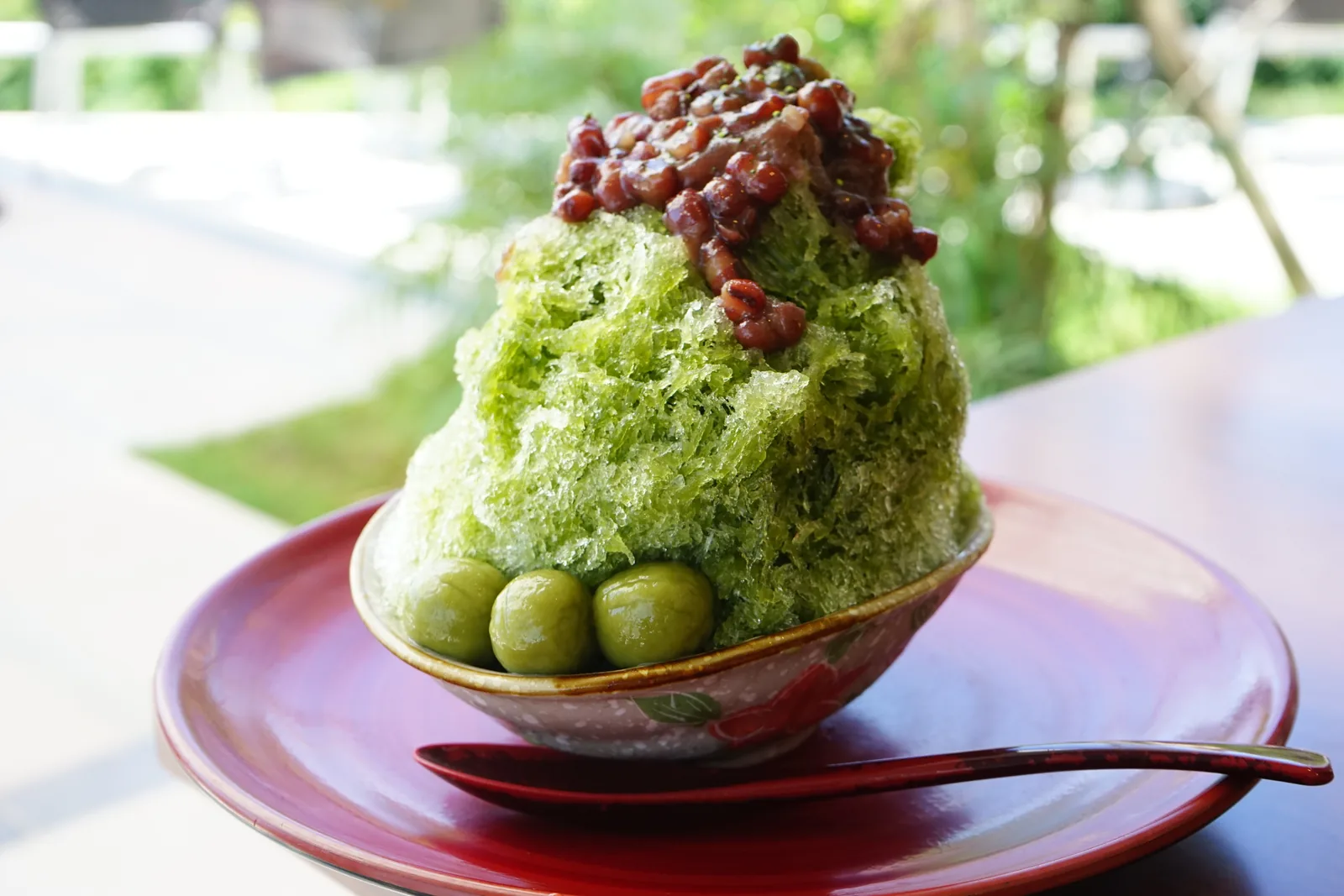
Be honest about this one: kakigori is the hardest item in this series to run, and it is not right for most cafes. It needs a block ice shaver, a freezer with room for blocks, a reliable pure ice supplier, and about three minutes of undivided attention per bowl. It is a dessert business inside a beverage business.
Where it works is a cafe with seating, a summer afternoon trade, and a reason to have people stay. Kakigori cannot travel and it cannot wait, so it is worthless for to-go volume and excellent for occupancy on a hot afternoon. It also photographs better than anything else you can put on a matcha menu, which is a real acquisition channel.
The equipment question splits the same way as frozen drinks. A cube-ice shaver is cheap and will produce something acceptable, but it cannot make ribbons. A block ice shaver plus a supplier of pure ice is the version worth doing. If you cannot source pure ice locally, do not start; the dish is the ice.
Finding it is easier than it sounds. In most US metros the supplier you want is a craft cocktail ice company rather than a general food-service ice vendor. The clear block they sell to bars is made the same way, filtered and slow-frozen, and it comes in blocks a shaver can take. Ask for block rather than cubes, and ask how long they freeze it.
If you want a matcha dessert without any of this, the honest answer is to do something else. Kakigori done badly is worse than not offering it. A blended drink or a well-built iced matcha will do more for a summer menu than a mediocre bowl of shaved ice.
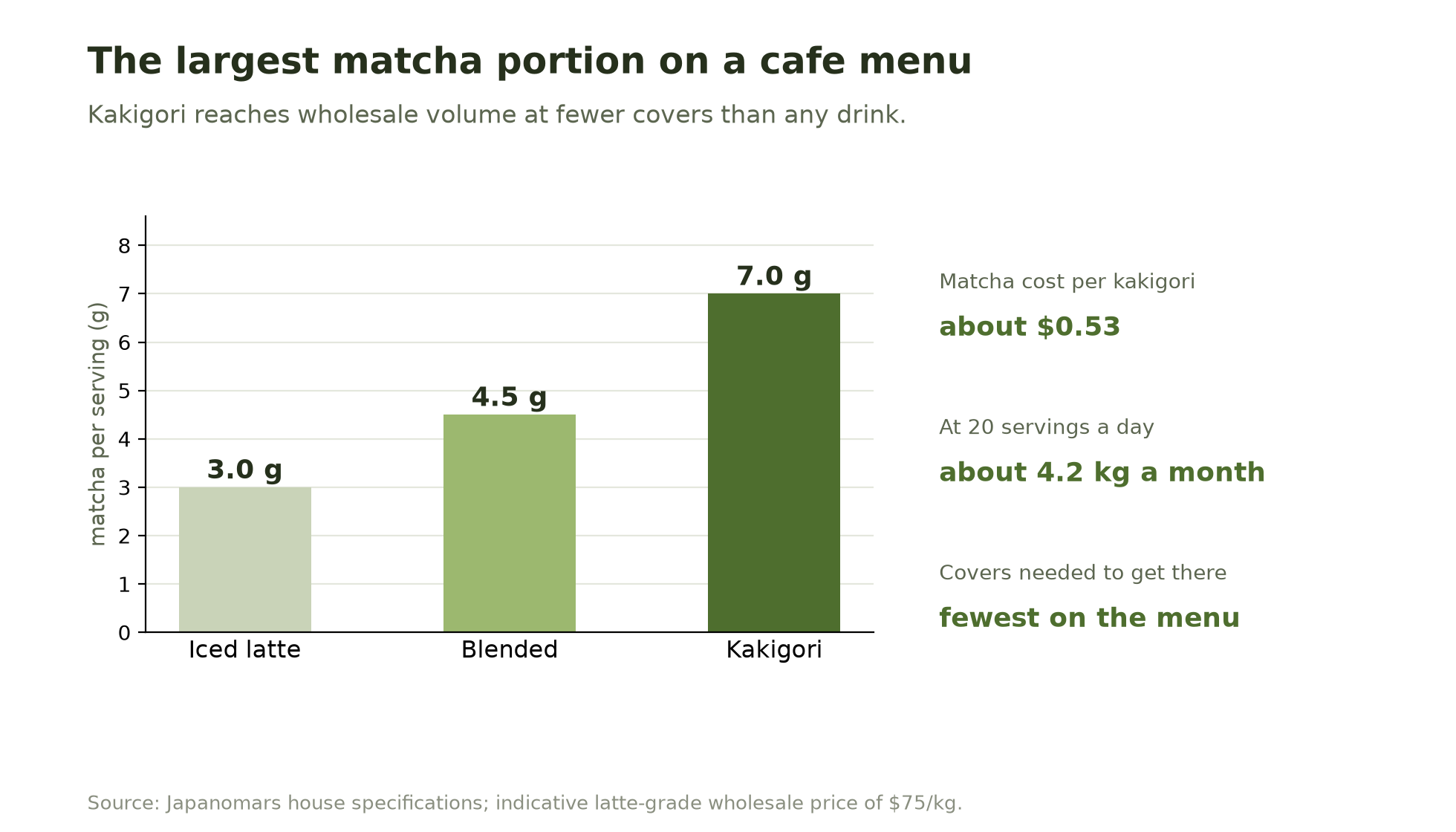
At an indicative latte grade wholesale price of about $75/kg, a 7.0g serving carries about $0.53 of matcha, against roughly $0.23 for a 3.0g iced latte. It is the single largest matcha portion on a cafe menu, and it sits on a dessert ticket that carries it comfortably. Kakigori prices as a dessert rather than a drink, well above a latte, so even at 7 grams the matcha is a small share of what the customer pays. The ice, the beans and the three minutes of labor are the bigger lines.
The volume arithmetic is what makes it interesting on the sourcing side. A cafe selling only 20 kakigori a day works through about 4.2 kilograms of matcha a month on that one item, at fewer covers than a drink would need to get there. Add ice and azuki cost on top and you are still looking at a high-margin dessert, because the ticket price for kakigori sits well above a latte.
Grade choice matters more here than in a blended drink, for the opposite reason to what you might expect. The matcha is not hiding behind milk. It is whisked, sweetened, and served against a neutral white background, so both its color and any coarseness in the grind are fully exposed. This is a build where a good latte grade shows, and where a tired one is obvious to the customer before they taste it. We unpack how grade names map to what you are actually buying in matcha grades explained.
Texture. Kakigori is shaved into continuous fine ribbons that collapse on the tongue and absorb syrup, while a snow cone is crushed ice that the syrup drains through. The difference comes from using dense pure ice and shaving it at around -5°C rather than straight from a freezer.
The ice was too cold when you shaved it. Commercial ice is stored around -18°C, which is too hard for the blade to peel properly, so it produces powder. Move the block to a refrigerator to bring it up to roughly -5°C before service, which is what Japanese kakigori shops do each morning.
Pure ice, called junpyo in Japan, made from purified water and frozen slowly over roughly 48 to 72 hours. Slow freezing forces out dissolved air, giving a dense clear block that shaves into sheets. Fast-frozen freezer ice traps air, and that trapped air makes it shatter instead of shave.
About 7 grams per serving in our house spec, whisked with 18g of sugar and 35g of hot water to make roughly 60g of syrup. That is more than double an iced latte, because the syrup has to carry flavor across a large volume of ice without being diluted into nothing. This syrup spec is our house recommendation, not a published standard; treat it as a starting point.
The classic matcha kakigori. Uji refers to the matcha and kintoki to the sweet red azuki beans served with it. The syrup is matcha, sugar and water whisked together, poured over the shaved ice, with azuki on top. Modern versions often add shiratama rice dumplings and condensed milk.
Not well. Cube-ice shavers produce a granular result closer to a snow cone, because cube ice is fast-frozen and full of trapped air. If you cannot source block pure ice locally, kakigori is probably not the right item for your cafe.
Kakigori rewards two decisions made before anyone touches a machine: buy pure ice, and warm it to about -5°C before you shave it. Get those right and the rest is a whisked syrup and a bit of assembly. Get them wrong and no amount of good matcha will rescue the bowl.
Kakigori is the build where matcha quality is most visible, which cuts both ways. If you want to see how a recently milled lot behaves against shaved ice, we can send samples with the milling date on them.
Hiroshi Asami is the founder of Japanomars, which exports matcha from producers in Saitama, Gifu, Saga, Fukuoka, and Kagoshima to cafes in the United States and Canada.
%E7%99%BD_%E5%A4%A7%E3%81%8D%E3%81%84.png)