%E5%A4%A7%E3%81%8D%E3%81%84.png)
Barista Technique · 2026

Most bad matcha lattes are not a bad-matcha problem, they are a technique problem: water too hot, no sift, the wrong tool, the wrong grade, or an eyeballed scoop. Fix those five habits and the same bag of matcha you already stock tastes sharper, greener, and less bitter tomorrow morning. This guide covers the mistakes baristas make most often, the fix for each, and a step-by-step build to post at the bar.
Key takeaways
In this guide
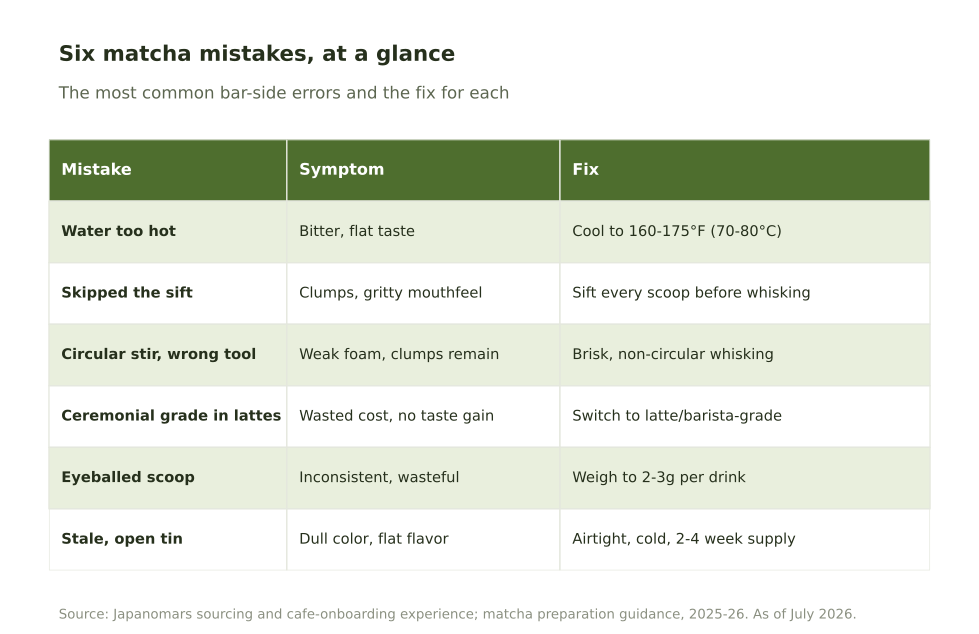
Bitterness in matcha almost always comes from water that is too hot, not from the matcha itself. Water above roughly 175°F (80°C) scalds the leaf and pulls out sharp catechins and tannins before a whisk or frother has a chance to build a smooth base, and once that happens, no amount of milk or syrup fixes it. The reliable fix is a cool-down step: bring your matcha water to 160 to 175°F (70 to 80°C), noticeably below a coffee steam wand, before it ever touches the powder.
Most cafe bars are built around near-boiling water and 150 to 160°F steamed milk, so matcha needs its own habit: a kettle set to a lower default, or a pour of hot water cooled 10 to 15 seconds before it hits the sifted powder. Japanese matcha guidance is consistent on this point, the "80°C rule" for umami without bitterness shows up across producer and tea-shop sourcing material as the standard target, and it matches what we tell every new cafe partner during onboarding.

Clumping is a hydration problem, not a mixing problem. Matcha's particles are extremely fine and hydrophobic when dry, meaning they repel water and bind to each other on contact instead of separating, so stirring harder just pushes clumps around rather than breaking them. The two fixes that actually work are sifting the powder before it touches liquid and building a smooth paste with a small amount of water before milk goes anywhere near it.
Sift every scoop, even from a fresh tin: a simple handheld tea strainer breaks up the static clusters that form from pressure and humidity during storage and scooping. Then whisk that sifted powder with about 30ml of water at 160 to 175°F into a paste before adding steamed milk. Skipping straight to milk is the single most common shortcut that produces a gritty, clumpy latte, and it is also the easiest one to train out in a single shift.
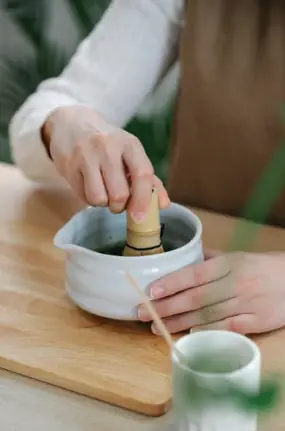
Stirring matcha in circles like hot chocolate creates a vortex that concentrates clumps in the center instead of breaking them apart. The traditional bamboo whisk, the chasen, uses a fast, non-circular W or M motion specifically because that shearing action separates clumped particles in seconds, and the same logic applies to a milk frother or handheld mixer: short, brisk, back-and-forth strokes work, slow circles do not.
Most bars will not hand a barista a chasen during a Saturday rush, and that is fine. Keep one on hand for showcase drinks and training new hires on what a properly whisked bowl looks like, but the daily driver should be whatever fast, non-circular tool your bar already uses for milk. The habit matters more than the equipment: teach "whisk it like you mean it, not in circles," and most whisking-related clumping disappears.
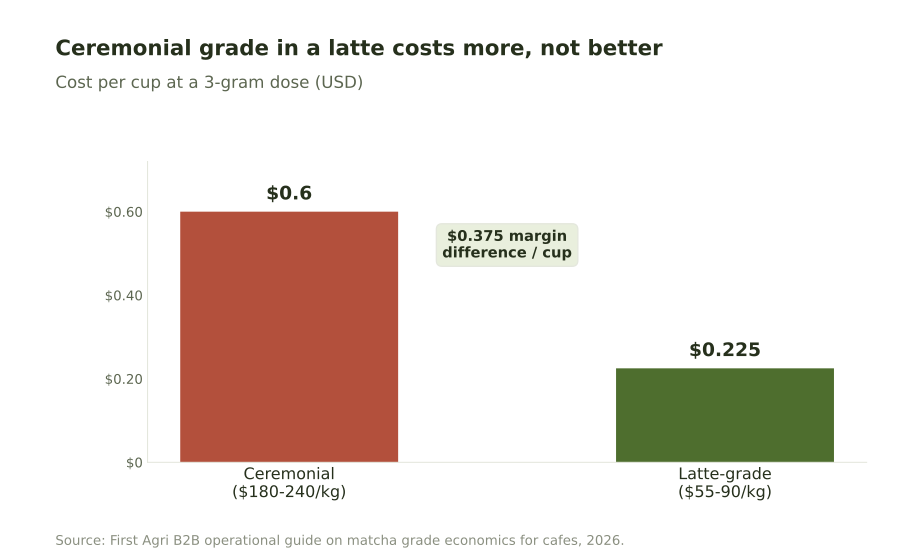
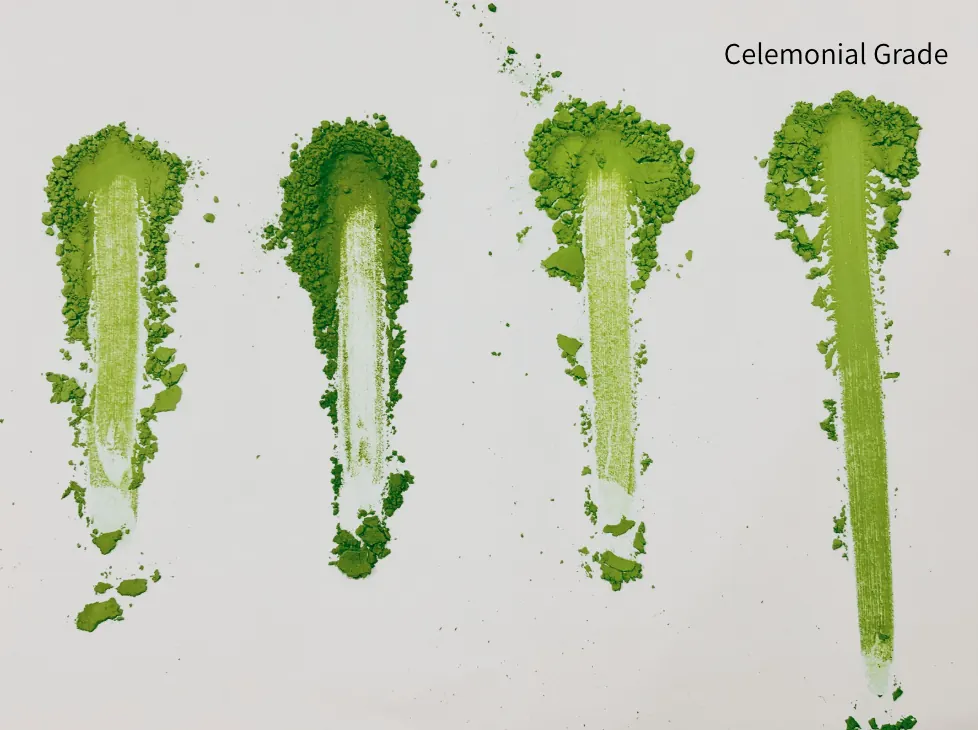
Many cafes pour $180 to $240/kg ceremonial-grade matcha into steamed milk and flavored syrup, a workflow that buries its delicate umami and wastes the premium you paid for. Latte-grade matcha, sometimes called barista-grade, is grown and processed specifically to hold its color and catechin-forward punch through milk and heat, and it runs roughly $55 to $90/kg sourced direct from Japan. Switching your core latte SKU to latte-grade frees real margin with no taste difference customers can detect.
Run the math: at a 3-gram dose, ceremonial-grade matcha costs about $0.60 per latte versus about $0.225 for latte-grade, a $0.375 margin difference on every drink. For a cafe doing 800 matcha lattes a month, that gap is worth roughly $3,600 a year in preserved margin on one SKU, and it scales fast across a multi-location group. Ceremonial grade still earns its place on straight usucha service at 70 to 75°C, just not buried under milk. Our ceremonial grade matcha guide covers where that grade pays off, and matcha grades explained breaks down the full ladder if you are re-speccing your menu.
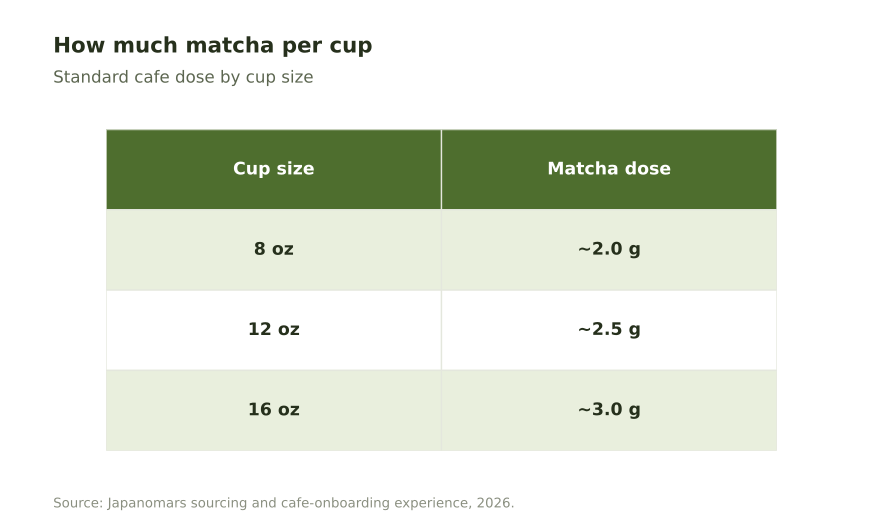
A standard cafe matcha latte runs about 2 to 3 grams of matcha depending on cup size, and the gap between a written recipe and what actually leaves the tin is bigger than most owners assume. Over-scooping by even half a gram per drink, powder lost at the edges of a sifter, and staff "testing" drinks during training all quietly add up to real cost over a month.
A simple sizing guide: roughly 2 grams for an 8oz cup, 2.5 for a 12oz cup, 3 for a 16oz cup, adjusted up slightly for high-volume milks like oat that dilute flavor more than whole milk. A new hire making a few practice lattes a day across a two-week onboarding can add 60 or more grams of usage that never shows up as revenue, invisible until someone weighs it. The fix is the same one that works everywhere else on a bar: weigh to a set recipe with a small scale instead of eyeballing a scoop. For the full ratio-and-method build, see our matcha latte guide.

From the sourcing floor
The mistake we see most often when we start working with a new cafe is not a bad supplier, it is a bar built around habits from coffee: near-boiling water, a circular stir, and a scoop nobody has weighed in months. The fix is usually a fifteen-minute retrain, not a new order.
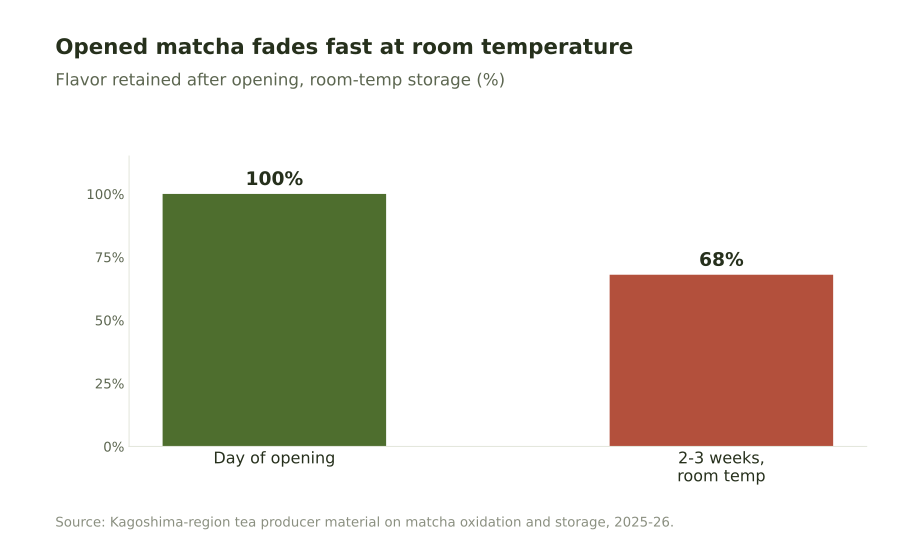
An open tin of matcha on a shelf near the espresso machine loses noticeably more than 30% of its flavor within two to three weeks at room temperature, because its fine powder has far more surface area exposed to oxygen, light, and heat than whole tea leaves ever do. Producer testing from Japan's Kagoshima tea region, including areas we source from directly, backs this up: catechins oxidize quickly once matcha is milled and opened, which is what dulls the color from vivid green to a flat, hay tone.
The fix is airtight, cold, and sized right. Keep bar-side matcha sealed between uses, refrigerated when your setup allows it, and portioned to what the bar will realistically use in two to four weeks rather than a bulk tin left open all shift. Our dedicated guide to matcha storage, freshness, and shelf life covers container choice, fridge versus freezer, and order sizing in full.

Print this at the bar. It folds every fix above into one six-step build a new hire can follow on day one:
Bitterness almost always comes from water that is too hot. Matcha wants water at roughly 160 to 175°F (70 to 80°C), well below a coffee steam wand's temperature. Water above that scalds the leaf and pulls out sharp catechins and tannins that no amount of milk or syrup can mask, so the fix is cooling the water before it touches the powder, not adjusting the recipe around the bitterness.
Clumping happens when dry matcha particles bind together on contact with water before they are separated, and it is usually a sequencing problem: skipping the sift, or adding milk before the powder is fully hydrated into a paste. Sift every scoop, whisk it into a smooth paste with a small amount of hot water first, and only then add milk.
Not for daily service. A chasen's fast W or M motion is worth using for showcase drinks, tastings, and training new hires on proper texture, but a milk frother or handheld mixer used with short, brisk, non-circular strokes gets a bar through a rush just as well. The motion matters more than the tool.
Generally no. Ceremonial-grade matcha is processed for straight service and its delicate umami gets buried under steamed milk and syrup, wasting the premium you paid for it. Latte-grade (also called barista-grade) matcha is built to hold its flavor through milk and costs roughly a third as much, with no perceptible taste loss in the finished drink.
A standard cafe dose runs about 2 grams for an 8oz cup up to 3 grams for a 16oz cup. Eyeballing a scoop instead of weighing it is one of the biggest sources of quiet waste at a matcha bar, since over-scooping by even half a gram per drink adds up fast across a busy month.
Opened matcha can lose more than 30% of its flavor within two to three weeks at room temperature because its fine powder oxidizes quickly once exposed to air, light, and heat. Keep bar-side matcha sealed, refrigerated when possible, and sized to a two-to-four-week supply rather than a large tin left open all shift.
None of these fixes require new equipment or a new supplier, just water that is cooler than your steam wand, a sift, a scale, a non-circular whisking motion, the right grade for the job, and a sealed, cold tin. Train the six-step build above into your team and the same matcha you already stock will taste noticeably better by tomorrow's first shift.
Japanomars supplies specialty cafes with latte-grade and ceremonial matcha direct from six producing regions in Japan. Request a sample set to train your team on the fixes above, and we will help you land on the right grade and dose for your menu.
Request samples & pricingHiroshi Asami is the founder of Japanomars, a Japanese matcha exporter supplying specialty cafes across the US, Canada, and the Philippines, working directly with farms and regional tea factories in six producing regions.
Sources: First Agri B2B operational guide on matcha grade economics for cafes (2026, ceremonial vs. latte-grade cost per cup); Japanese matcha preparation guidance on water temperature and technique (matcha-techo.com, matcha-times.jp, 2025-26, the 80°C rule and sifting/clumping mechanics); Kagoshima-region tea producer material on matcha oxidation and storage (2025-26, flavor loss within 2-3 weeks of opening at room temperature); cafe-operations sourcing on matcha dosing and waste (2026).
%E7%99%BD_%E5%A4%A7%E3%81%8D%E3%81%84.png)