%E5%A4%A7%E3%81%8D%E3%81%84.png)
Cafe Menu · 2026
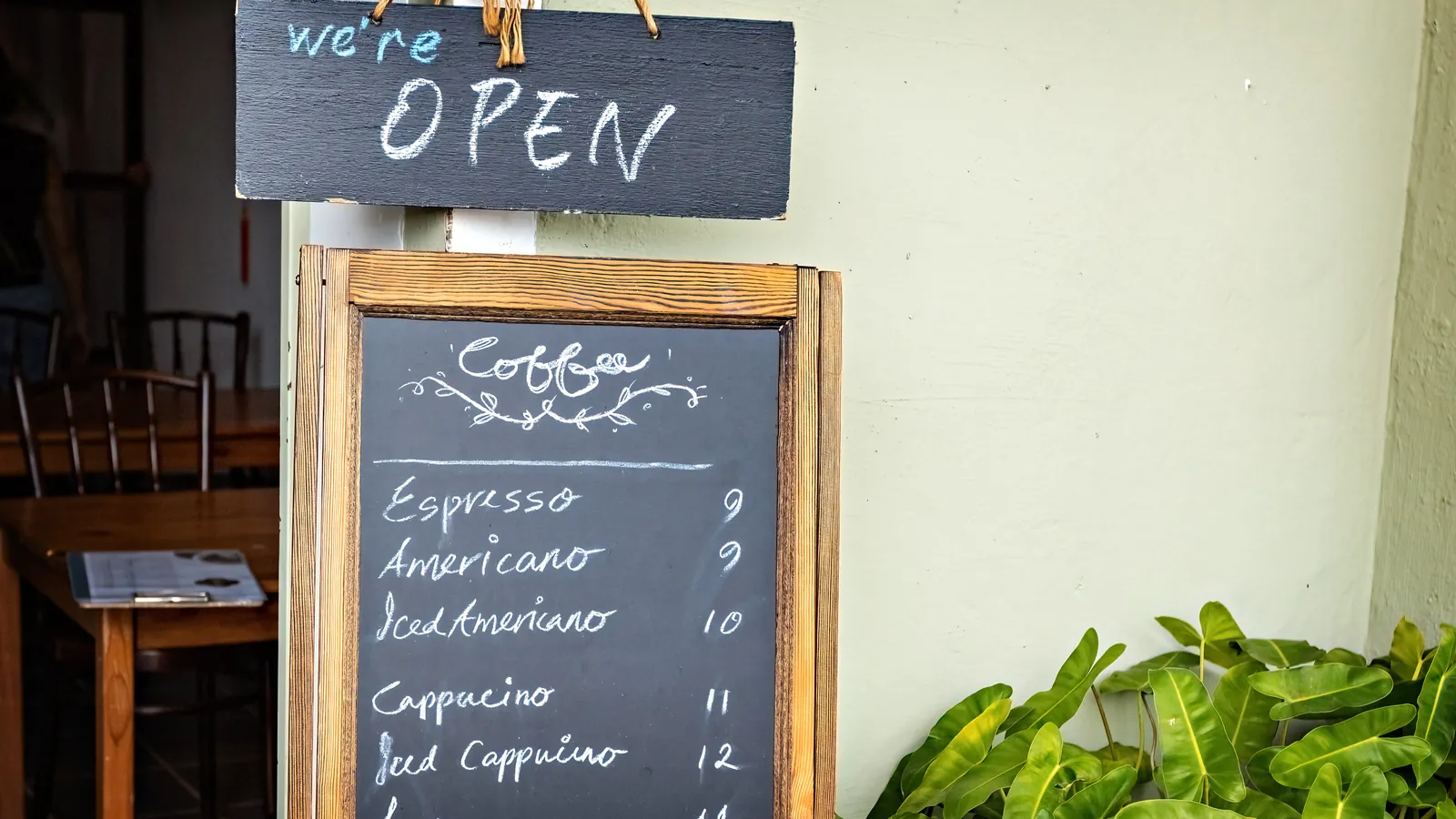
Price a matcha latte the way you'd price any specialty drink: start from your target gross margin, not from what the cafe down the street charges. At 2026 wholesale pricing, the matcha itself typically costs $0.15 to $0.30 per latte at a standard 2 to 3 gram dose, a small fraction of the $5 to $9 most US cafes charge, which means milk, cup, and labor move your margin far more than the matcha line item does. This guide walks through the real cost-per-cup math, how matcha margins compare to espresso drinks, and how to reprice without guessing.
Key takeaways
In this guide
Matcha itself is a small line item: at a standard 2 to 3 gram dose per latte and 2026 premium latte-grade wholesale pricing of roughly $55 to $85 per kilogram, the matcha in a single drink costs about $0.11 to $0.26, call it $0.15 to $0.30 once you round up for a slightly generous scoop. That's the ingredient cost most operators overestimate when they hear "matcha is expensive."
Grade changes this math directly. Culinary grade at $35 to $50/kg runs closer to $0.10 to $0.15 per 3-gram dose, while ceremonial grade at $100 to $200/kg jumps to $0.30 to $0.60 per dose, which is exactly why ceremonial grade matcha is usually reserved for a straight-whisked tier rather than the everyday latte. For the full grade-to-price breakdown at cafe order volumes, see matcha wholesale pricing, MOQs, and lead times. The number to remember: even at ceremonial pricing, matcha rarely exceeds $0.60 of a drink that sells for $5 or more.
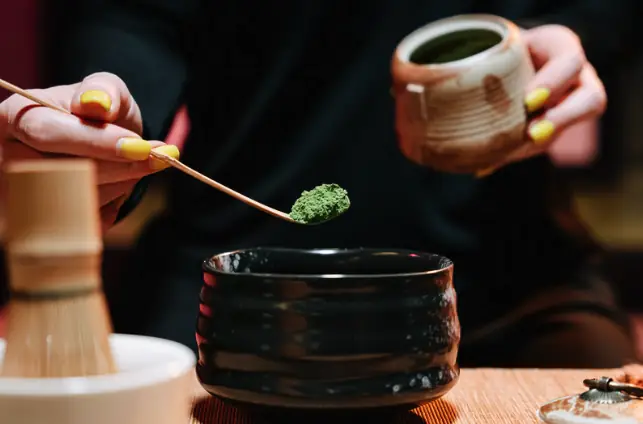
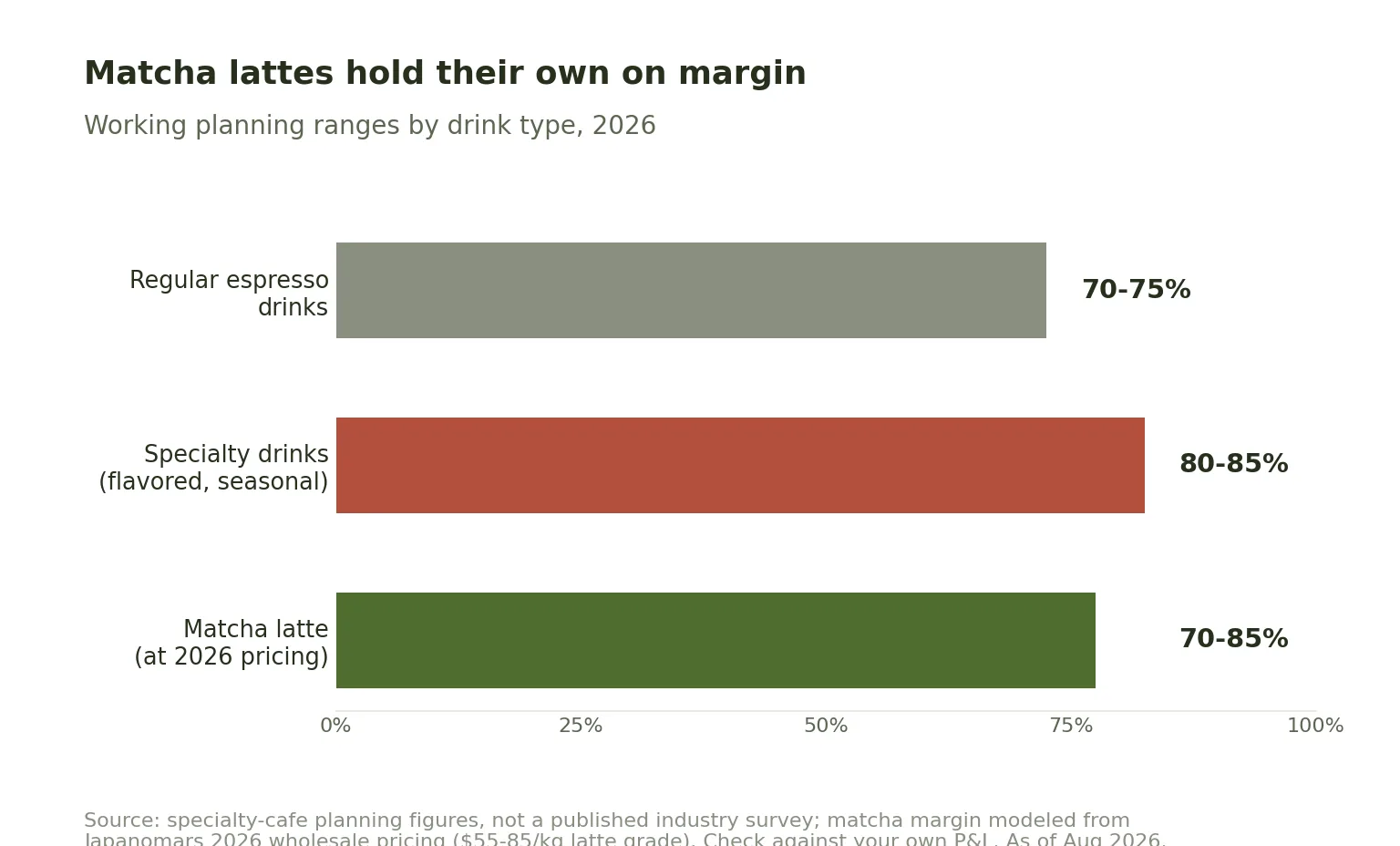
Matcha lattes typically carry margins as good as or better than espresso drinks, because the raw ingredient cost per cup is low relative to the price customers already expect to pay. Specialty cafes commonly work to gross margins in the low-to-mid 70s on standard espresso drinks and into the 80s on specialty and seasonal builds; run the arithmetic below on current direct-from-Japan matcha pricing and a matcha latte lands in the same territory or a little above it. Treat those as working planning figures rather than a published industry statistic, and check them against your own P&L, because the spread between cafes is wide.
The practical implication: a matcha latte doesn't need a "premium" surcharge to justify its place on the menu next to your espresso drinks. If your espresso latte is priced to hit a 72% margin, a matcha latte at the same price point, or even the same price as your seasonal specials, comfortably clears a similar or better margin once you account for matcha's low per-dose cost.
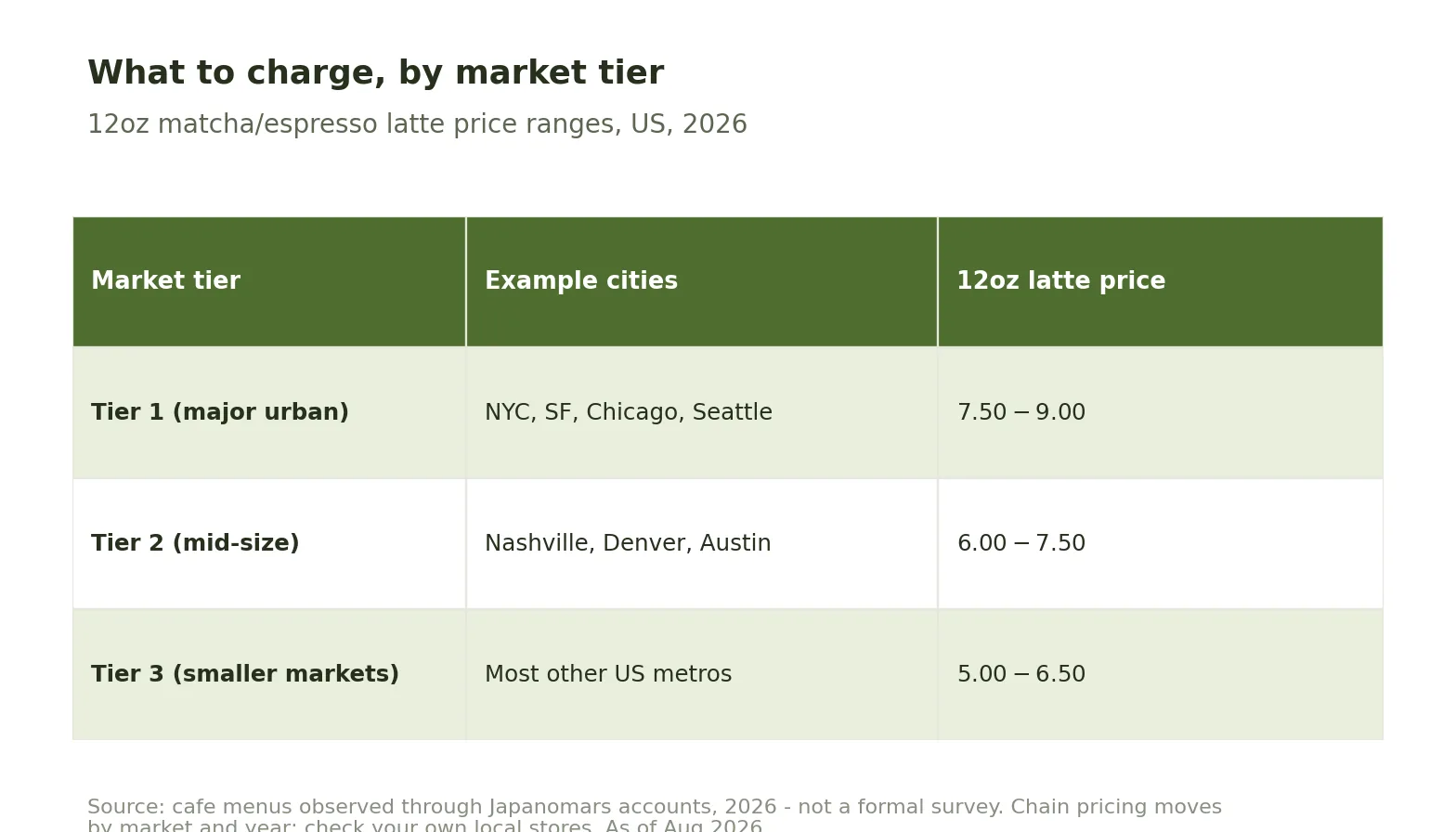
Menu prices for a matcha latte track your local market tier more than your matcha cost. As a rough 2026 picture from cafe menus we see through our own accounts: tier-one urban markets (New York, San Francisco, Chicago, Seattle) run a 12oz latte around $7.50 to $9.00; tier-two mid-size cities (Nashville, Denver, Austin) run $6.00 to $7.50; tier-three smaller markets run $5.00 to $6.50. The chains anchor the low end, with Starbucks and Dutch Bros matcha drinks generally in the $5 to $7 band. Chain pricing moves by market and by year, so check your own local stores rather than treating any of these as fixed.
Price your matcha latte at or near your comparable espresso latte price for your market tier, not below it. Given how small a share matcha is of total drink cost, undercutting your own espresso pricing to seem "reasonable" on matcha only hands away margin you don't need to give up. If anything, a small premium ($0.25 to $0.50 over your standard latte) is defensible given matcha's higher perceived value and story, as long as you're not already the highest-priced matcha in your market.
Milk usually costs more per cup than the matcha itself, especially with alternative milks. A standard 8 to 10oz pour of whole dairy milk runs roughly $0.15 to $0.25, but oat, almond, or other alt-milks commonly run $0.30 to $0.60 for the same pour, meaning a customer's oat-milk matcha latte can carry more milk cost than matcha cost. Add $0.15 to $0.25 for cup, lid, sleeve, and straw, and your full non-labor ingredient cost for an everyday latte-grade matcha latte typically lands around $0.45 to $1.15 depending on milk choice. On a $5 to $9 drink that is roughly a 5 to 23% ingredient cost, comfortably under the 25 to 35% beverage cost-of-goods most cafes plan around. Build the drink on ceremonial grade instead and the matcha line roughly doubles, which still leaves you inside target.
Labor is the line item ingredient math leaves out but margin math can't. A drink that takes 45 seconds to make at a 30% ingredient cost is more profitable per labor-hour than one that takes four minutes at 25%, and matcha's whisk-and-pour build is fast, comparable to or quicker than a latte with espresso extraction time. If you charge an alt-milk upcharge (standard practice at $0.50 to $0.75), make sure it actually covers the milk cost difference; many cafes set that upcharge once and never revisit it as alt-milk costs shift.
A wholesale matcha price increase almost never threatens your margin the way it feels like it will. Because matcha is such a small fraction of total drink cost, even a large jump, say $10 to $20 more per kilogram during a tight-supply season, adds only about $0.02 to $0.06 to a single 2 to 3 gram dose. On a $6 drink, that's well under a 1 percentage point shift in margin, nowhere near enough to justify an emergency menu reprice on its own.
What actually erodes margin over time is not repricing at all while everything around the matcha, milk, cups, labor, rent, quietly climbs. Track your matcha cost per kilogram the same way you'd track any input, but don't let sourcing-side anxiety about tight supply (see the 2026 matcha market) drive reactive pricing decisions that your actual cost-per-cup doesn't support.
From the sourcing floor
When a wholesale price moves, the first thing I adjust is my own margin, not the cafe's cost. Most seasonal movement can be absorbed that way, and the cafe never has to touch a menu board over it. When a move is too large to absorb I go to the cafe and we talk it through rather than emailing a new price list, and when costs come down I pass that down as well, because a supplier who only gets in touch when prices are rising is not really a partner.
Reprice on a predictable schedule tied to your full cost review, not in response to any single supplier email. Most specialty cafes revisit menu pricing once or twice a year, bundling a matcha adjustment (if any is even needed) into the same pass as coffee, milk, and packaging costs, rather than singling out one drink for a standalone price change that draws attention.
When you do move a price, a small, quiet adjustment ($0.25 to $0.50) rounded to a clean number reads as normal menu maintenance; a large jump or a matcha-only increase reads as a story, and customers notice stories more than numbers. If your actual per-cup matcha cost has moved only a few cents, as it usually has even after a "shortage" headline, that's a strong sign you don't need to touch the price at all this cycle.
Run this math for your own menu before you set or change a price:
| Line item | Typical range | Your number |
|---|---|---|
| Matcha (2-3g at your grade's $/kg) | $0.10-0.60 | |
| Milk (dairy or alt, per standard pour) | $0.15-0.60 | |
| Cup, lid, sleeve, straw | $0.15-0.25 | |
| Total ingredient cost | $0.45-1.15 (latte grade) | |
| Menu price | $5.00-9.00 | |
| Gross margin | 70-85% |
Fill in your actual grade, dose, and milk mix, then check the resulting margin against your target. If it's below 70%, the milk line and menu price are almost always the levers to check first, not the matcha.
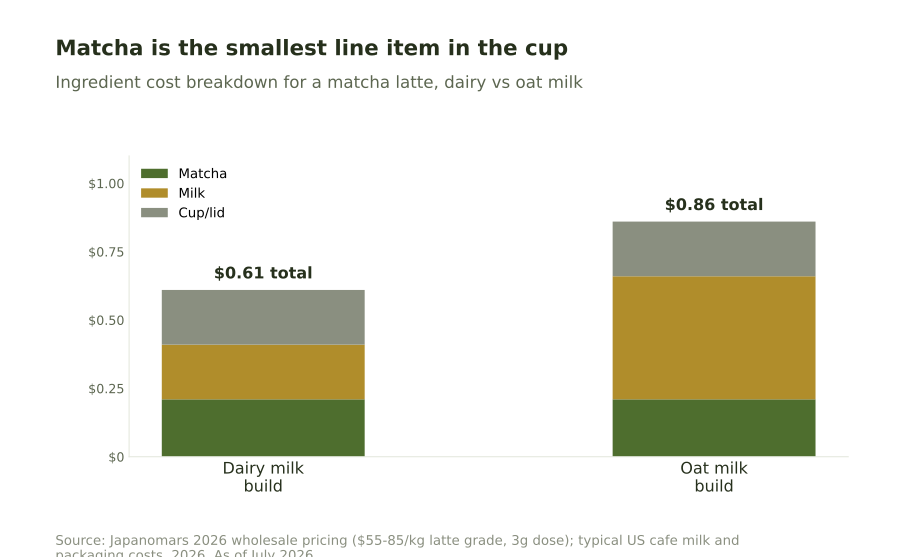
Worked example: a cafe running premium latte grade at $70/kg, a 3-gram dose, and oat milk pays about $0.21 for matcha, $0.45 for oat milk, and $0.20 for cup and lid, a total ingredient cost of $0.86. Priced at $6.50, that's an 87% gross margin, well above the 70 to 85% target and ahead of most espresso drinks on the same menu. Even doubling the matcha dose to 6 grams for a stronger pour only pushes the total to about $1.07, still a 84% margin at the same price.
Iced matcha lattes typically cost slightly less per cup than hot, since a standard build uses about the same matcha dose over ice with less or no steamed milk froth, but most cafes price iced the same as hot or even a touch higher because it's often the higher-volume, higher-demand version, especially in warmer months. The iced matcha guide covers the build itself; from a margin standpoint, treat iced and hot as the same drink with the same target margin rather than two separate pricing decisions.
At a standard 2 to 3 gram dose and 2026 premium latte-grade wholesale pricing of about $55 to $85 per kilogram, matcha costs roughly $0.15 to $0.30 per latte. Ceremonial grade at $100 to $200/kg runs higher, up to about $0.60 per dose, but is usually reserved for straight-whisked drinks rather than everyday lattes.
Aim for 70 to 85% gross margin, in line with or above typical espresso drink margins. Because matcha's ingredient cost is low relative to its menu price, the arithmetic on 2026 wholesale pricing usually lands at the top of that band or above it. Treat the range as a planning figure and check it against your own numbers.
Price near your comparable espresso latte for your local market tier: roughly $7.50 to $9.00 in tier-one cities, $6.00 to $7.50 in tier-two markets, and $5.00 to $6.50 in tier-three markets, for a standard 12oz size. A small premium over your regular latte ($0.25 to $0.50) is defensible given matcha's story and perceived value.
Yes, if it actually covers the cost difference. Oat and other alt-milks commonly run $0.30 to $0.60 per pour versus $0.15 to $0.25 for dairy, so a standard $0.50 to $0.75 upcharge is reasonable, but check it periodically since alt-milk costs shift and many cafes set the upcharge once and never revisit it.
Usually not on its own. Because matcha is such a small share of total drink cost, even a large wholesale increase typically adds only a few cents to your per-cup cost, well under a full percentage point of margin on most menu prices. Bundle any matcha adjustment into your regular full-menu pricing review rather than reacting to a single supplier price change.
Matcha is one of the cheapest ingredients on your specialty menu relative to what it sells for, which is exactly why it can carry some of your best margins if you price it like the rest of your drinks instead of treating it as a special case. Run the real cost-per-cup math, price near your market tier, and reprice on a schedule tied to your full cost review, not to headlines about matcha supply.
Japanomars supplies specialty cafes with matcha across culinary, premium latte, and ceremonial grades, with current landed pricing for your order size. Request samples and a wholesale quote, and build your menu pricing on real numbers, not estimates.
Request samples & pricingHiroshi Asami is the founder of Japanomars, a Japanese matcha exporter supplying specialty cafes across the US, Canada, and the Philippines, working farm-direct with growers and regional tea factories in six producing regions. The cost figures here come from the wholesale prices he quotes and the cafe menus he sees, and the guide says plainly where a number is our own observation rather than published data.
Sources
%E7%99%BD_%E5%A4%A7%E3%81%8D%E3%81%84.png)