%E5%A4%A7%E3%81%8D%E3%81%84.png)
Quality & Sourcing · 2026
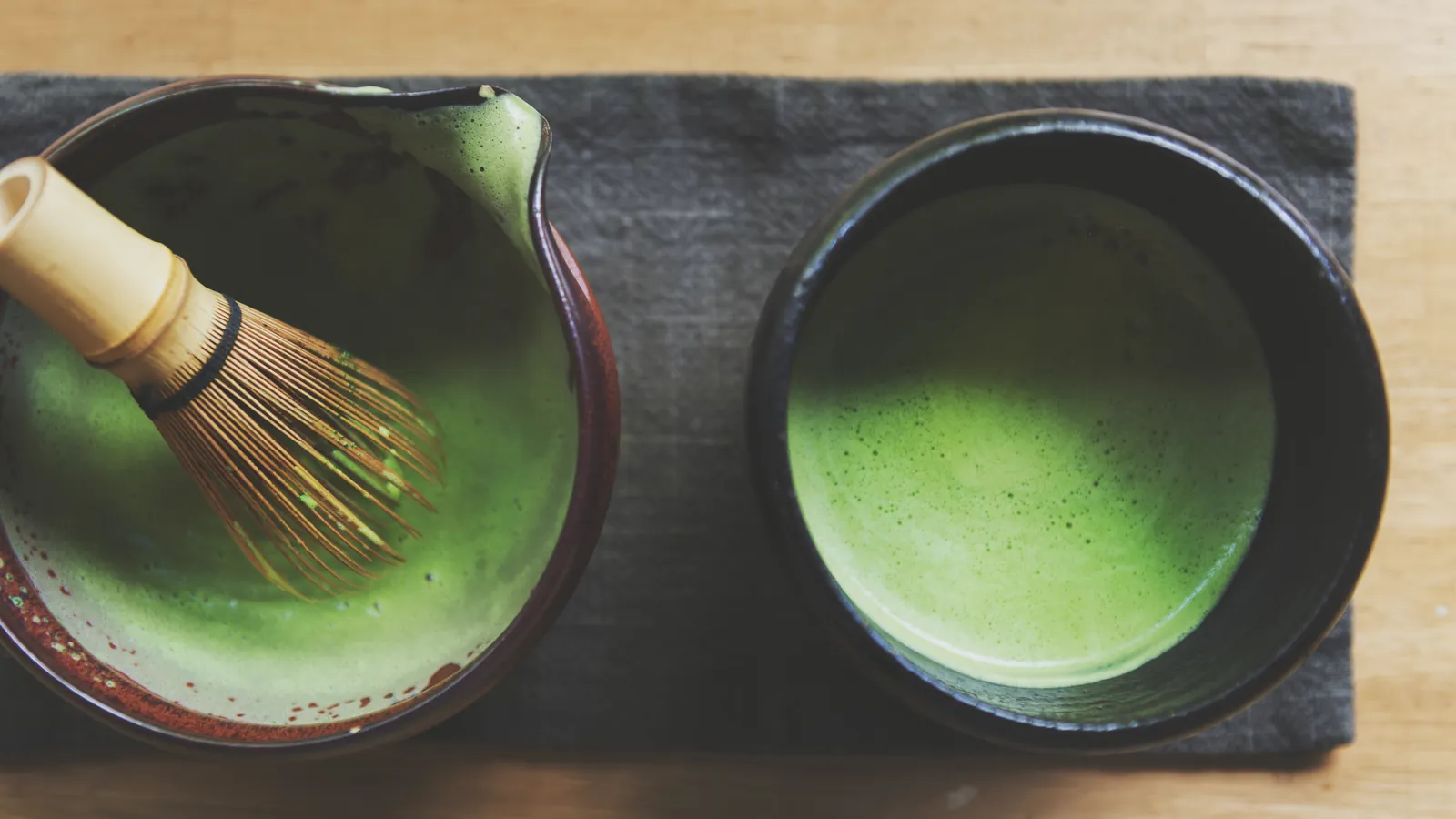
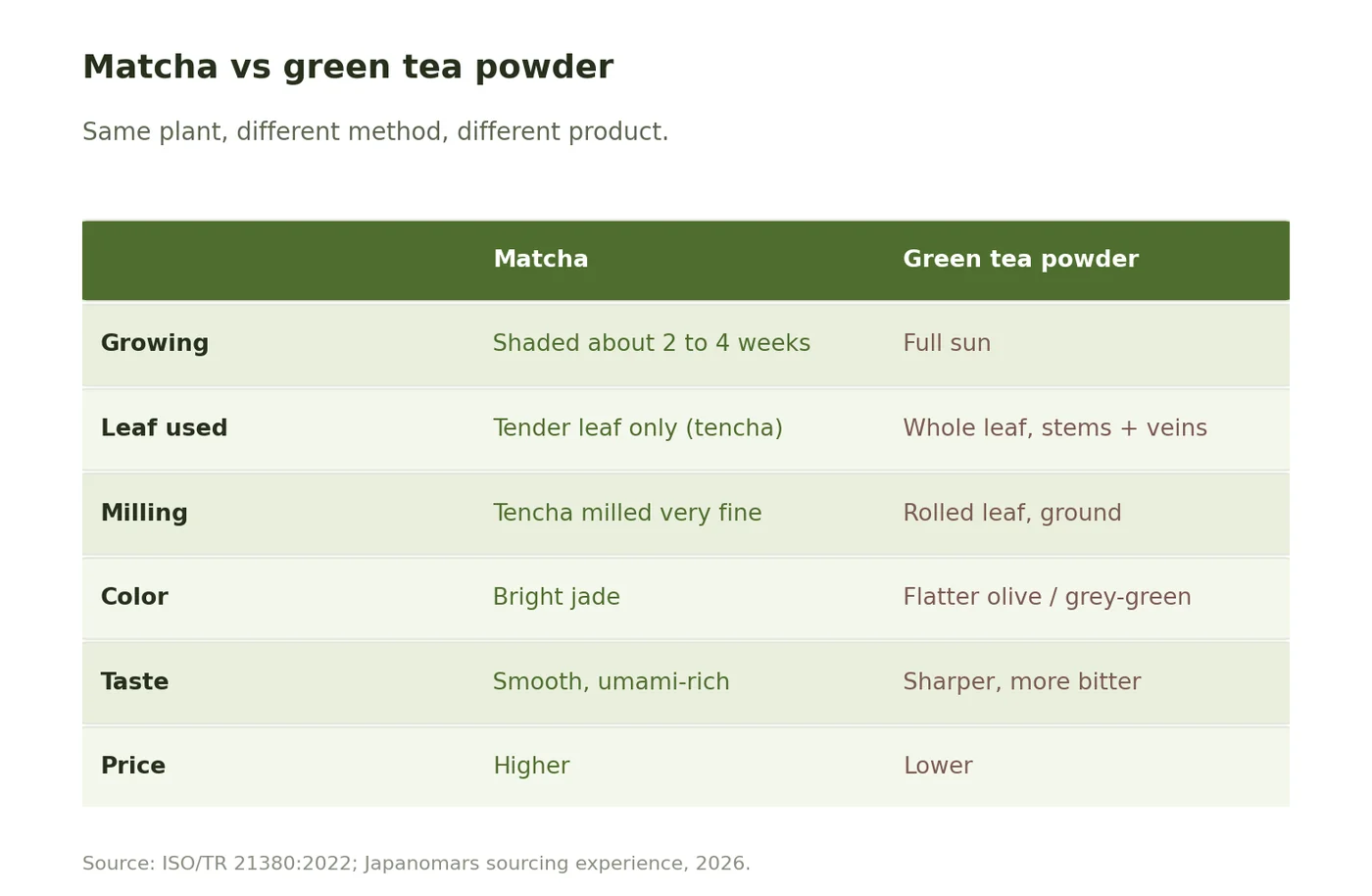
No, matcha is not just powdered green tea. Matcha is made from leaves that are shade-grown for weeks, steamed, dried flat without rolling into tencha, then milled into a very fine powder. Ordinary green tea powder is usually full-sun leaf, stems and all, simply ground. That difference in growing and processing is why matcha is vivid green, smooth, and umami-rich, while green tea powder is duller, coarser, and more bitter. This is the quick version for cafe buyers deciding what actually belongs on a matcha menu.
Key takeaways
In this guide

No. Both are green tea in powder form, but they are made in completely different ways, and the method is what creates the quality. Matcha comes from shade-grown leaf that is steamed, dried without rolling into tencha, then milled into a fine powder. Green tea powder is usually sun-grown sencha, often ground whole including stems and veins. Same plant, very different product.
This is the same point our guide to what officially counts as real matcha makes using the international ISO definition: matcha is defined by how it is grown and made, not by the word on the bag. A green powder that skipped shading or tencha drying is powdered green tea, even if it is labeled matcha.
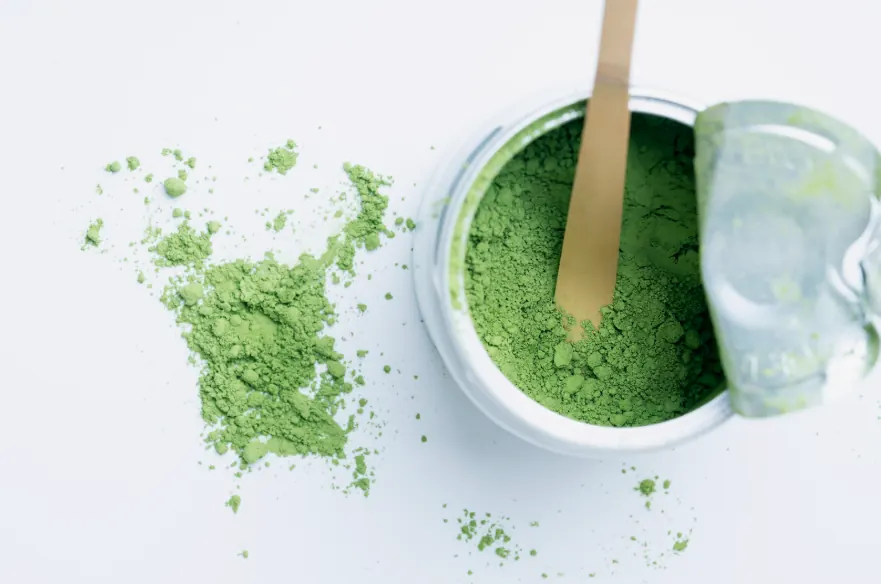
Three steps separate matcha from ordinary green tea powder, and all three add cost and quality. First, shade growing: the plants are covered for about two to four weeks before harvest. Second, tencha processing: the steamed leaf is dried flat without rolling, then destemmed and deveined so only the tender leaf flesh remains. Third, fine milling: the tencha is milled to a powder of about 10 to 30 microns. A granite stone mill is the traditional tool, and ISO/TR 21380 also allows ball and jet mills.
Green tea powder skips the first two. It is typically grown in full sun and made from rolled leaf that often includes stems and veins, then simply ground. That is why it costs less, and why it behaves differently in a cup.
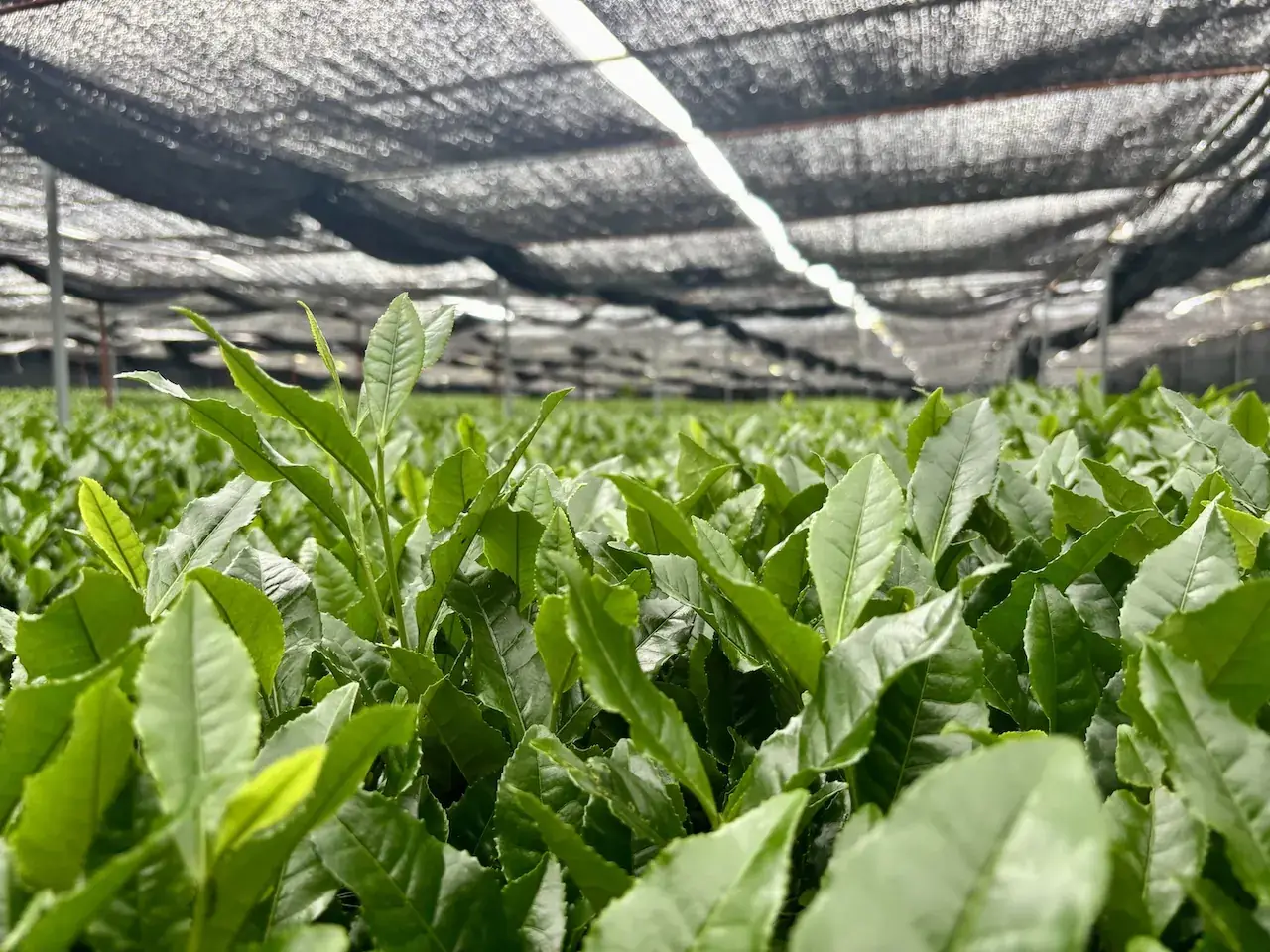
Shading is the single biggest reason matcha tastes the way it does. When the plants are covered and starved of direct sun, the leaves produce more L-theanine (the amino acid behind matcha's umami and smoothness) and more chlorophyll (the vivid green), while producing fewer catechins, the polyphenols that make sun-grown tea taste bitter and astringent. A 2022 study on matcha shading in the International Journal of Molecular Sciences confirmed the pattern: shading raised free amino acids and chlorophyll and suppressed catechins, with chlorophyll highest under heavy shade of around 85%.
Green tea powder never goes through this. Grown in full sun, it keeps the higher-catechin, lower-theanine profile, so it reads as sharper and more bitter, and its color is a flatter olive rather than jade. No amount of fine grinding fixes a leaf that was never shaded.


For a cafe, the practical rule is simple: if your menu says matcha, serve matcha, not powdered green tea. Customers who order a matcha latte expect the jade color, the smooth umami, and the clean finish that only shade-grown tencha delivers. Substituting cheaper green tea powder saves a little per gram but shows up immediately as dull color, a bitter edge, and inconsistent foam, and it quietly erodes the premium you are charging for.
This is also why matcha carries a higher wholesale price, and why that price is defensible on the menu. If you want the deeper quality signals to check when you buy, see what makes matcha good and how the grades actually differ.
Matcha tends to deliver more L-theanine and antioxidants per serving because you drink the whole shade-grown leaf, and shading raises amino acids while lowering bitterness. Green tea powder from sun-grown leaf has a higher-catechin, lower-theanine profile. Both are green tea, but matcha's growing and processing concentrate the compounds cafe customers associate with quality.
You can, but it will not taste or look like a matcha latte. Green tea powder gives a duller, greyer color, a more bitter edge, and thinner foam. If your menu says matcha, customers expect the jade color and smooth umami of real matcha made from shade-grown tencha, so substituting green tea powder risks the drink and the price you charge for it.
Because it costs more to make. Matcha requires weeks of shading, tencha processing that removes stems and veins, and very fine milling, all of which add labor and reduce yield. Green tea powder skips the shading and tencha steps and often includes the whole leaf ground fast, so it is cheaper to produce and cheaper to buy.
Look at color and foam. Real matcha is bright jade and whisks into a fine, even foam. Powdered green tea is a flatter, greyer olive, feels grittier, and foams poorly. Taste confirms it: matcha is smooth and umami-forward, green tea powder is sharper and more bitter.
Matcha and green tea powder start from the same plant and end up as completely different products, because matcha is shade-grown and made from tencha, and green tea powder is not. That is what you are paying for, and what your customers taste. Hold anything labeled matcha to those steps.
We export single-origin matcha direct from farms in Kagoshima, Yame, Uji, and beyond, and we will send samples so you can taste the difference against whatever you are pouring now.
Request samples & pricingHiroshi Asami is the founder of Japanomars, an exporter of premium single-origin Japanese matcha to US specialty cafes, working directly with tea farms in Sayama, Ibi, Ureshino, Yame, Kirishima, and Chiran.
Sources: ISO/TR 21380:2022, Matcha tea, Definition and characteristics (ISO, 2022); Li et al., "Effect of Shading on the Morphological, Physiological, and Biochemical Characteristics as Well as the Transcriptome of Matcha Green Tea," International Journal of Molecular Sciences (2022); Japanomars sourcing experience, 2026.
%E7%99%BD_%E5%A4%A7%E3%81%8D%E3%81%84.png)