Regions · Kirishima, Kagoshima
 By Hiroshi, founder of Japanomars
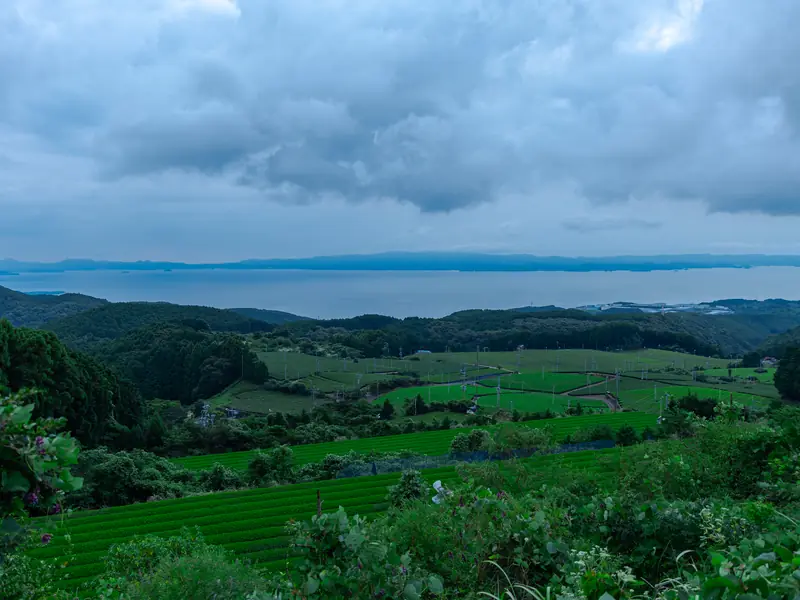
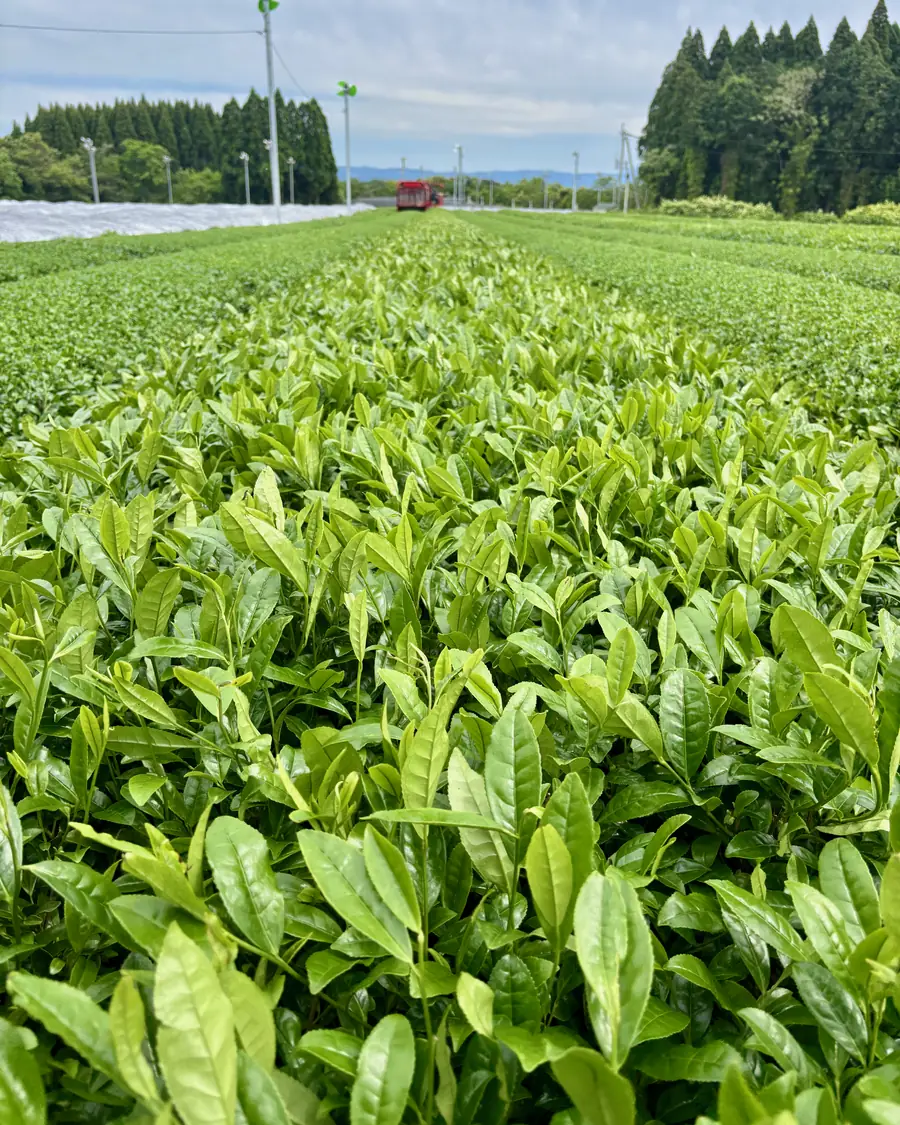
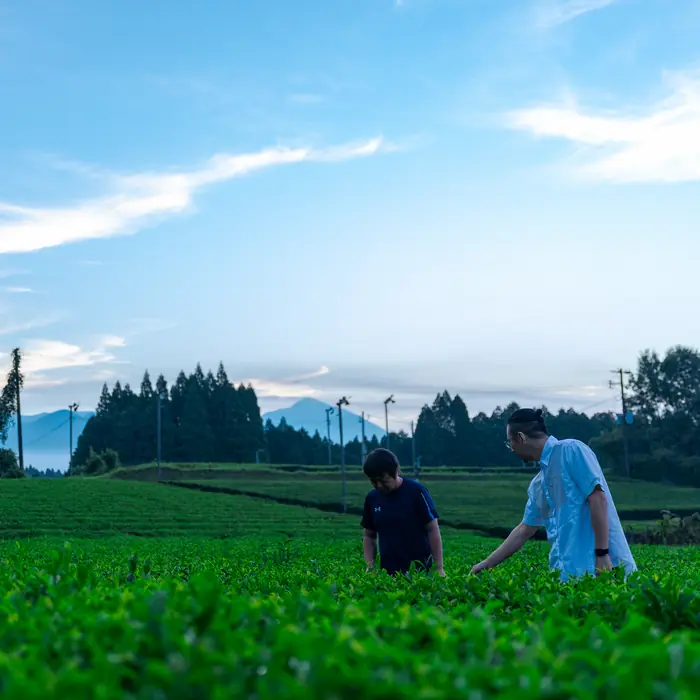
High in Kagoshima, at the foot of the Kirishima mountains, Tatsunori grows tea on fields ringed by forest. The matcha we carry from his family's farm is certified organic under Japan's JAS standard.
At a glance
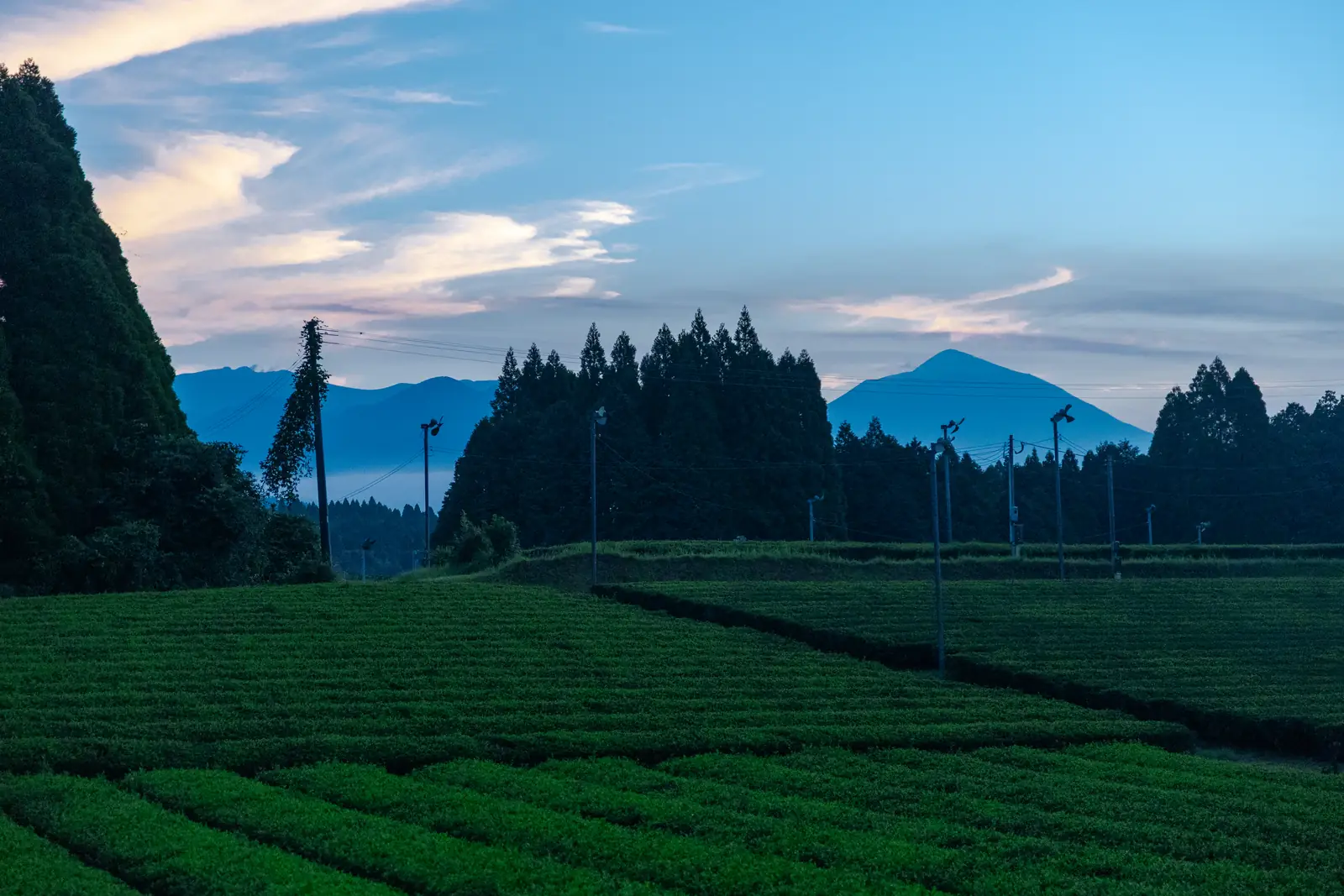
Summers stay hot, but these fields sit 2 to 3 degrees cooler than the plains below. “The best thing is the evening showers,” Tatsunori says. “In the late afternoon, even in summer, rain often comes.”
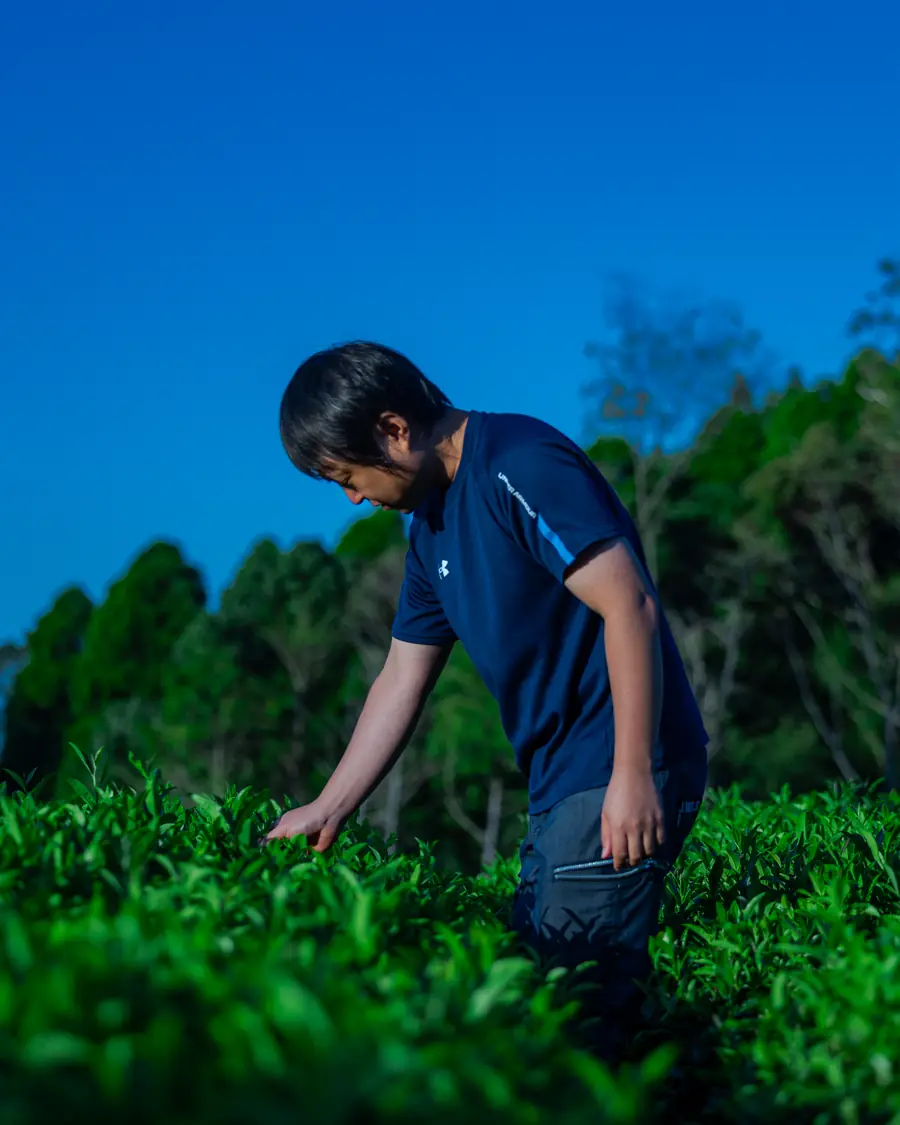
With matcha, you take in the whole leaf. So I think it should be something safe you can trust.
Tatsunori
Weeds grow no matter what. On the organic fields they are pulled by hand, by a lot of people.
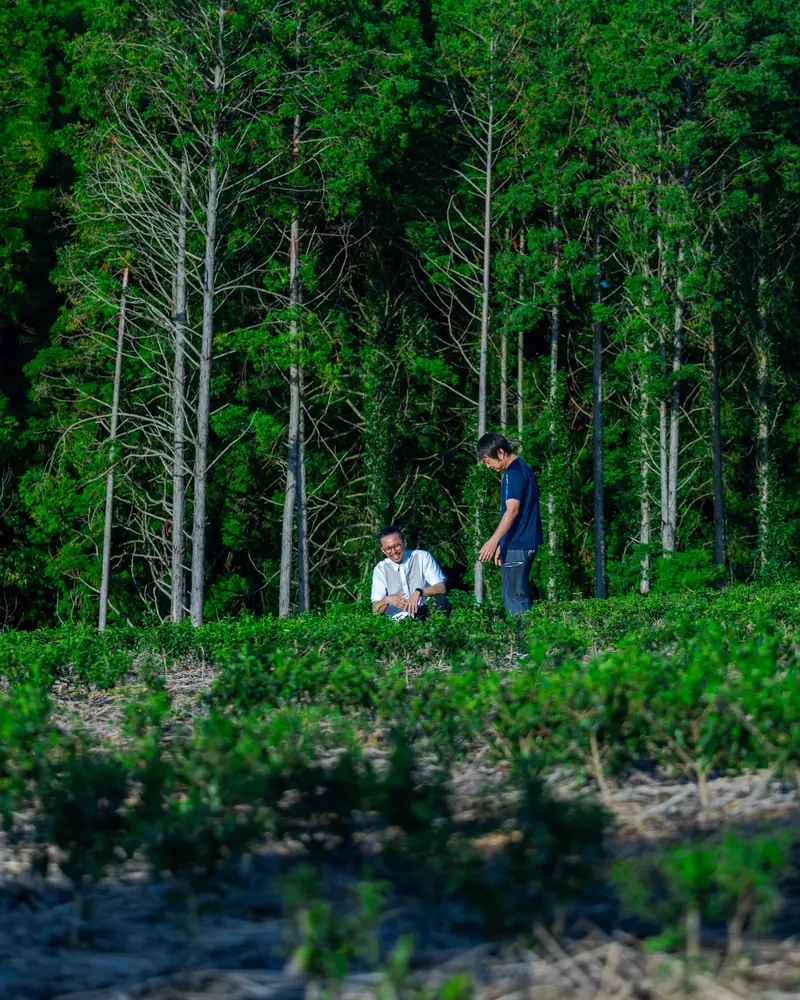
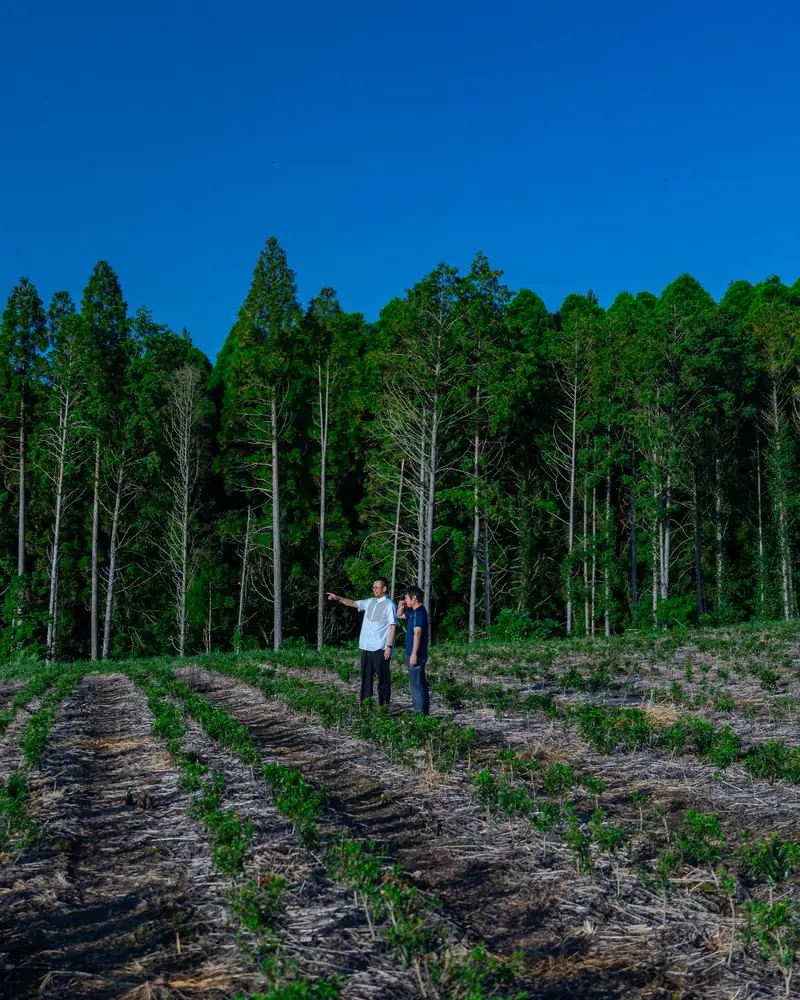
Close to 90% of the family's fields are surrounded by forest, so no spray drifts in from other farms. The first field they farmed organically had been abandoned for years. Nobody had sprayed it for years, and even without treating it for pests or disease, the tea did just fine.
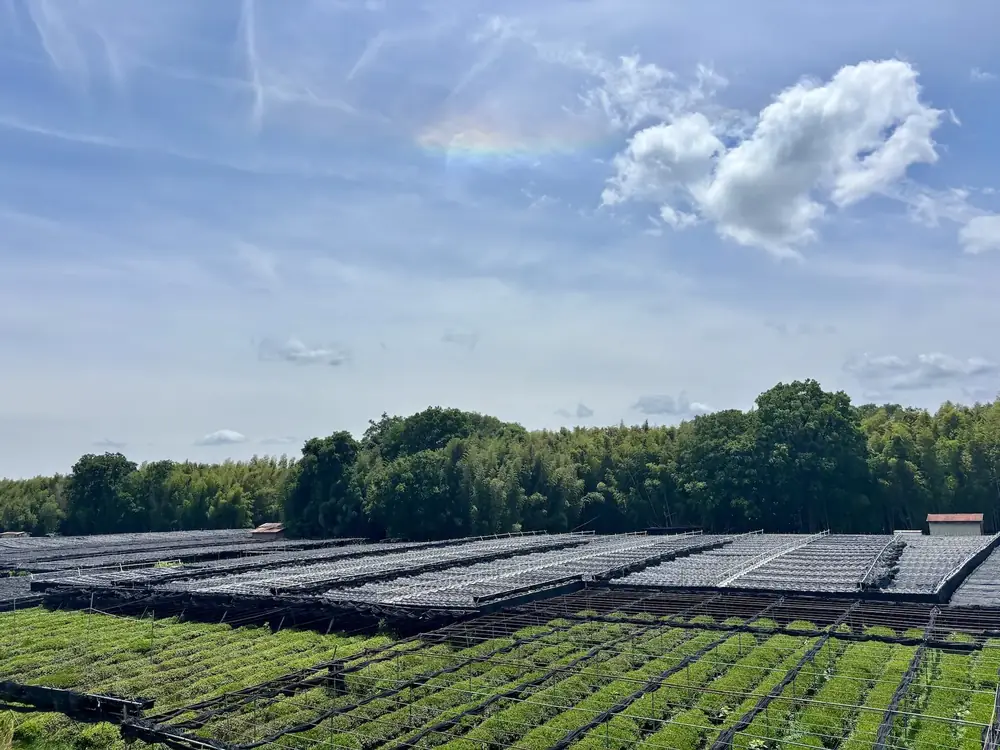
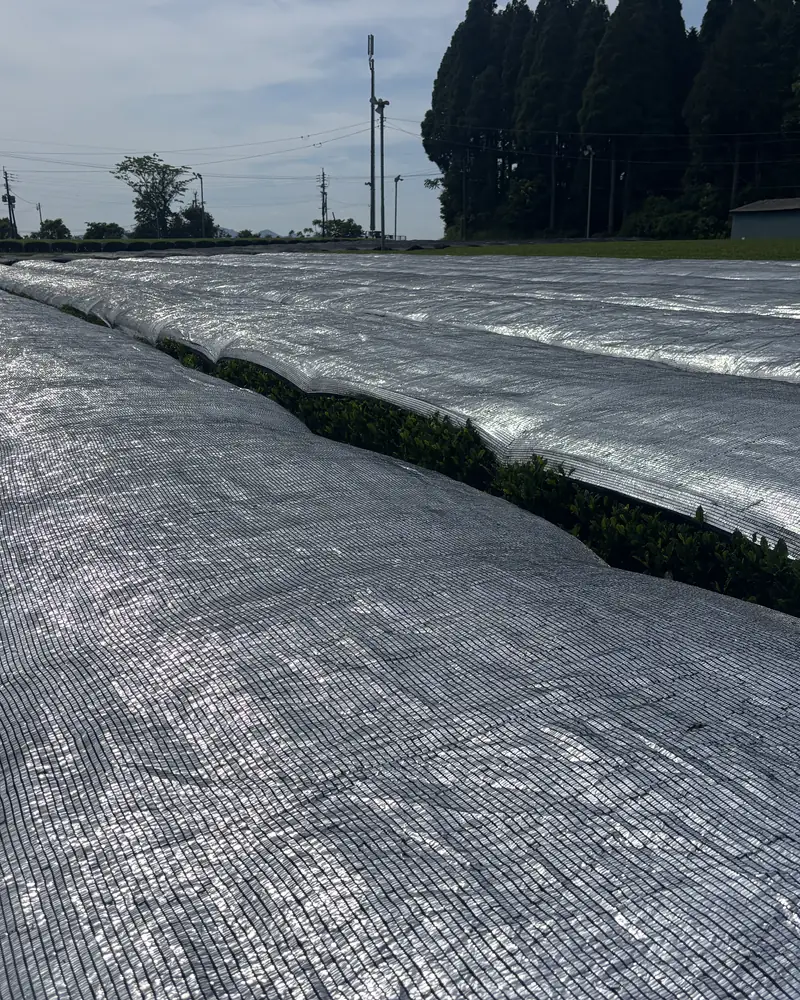
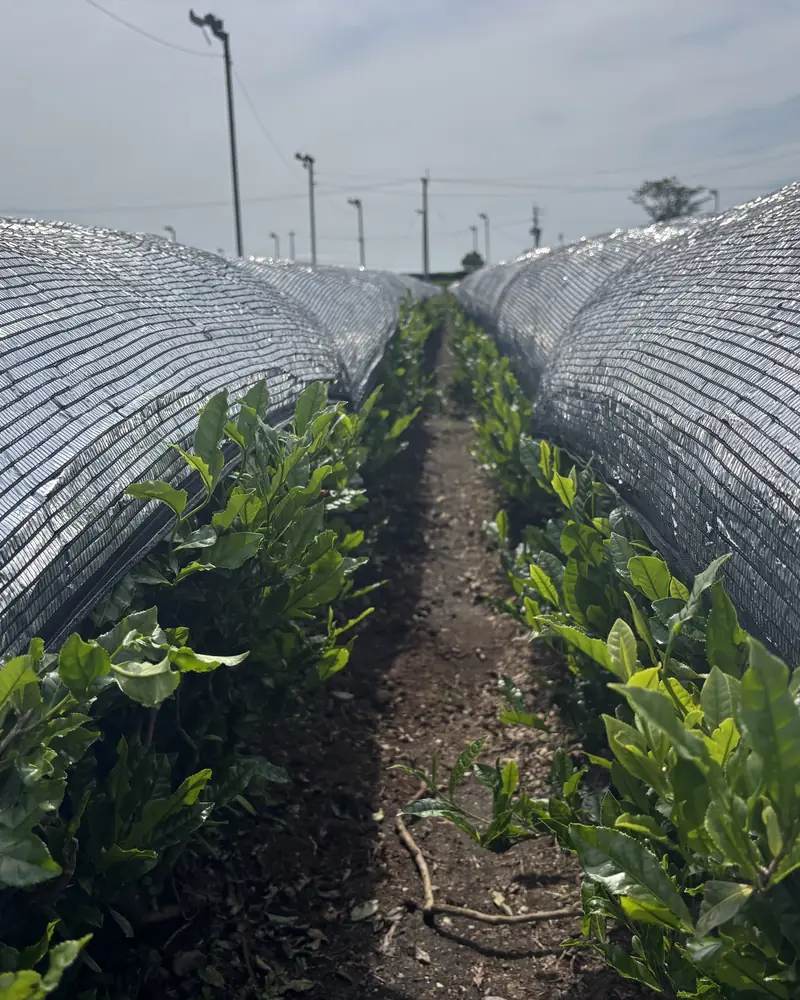
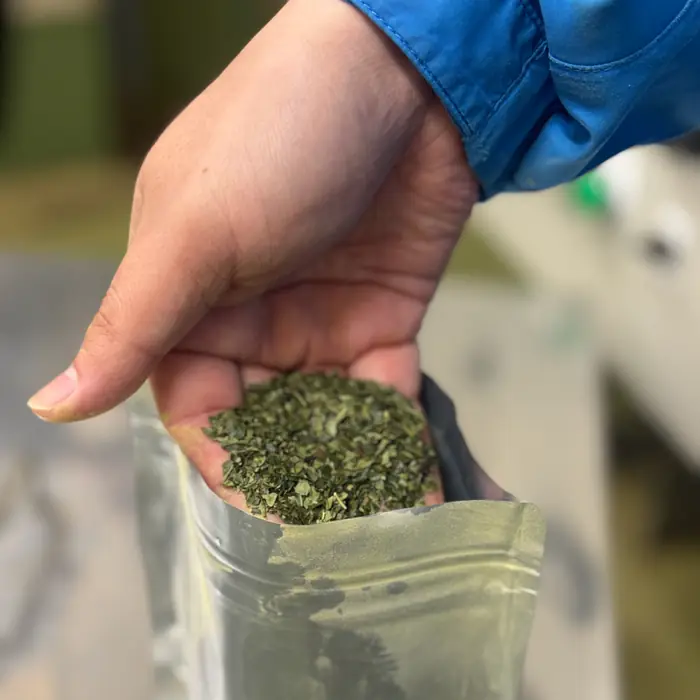
Before the spring harvest, the rows go under covers. With less sun, the leaf turns a deeper green and holds more umami. That is where matcha's color and taste begin.

When we make tea, the most important thing is the temperature of the leaves. We call it ‘chaon’. It's about skin temperature.
Tatsunori
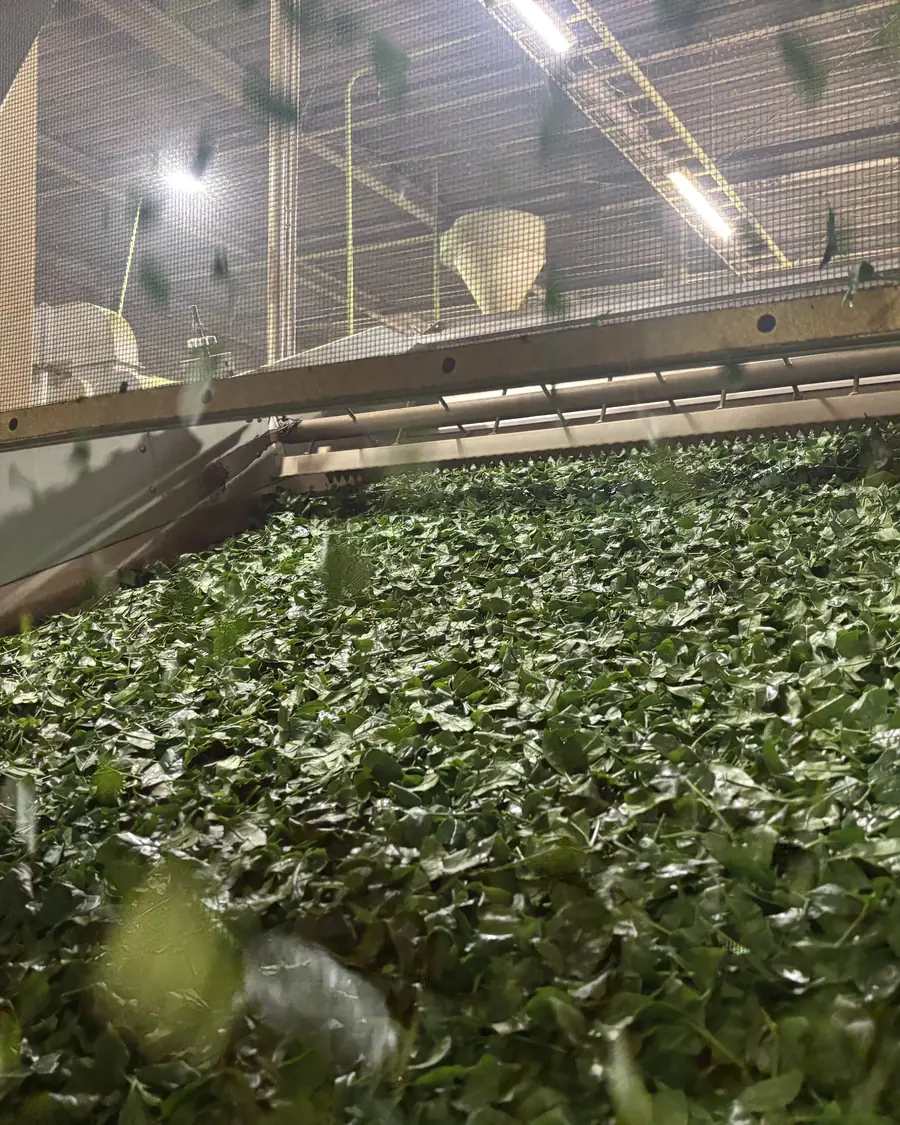
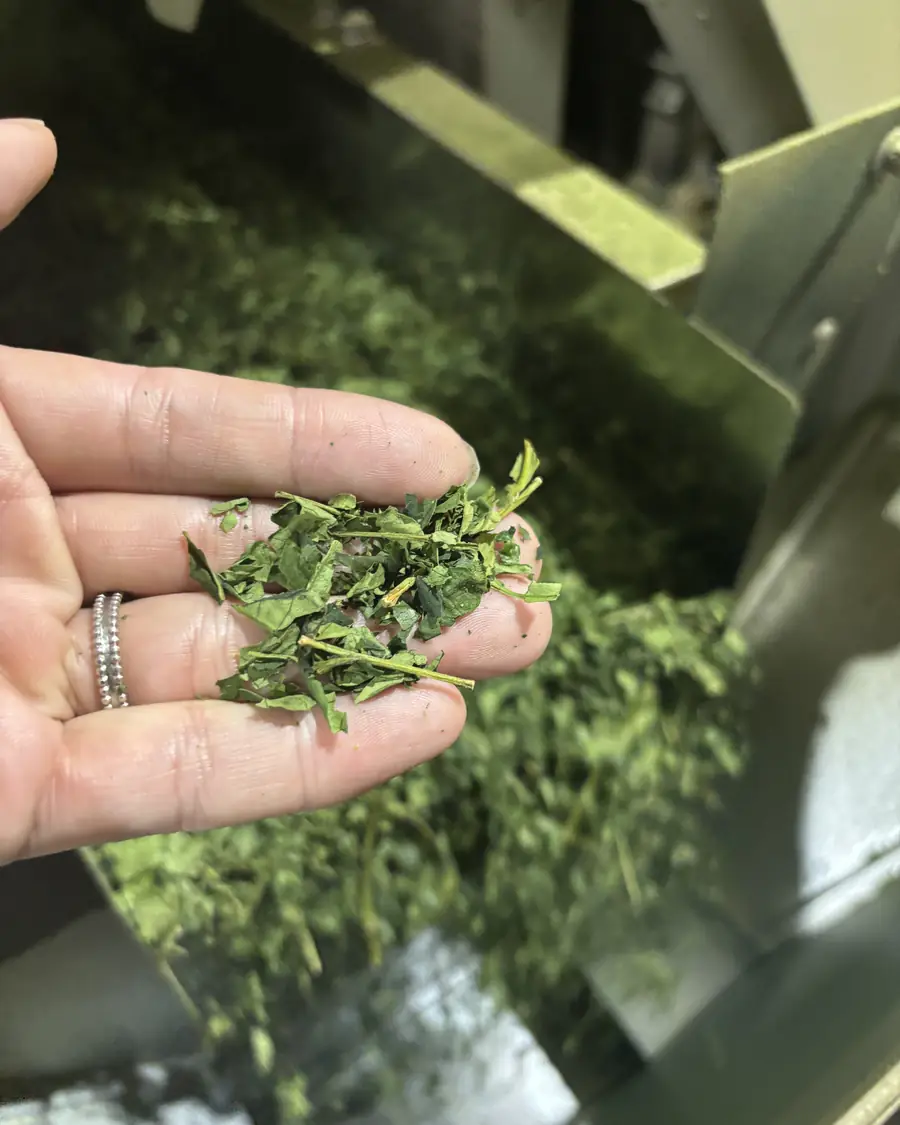
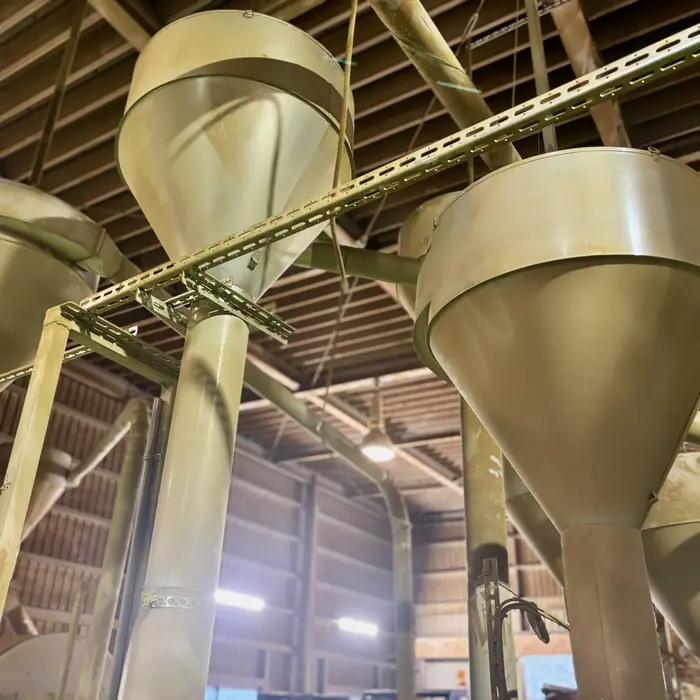
Hold the leaf there from start to finish, he says, and the quality and the color don't fade. On rainy days, wet leaves go through a dehydrator first, so they can pick and process even in the rain.
Swipe →
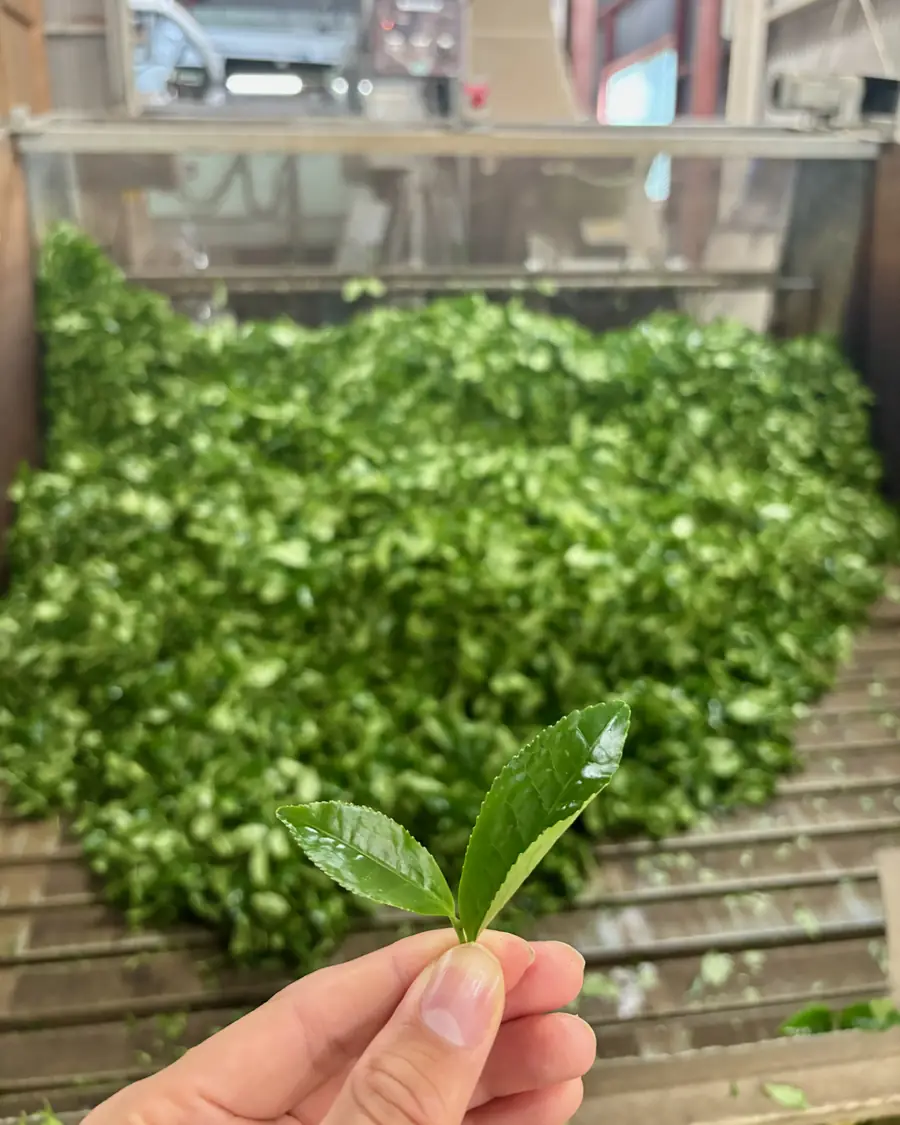
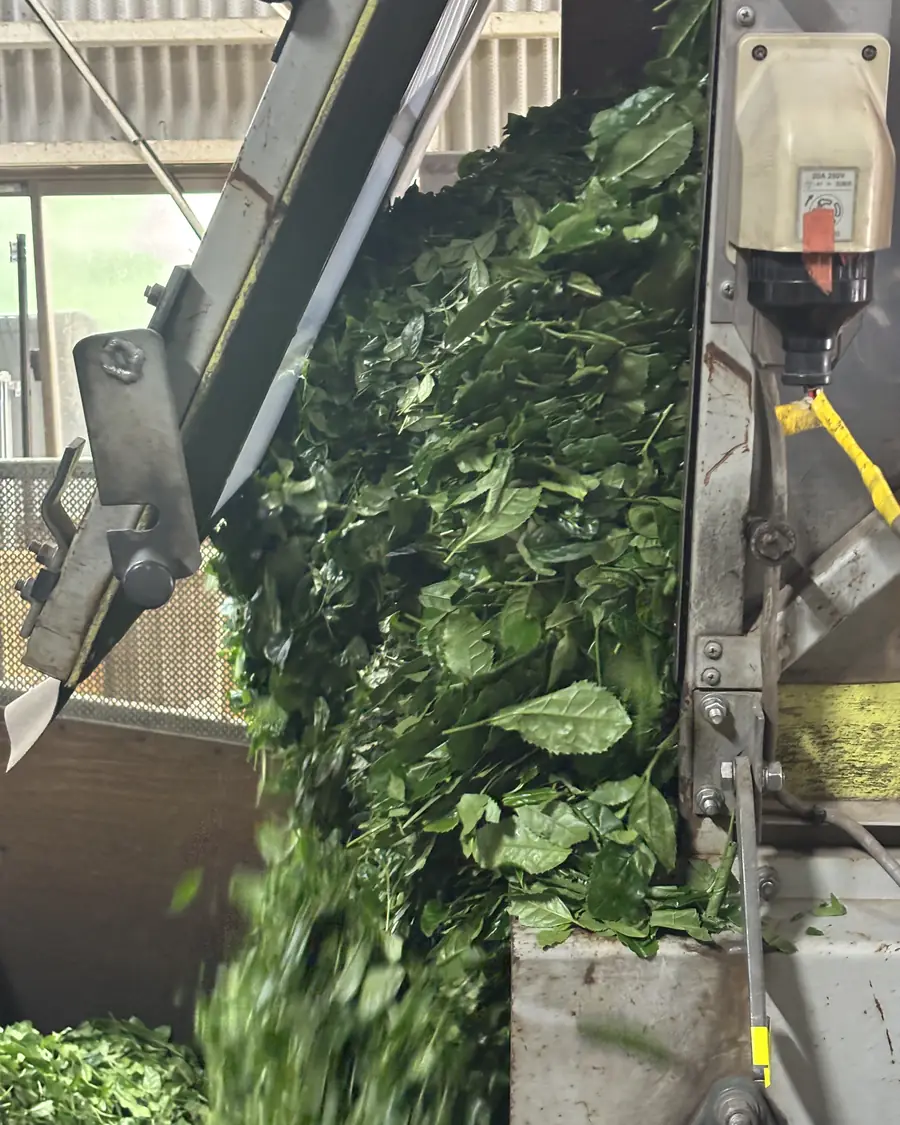
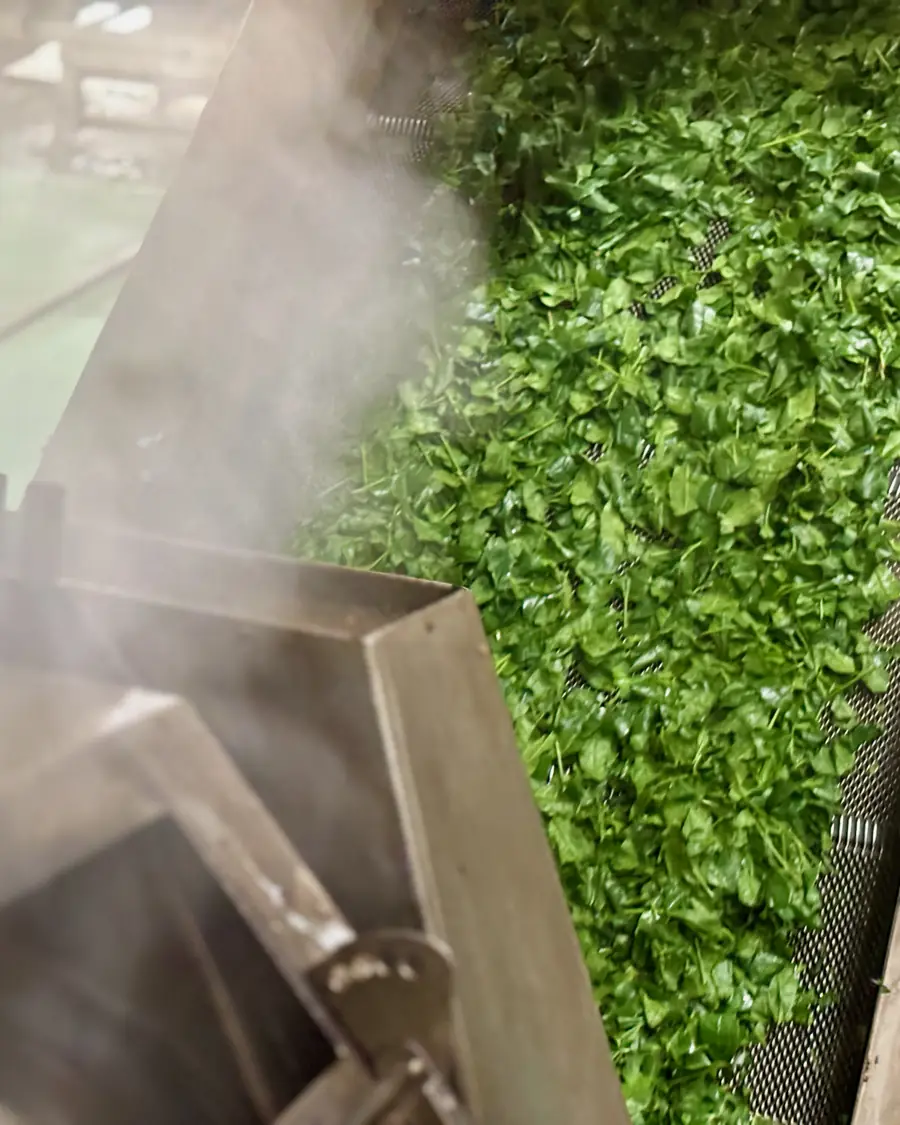
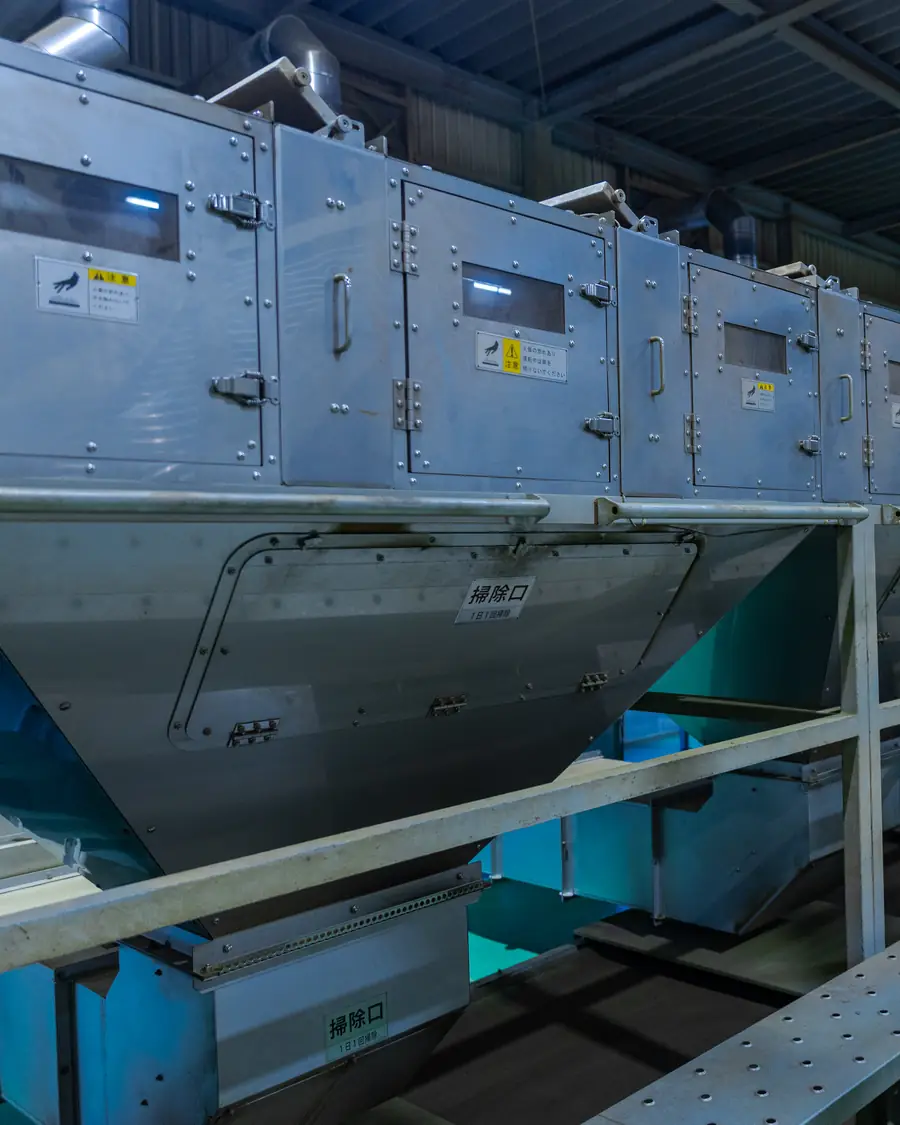
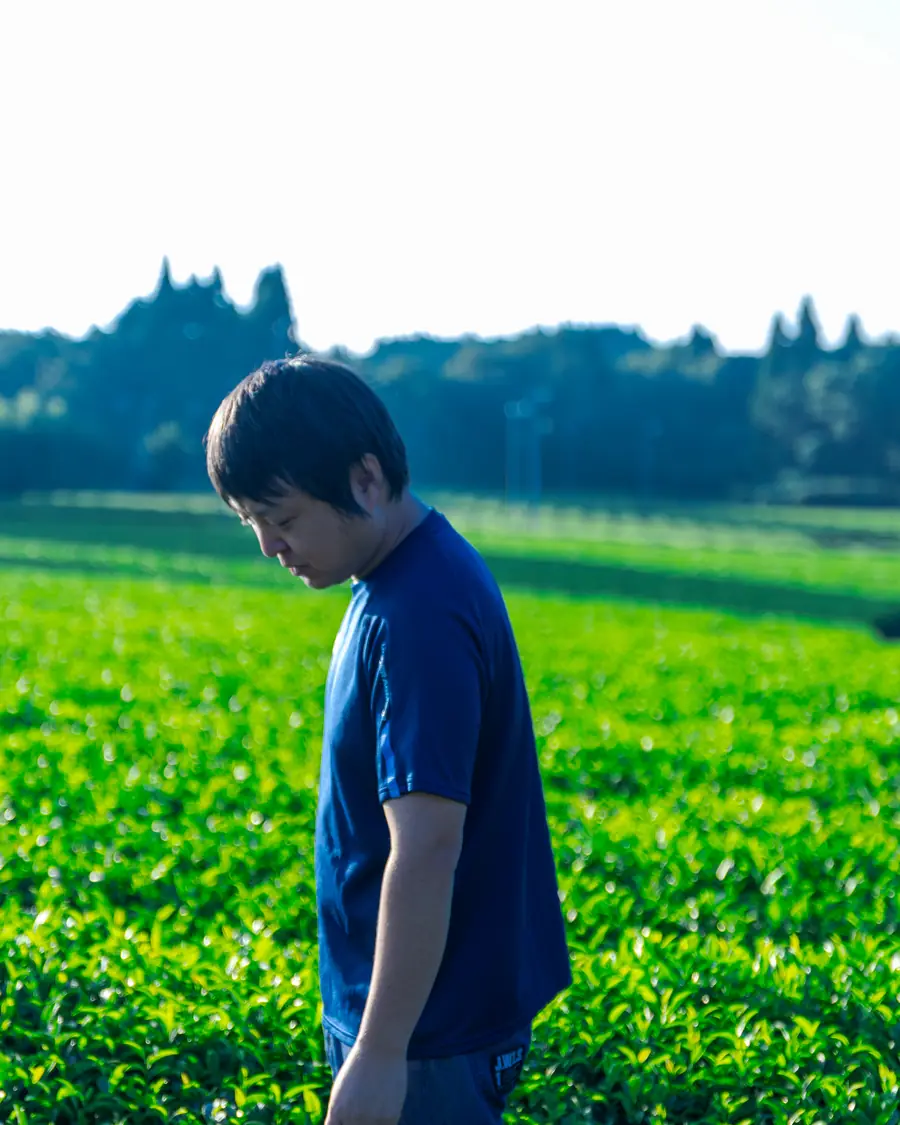
I was born into a tea farming family. Since I was little, I've been in the tea factory and out in the fields. So tea is part of my life.
Tatsunori
The family turned to matcha because they could feel the demand coming from overseas.
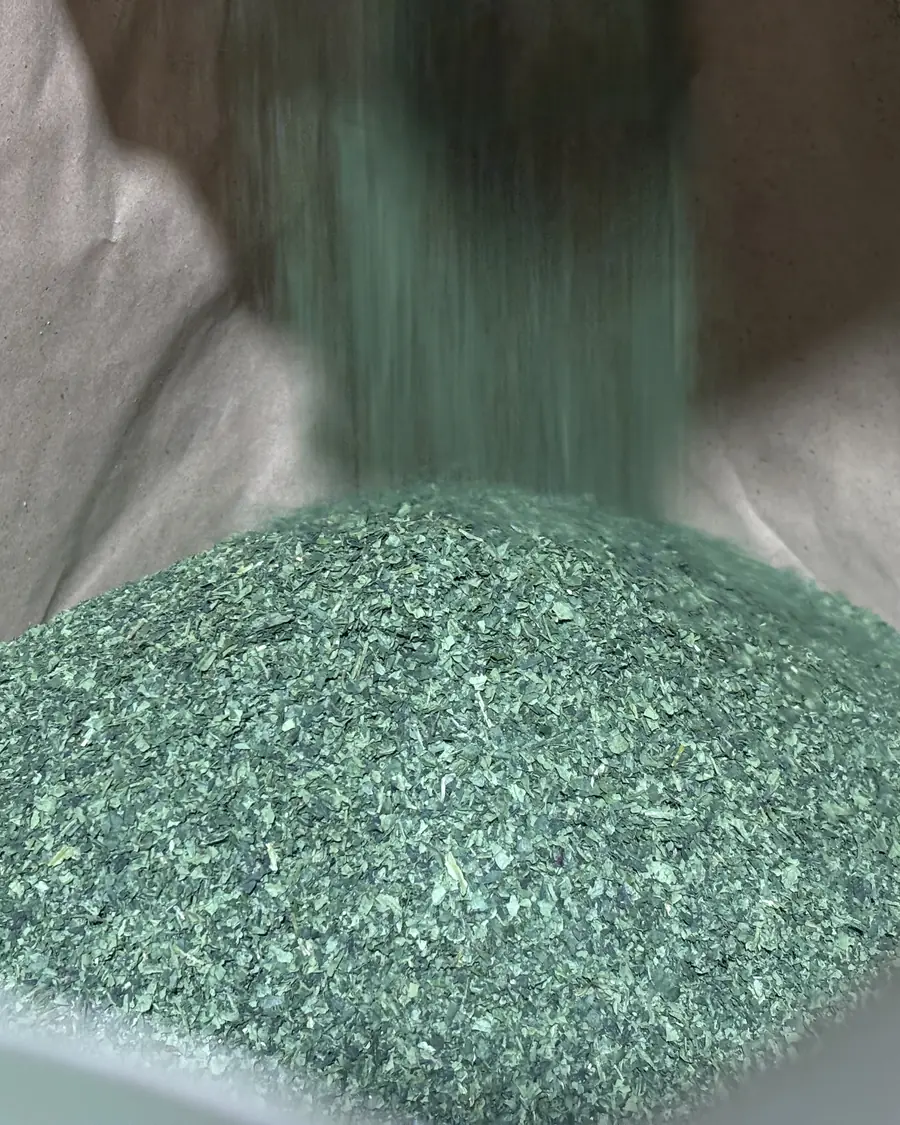
On our visits we open the tencha with Tatsunori, touch it and smell it. That is how we decide what goes to cafes.
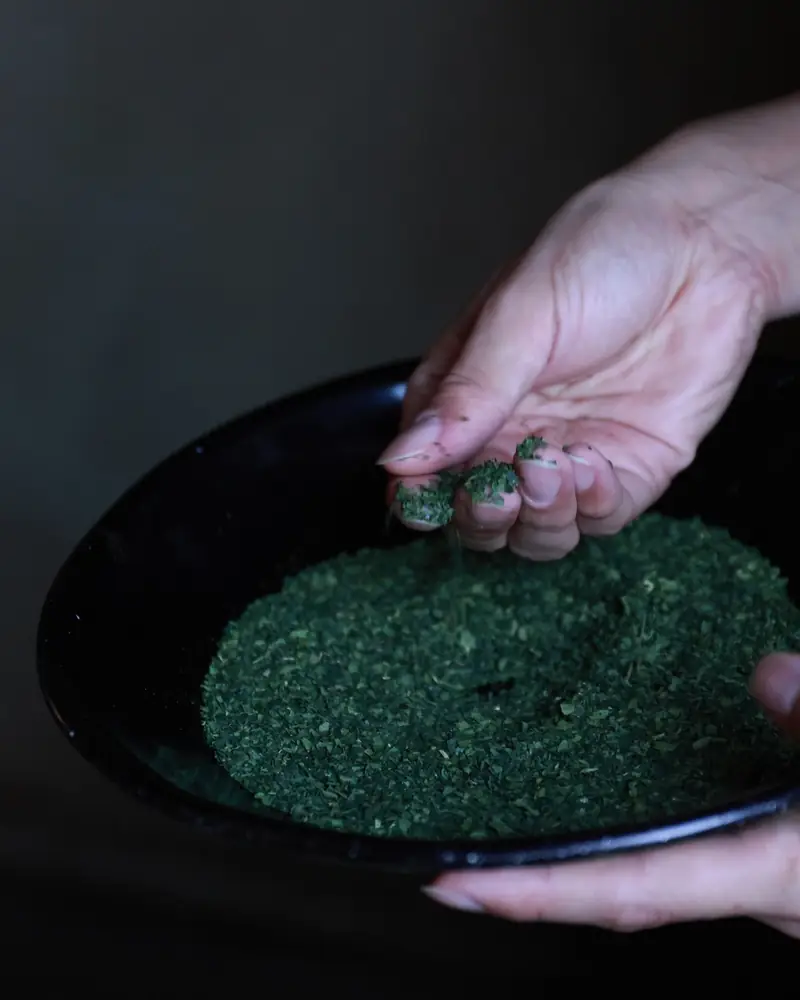
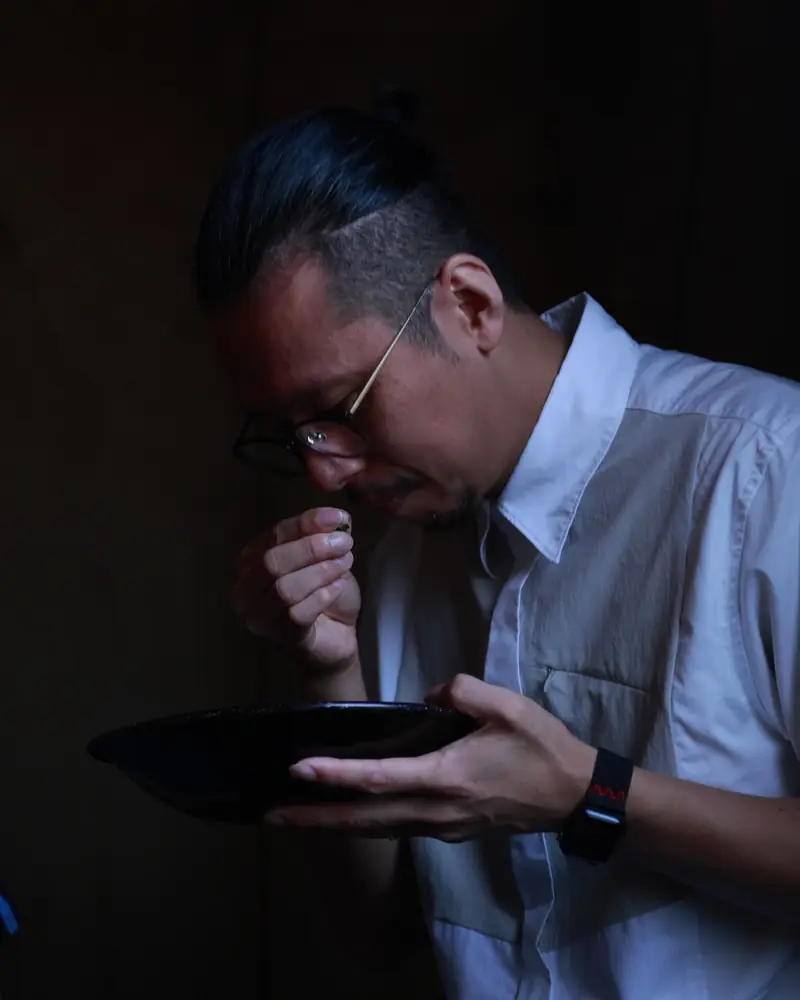
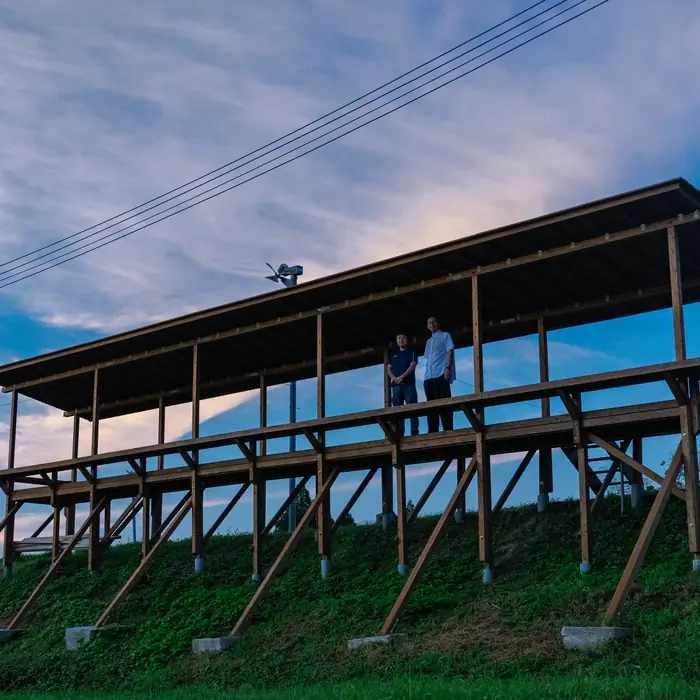
We visit in every season. Seeing the farm through the year is how we know what a good harvest looks like.
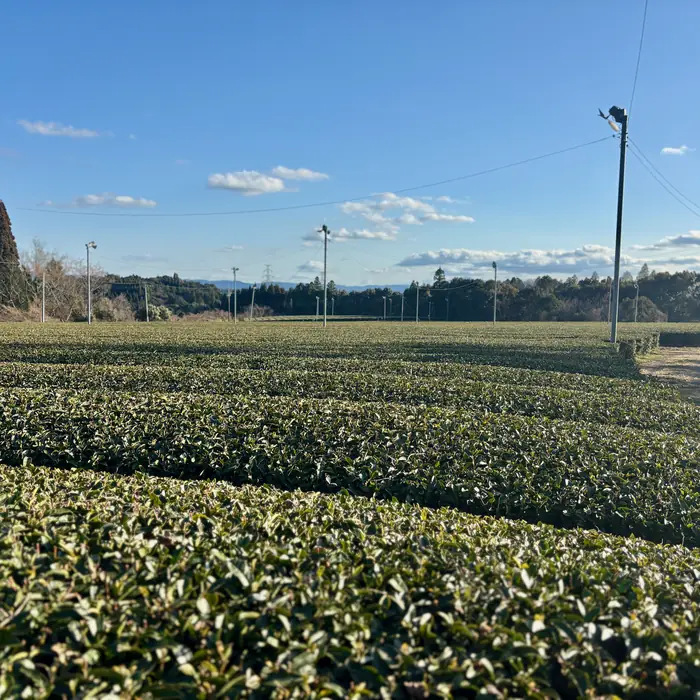
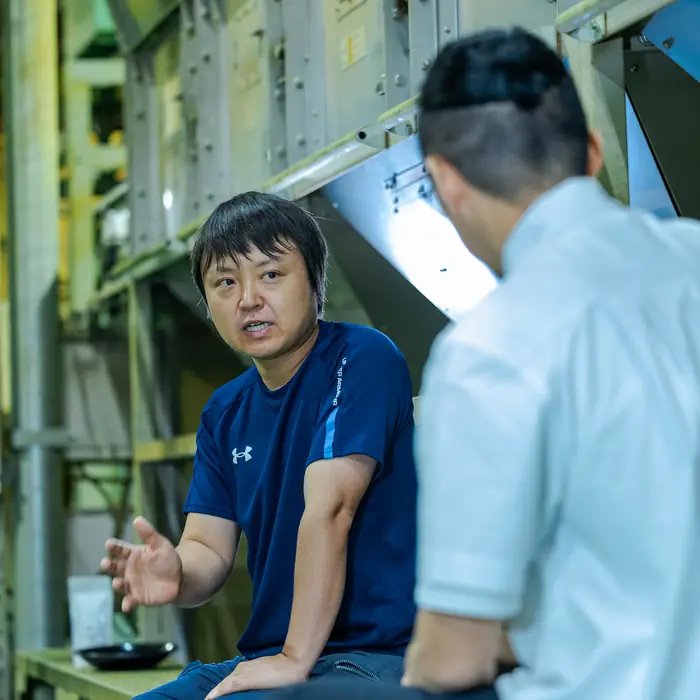
About Tatsunori
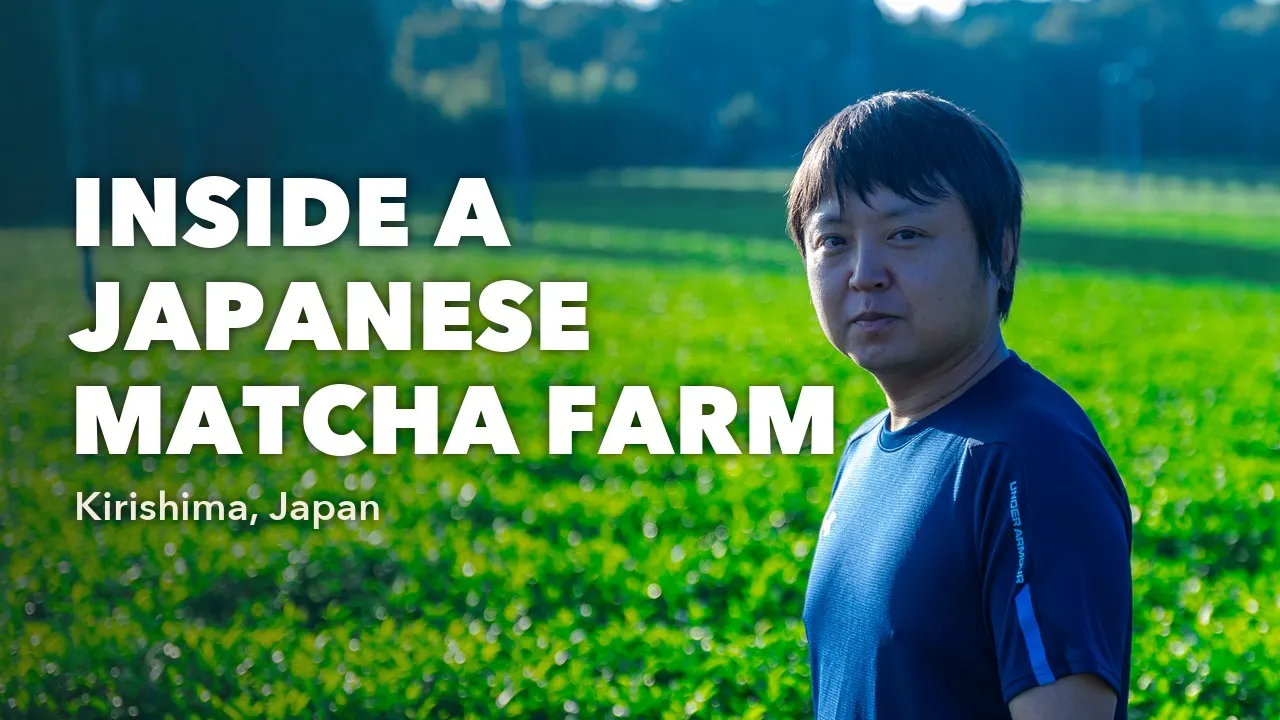
Tatsunori is a tea farmer in Kirishima, Kagoshima, in the south of Japan. He grew up between his family's tea fields and their factory, and he still works both, growing the leaf and making the tencha. The family moved into matcha to meet demand from overseas, and has been growing more of it organically on fields surrounded by forest. He is one of the farmers we work with directly, and we visit his farm in every season.
A 10-minute film from our visit to the farm. In Japanese, with English subtitles.
Questions by Hiroshi, answers by Tatsunori. Translated from Japanese and lightly edited for length.
Why did your family start growing tea here?
Tea looked like a good business to get into. At first, we only had the fields. A few years later, we built our own factory. That's where it all began.
How has tea changed here since then?
These days, the number of sencha factories is going down. But in their place, there's the matcha boom.
We started making matcha about ten years ago. Back then, business across the whole tea industry wasn't good. Fewer and fewer people were brewing tea in a teapot. Bottled tea was in demand at the time.
But bottled tea is a price war. Growers can't set prices based on what they put in. It wasn't a time when you could grow sales. And back then, very few farmers in Japan were making matcha.
We thought exports would grow. We could feel the demand for tea overseas. So we shifted to making matcha mainly for export. And I think that's let us ride the matcha boom we're seeing now.
Did you plan to go organic from the start?
Even back when we made sencha, about 10% of it was organic. We started expanding organic about ten years ago, too. If you're going to export, organic was the best way in. The easiest. That's how our organic farming started.
Also, most of our fields are surrounded by forest. Close to 90% of them. That makes organic easier. We don't have to worry about pesticide drifting over from other farms.
So organic was easy for us to take on. The first field we farmed organically had been left abandoned for years. We bought it. No one had sprayed anything on it. Not for years.
When we started there, we found that even without doing anything about disease or insects, tea could do just fine.
What was hard when you started organic?
But weeds grow no matter what. Weeding is hard work. We weed with a lot of people, by hand. With matcha, you take in the whole leaf.
So I think it should be something safe you can trust.
Our organic fertilizer is mainly rapeseed meal, fish meal, and bone meal. Basically those three. We apply them regularly, watching the weather, with a set amount for the year.
To improve the soil, we use cut grasses like kaya and susuki. We lay them between the rows and mix them into the soil. That gets air into the soil and helps the plants take up fertilizer. Without oxygen, fertilizer is hard to absorb.
So we think carefully about soil structure as we manage fertilizer. We keep adding it for three or four years, and it breaks down and turns into organic compost. Spreading the grass also helps keep weeds down.
And it keeps moisture in the soil, so the water doesn't evaporate.
Broadly, we have early, mid-season, and late cultivars. Each one puts out new buds at a different time. Fertilizer especially. With the early cultivars, right now, from September to November, as it gets colder, if you give them too much fertilizer, they put out buds in the cold, and the buds get damaged.
Getting the fertilizer right is a little tricky, but we think it through. Well, these days, summers stay at 35°C for long stretches.
But here in Kirishima, compared with the lowlands, it's 2 to 3 degrees cooler. And the best thing is the evening showers. In the late afternoon, even in summer, rain often comes.
That really helps us.
Every tea has its own best moment to be picked. We try hard not to miss that moment. But the buds on all our tea grow at almost the same time. There are early and late cultivars, but picking all of it at its peak is hard.
So we set priorities, so each tea gets picked as close to its best as we can. When it rains, the leaves come in full of water. If you process them like that, it affects the color and the taste.
The quality drops. So we run them through a dehydrator first, then dry them, so the quality doesn't drop. It also means we can pick and process even on rainy days.
When we make tea, the most important thing is the temperature of the leaves. We call it 'chaon'. It's about skin temperature. If you hold it there from start to finish while drying, the quality and the color don't fade.
So we manage the heat to keep it there.
These days, with exports and more, more and more people around the world are drinking Japanese tea. Japanese tea is often called the best quality in the world. I don't want that quality to slip, even a little.
To customers here in Japan, and to people overseas, I want to keep spreading good Japanese tea.
Well, I was born into a tea farming family. Since I was little, I've been in the tea factory and out in the fields. I've done all of it. So tea is part of my life. It's just natural. Making tea is how I've always lived.
And I want to keep living with tea from here on.
If a guest asks
Bold and full-bodied, with a mineral edge.
“This matcha comes from an organic farm in Kirishima, in the south of Japan. The fields sit inside the forest, and the weeds are pulled by hand.”
We send 20 g samples so you can taste it next to what you pour now. Tell us about your menu and we'll suggest the regions that fit.

Put the QR code on your counter or menu so guests can see where their matcha comes from.
Open the QR code (PNG) · japanomars.com/regions/kirishima
Photos: Japanomars