Japanomars · Sayama
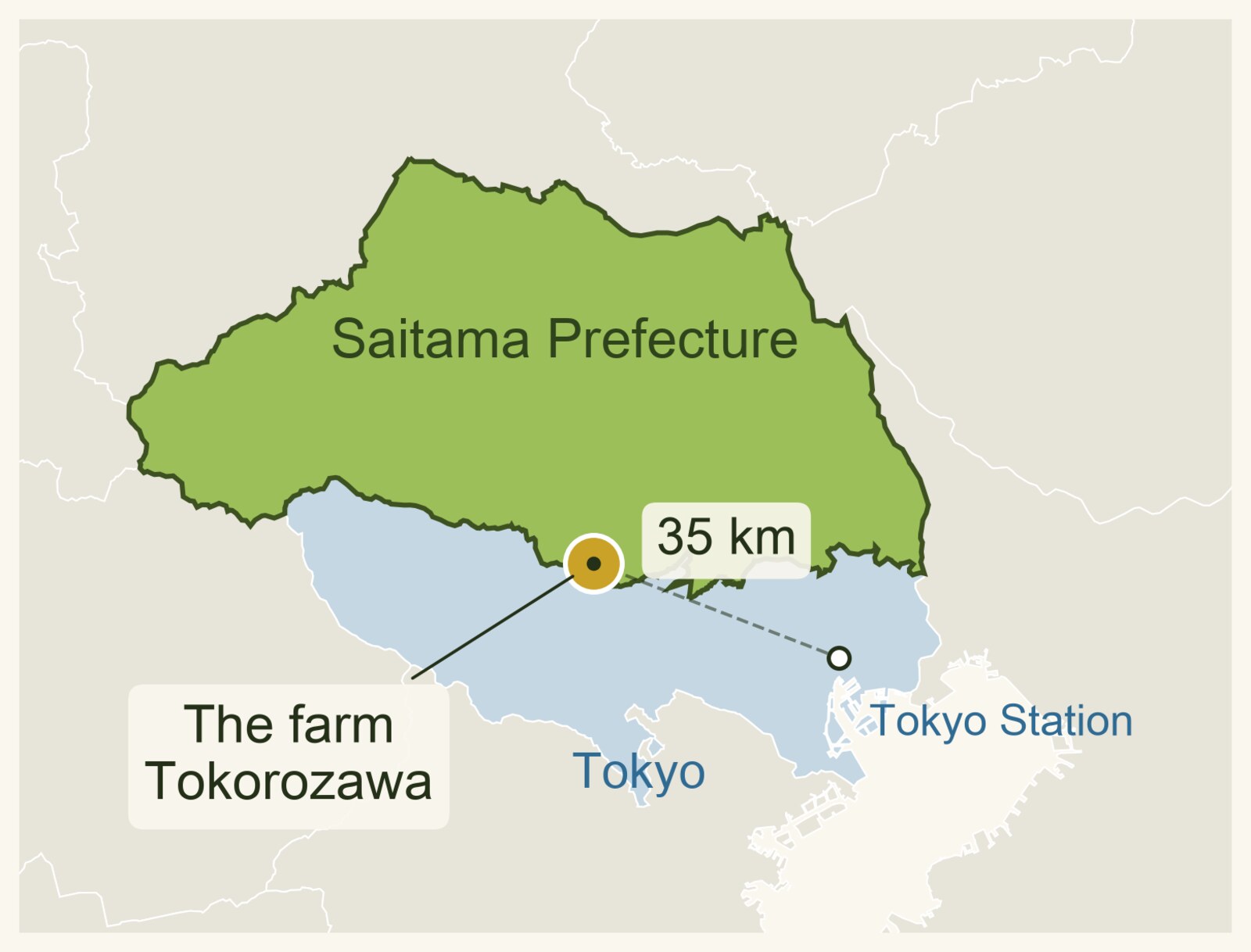
Your matcha grew 35 km from Tokyo.
Sayama, Saitama, Japan.
Japanomars · Sayama
Sayama, Saitama, Japan.
Where it is
Tea likes warm. Almost all of Japan's tea is grown in the south and west. Sayama sits at the top of the map, on the cold edge of where the plant will grow at all.
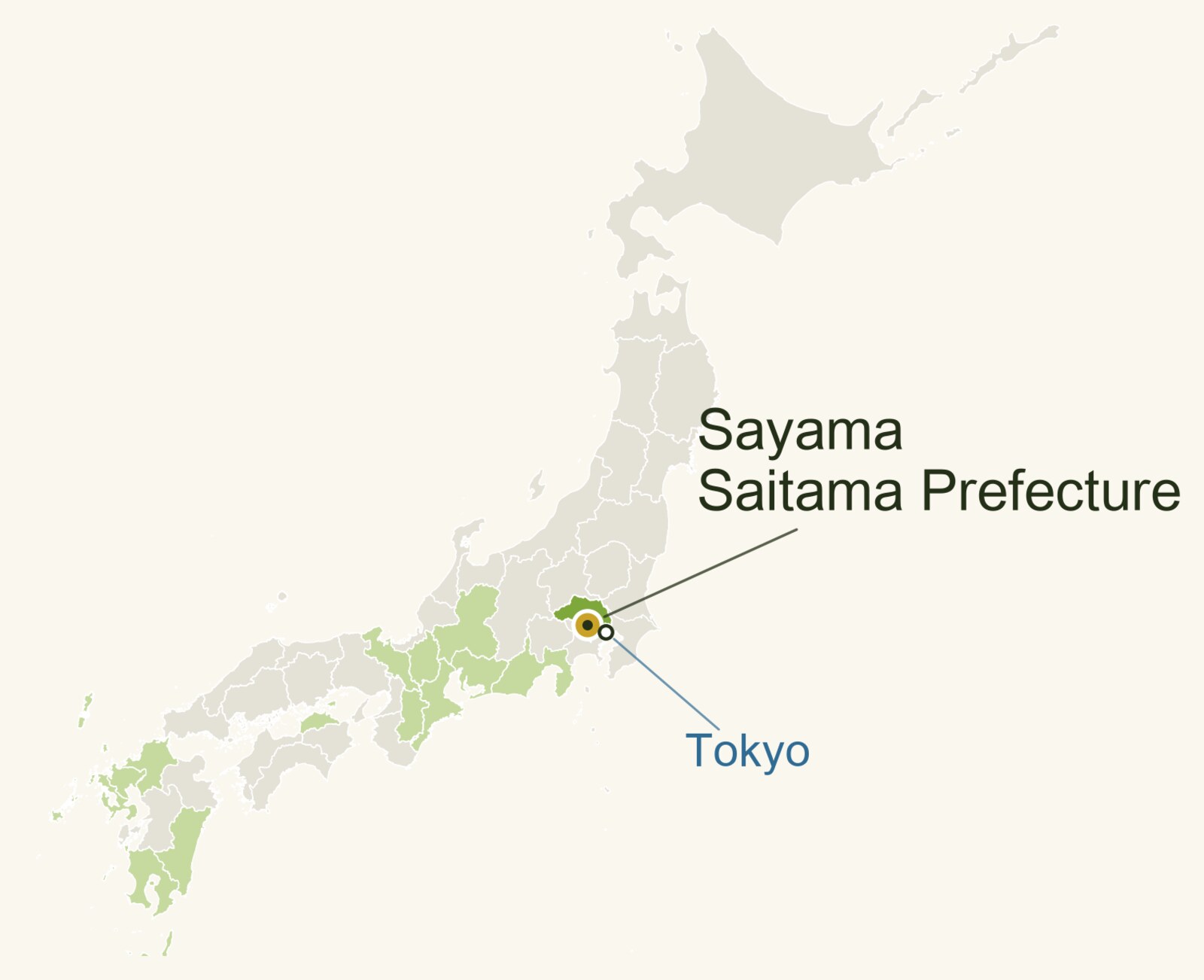
Sayama is a district, not a town. It covers three towns west of Tokyo: Iruma, Tokorozawa and Sayama. This farm is in Tokorozawa, and the city starts at the edge of the field.
How rare it is
Almost all Japanese tea comes from the south. Shizuoka and Kagoshima are first and second by a long way. Saitama is eighth, and its whole crop is 838 tonnes a year, which is 1.3 per cent of the country's tea. Matcha is a small fraction of even that.
The reason is the winter. Growers in Kagoshima pick four times a year. Here it is twice.
That sounds like a problem. It is the whole point.
The plant stops for months. The leaf it puts out in spring is thicker than the leaf further south, and thick leaf is where the flavour is. There is not much of this tea, and the growers here decided a long time ago that this was fine.
The field, and the houses on the other side of it.
Everyone in the Japanese tea trade knows this line:
Shizuoka for colour. Uji for aroma. But for flavour, Sayama.
It comes from a work song, sung by the people picking the leaf. Sayama's own tea merchants later took that one line and put it on everything, which is exactly what you would expect them to do. It worked. It is how most of Japan first heard of this place.
Two more habits worth knowing. In most of Japan one company grows the leaf, another processes it and a third sells it. In Sayama the same family usually does all three. And every Japanese green tea gets a final drying, but Sayama holds that fire hotter and longer, and has done for so long that the technique carries the name of the place. It is why tea from here is known for weight rather than delicacy.
Why it tastes like this
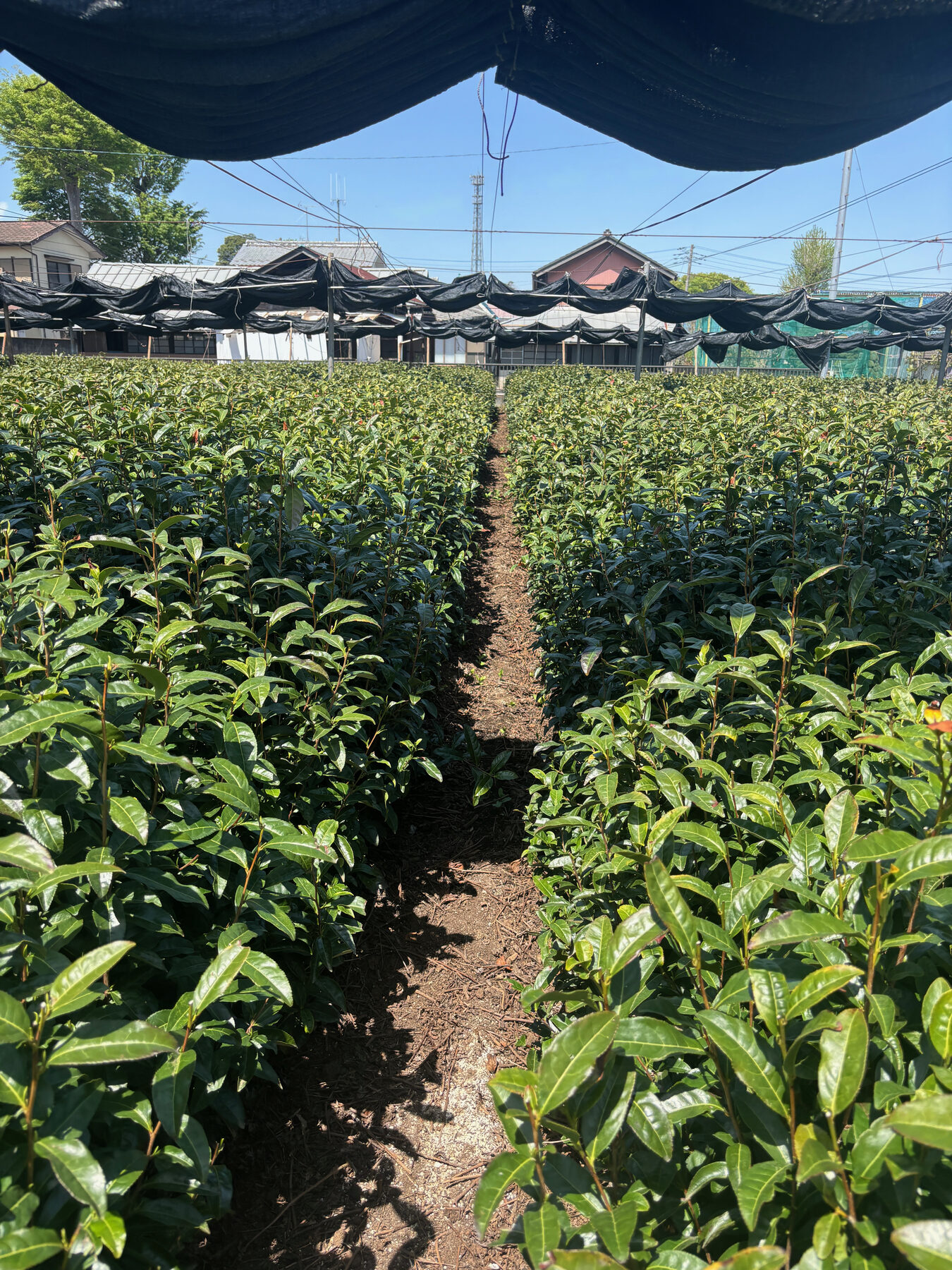
Before the leaf is picked, it is covered. Cutting the light slows the plant down. It holds on to what tastes sweet and makes less of what tastes bitter. That is the whole trick.
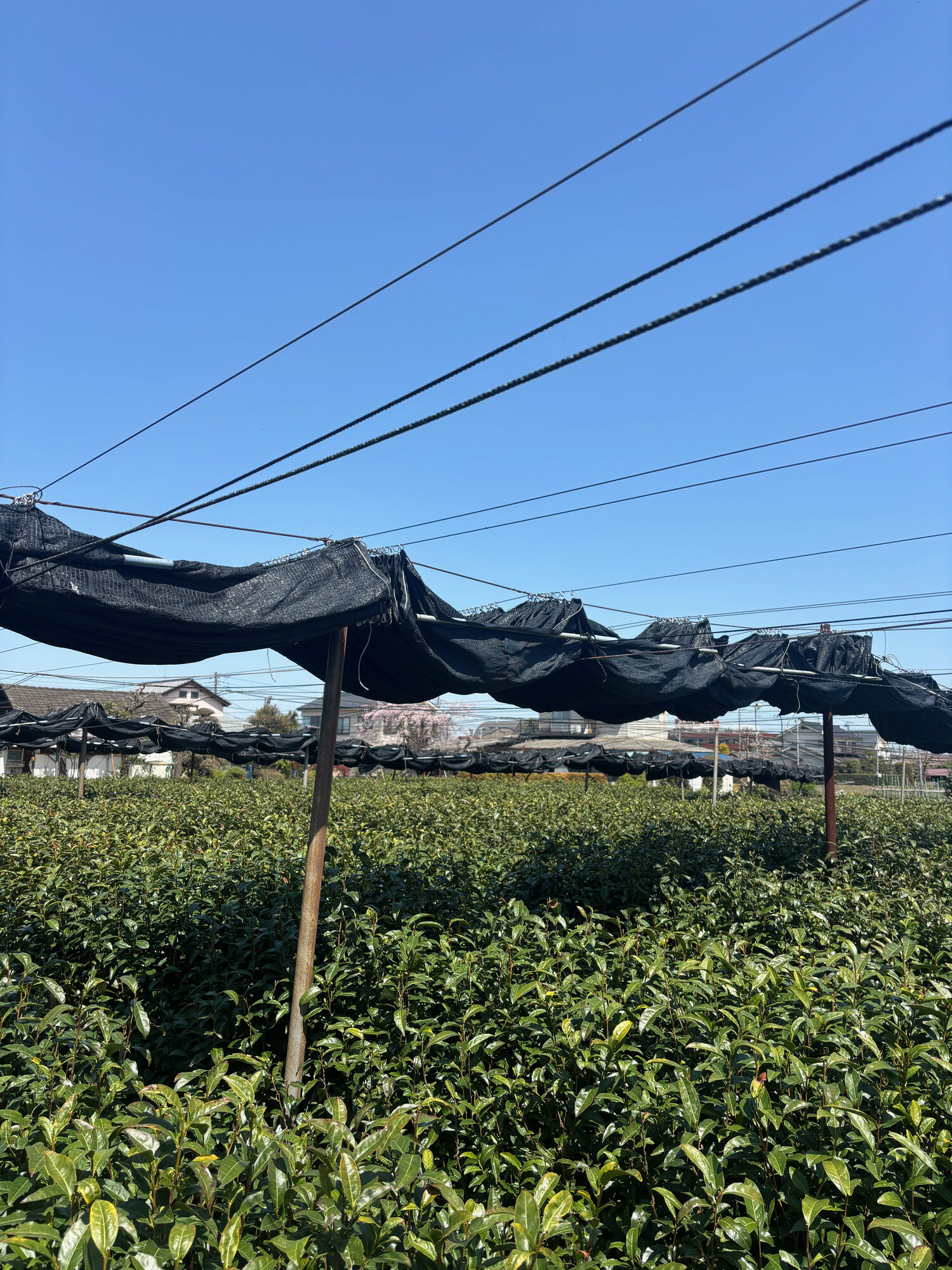
Here the shade is a structure. Posts and wire stand over the rows all year, and the cloth is pulled across the top in spring. The plant grows in open air, in the dark.
Out of the leaf, and the frame is already there.
Early April. The cloth is going on.
If a customer asks you one thing, tell them it was grown in the dark on purpose.
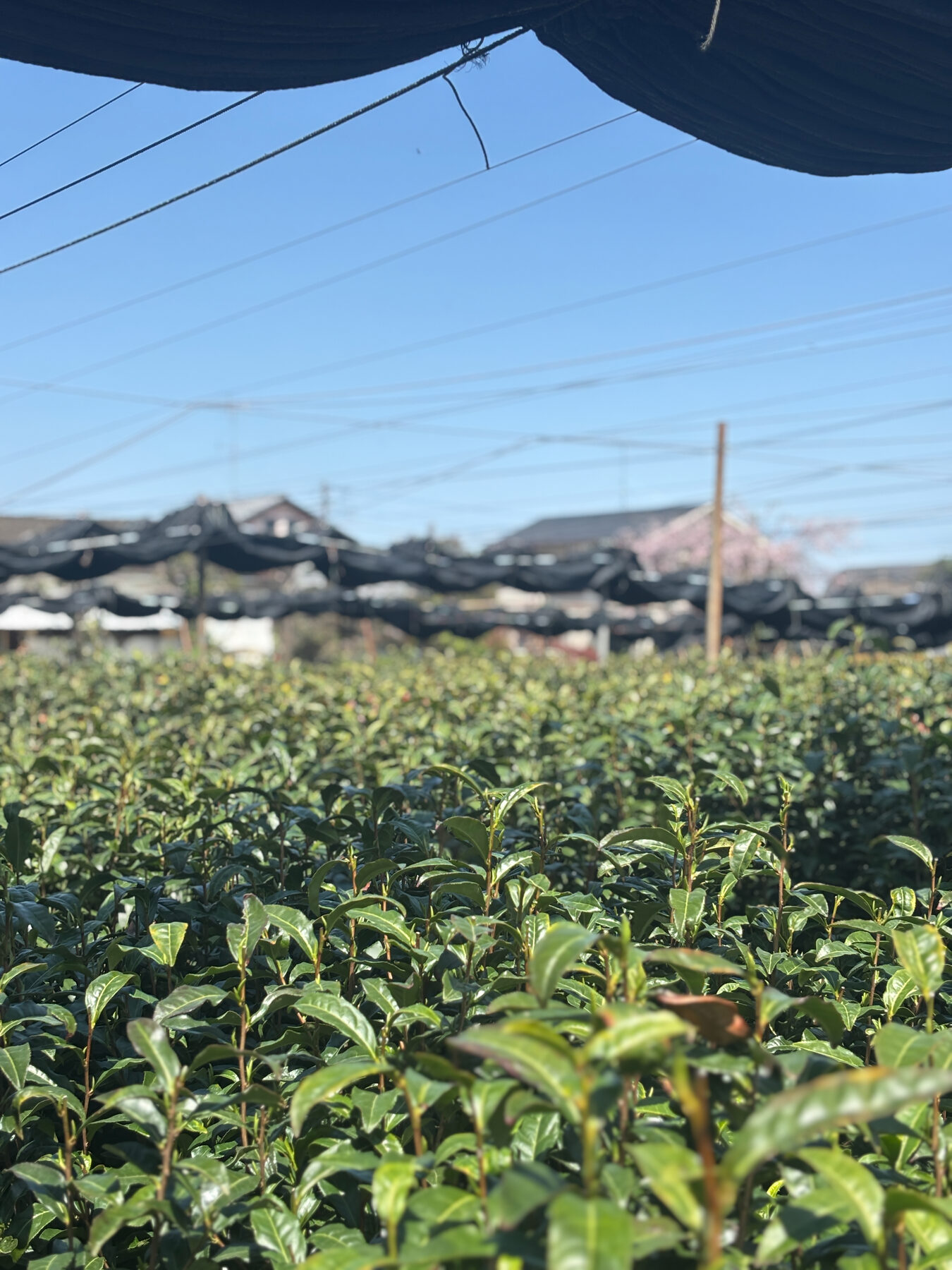
Underneath, looking out. The pink is cherry blossom.
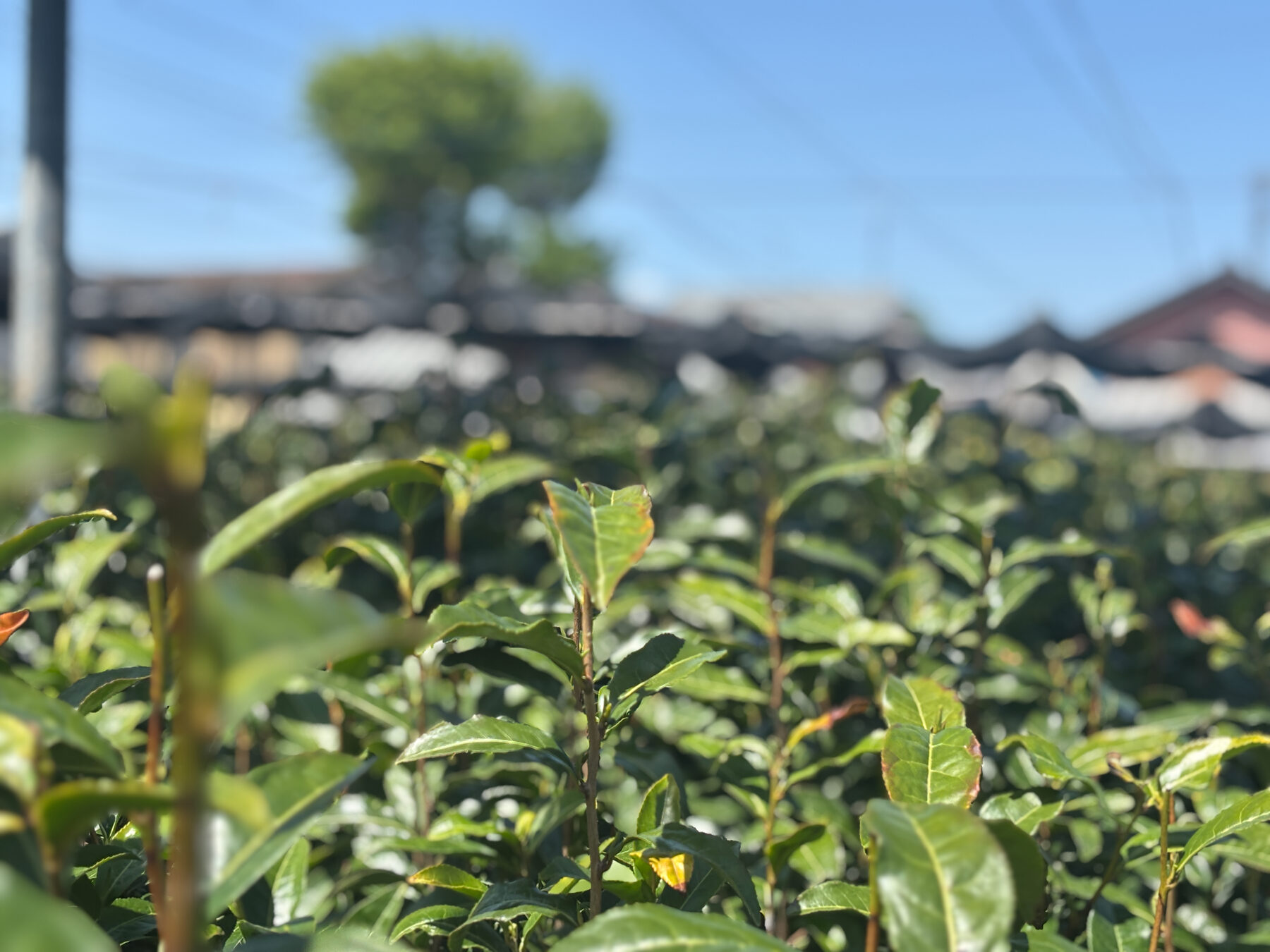
Still weeks from picking.
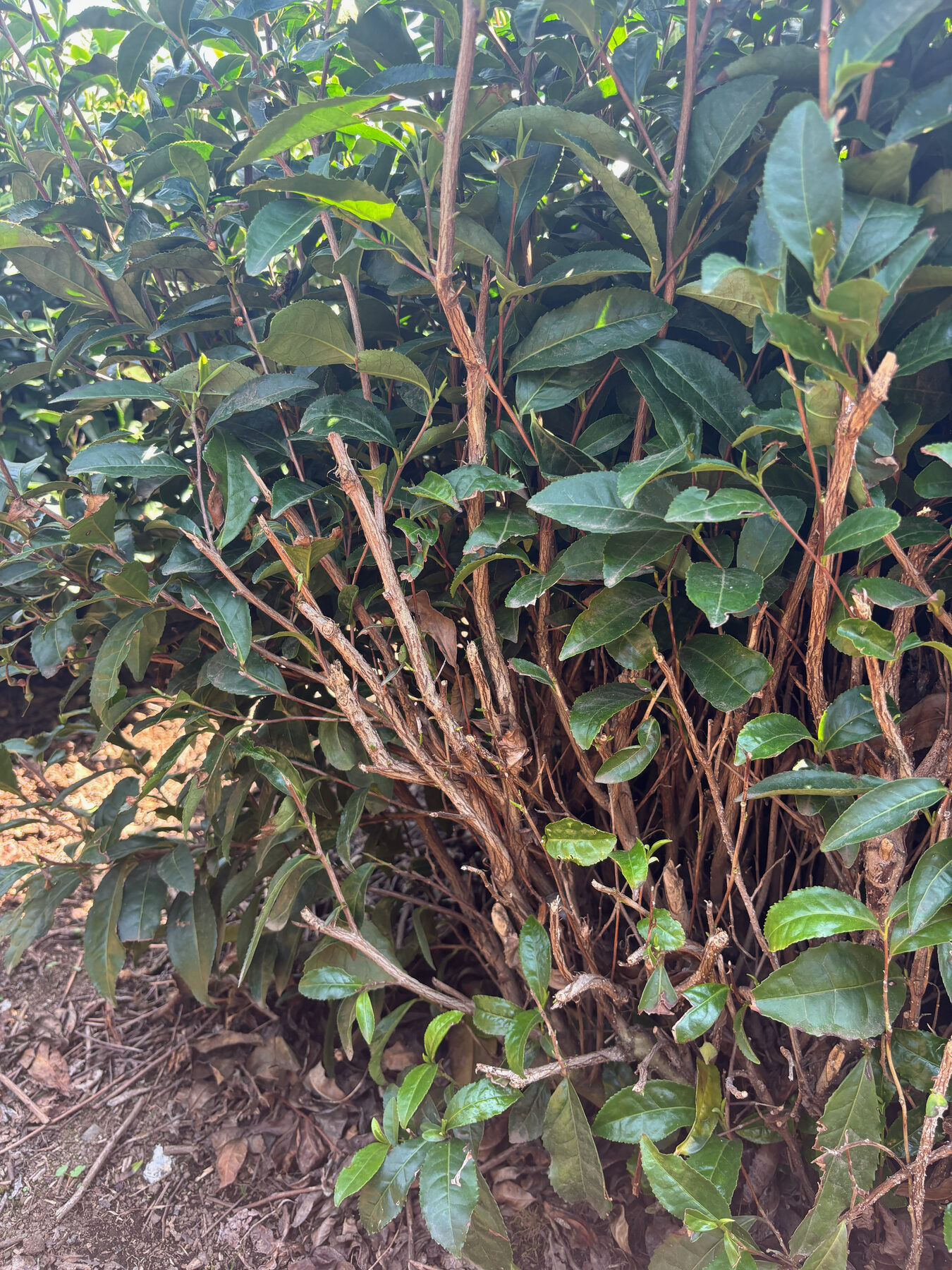
Push the green aside. The wood underneath is old.
The farm
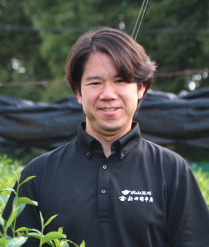
Shinichiro Arai 新井真一郎, the third generation.
Most matcha changes hands several times between the field and the tin. This one does not.
Arai-en grows the leaf and processes it themselves. The factory is the building you can see behind the shade frames in the photograph below. It is the same address.
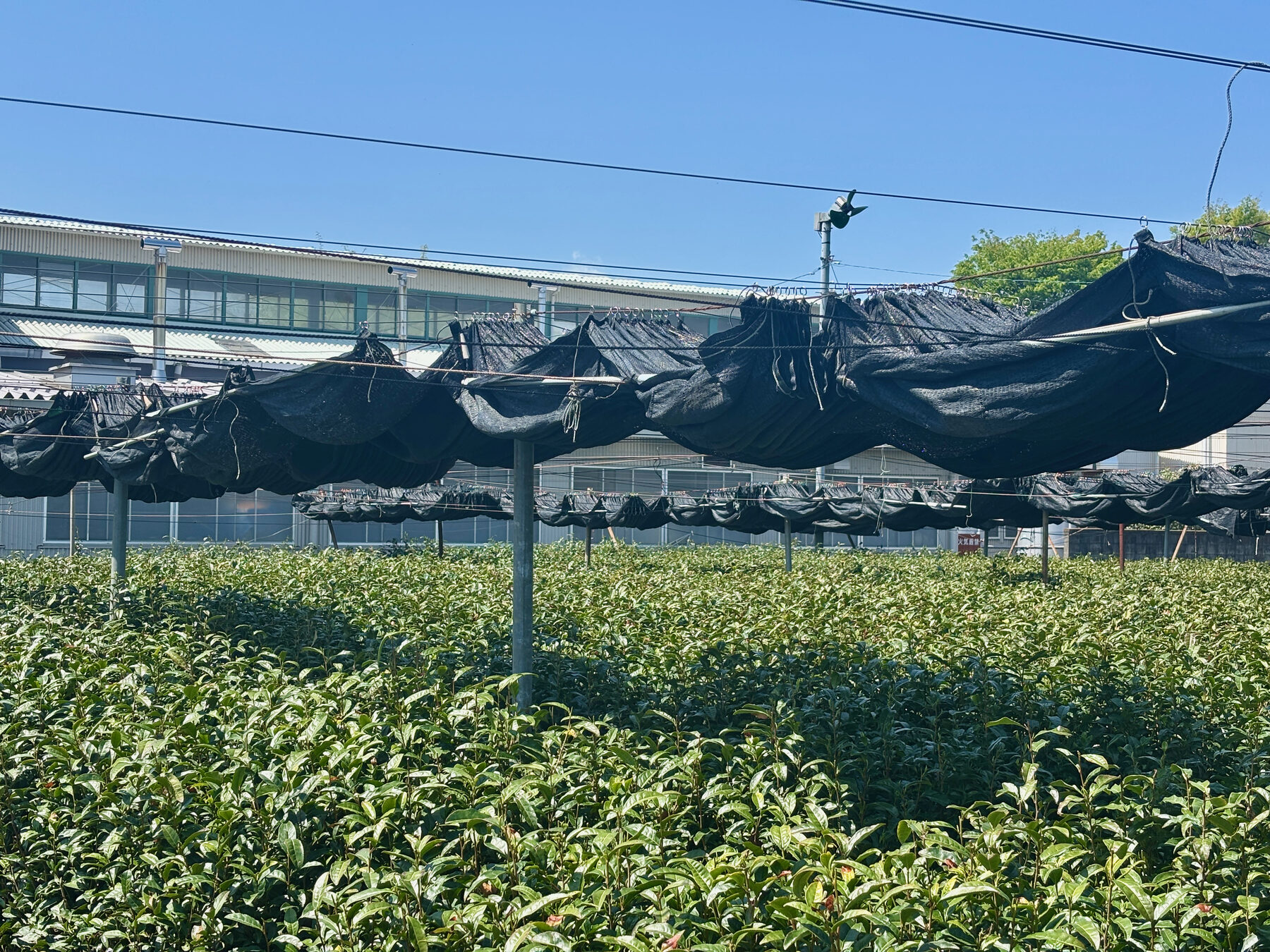
The factory is at the edge of the field. The leaf does not travel.
The family has been doing this since 1924, and Shinichiro Arai is the third generation to do it. In 1996 their tea took the Emperor's Cup, the top award at Japan's national agriculture festival. In 2012 they sent a green tea powder to the Pope. In 2025 one of their teas won a prize at a Japanese tea competition in Paris.
We put our work into the soil first, mainly with organic fertiliser.
Arai-en Honten, in their own words
You can go
Most tea farms worth visiting are a flight and a hire car away. This one is not. The family keeps a shop and a small tea room in the next town, six days a week, twenty-eight minutes from Ikebukuro on the express.
If a customer ever tells you they are going to Japan, this is a real answer to give them.
When you drink it
Cold winters, thick leaf, and a region that has always chased flavour over finesse. It arrives with weight, and it does not disappear under milk.
If someone asks
Sourced by Japanomars. Sayama, Saitama, Japan.
This page is private. It exists for the people who drink this tea and the people who serve it.
Japanomars buys this tea direct from the farm. If you serve tea and want to talk to us, japanomars.com.